Burg Golling: A Medieval Hill Castle in Austria


Site at a Glance
- Rating
- 4.4
- Popularity
- Low
- Country
- Austria
- Primary era
- Medieval
- External website
- Open
- Eras represented
- Medieval, Early Modern, Modern
- Civilizations
- Habsburg, Holy Roman Empire
- Site type
- Military
- Remains
- Castle
On this page9 sections
History
Burg Golling is a hill castle in Golling an der Salzach, Austria, erected by the Prince-Archbishops of Salzburg in the thirteenth century. A Prince-Archbishop governed both a Roman Catholic archdiocese and its secular territory, so the fortress served the interests of a religious and political authority. The castle occupies a strategically important position above the Salzach valley, near the narrows between the Hagen Mountains and the Tennengebirge.
Earlier fortifications and the thirteenth-century castle
The site may have been watched from a wooden tower during the Roman period, when it could have helped observe the road between Virunum and Iuvavum. The nearby Lueg Pass had already been an important crossing in the Bronze Age. After the Bavarian conquest in the early Middle Ages, a wooden castle was built on the height. A timber motte, a medieval fortification centered on a tower on a mound, may also have preceded the later stone complex.
The present fortress was probably erected during the first half of the thirteenth century under Archbishop Eberhard II of Salzburg. It first appears in a written document in 1325, when Archbishop Friedrich granted the Veste Golling to Margarete von Kuchl and her sons, Konrad and Hartneid, for their lifetimes. The payment was 300 pounds of silver pennies. The Kuchlers belonged to the Salzburg nobility.
Transfer to the archbishops
Hartneid von Kuchl sold his property to Archbishop Pilgrim II of Salzburg in 1375. The castle was surrendered to the archbishop in 1438. After that, Salzburg employed custodians at Golling rather than retaining it as a privately held aristocratic seat. During the fourteenth and fifteenth centuries, the archbishops had taken control of important aristocratic castles in the region, and Golling remained in their ownership for centuries.
The castle also became the assigned official residence of a judicial administrator responsible for maintaining it. Major extensions and alterations followed during the second half of the fifteenth century, reinforcing the complex’s administrative and residential functions under Salzburg’s rule.
Peasant revolt and reconstruction
During the Peasants’ Wars, sixteenth-century uprisings by rural populations against feudal, fiscal, and ecclesiastical authorities in parts of Central Europe, Golling became a gathering place for rebels from the surrounding mountains in 1525. In the following year, a peasant army attacked and looted the village and castle. The mercenary commander Burkhard von Ems eventually forced the rebels to surrender. Twenty-seven peasant leaders were beheaded, and the rural population had to pay heavy reparations.
The castle suffered serious damage in these events and underwent extensive renovation in 1532. Heavy rains and flooding of the Salzach caused further severe damage in 1573. From 1589, the complex was extensively rebuilt and enlarged, producing a radical reconstruction of the building.
Seventeenth- to nineteenth-century changes
Lightning destroyed the castle tower in 1599. During a market fire in 1619, the surrounding wall was demolished as a measure to prevent the flames from spreading. A replacement wall was built two years later, and construction continued at the castle through much of the seventeenth century.
Prince-Archbishop Franz Anton von Harrach visited Golling in 1722, ordered renovations, and created a heated princely room. The room was paved in 1633. Extensive repairs took place in 1871, when the dilapidated south wing was enlarged and extended for use as a prison.
Administrative use and preservation
The district court in the castle was abolished in 1923. Parts of the complex were subsequently divided into apartments, while other rooms accommodated a customs-guard section and a tax office. A local-history museum was established in several rooms in 1971. It presents objects connected with the castle’s history alongside fossil finds from the surrounding area.
Burg Golling is a protected monument and survives as a publicly accessible historic complex. Since 1999, the nonprofit Kunst & Musik Forum Golling has organized a festival in the castle, with programs including classical chamber music, readings, chansons, and jazz.
Remains
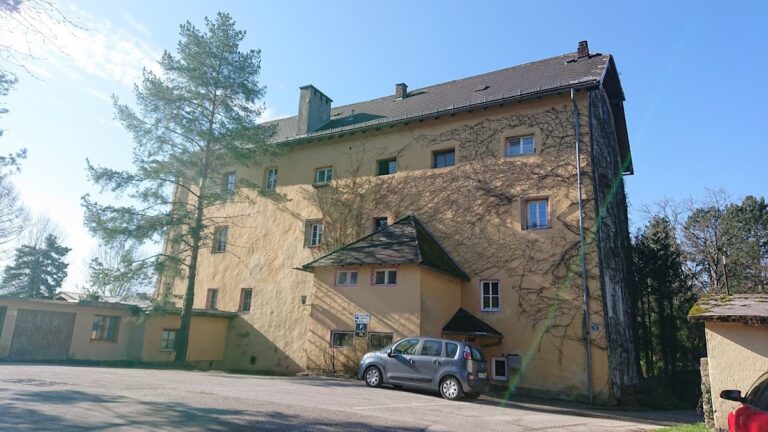
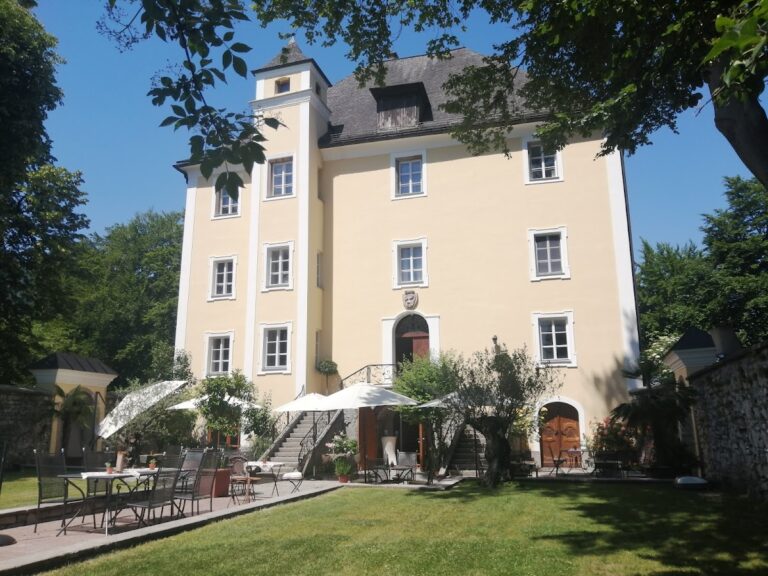
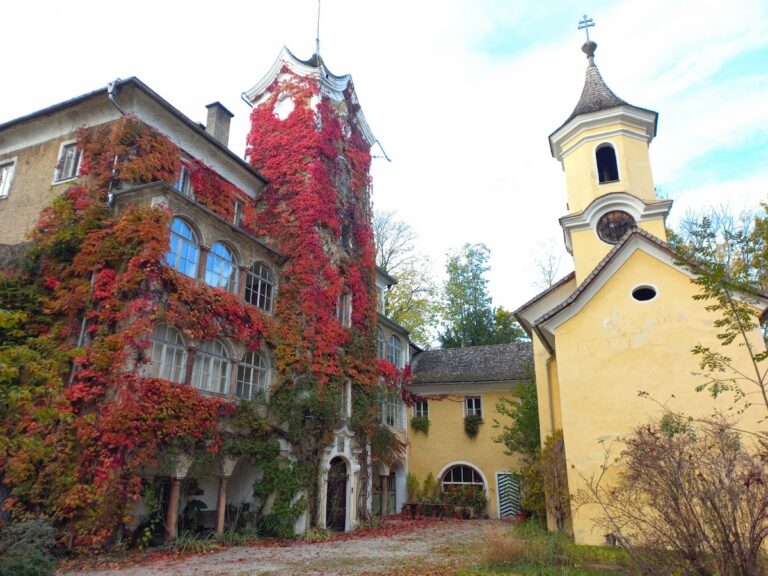
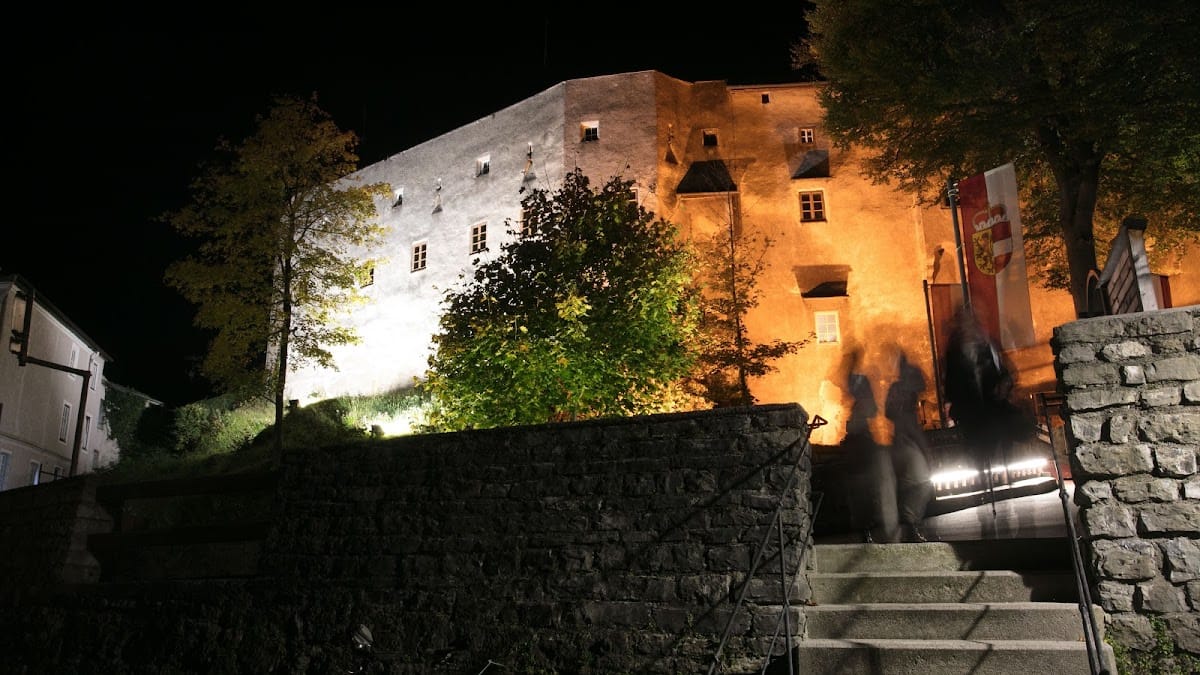
Burg Golling is a relatively large hill fortress on a rocky height 469 metres above sea level. Its position overlooks the Salzach valley near the narrow passage between the Hagen Mountains and the Tennengebirge. The surviving complex combines the thirteenth-century stone castle with later fortification, residential, administrative, and institutional changes.
Entrance and defensive enclosure
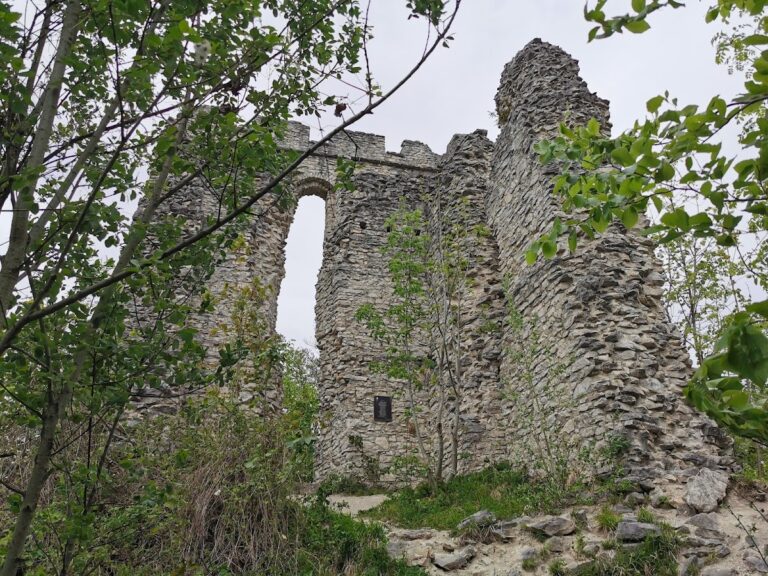
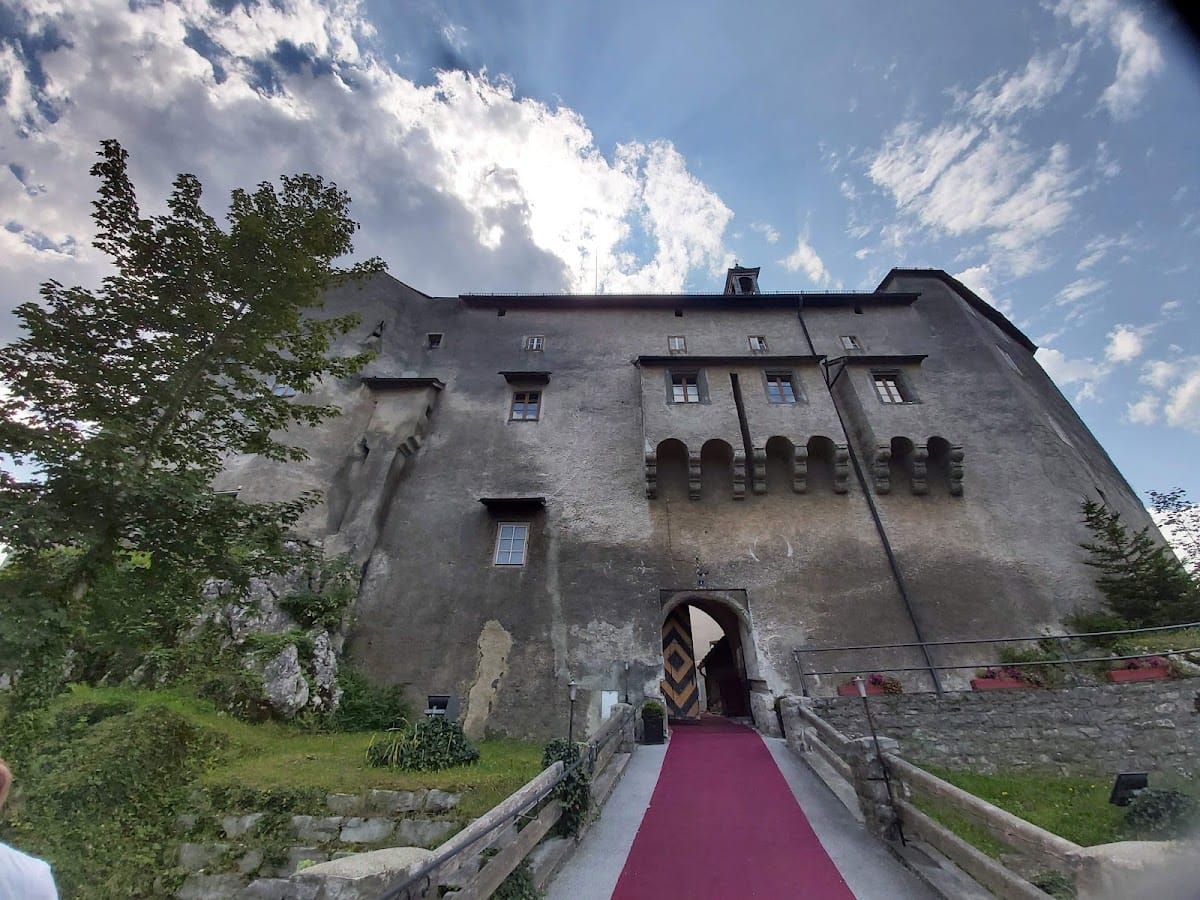
Access to the castle is across a bridge over a moat. The bridge was renovated in 1532 and again in 1713, reflecting the continuing maintenance of the entrance during later phases of the complex’s history. The surrounding defensive wall was demolished during the 1619 market fire and replaced in 1621. The castle tower, an earlier element of the fortified structure, was destroyed by lightning in 1599.
Wings, rooms, and later adaptations
The south wing had become dilapidated by 1871. It was enlarged and extended to serve as a prison, adding a nineteenth-century institutional function to the castle’s earlier administrative and residential roles. Other parts of the complex were later subdivided into apartments, while rooms also accommodated the district court, customs-guard offices, and a tax office.
The princely room forms part of the castle’s sequence of interior alterations. It was paved in 1633 and later provided with heating during the renovation commissioned by Franz Anton von Harrach in 1722. Several rooms now house the local-history museum, whose displays include historical objects associated with Burg Golling and fossil finds from the surrounding area.