Burg Gruttenstein: A Medieval Administrative and Defensive Castle in Germany


Site at a Glance
- Rating
- 4.4
- Popularity
- Low
- Country
- Germany
- Primary era
- Medieval
- External website
- Open
- Eras represented
- Medieval, Early Modern
- Civilizations
- Duchy of Bavaria, Holy Roman Empire
- Site type
- Military
- Remains
- Castle
On this page8 sections
History
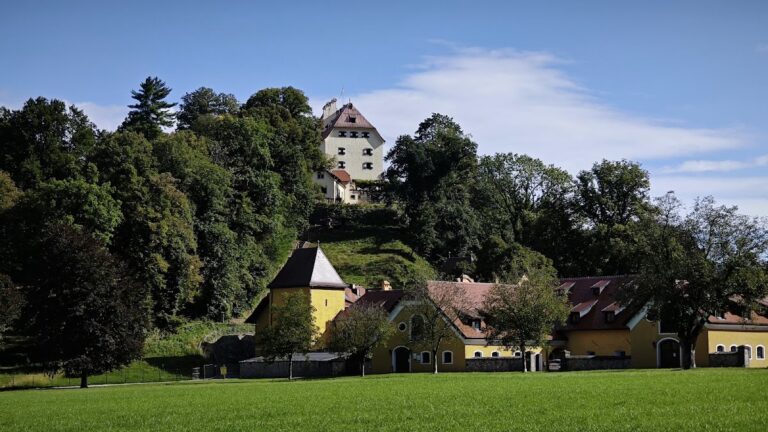
Burg Gruttenstein is a hilltop castle in Germany above the centre of Bad Reichenhall. Its builder and exact construction date are unknown, although a stone fortification probably stood here by the twelfth century and may have served as a residence for the Hallgrafen, medieval officials connected with the administration of salt production and related rights in the Reichenhall area.
Destruction and Salzburg’s Challenge
In 1196, the Archbishop of Salzburg destroyed Reichenhall and Gruttenstein. As a demonstration of his authority over Reichenhall, he ordered the construction of the Hallburg on nearby Streitbichl. That fortress was short-lived, while the destruction of Gruttenstein formed part of a wider struggle between Salzburg and the rulers of Bavaria.
Bavarian Rebuilding
During these conflicts, the Duke of Bavaria began rebuilding Gruttenstein in 1218. The archbishop repeatedly demanded that the castle be demolished and secured a legal ruling supporting this demand. Gruttenstein nevertheless survived, allowing the Bavarian duke to consolidate his power in Reichenhall.
Ducal Administration and Residence
From the thirteenth century, Gruttenstein became the administrative seat of a ducal Bavarian official responsible for the Reichenhall district court, a territorial court and administrative district governed on behalf of the duke. Its role therefore extended beyond military defence. The complex also served a representational purpose, and parts of it were remodelled with larger windows and more residential interiors. This development explains why the castle is also often called a palace.
Preservation
The privately owned castle has undergone extensive renovation since the beginning of 2007. Burg Gruttenstein is protected as an architectural monument of Bad Reichenhall and is also classified as an archaeological monument, including underground medieval and early-modern remains associated with the castle and its predecessor structures.
Remains
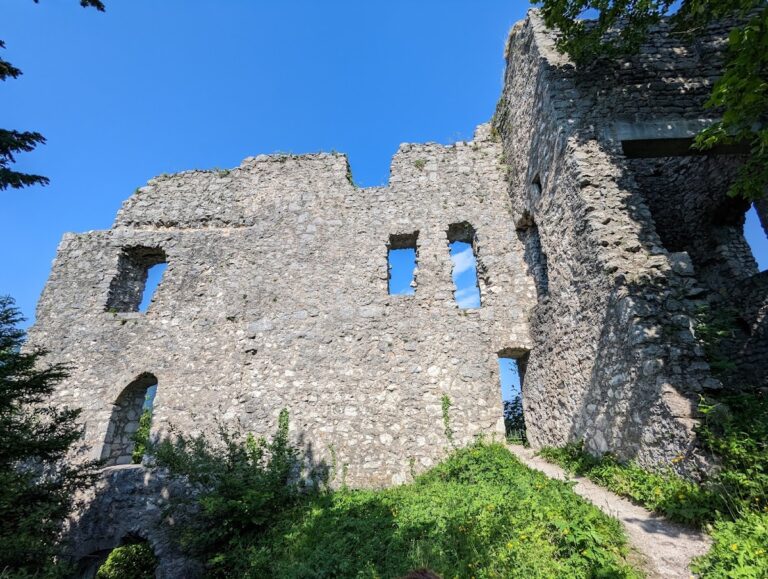
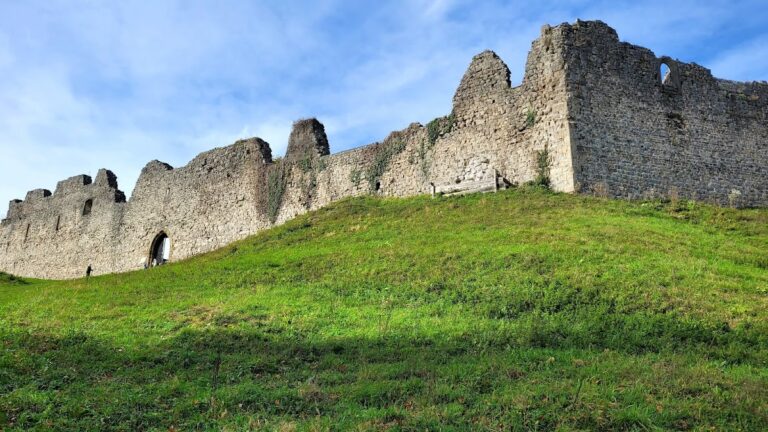
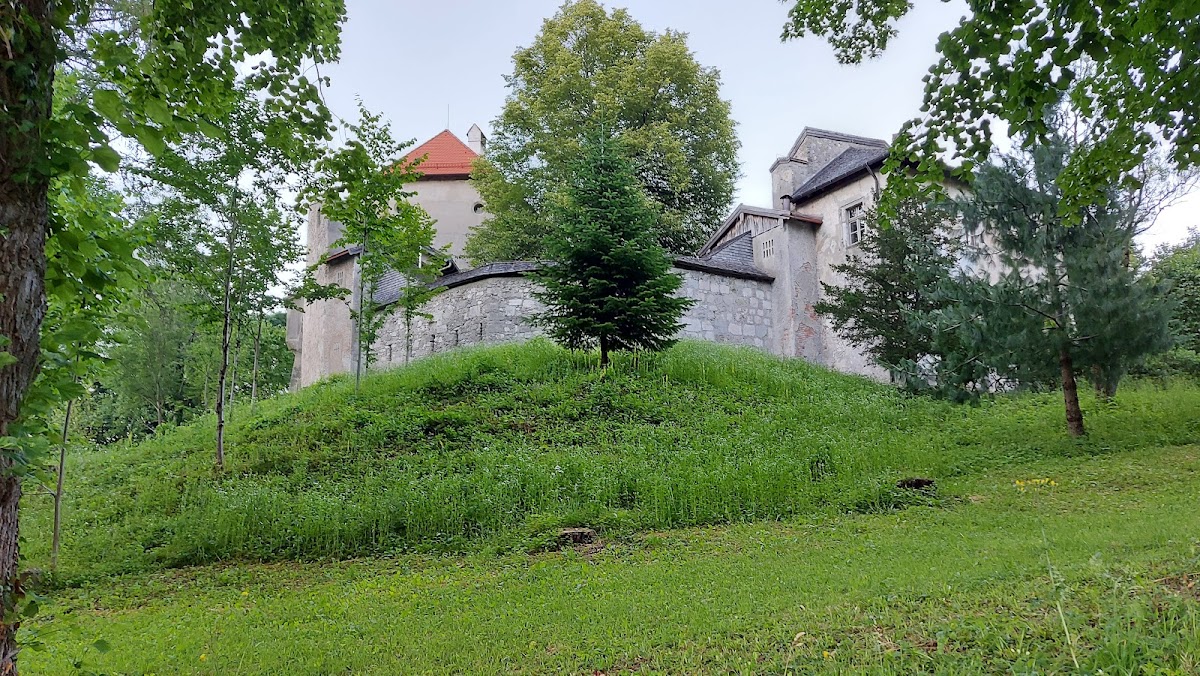
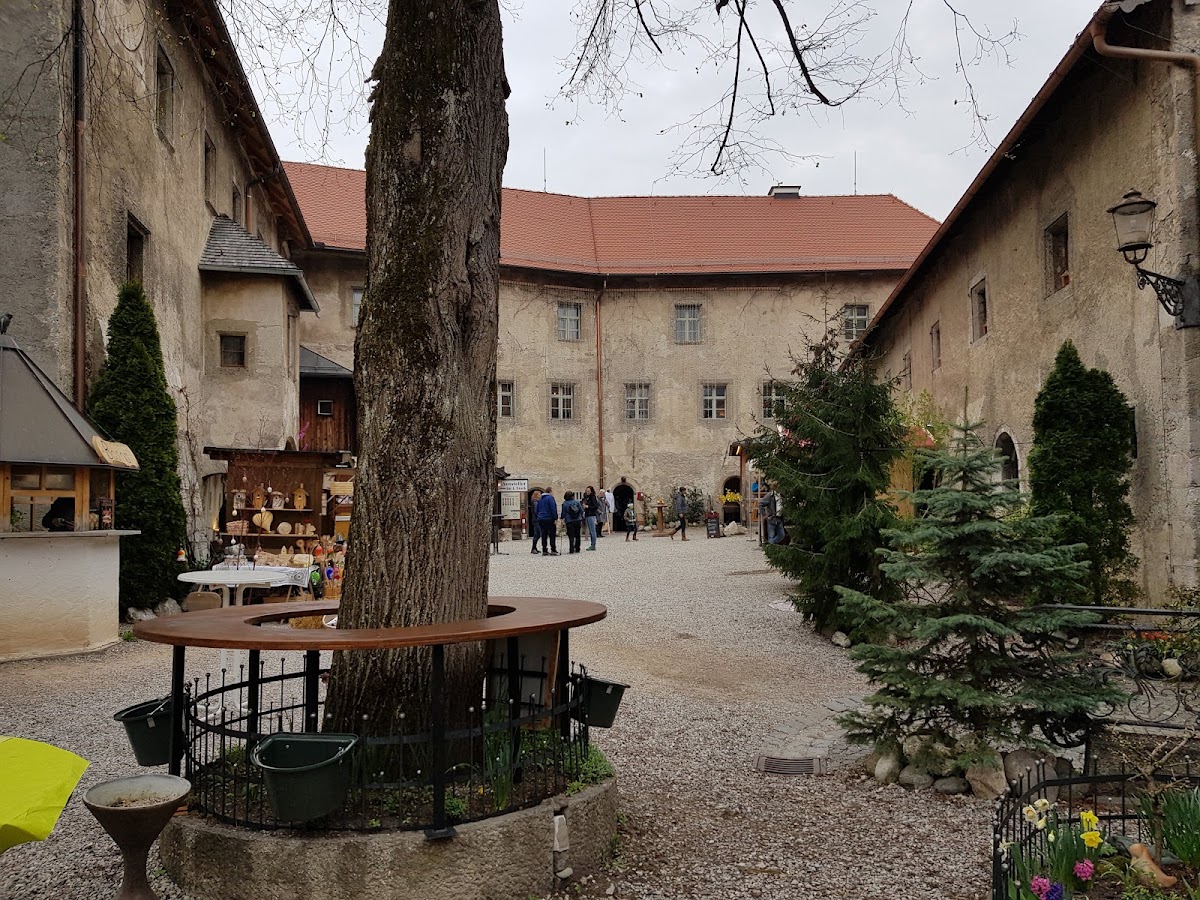
Burg Gruttenstein forms a compact, three-storey complex on a hill about 500 metres above sea level. Built of rubble stone and ashlar, it encloses a central castle courtyard and retains substantial parts of its historic fabric. The highest element is a strong east-west shield wall, a defensive wall designed to protect the side most exposed to attack. This wall once formed part of Bad Reichenhall’s town defences.
Residential Complex
The north wing contains the former lordly residential rooms. Their larger windows and more domestic interiors reflect the transformation of the complex as it acquired administrative and representational functions alongside its military role. The surviving arrangement combines these residential spaces with the enclosed courtyard and the other parts of the compact castle.
Entrance Defences
Access to the courtyard passes through a low gatehouse. The entrance was formerly protected by a gate and a portcullis, a vertically lowered barrier used to secure a gateway. A medieval drawbridge may also have stood at this approach. Together with the shield wall, these features express the defensive character of the castle, while the preserved masonry records its construction in rubble stone and ashlar.
Nearby sites