Burgruine Gutrat: A Medieval Rock Castle in Austria
Site at a Glance
- Rating
- 4.4
- Popularity
- Very Low
- Country
- Austria
- Primary era
- Medieval
- Eras represented
- Medieval
- Civilizations
- Holy Roman Empire
- Site type
- Military
- Remains
- Castle
On this page9 sections
History
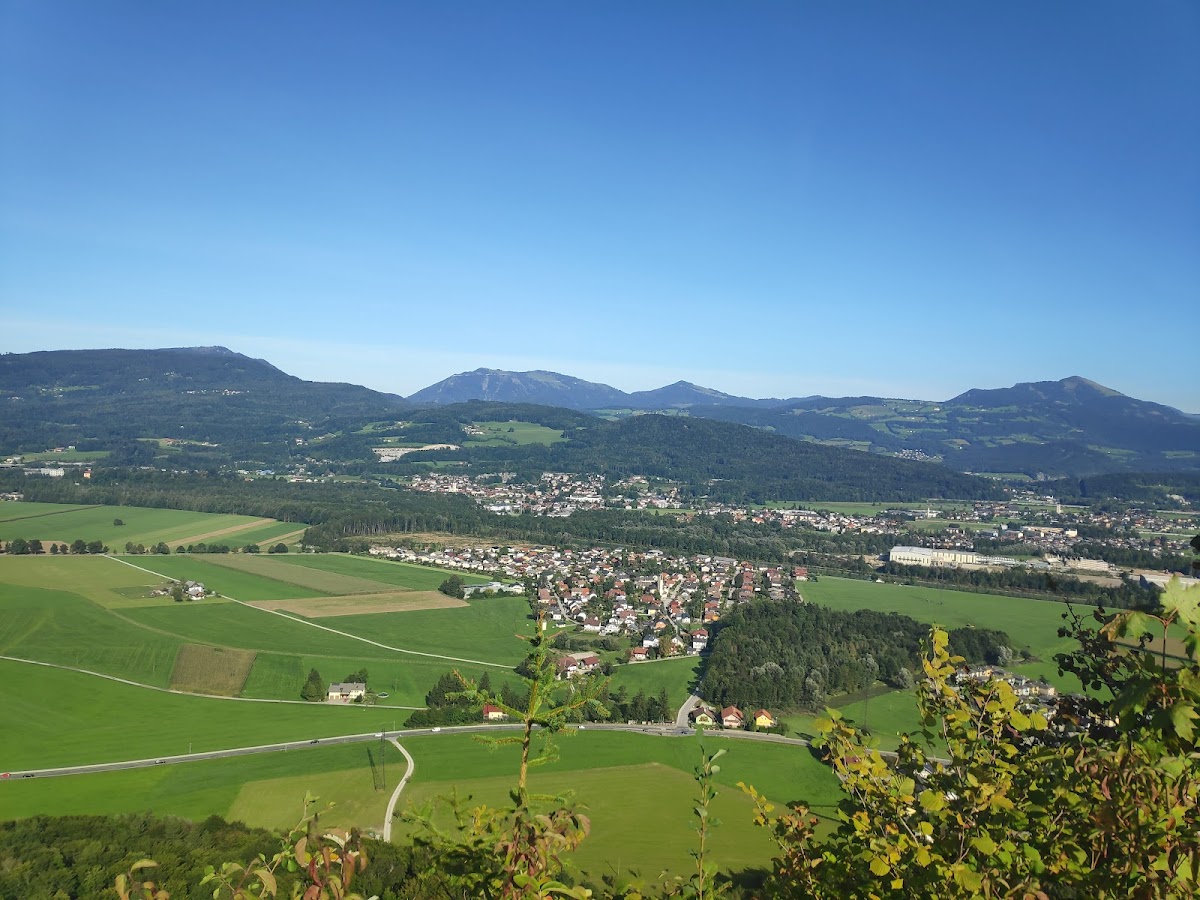
Burgruine Gutrat is a medieval rock castle ruin in Austria above the Salzach Valley north of Hallein, constructed around 1100–1200 to protect the saltworks at the foot of Tuval Mountain. The saltworks had been rediscovered in the twelfth century, giving the castle a strategic and economic purpose within the territory governed by the archbishop of Salzburg.
Foundation and Salzburg control
Archbishop Adalbert III of Salzburg commissioned the castle, entrusting its construction to Chuno of Werfen-Schnaitsee. Chuno was burgrave of Hohenwerfen and a ministerial, a medieval service official or dependent noble serving a higher lord. By 1209, he was using the name “von Gutrat,” probably because the castle had already been completed and was held as freehold property.
Gutrat strengthened the archbishop’s control over the Salzach Valley and supported Salzburg’s efforts to settle disputed territorial rights with the Prince-Provostry of Berchtesgaden. A Prince-Provostry was an ecclesiastical territory ruled by a provost with princely rank, while an archbishopric was governed by an archbishop.
Decline of the castle
When the saltworks ceased production, Gutrat quickly lost its importance. Around 1300, the Gutrat family fell out of favour with the Salzburg archbishop. The castle, previously held as freehold property, passed to the archbishopric and was then granted back to the family as a fief.
The last member of the Gutrat family died in 1304, after which the castle was left to decay. Its later importance was largely connected with the territorial boundary between the Prince-Provostry of Berchtesgaden and the Salzburg archbishopric. A map made by Johann Faistenauer in 1626 marks the castle ruin on the mountain of Gvedrath.
Conservation
The Land of Salzburg carried out conservation work at the ruin between 2002 and 2004. Burgruine Gutrat is privately owned.
Remains
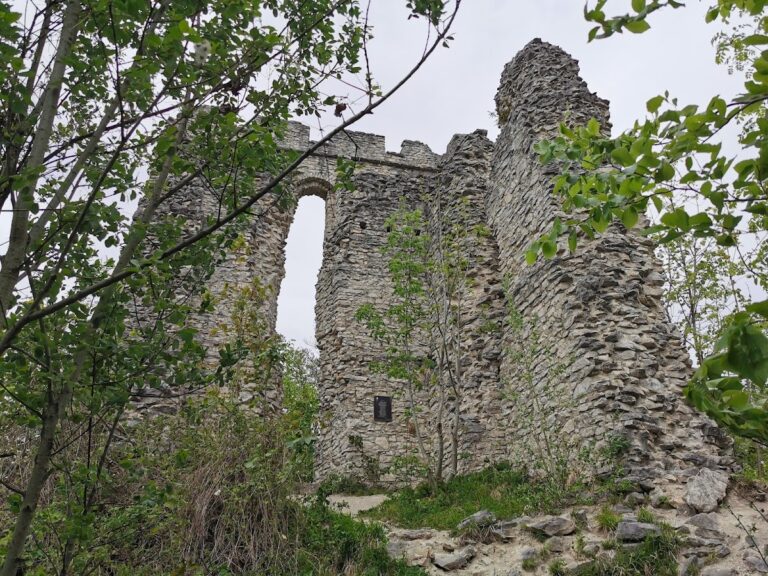
The ruin stands 622 metres above sea level on a limestone rock above the Salzach Valley. The castle complex follows the narrow rock formation from north to south, with its buildings and defensive elements arranged along the available ridge.
Castle complex
Main castle
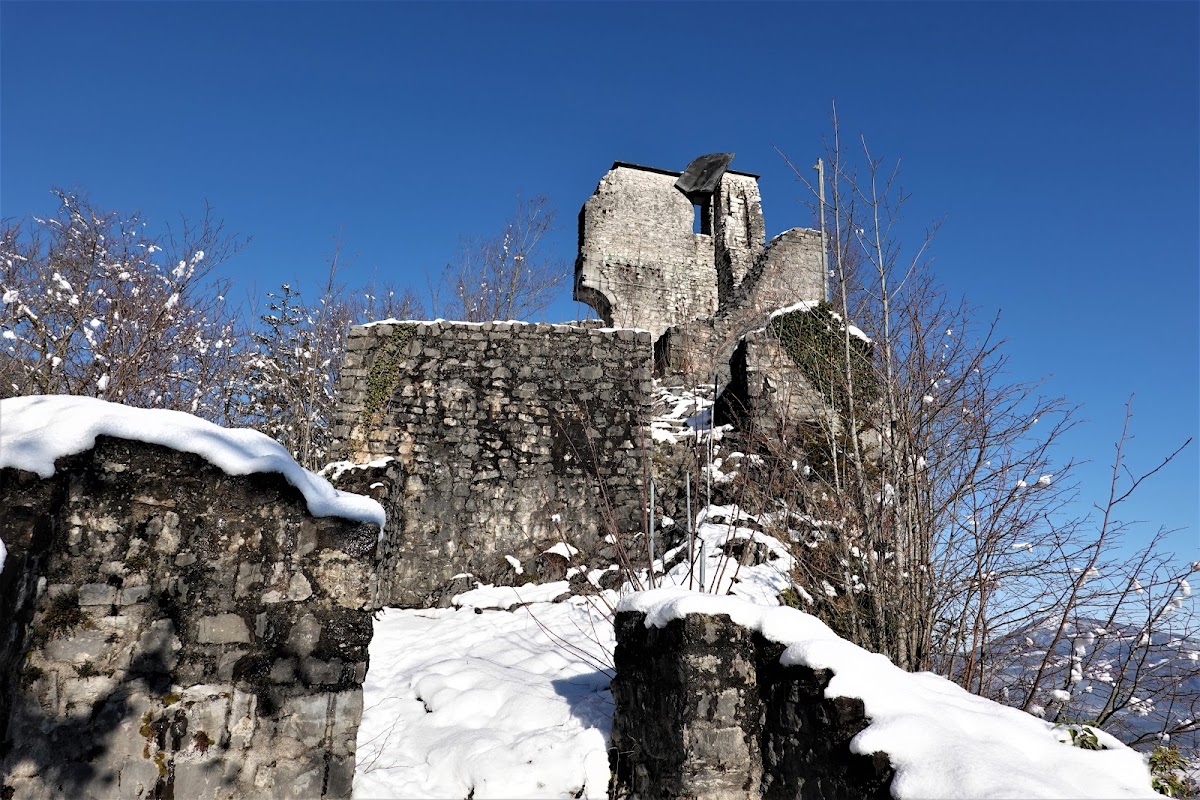
At the highest point in the north are the palas, the principal residential or representative building of a medieval castle, and the directly adjoining former keep, its principal fortified tower. Only a small part of the former castle survives, leaving these northern structures as the main surviving elements of the upper complex.
Outer courtyards and gate tower
Two polygonal outer courtyards extend south of the main castle. Their southern end is closed by a small gate tower, which formed the entrance structure for this lower part of the complex.
Approach defenses
Access to the ruin crosses a narrow rocky ridge. At the point where the ridge turns, a small tower-like structure protects the approach. The surviving fabric also includes an outer wall and holes associated with a former wooden ceiling.