Castell de Tamarit: A Medieval Fortress and Village in Tarragona, Spain



Visitor Information
Google Rating: 4.5
Popularity: Medium
Google Maps: View on Google Maps
Official Website: www.castillotamarit.com
Country: Spain
Civilization: Medieval European
Remains: Military

History
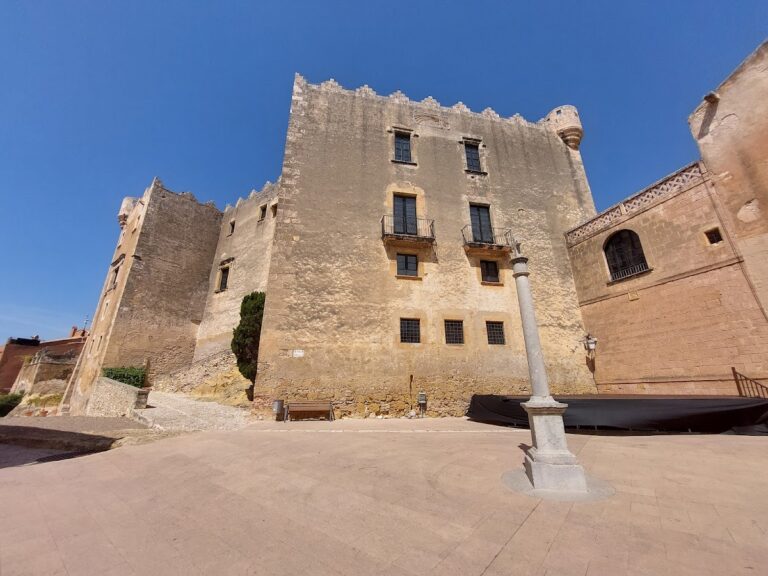
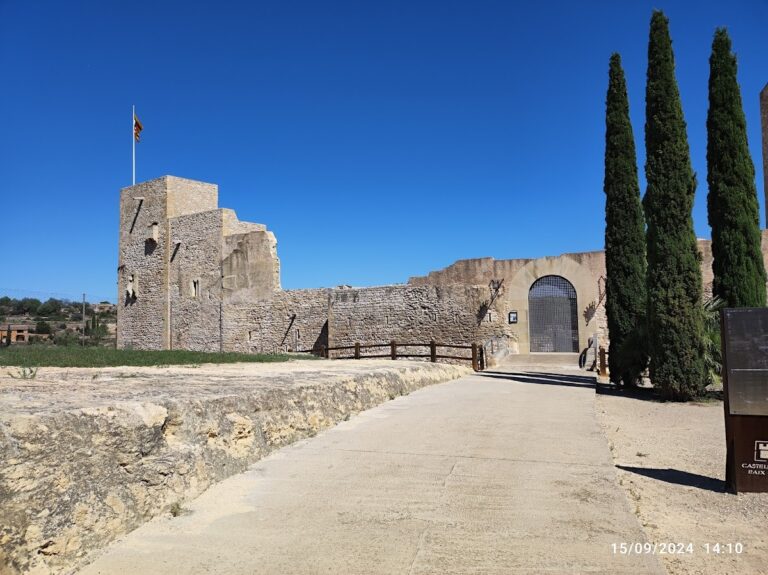
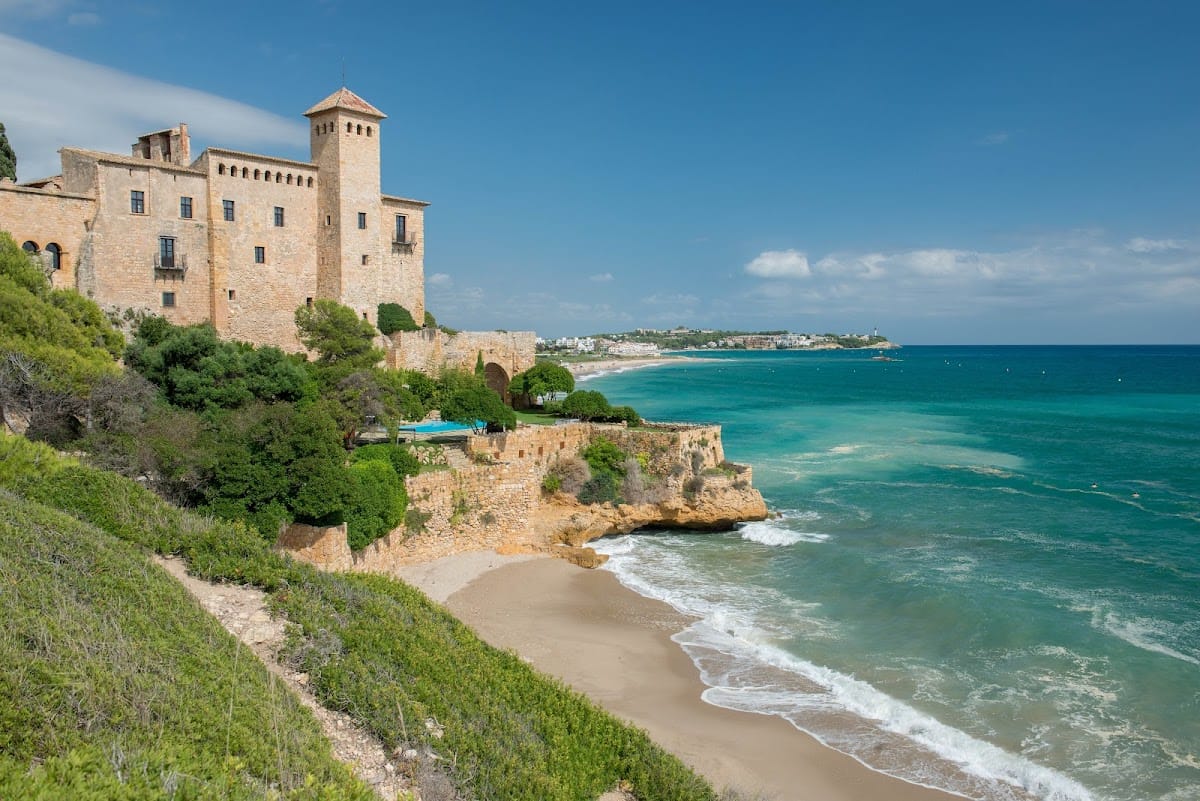
The Castell de Tamarit stands in the municipality of Tamarit, Spain, close to the Mediterranean coast near Tarragona. It was originally constructed by the medieval County of Barcelona during the 11th century as a defensive stronghold. This fortress played a crucial role in guarding the coastline from pirate raids by Berber and Ottoman forces during the period known as the Reconquista.
The earliest known lordship over the castle dates back to 1049, when Bernat Sendred de Gurb held the site before transferring ownership to Ramon Berenguer I. Shortly thereafter, in 1060, the castle was granted as a fief to Bernat Amat de Claramunt, who became the first viscount of Tarragona and the lord of Tamarit. The Claramunt family maintained control over the fortress through the 13th century, with documented inheritance disputes resolved by 1251. By the end of that century, the castle’s ownership became connected to the royal family through marriage when Guillema de Claramunt wed the infant Pere.
Throughout the 14th century, the castle came under the administration of the Archbishopric of Tarragona. This ecclesiastical authority retained possession until the 19th century, sharing jurisdiction from 1681 onward with the Montserrat family. The monarch Charles II honored Francisco de Montserrat with the noble title of Marquis of Tamarit during this era. In medieval times, the castle and its adjoining port served as important economic centers; the port was among the ten principal ports in Catalonia and held rights to collect tolls, reflecting its commercial significance.
The castle’s prosperity declined after the 15th and 16th centuries due to repeated attacks, and by the 19th century, the surrounding village was abandoned following an outbreak of malaria. In the early 20th century, the site changed hands when the Archbishop of Tarragona sold it in 1916 to Charles Deering, a wealthy American industrialist. Deering undertook a restoration campaign inspired by romantic aesthetics, guided by the noted artists Ramon Casas and Joan Ruiz, preserving the castle’s Romanesque, Gothic, and Renaissance architectural elements.
During the Spanish Civil War in the 1930s, anarchist forces considered destroying the castle’s church and its Baroque altarpiece. However, they refrained after learning of Deering’s ownership and his cultural patronage. Since 1992, the castle has been the property of the Catalan real estate firm Betren, which utilizes the site primarily for private gatherings. The castle complex, together with its medieval village walls and the surviving gates known as Porta de la Mora and Porta de la Creu, was officially declared a protected cultural heritage site (Bien de Interés Cultural) in 1988.
Remains
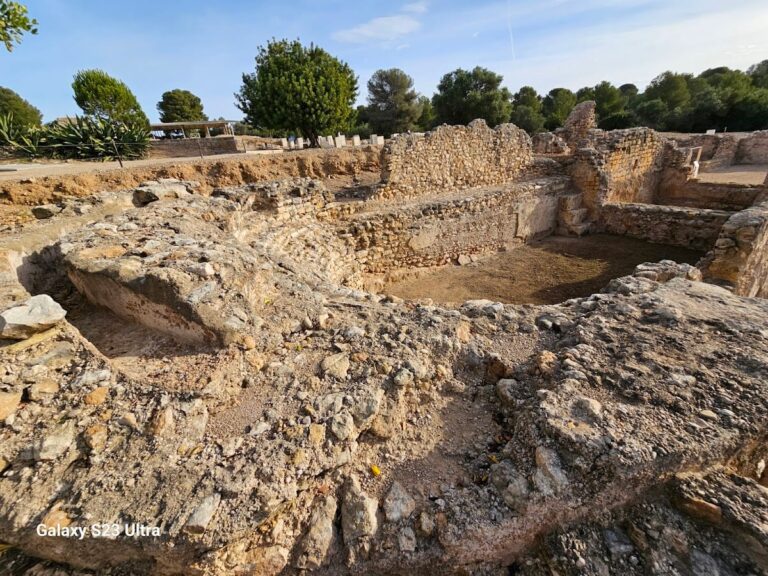
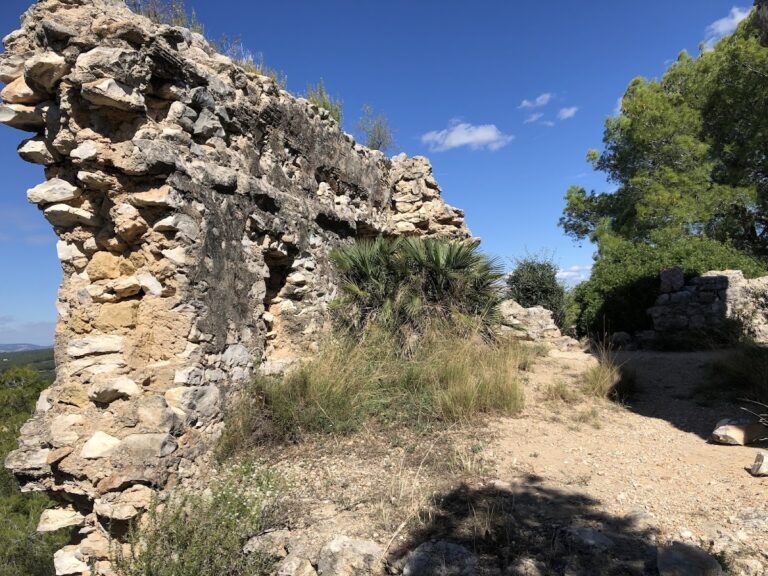
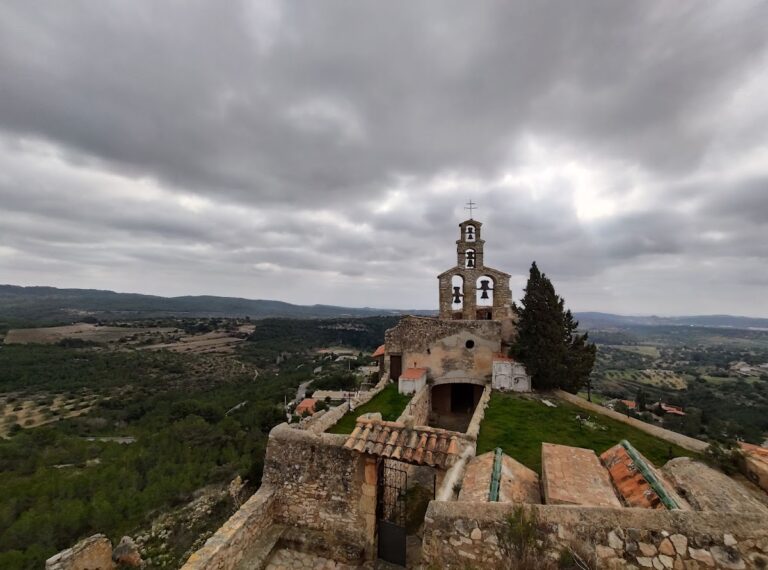
The Castell de Tamarit complex is situated on a rocky promontory overlooking the Mediterranean Sea and includes not only the castle itself but also a fortified medieval village known as a vila closa. The village is enclosed by defensive walls, which remain well preserved especially on the western side. Originally, four gates controlled access to the settlement; today, two remain intact: the Porta de la Mora and the Porta de la Creu. These gates served as fortified entry points and illustrate the defensive design of the enclosure.
Central to the complex is the castle’s Romanesque tower, a square structure built adjacent to the church. The northern face measures approximately 4.65 meters in length and is constructed from large, finely cut stone blocks called ashlar, each about 30 by 50 centimeters. The southern section of this tower shows later reconstruction using a different masonry style and includes a battered base, where the walls slope outward at the bottom to strengthen the foundation.
The church of Santa Maria de Tamarit, first recorded in 1154, occupies a prominent place within the castle grounds. This Romanesque building features a simple rectangular nave topped by a pointed barrel vault, an elongated semicylindrical ceiling shaped somewhat like a tunnel, supported across its width by two transverse arches. The square-shaped apse at the east end includes a ribbed vault, where arched ribs intersect, characteristic of Gothic architecture. The church was later expanded with side chapels to accommodate evolving liturgical practices.
Architectural details visible on the church include double-splayed windows—openings that widen both inward and outward to allow light and defend against attackers—some of which have since been closed off. One blocked lateral window retains a semicircular arch made from nine wedge-shaped stones, called voussoirs, that distribute weight evenly. Several sculptural fragments survive, including two column shafts, four decorated capitals (the uppermost parts of columns), and a string course, which is a continuous horizontal band encircling the building. Among the capitals, one features a geometric pattern carved into porous limestone containing fossils, while two others display pairs of lions and gryphons sculpted in sandstone. The remaining capitals and fragments lack ornamentation.
Inside the church, the right chapel is dedicated to Saint James and holds a white marble tomb slab commemorating Arnau de Tamarit, a knight and founder of the chapel who died in 1282. This grave marker is adorned with two coats of arms symbolizing the Tamarit and Montoliu families, linking the building’s history to the local nobility.
The castle’s interior also houses a notable collection of antique furnishings and a Baroque altarpiece within the church, illustrating the varied artistic layers accumulated over centuries. Overall, the Castell de Tamarit preserves an array of Romanesque, Gothic, and Renaissance elements that testify to its long and complex history.
Nearby sites