Zumaglia Castle: A Medieval Fortress in Ronco Biellese, Italy


Visitor Information
Google Rating: 4.3
Popularity: Low
Google Maps: View on Google Maps
Country: Italy
Civilization: Unclassified
Remains: Military

History
Zumaglia Castle stands on a hilltop within the municipality of Ronco Biellese in Italy. It was erected by a medieval civilization during the late 13th century. The earliest recorded construction dates back to 1291, when the castle was built on the summit of what is now known as the Brich di Zumaglia, replacing an older fortress previously occupying the site.
In the early 14th century, around 1329, the castle underwent significant fortification. This work was commissioned by Lombardo della Torre, who was the bishop of Vercelli and a local feudal lord. His involvement underscores the castle’s importance both as a religious authority’s stronghold and a defensive structure within the region.
The castle’s military role became evident in the mid-16th century when it experienced destruction. In 1556, troops serving Henry II of France bombarded the fortress, resulting in its ruin. Following this event, the castle lay in a state of abandonment for almost four hundred years.
In the 20th century, a revival of interest in the castle’s historical significance led to its reconstruction. In 1937, Count Vittorio Buratti undertook efforts to rebuild the fortress, restoring it after centuries of decay. Decades later, in 1995, the area surrounding Zumaglia Castle, including Brich di Zumaglia and Mont Prève, was officially established as a protected park zone, highlighting its cultural and environmental value.
Since 2013, the castle has been entrusted to a theater company known as a.r.s. Teatrando. They use the site to host a variety of cultural events, transforming the site into a space for exhibitions, receptions, music performances, and an annual summer theater festival. This modern function connects the historical legacy of Zumaglia Castle with contemporary cultural expression.
Remains
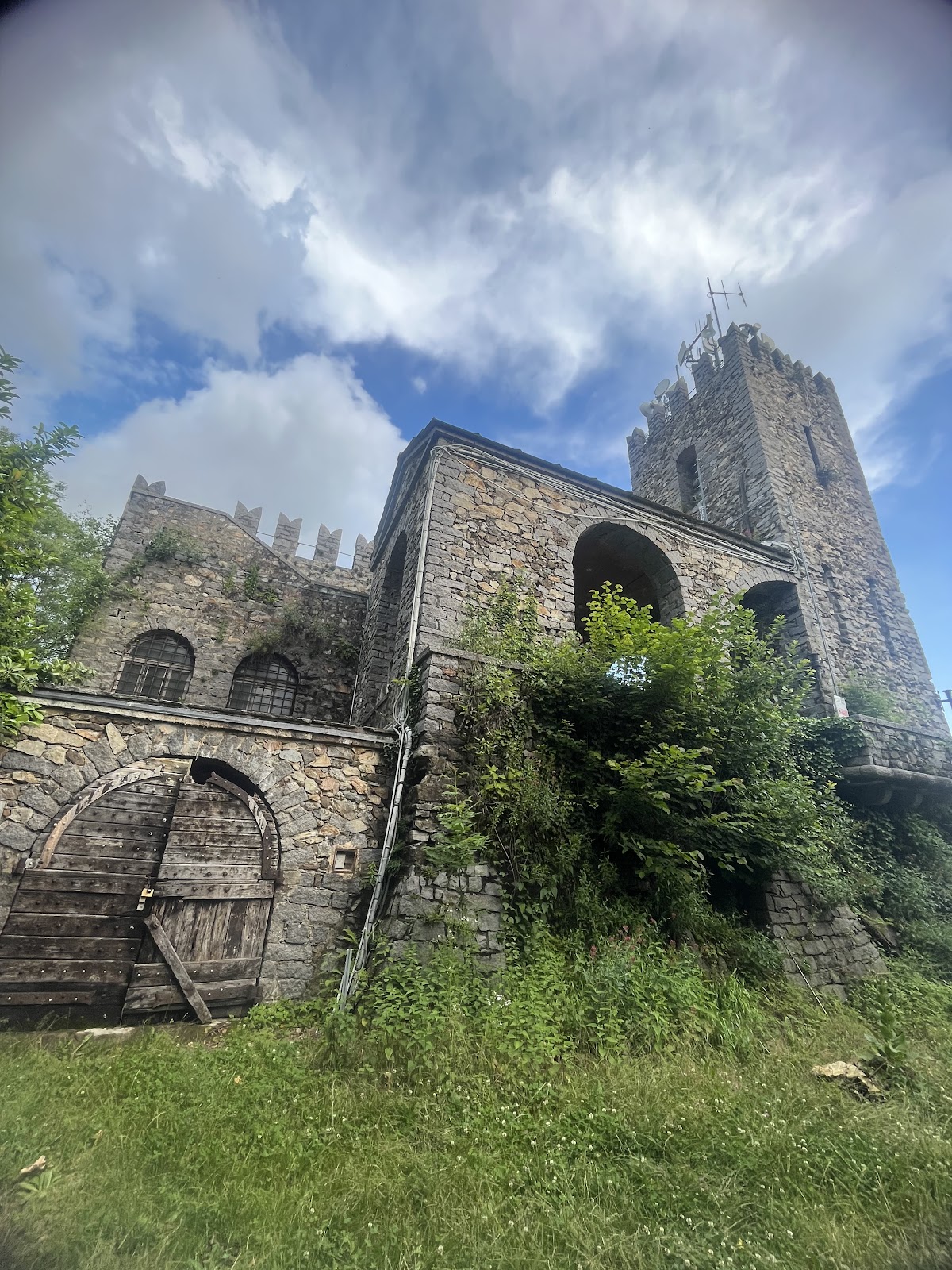
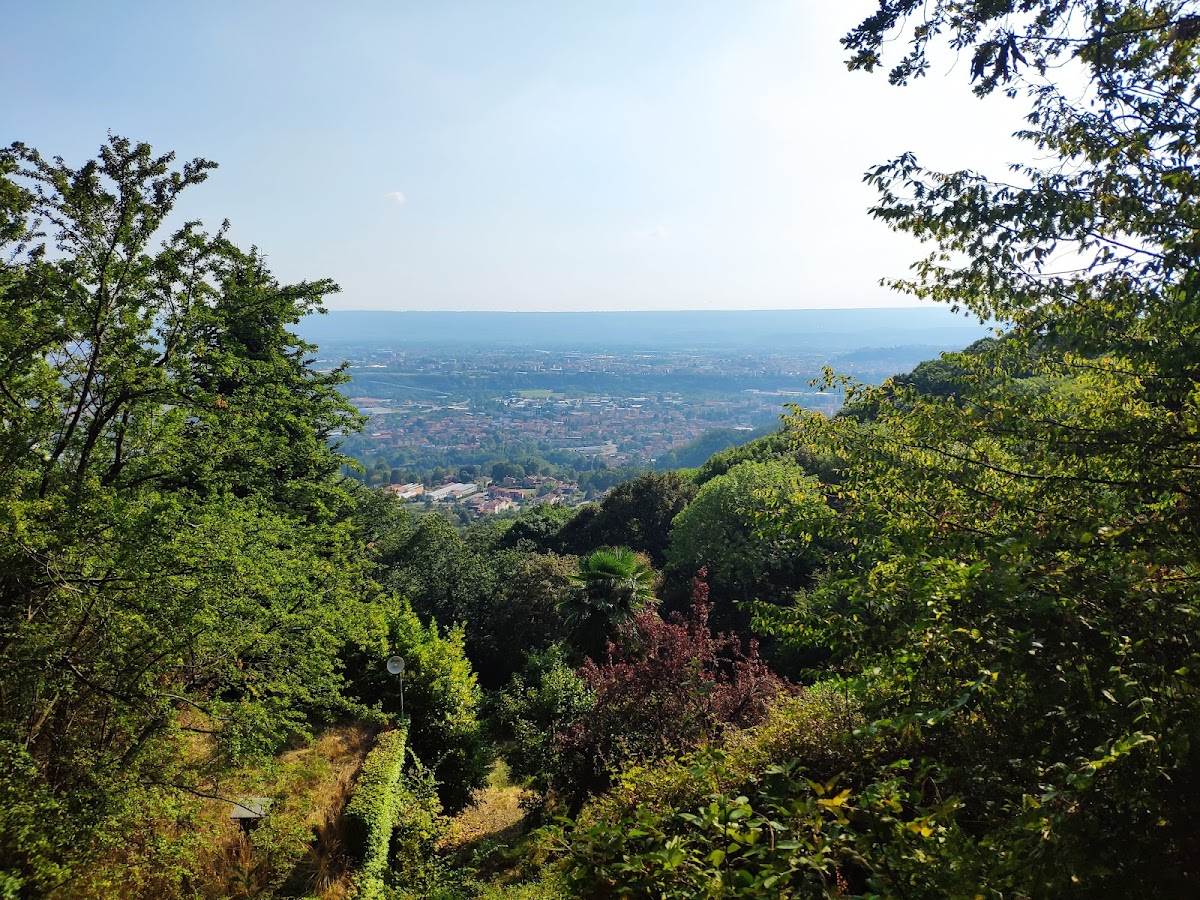
Perched 669 meters above sea level at the top of Brich di Zumaglia, the castle retains its commanding position over the surrounding Biella landscape. It is enveloped within a spacious park that boasts dense and varied vegetation, including trees of rare or exotic kinds that have reached notable sizes. This natural setting complements the historic character of the site.
Access to the fortress is facilitated by two cobbled footpaths and a dirt road, which ascend from the nearby sports center of Ronco Biellese or from the saddle between Brich di Zumaglia and Mont Prève. At this saddle, a parking area with capacity for several dozen vehicles accommodates visitors arriving by car. The proximity of the castle to the Grande Traversata del Biellese, a long-distance hiking trail spanning 234 kilometers, situates it within a broader network of regional pathways.
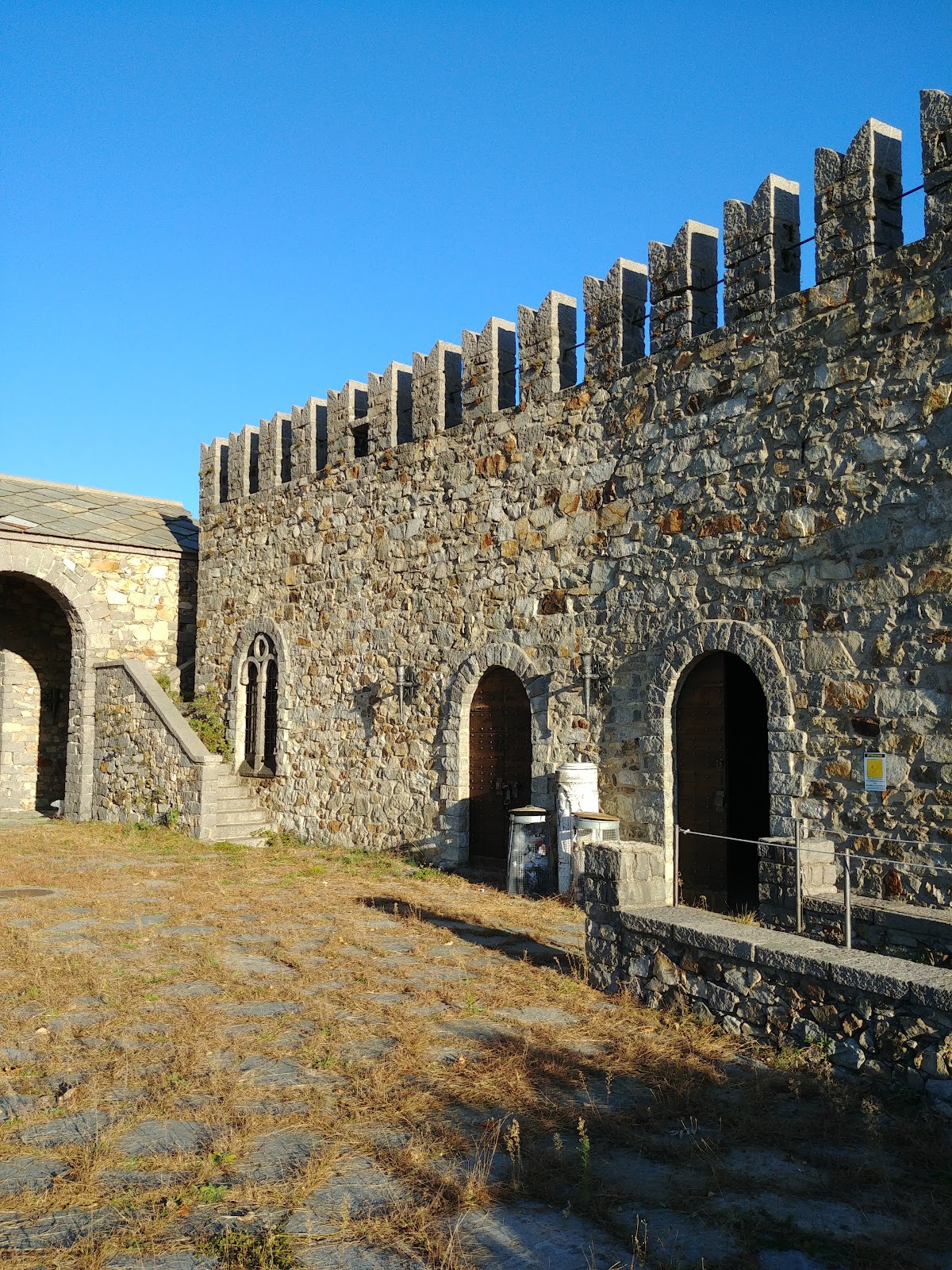
The castle’s walls serve a functional and cultural purpose today. During the summer theater festival produced by its resident company, theatrical scenes are performed directly on these ancient walls. This use preserves the medieval structures as active stages, linking their historic defensive role with performance art.
The castle’s current form owes much to its 20th-century reconstruction efforts, which restored it from centuries of ruin following its destruction in the 16th century. While specific architectural details such as building materials, decorative motifs, or inscriptions are not documented here, the restored structure continues to evoke the medieval origins and historical evolution of Zumaglia Castle.
Nearby sites