Burg Zievel: A Medieval Castle in Germany


Site at a Glance
- Rating
- 4.4
- Popularity
- Low
- Country
- Germany
- Primary era
- Early Modern
- External website
- Open
- Eras represented
- Medieval, Early Modern, Modern
- Civilizations
- German, Holy Roman Empire
- Site type
- Military
- Remains
- Castle
On this page11 sections
History
Burg Zievel is a medieval castle in Germany near Lessenich, now part of Mechernich, whose documented history reaches back to 1107. Its changing ownership reflects almost a millennium of regional noble power, while the complex was later reshaped by the Metternich and Krewel families.
Medieval lordship
In 1107, Burg Zievel belonged to the Counts of Limburg. A document from 1169 mentions Gerhardus de Zivele, providing an early connection between the castle and the family name associated with it. In 1190, the property briefly came under Philipp von Heinsberg, the Archbishop of Cologne.
By 1234, Burg Zievel had returned as a free lordship to the noble Lords of Daun. A free lordship was territory held directly by a noble lord rather than incorporated into a higher territorial domain. The Lords of Daun later adopted the name von Zievel. During the fourteenth century, the castle passed to the Schmeich von Lissingen family. From 1337, the knight Johann Schmeich von Lissingen held it together with the villages of Lessenich and Rißdorf.
Metternich and Krewel ownership
Karl von Metternich acquired Burg Zievel in the fifteenth century. In the seventeenth century, inheritance brought the property to the Metternich-Müllenark family. By the end of the eighteenth century, it belonged to the von Roth family.
The Krewel family had leased the estate from 1766 and became its owner in 1822. They replaced the old manor house with a new building constructed between 1825 and 1828. The earlier house was demolished in 1828, giving the residential part of the complex its present nineteenth-century character.
Modern use
Burg Zievel remains privately owned and serves as a residential and business property. A club founded in 1994 and 1995 established an 18-hole golf course in the surrounding parkland. The castle is designated as an architectural heritage monument in North Rhine-Westphalia.
Remains
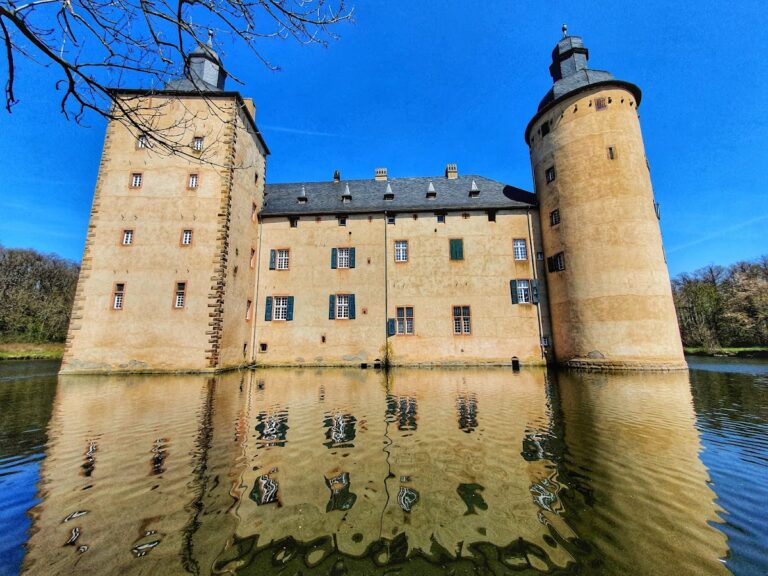
Burg Zievel occupies a rectangular plan at the southern edge of the forested Billiger Berg, near the valley of the Veybach. It was originally a moated castle, although the surrounding moats no longer survive. The surviving buildings form a well-preserved complex of medieval and later structures set within parkland containing old trees and reed-lined ponds.
Fortifications and seventeenth-century buildings
Western fortified tower
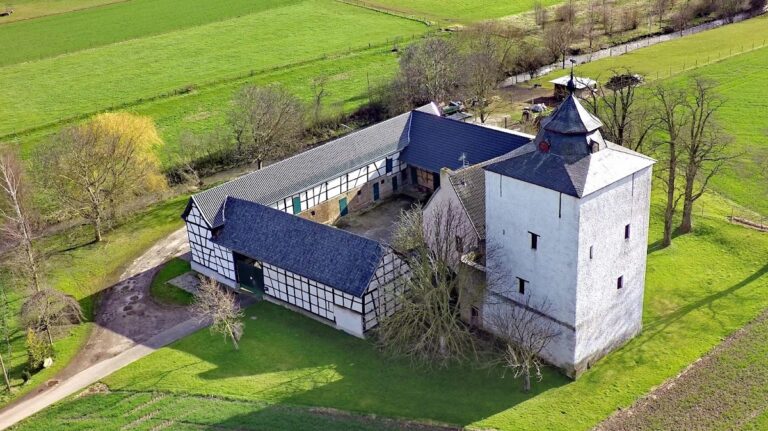
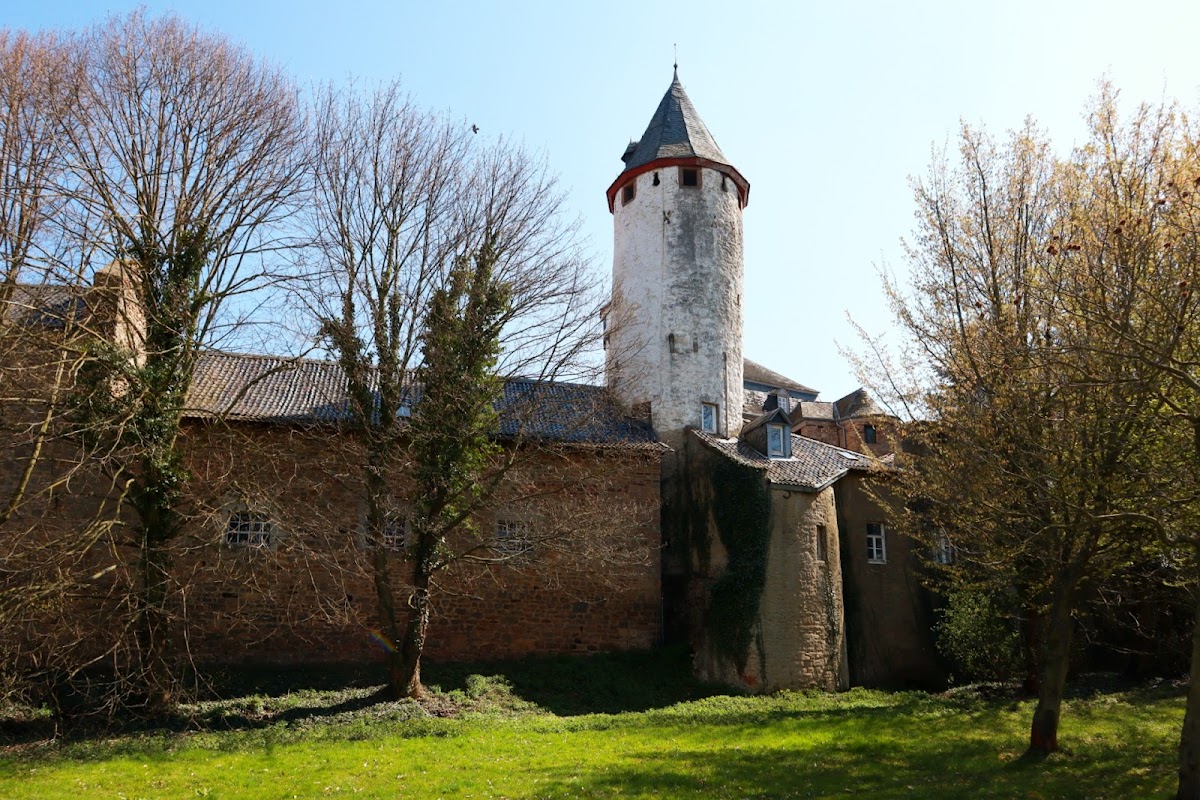
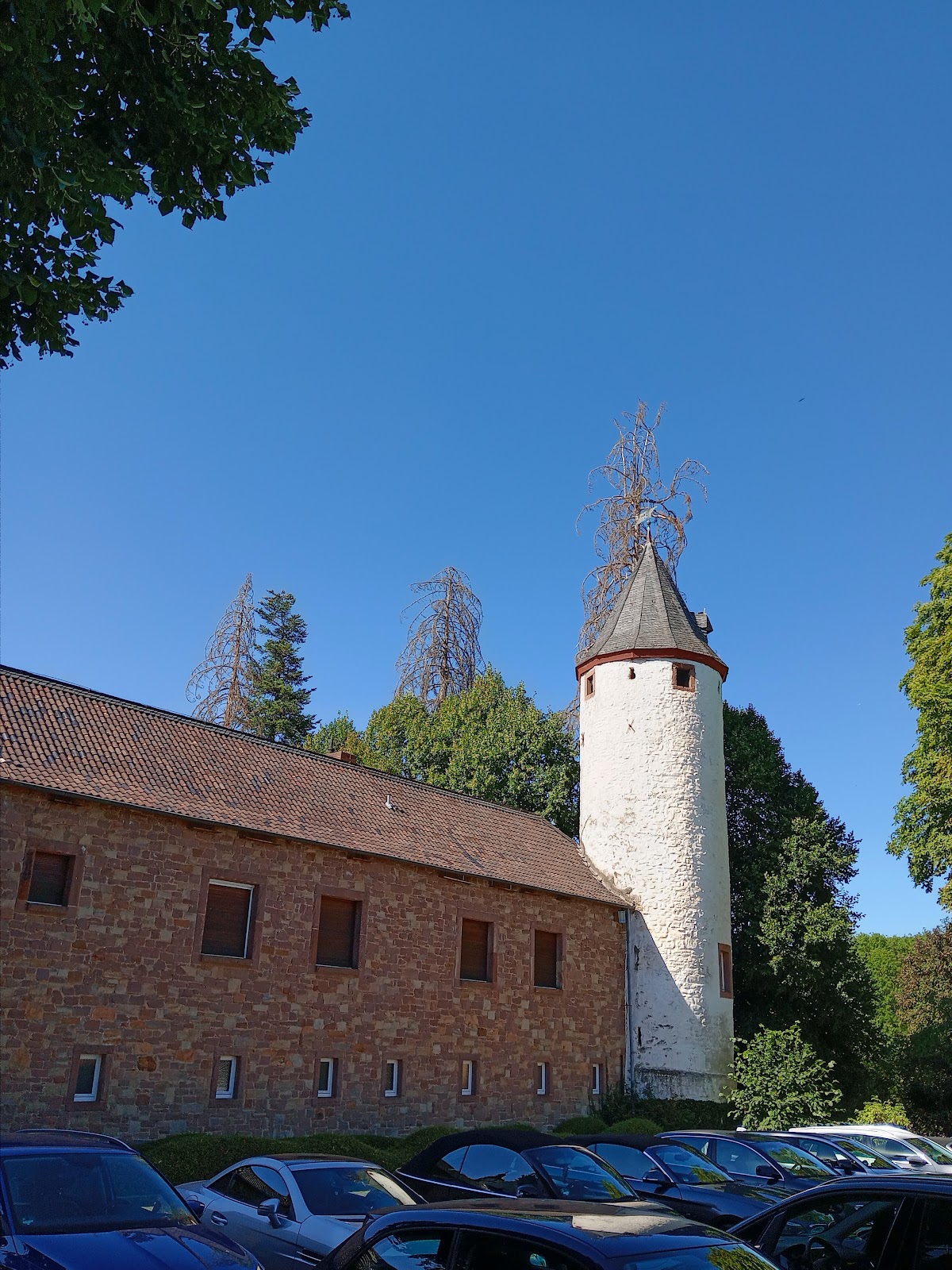
A round fortified tower stands on the western side of the complex. Its core derives from an older predecessor structure, while a Baroque roof and white exterior paint substantially alter its present appearance. The tower forms part of the castle’s surviving defensive fabric.
Gate towers and stepped-gable building
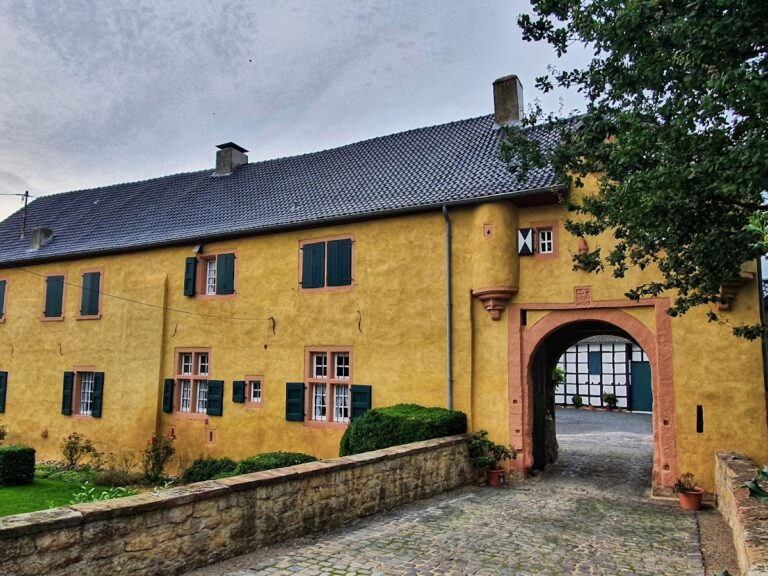
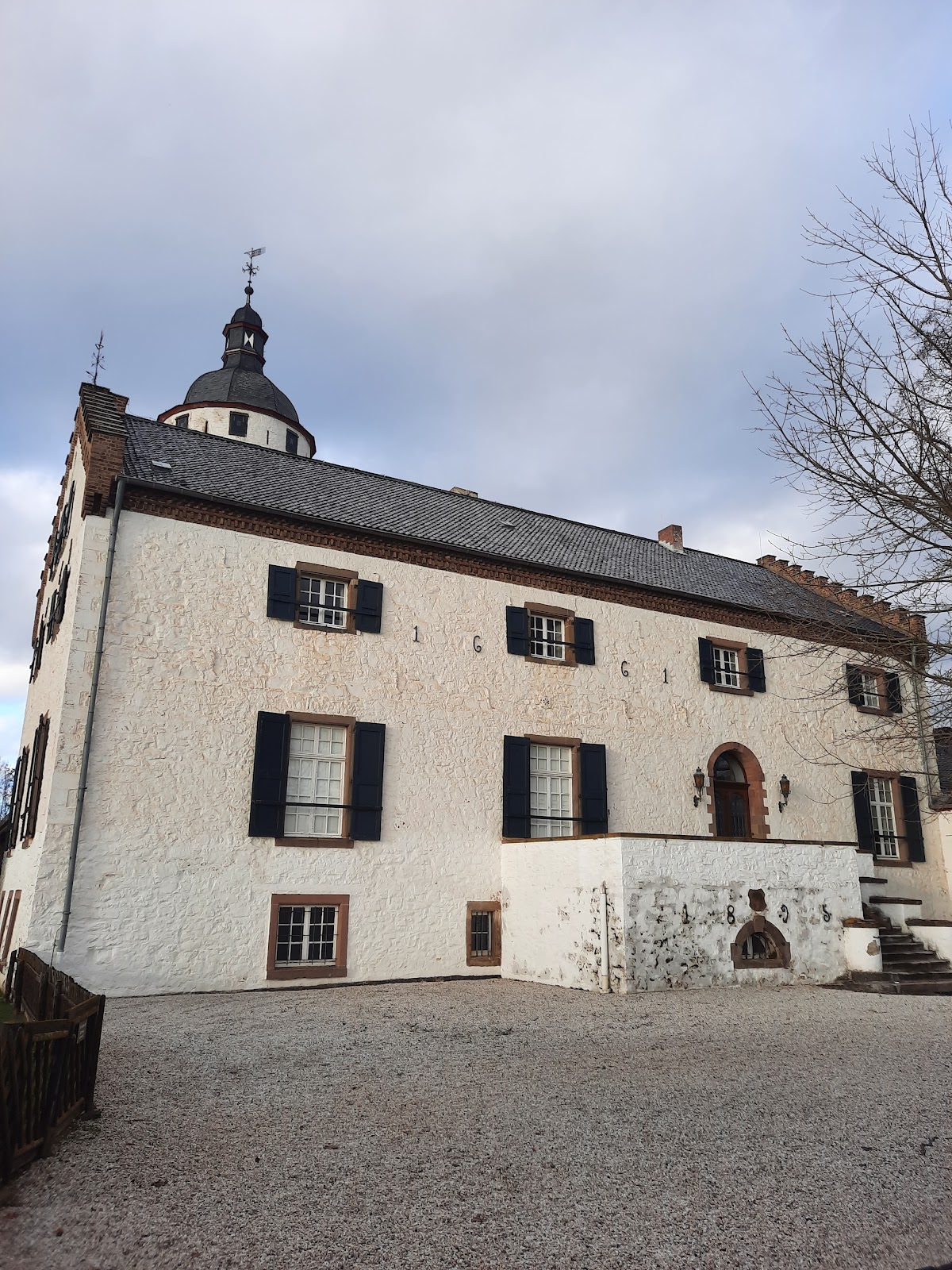
Gate towers occupy the southwestern and northwestern corners of the rectangular complex. Beside the western fortified tower stands a two-storey building with a stepped gable, whose sloping edges rise in a series of steps. The building bears the date 1661 and belongs to the expansion phase associated with the Metternich family.
Manor house and parkland
Nineteenth-century manor house
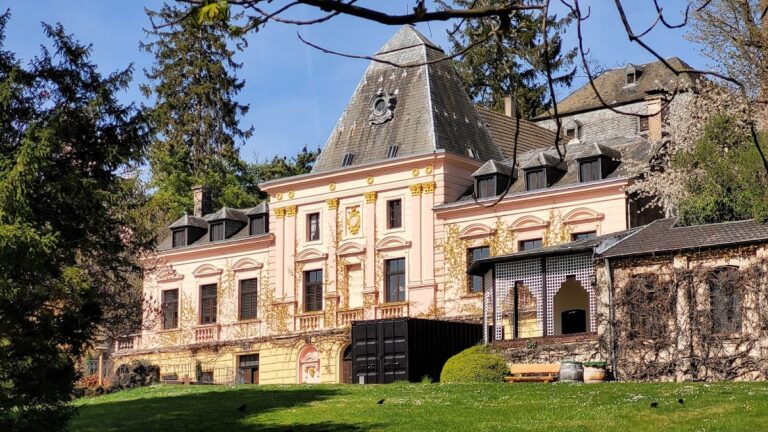
The present manor house was built between 1825 and 1828 and is painted pink. It replaced the earlier manor house demolished in 1828, forming the principal later residential building alongside the older fortified structures.
Landscape garden and later grounds
The park around the manor house, fortified tower, and ancillary buildings contains mature trees and ponds lined with reeds. These ponds once formed part of an English landscape garden. Some golf-course fairways now cross the partially hilly ground surrounding the castle.