Villa San Marco: A Roman Residential Complex near Stabiae



Visitor Information
Google Rating: 4.7
Popularity: Medium
Google Maps: View on Google Maps
Official Website: pompeiisites.org
Country: Italy
Civilization: Roman
Remains: Domestic

History
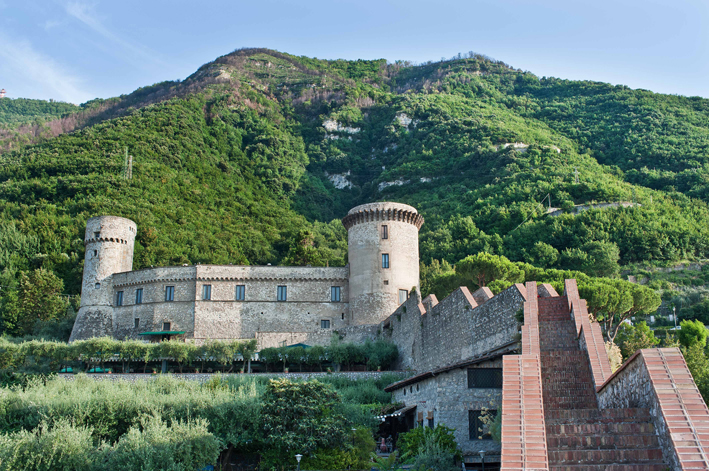
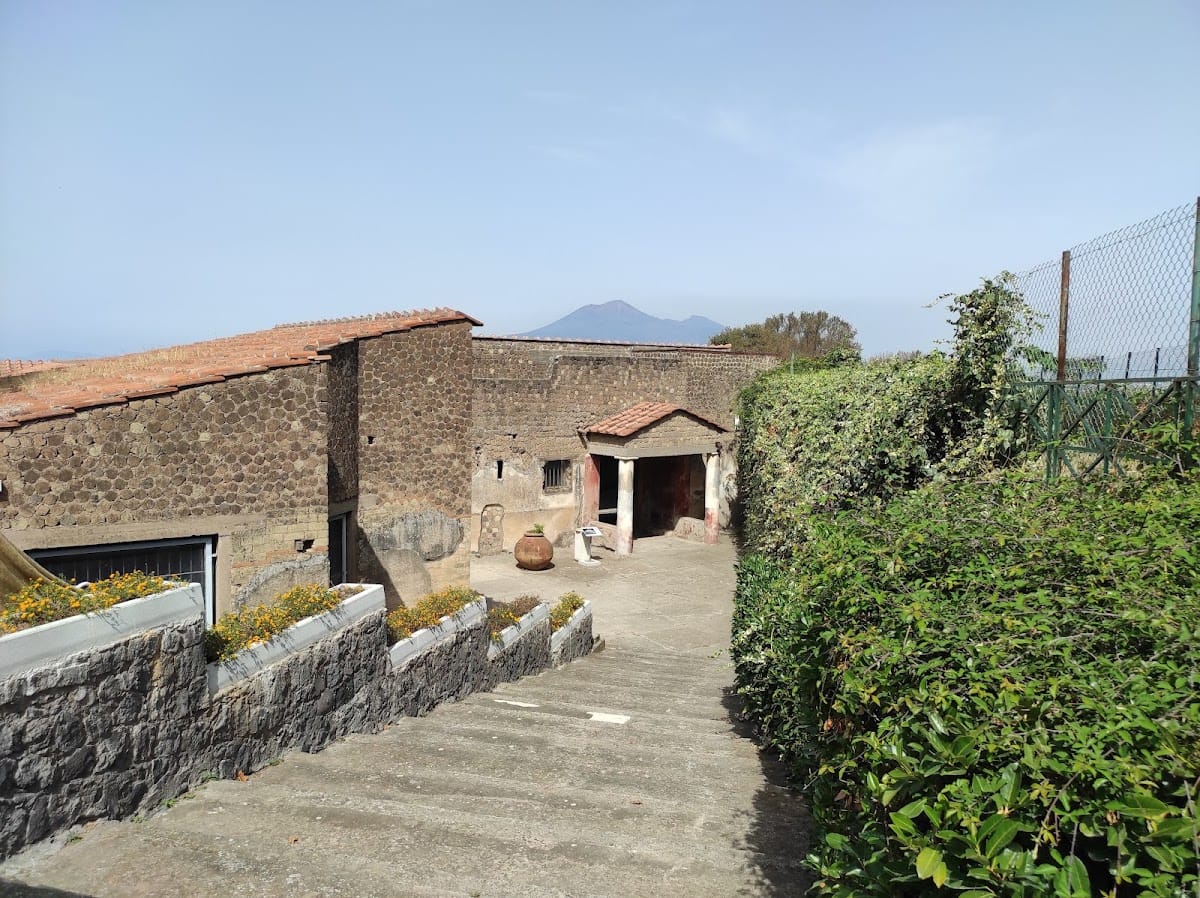
Villa San Marco is situated on the Hill of Varano near the ancient city of Stabiae, within the modern municipality of Castellammare di Stabia in Italy. This residential complex was constructed during the Roman period, specifically originating in the Augustan Age.
During the Augustan era, the villa was established as a luxurious countryside residence, taking advantage of its elevated position overlooking the Bay of Naples. In the subsequent Claudian period, the villa underwent significant expansion and reorganization, adapting its layout and functions to new aesthetic and practical preferences of the time. These modifications included the addition of elaborate gardens and bath complexes, indicating continued elite occupation and investment.
The villa’s name derives from an 18th-century chapel dedicated to St. Mark, erected on the site long after the Roman period. This later religious association influenced the modern designation of the villa but does not reflect its original Roman identity or use.
Excavations of Villa San Marco began in the mid-18th century under the reign of King Charles of Bourbon. Directed by Roque Joachin de Alcubierre and Carl Weber, these early investigations focused primarily on recovering decorative frescoes and furnishings. The villa was part of a broader archaeological campaign at Stabiae, which also included other prominent villas such as Villa del Pastore and Villa Arianna. Artifacts recovered during this period were initially housed in the Portici Royal Palace.
More systematic archaeological work resumed in the mid-20th century, with excavations conducted between 1950 and 1962. These efforts aimed to clarify the stratigraphy and architectural phases of the villa. Further stratigraphic excavations took place in 2011, followed by restoration projects completed between 2011 and 2012. These restorations addressed damage sustained during the 1980 earthquake, ensuring the preservation of the villa’s structural and decorative elements.
Remains
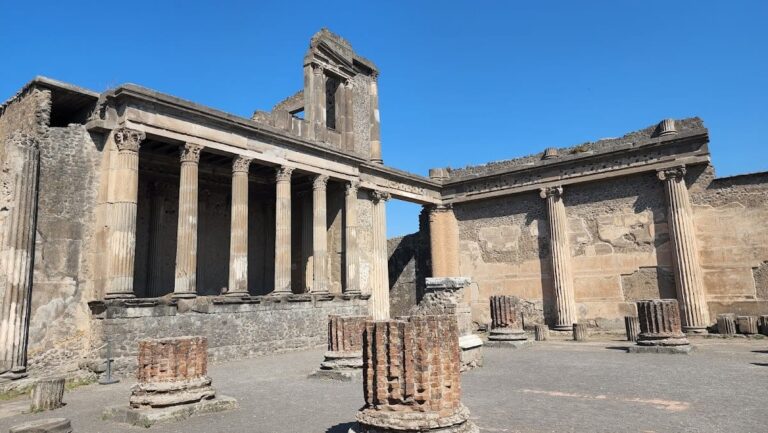
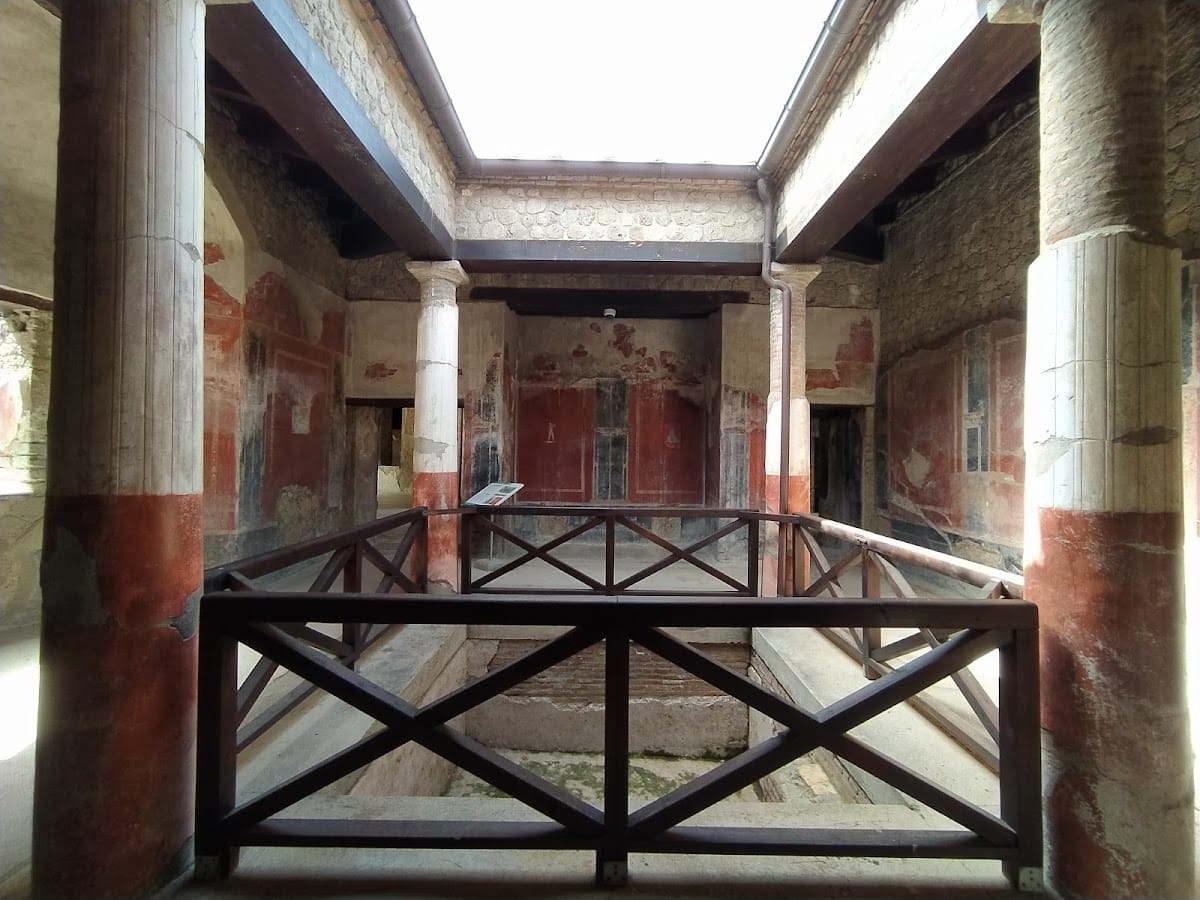
Villa San Marco encompasses approximately 11,000 square meters, making it one of the largest Roman villas in the Vesuvian area. The complex is situated on a hill, offering panoramic views of the surrounding landscape. Its architectural design follows an axial plan centered on a tetrastyle Ionic atrium, a formal reception space supported by four columns.
The original structure was later expanded with a three-sided portico featuring a colonnade of spiral columns. This portico enclosed a large garden with a swimming pool, creating a leisure area integrated into the villa’s layout. The main entrance, now buried, originally led into a porticoed courtyard that connected to the tablinum, or main reception room, and then to the atrium. Surrounding the atrium were four small cubicula, or bedrooms, and the thermal baths.
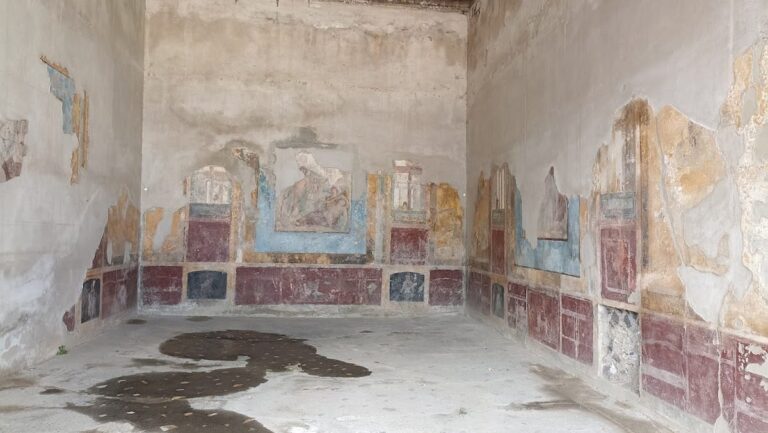
The bath complex is oriented obliquely relative to the villa’s main axis, aligned instead with a pre-existing street. It includes a small atrium decorated with frescoes depicting cupids, wrestlers, and pugilists, which were renovated in the 4th style of Roman wall painting during the Claudian period. The baths comprise a caldarium (hot bath) with a large basin, a tepidarium (warm room), and a frigidarium (cold bath) featuring a stepped pool. A travertine staircase with hairpin turns connected the villa’s elevated position to the coastal plain below.
The expansive porticoed garden contains a pool with a semicircular end wall adorned by a stucco-decorated nymphaeum, a monument dedicated to water nymphs. Adjacent rooms at the garden’s extremities were richly decorated and likely intended for relaxation and socializing.
The reception hall featured marble cladding on the lower walls and frescoes above. The portico ceiling, destroyed during the 1980 earthquake, was once fully painted with mythological scenes, indicating the villa’s decorative richness.
East of the atrium and tablinum lies a trapezoidal peristyle garden, centered on a large tree whose root molds remain visible. This garden was surrounded by rooms probably used as servants’ quarters or for food storage. The north wing of the peristyle included a monumental entrance with two semi-columns opening onto the public street. Near this entrance, a small room constructed with opus craticium (a Roman timber-frame technique) likely served as a doorkeeper’s lodge.
Two triangular rooms on the west side of the peristyle functioned as latrines. One smaller adjacent room, lined with hydraulic plaster to ensure water resistance, probably served as a cistern. This cistern is notable for having a window, which appears to have been a later addition.
A brick staircase located in the northwest wing connected the ground floor to the first floor, indicating the villa’s multi-level design. Several graffiti were discovered in the latrines, while a graffito near the entrance, dating from Bourbon times, contains a blessing invoking the Virgin Mary, reflecting the site’s later religious associations.
Restoration efforts have included protective coverings over the atrium, kitchen, frigidarium, corridors, and peristyles. These interventions have preserved the villa’s remains and allowed renewed access through the main entrance constructed in the 1950s.
Nearby sites