Villa Romana dei Nonii Arrii: A Roman Lakeside Residence on Lake Garda
Visitor Information
Google Rating: 4.3
Popularity: Very Low
Google Maps: View on Google Maps
Country: Italy
Civilization: Roman
Remains: Domestic

History
The Villa romana dei Nonii Arrii is located in the municipality of Toscolano Maderno, Italy, on the shores of Lake Garda. This grand residence was built by the Romans during the first century CE, serving as a luxurious home for the influential Nonii family, a prominent lineage in the Brescia area.
The villa experienced significant development in the early second century CE, a period that saw extensive modifications to its structure and decoration. Evidence suggests that the estate remained under the ownership of the Nonii family for several centuries, possibly until the early fifth century CE. An inscription found near the site identifies Marcus Nonius Macrinus, a notable figure who served as consul in 154 CE and later as proconsul of Asia in 170-171 CE, as the villa’s likely owner. This direct connection to a named individual is unique among the villas on Lake Garda.
Alongside its residential function, the villa complex included two temples dedicated to the Roman gods Jupiter and Bacchus, indicating that religious activities were an integral part of the estate. Over time, these pagan temples were altered or replaced by Christian buildings, reflecting the broader religious transformations occurring in the region during late antiquity.
Remains
The villa covers an extensive area of more than 15,000 square meters and is situated very close to the lake, with its main façade facing the water. The design includes a monumental loggia—a covered gallery with open sides—overlooking the lake, as well as projecting sections, known as avant-corps, on the northern and southern sides of the building.
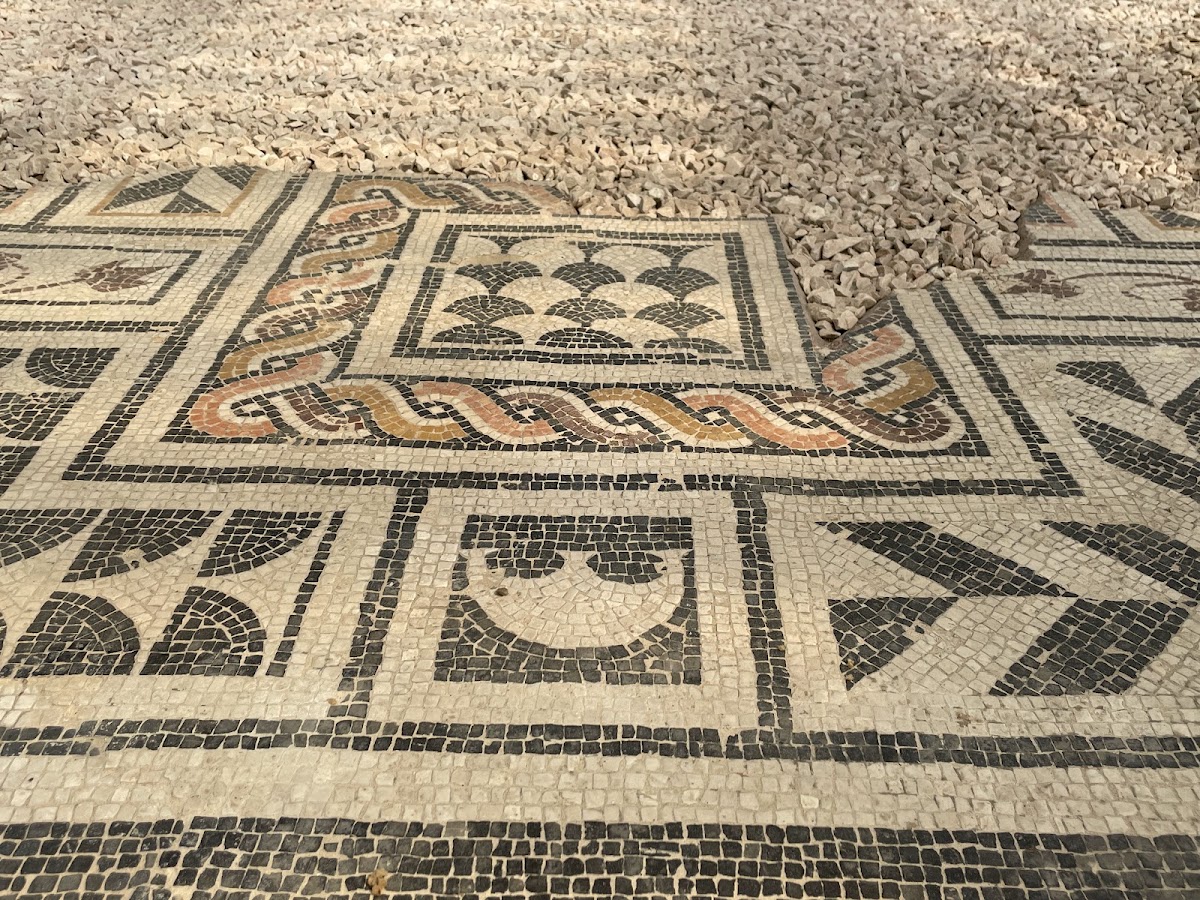
Archaeological excavations have revealed richly decorated interior spaces, including floors adorned with geometric mosaics and walls painted with frescoes that imitate marble surfaces. T
The site also contains the remains of two ancient temples, one dedicated to Jupiter, the king of the Roman gods, and the other to Bacchus, the god of wine and festivity. These sacred structures were part of the villa’s complex and were later modified or replaced by Christian constructions, marking a shift in religious practices at the site.
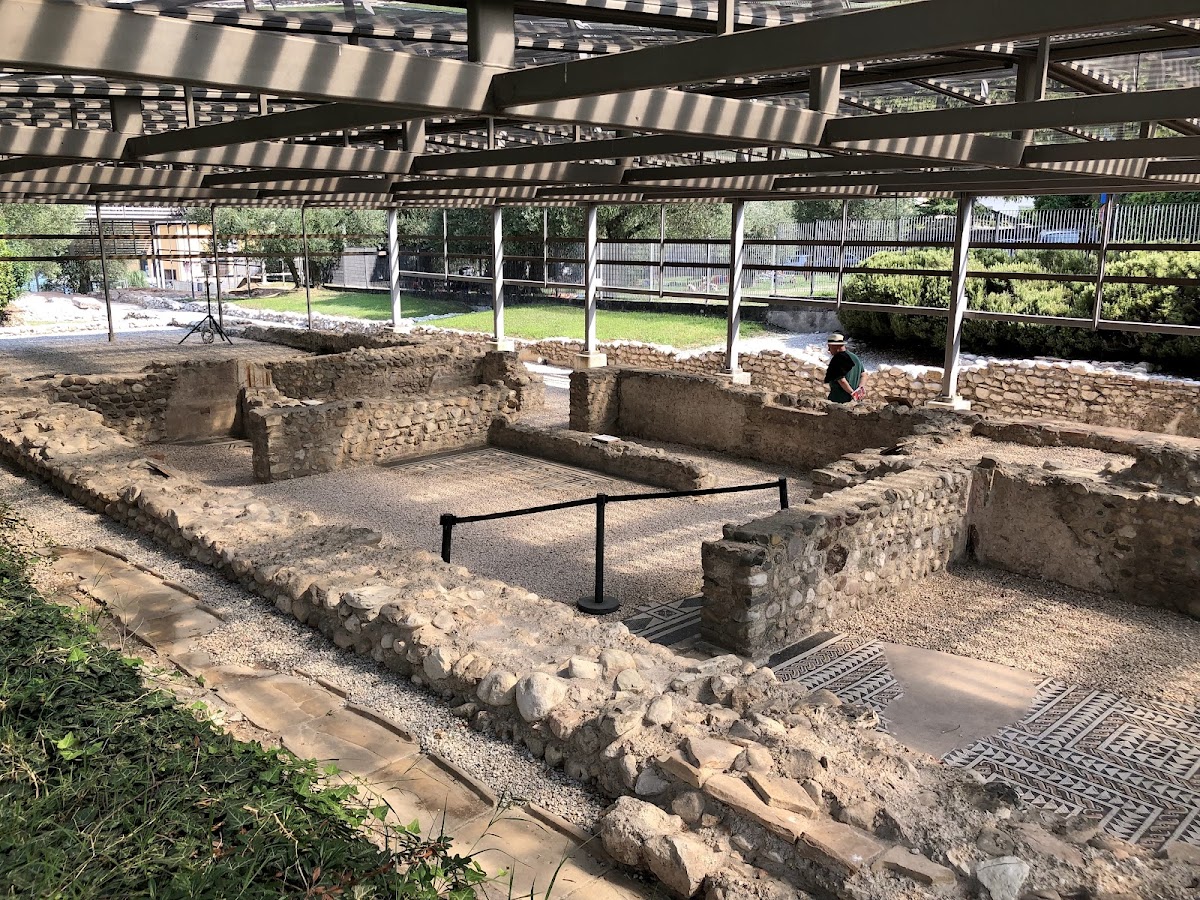
Today, the southern sector of the villa is preserved as an archaeological area, allowing visitors to observe the remains of the residential complex and the associated temples. The villa’s layout and decorative style place it among the notable Roman lakeside residences on Lake Garda, comparable to other important villas found at Sirmione and Desenzano del Garda.
Nearby sites