Castello Scaligero in Torri del Benaco: Fortress and Museum on Lake Garda


Site at a Glance
- Rating
- 4.5
- Popularity
- Medium
- Country
- Italy
- Primary era
- Medieval
- External website
- Open
- Eras represented
- Classical, Medieval
- Civilizations
- Lombard, Roman
- Site type
- Military
- Remains
- Castle
On this page8 sections
History
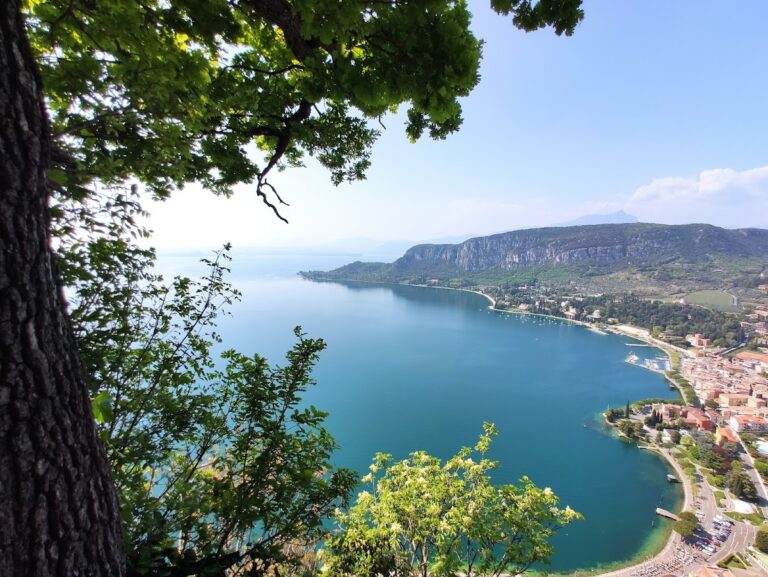
Castello Scaligero in Torri del Benaco is a fortress in Italy on the eastern shore of Lake Garda, with presumed Roman origins and later medieval and Venetian phases. Torri del Benaco may have been a Roman castrum, a fortified settlement or military camp, defended by Roman legions established around the lake in about 15 BC. During this period, the settlement was known as Tulles, and the western tower and a small harbor were already present.
Roman and Lombard Origins
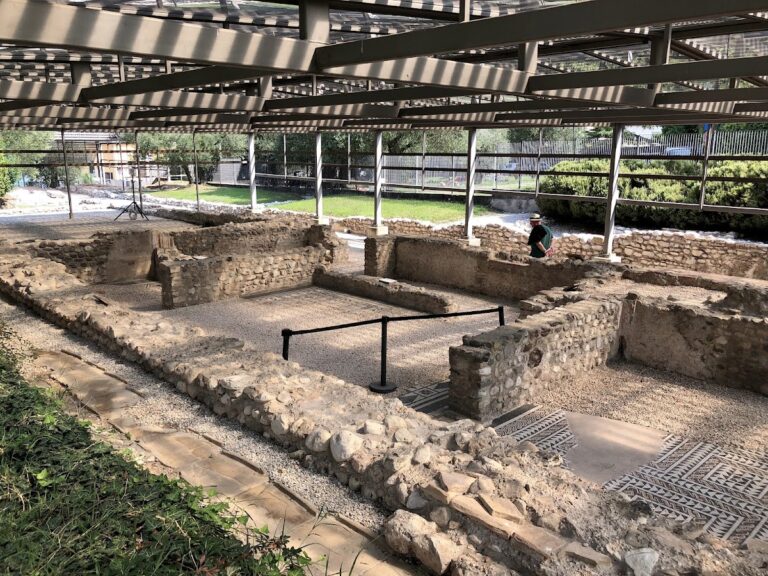
The western tower is considered earlier than the other towers and differs noticeably in its architecture. Its foundations contain remains of a Roman fort, linking the present fortress to the settlement’s earliest known defensive history. After the end of Roman imperial authority in the West, the site continued as a Lombard fort. The Lombards were a Germanic kingdom that ruled much of Italy during the early medieval period.
Berengar and the Medieval Stronghold
In the tenth century, King Berengar I of Italy is said to have restored the earlier stronghold to defend Monte Baldo and counter Magyar incursions. The Magyars, who established the medieval Kingdom of Hungary, conducted raids into northern Italy during the ninth and tenth centuries. Berengar also commissioned curtain walls, whose surviving remains extend between Torri’s historic center and the Gardesana. A tower bearing his name in Piazza della Chiesa is traditionally associated with this phase.
Torri del Benaco retained strategic importance during the twelfth century, including under Emperor Frederick Barbarossa. In the fourteenth century, the fortress became associated with the House of della Scala, the medieval ruling family of Verona, and acquired the name by which it is known today. In 1383, Antonio della Scala, the dynasty’s last lord, entrusted Bonaventura Prendilacqua with renovation work. A plaque on the western side of the western tower commemorates the undertaking.
Visconti, Carrara, and Venetian Rule
After several days of assault, the fortress was captured by the Visconti of Milan. The Carrara family of Padua also controlled Torri del Benaco for a time. In 1405, after Verona submitted to the Republic of Venice, the castle became Venetian. During the sixteenth century, it served as the seat of the Gardesana dall’Acqua, a Venetian military and administrative organization that policed Lake Garda, fought smuggling, and collected duties. Its commander held the title Capitano del Lago, or Captain of the Lake.
Decline and Recovery
The castle’s decline culminated in 1760, when the outer defensive circuit was demolished. A citrus garden and lemon house, a protected structure for sheltering citrus trees during colder months, replaced the former enclosure. After the fall of the Venetian Republic in 1797, the property passed to the Nuvolari counts and to Giuseppina Arduini. During the French administration, it continued to serve as a base for raids in the surrounding area.
The castle remained abandoned until 1980. Local residents, supported by the municipal administration, carried out its recovery, completed in 1983. The municipality had acquired the property in 1973, and the Museo del Castello Scaligero opened there in 1983. The ethnographic museum presents the culture and traditions of Lake Garda and its hinterland, including olive cultivation, fishing, boatbuilding, and the rock engravings of Torri del Benaco. The complex is recognized as Italian national heritage and as an Italian cultural property.
Remains
Fortress Layout and Defensive Structures
The surviving fortress covers approximately 590 square meters and consists of three towers, a keep, and connecting fortification walls. A keep is the principal or strongest tower in a medieval fortress. The three towers are associated with the name of the municipality, whose name refers to towers, while internal walkways run through the defensive complex and overlook Lake Garda. The western tower is architecturally distinct from the other two and preserves Roman fort remains within its foundations.
The tower associated with Berengar stands in Piazza della Chiesa and survives as part of the later fortification history. During the della Scala period, it was enclosed within the castle’s defensive walls. Remains of the curtain walls extend between the historic center and the Gardesana. These surviving walls belong to the wider defensive development, while the demolition of the outer circuit in 1760 left the present fortress structure separate from the former enclosure.
Citrus Grounds and Museum Spaces
The complex includes a citrus garden, a lemon house or citrus greenhouse, and a botanical garden containing principal plant species from the Lake Garda shore and hinterland. The museum occupies a series of spaces connected with local work and customs, including the well area, caulkers’ room, olive and press room, fishing room, lemon greenhouse, hall of the “Antichi Originari,” scale-model room, and rock-engravings room. Its displays include material relating to fishing and boatbuilding. A scale model reconstructs the historic center of Torri del Benaco at the beginning of the twentieth century.