Temple of Mars in Corseul: A Romano-Celtic Sanctuary in Brittany

Visitor Information
Popularity: Very Low
Google Maps: View on Google Maps
Country: France
Civilization: Roman
Remains: Religious

History
The Temple of Mars is located in Corseul, a commune in Brittany, in northwestern France. This site was part of the territory inhabited by the Coriosolites, a Celtic tribe during the Roman period. The sanctuary was built by the Roman-Celtic population around the middle of the 1st century CE, reflecting a blend of local and Roman religious traditions.
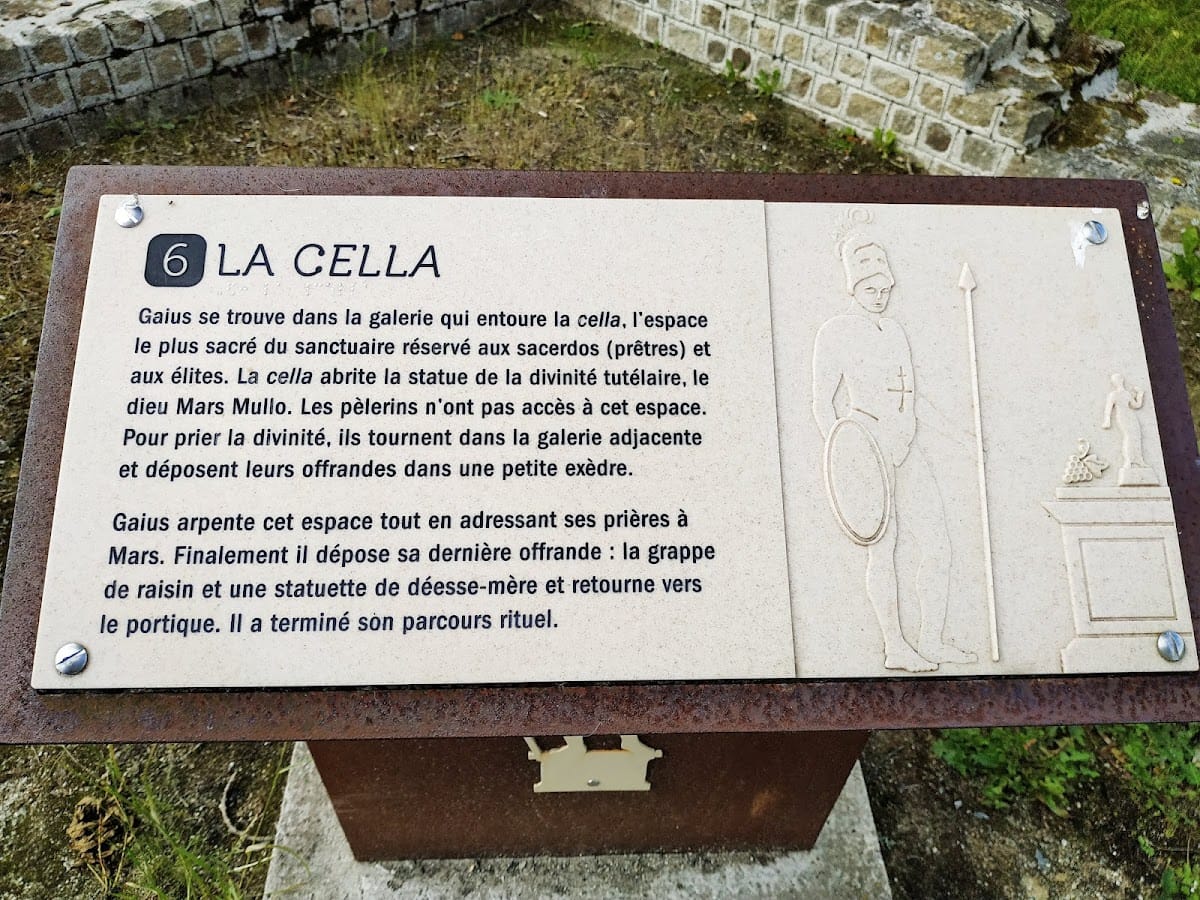
From its construction until the late 3rd century CE, the temple served as a religious center for the civitas of the Coriosolites. Pilgrims came to venerate a deity whose statue stood inside the temple’s octagonal cella, the inner chamber. Although traditionally called the Temple of Mars, there is no definitive evidence linking the sanctuary to the Roman god of war. The name likely reflects later interpretations rather than original dedication.
The temple was destroyed by fire sometime after 270 CE. This destruction may have resulted from raids by barbarian pirates along the English Channel coast or from local uprisings known as the Bagaudae, or possibly both. After this event, the site was abandoned and fell into ruin.
Interest in the temple revived in the early 18th century when engineer Simon Garengeau visited in 1709 and reported his observations to the Académie royale des inscriptions et médailles. In the 19th century, systematic excavations took place, and in 1869 Émile Fornier produced a detailed plan of the sanctuary. The temple was officially recognized as a historic monument in 1840, and the wider Gallo-Roman site received protection status in 1997.
Remains
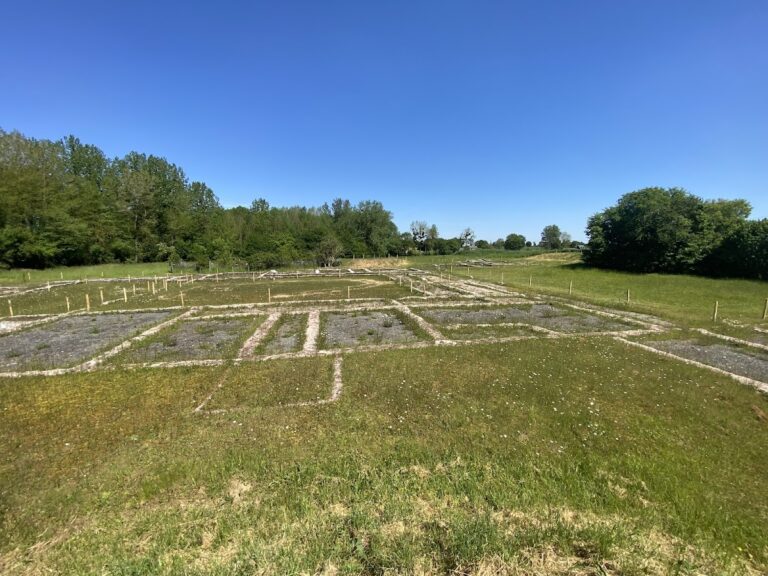
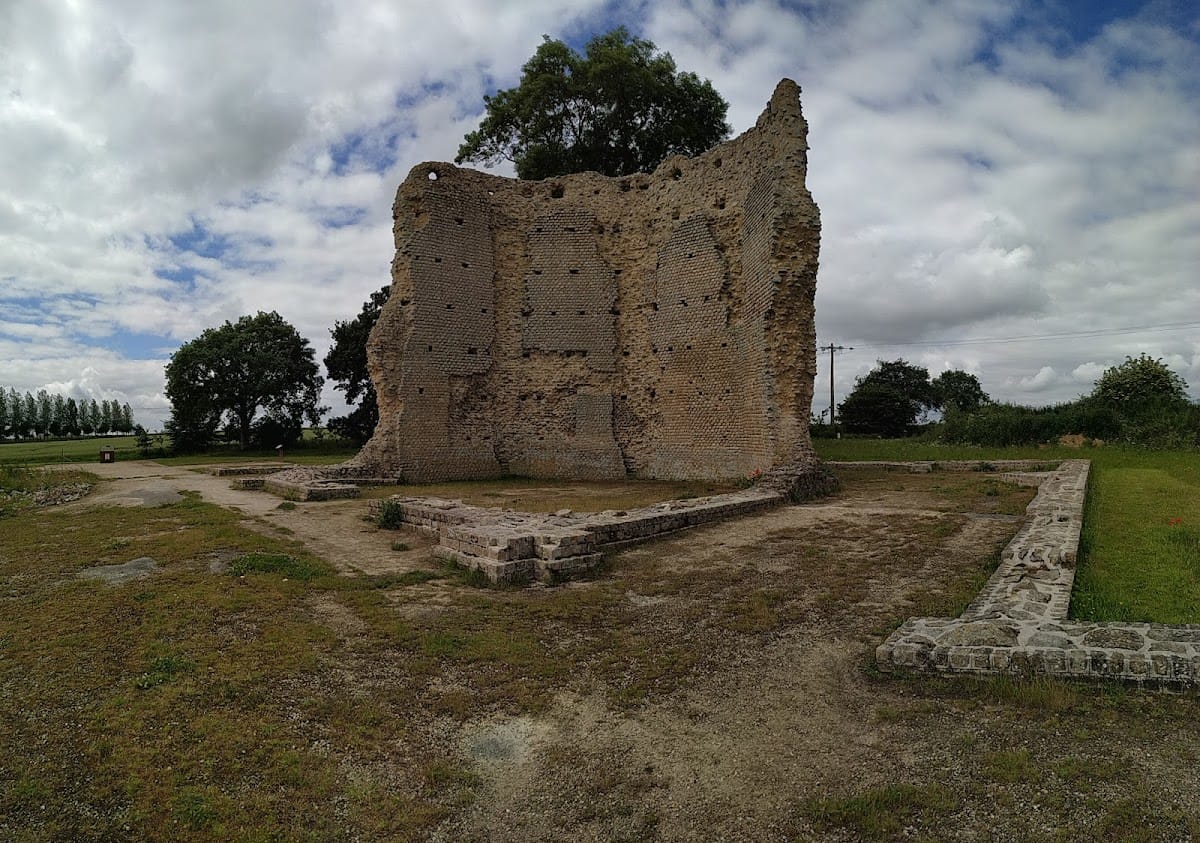
The Temple of Mars sanctuary covers nearly one hectare, measuring about 90 by 80 meters, making it one of the largest known religious complexes in ancient Gaul. The site features a courtyard enclosed on three sides by a gallery, creating a defined sacred space.
The most prominent structure is the octagonal cella, the temple’s inner chamber where the cult statue was originally placed. Three sections of the cella’s walls still stand, reaching approximately ten meters in height. The main building of the temple complex rises to 22.5 meters, making it the tallest Roman ruin in western France.
Construction materials include granite ashlar blocks and rubble, combined with shale rubble. Some of these stones were later reused in the 16th century to build the Haut-Bécherel farm, which occupies the northwest corner of the site. This farm was built on the foundations of the temple’s south gallery and included features such as a bread oven and a well. Originally, the farm consisted of five buildings, but these were demolished in 1997.
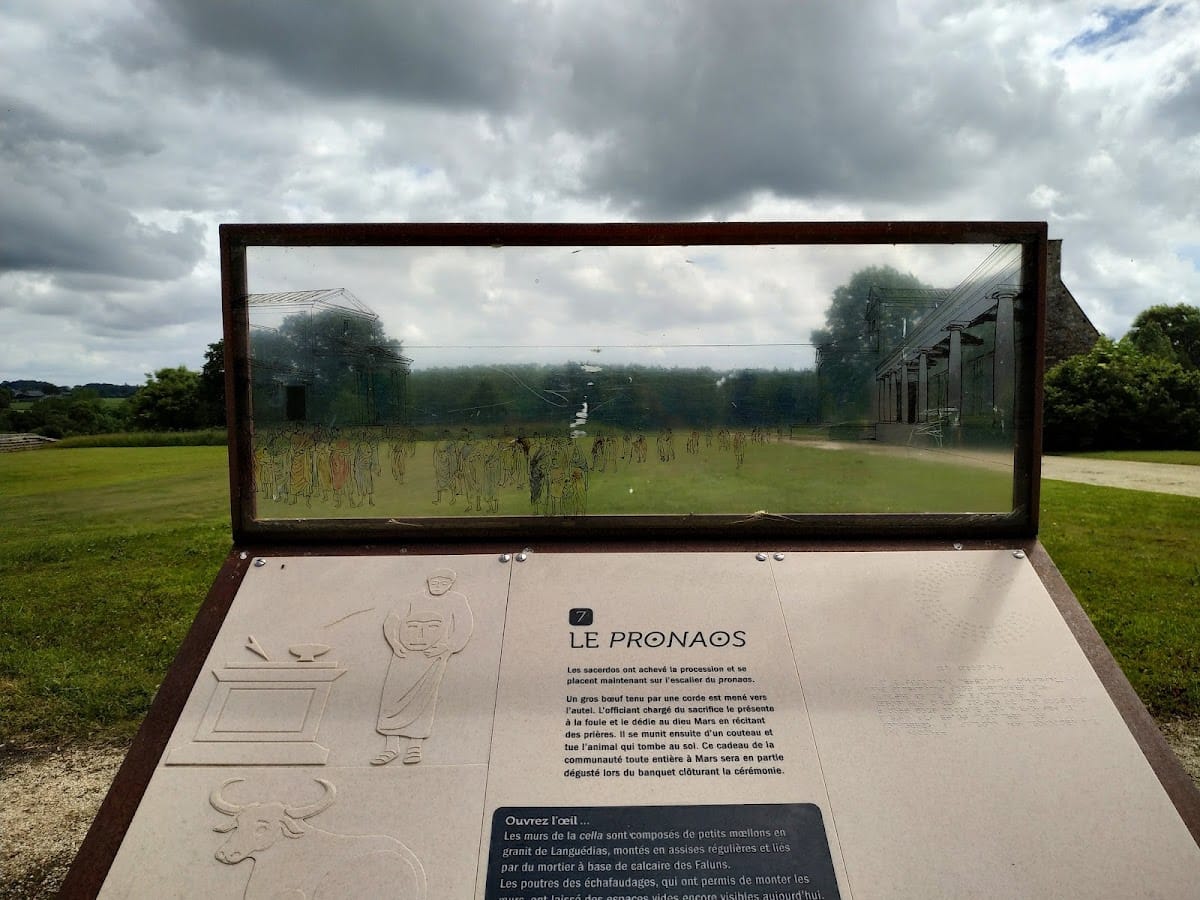
In 2016, a 3D digital reconstruction of the temple was created by Yann Bernard and Gaétan Le Cloirec. This model was based on archaeological findings and historical plans, providing a detailed visualization of the sanctuary’s original appearance.
Nearby sites