Gallo-Roman Villa of Lamarque: An Aristocratic Rural Estate in France
Site at a Glance
- Rating
- 4
- Popularity
- Very Low
- Country
- France
- Primary era
- Classical
- Eras represented
- Classical, Medieval
- Civilizations
- Merovingian, Roman
- Site type
- Domestic
- Remains
- Villa
On this page10 sections
History
The Gallo-Roman villa of Lamarque in France was an aristocratic rural estate built during the late first century AD over a Gallic farm dating from the first century BC. It stood about 6 kilometres southeast of Aginnum, the Roman settlement corresponding to modern Agen and the administrative centre of the local civic district in the province of Aquitania, a Roman province in southwestern Gaul.
From Gallic Farm to Gallo-Roman Estate
Construction began in the late first century AD and continued into the fifth century. The estate combined a residential and bathing sector with cultivated land and facilities for workers. Its greatest extent and prosperity came in the fourth century, when it covered about 1.5 hectares. The complex remained occupied after the Gallo-Roman period, at least until the sixth century, making it valuable for tracing changes in rural settlement across a long period.
Lamarque was not simply a residence but a large working estate whose different areas supported domestic life, agriculture, bathing, and labour. Its development reflects the organization of elite rural properties in ancient Aquitania and provides evidence for the relationship between an urban centre such as Aginnum and the countryside around it.
Transformation and Archaeological Study
During the sixth century, the site was transformed. Marble taken from columns and statues was reused in a lime kiln. The resulting lime was intended for transport by river to Aginnum, where it could be sold in the market or used in building construction. This reuse altered the earlier estate while showing how its materials continued to serve the needs of the post-Roman community.
Boudon de Saint-Amans made the first scientific study of Lamarque in the nineteenth century, identifying underfloor heating systems, mosaics, and coins. Six excavation campaigns between 1986 and 2000 later demonstrated the scale and importance of the villa, although only a small part of the estate was investigated. Lamarque is particularly important for the study of ancient rural settlement and for understanding the transition from Antiquity to the Middle Ages.
The site’s later interpretation has also included a possible connection with Foy of Agen, a Christian martyr traditionally associated with Agen and dated by tradition to the late third century. In 2014, the Benedictines of Saint-Pierre-de-Clairac proposed that Foy, who was born around 291 into a Gallo-Roman noble family, may have been born in a large villa such as Lamarque. This remains a possibility rather than an established identification.
Remains
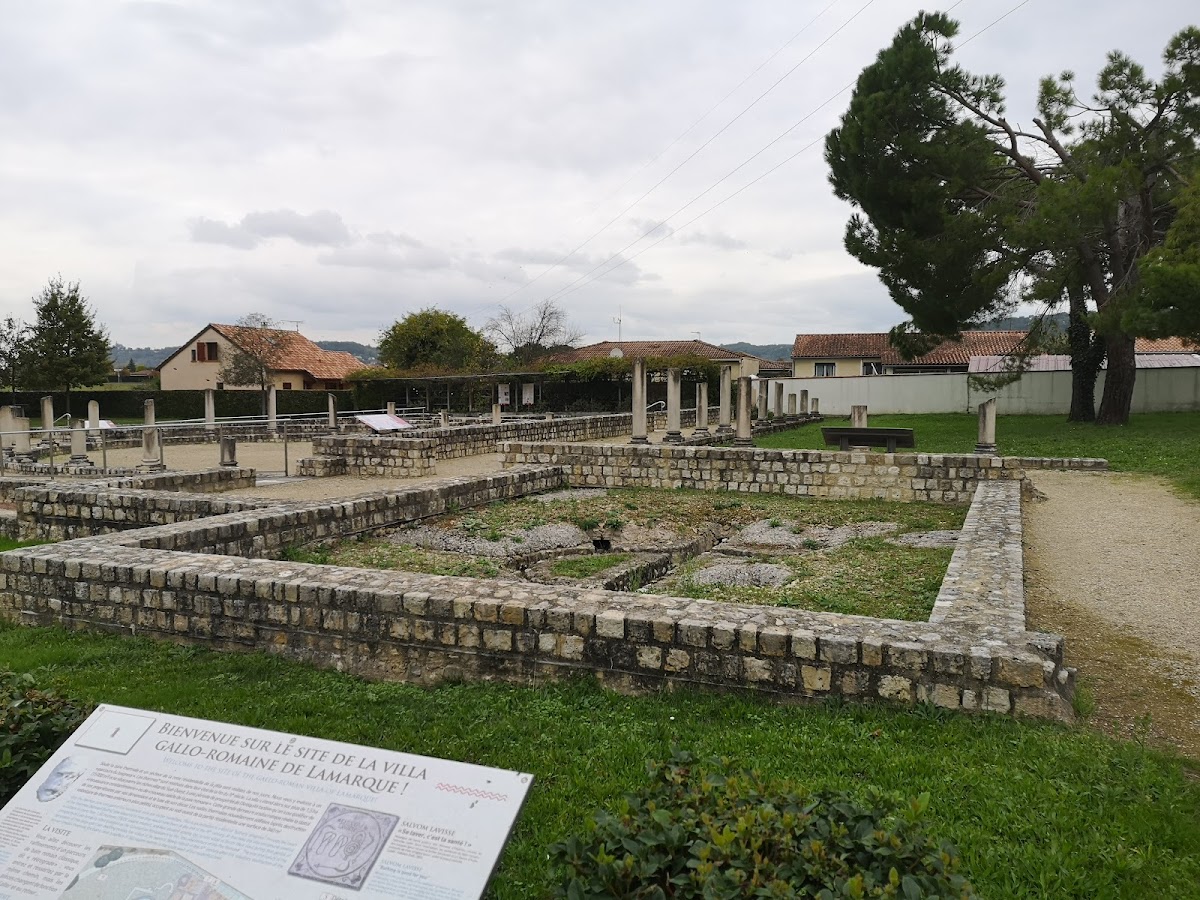
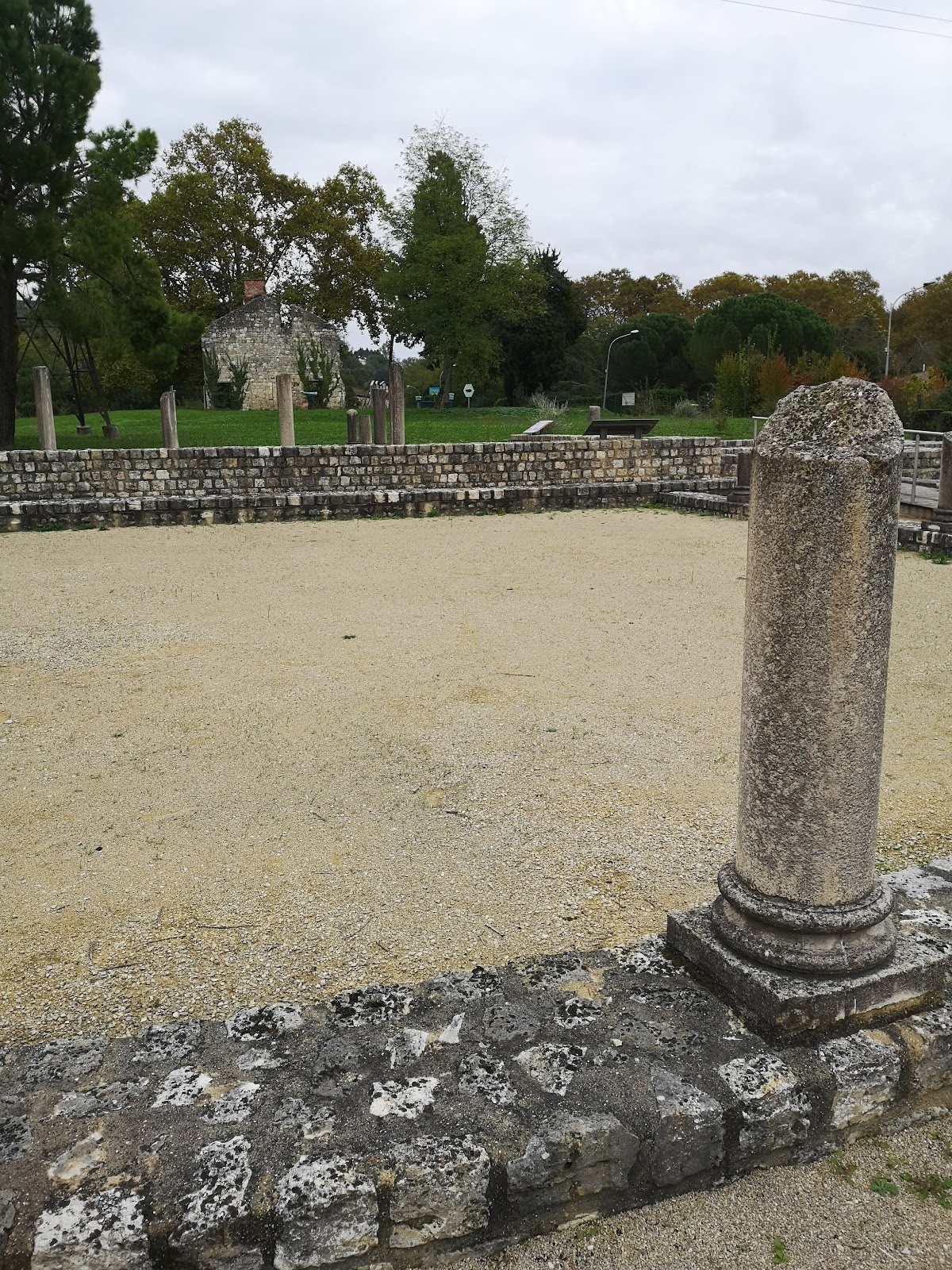
The villa was organized into three principal areas: a residential and bathing sector, an agricultural sector, and a workers’ or service sector. Excavation covered approximately 3,500 square metres in the southwest wing of the residential area and exposed almost the complete bathing complex. The surviving evidence includes heated floors, mosaics, coins, reused marble, and statues, allowing the estate’s domestic, technical, and later funerary history to be studied together.
Residential and Bathing Sector
Southwest Residential Wing
The excavated portion lay in the southwest wing of the residential sector. This area belonged to the part of the villa used for elite domestic life and contained mosaics and coins among its archaeological remains. Its heating installations used a hypocaust, an underfloor system that circulated hot air beneath floors and sometimes through wall spaces.
Bathing Complex
The bathing complex formed part of the residential area and extended over more than 3,500 square metres. It was unusually large for a villa in Aquitania. Excavation revealed almost the complete bath complex, together with the heating arrangements that supported its operation. The scale of the baths illustrates the resources invested in the estate’s residential facilities.
Later Reuse and Finds
Sixth-Century Lime Kiln
A sixth-century lime kiln incorporated marble taken from the villa’s columns and statues. The material was burned to produce lime for transport by river to Aginnum, for sale in the market or use in construction. The kiln therefore represents a physical phase of reuse in which elements of the earlier estate were processed for new purposes.
Statues and Funerary Evidence
A headless statue of Minerva was discovered at Lamarque in 1970. A statue of Marcus Aurelius was recovered from a sixth-century Merovingian tomb, linking the remains of the Roman estate with a burial of the Merovingian period, when the Frankish ruling dynasty governed much of Gaul. Together, these finds reflect the changing uses and interpretations of objects from the villa after its main Gallo-Roman phase.