Temple of Hadrian, Rome: An Ancient Roman Monument in the Campus Martius

Visitor Information
Google Rating: 4.6
Popularity: Medium
Google Maps: View on Google Maps
Official Website: www.turismoroma.it
Country: Italy
Civilization: Roman
Remains: Religious

History
The Temple of Hadrian, known as the Hadrianeum, was built in ancient Rome within the Campus Martius area, specifically in the district called Regio IX Circus Flaminius. It was constructed by the Roman Empire, dedicated to Emperor Hadrian, who ruled from 117 to 138 CE. The temple stood near other important monuments from the Hadrianic and Antonine periods, forming a significant imperial precinct.
Construction began during Hadrian’s reign, possibly intended to honor his wife, Vibia Sabina, who died and was deified in 136 CE. However, the temple was completed around 145 CE by Hadrian’s successor and adoptive son, Antoninus Pius, who dedicated it to the deified Hadrian approximately seven years after his death in 138 CE. The temple’s location near the Temple of Matidia, dedicated to Hadrian’s mother-in-law, suggests a family-focused monumental area celebrating deified relatives.
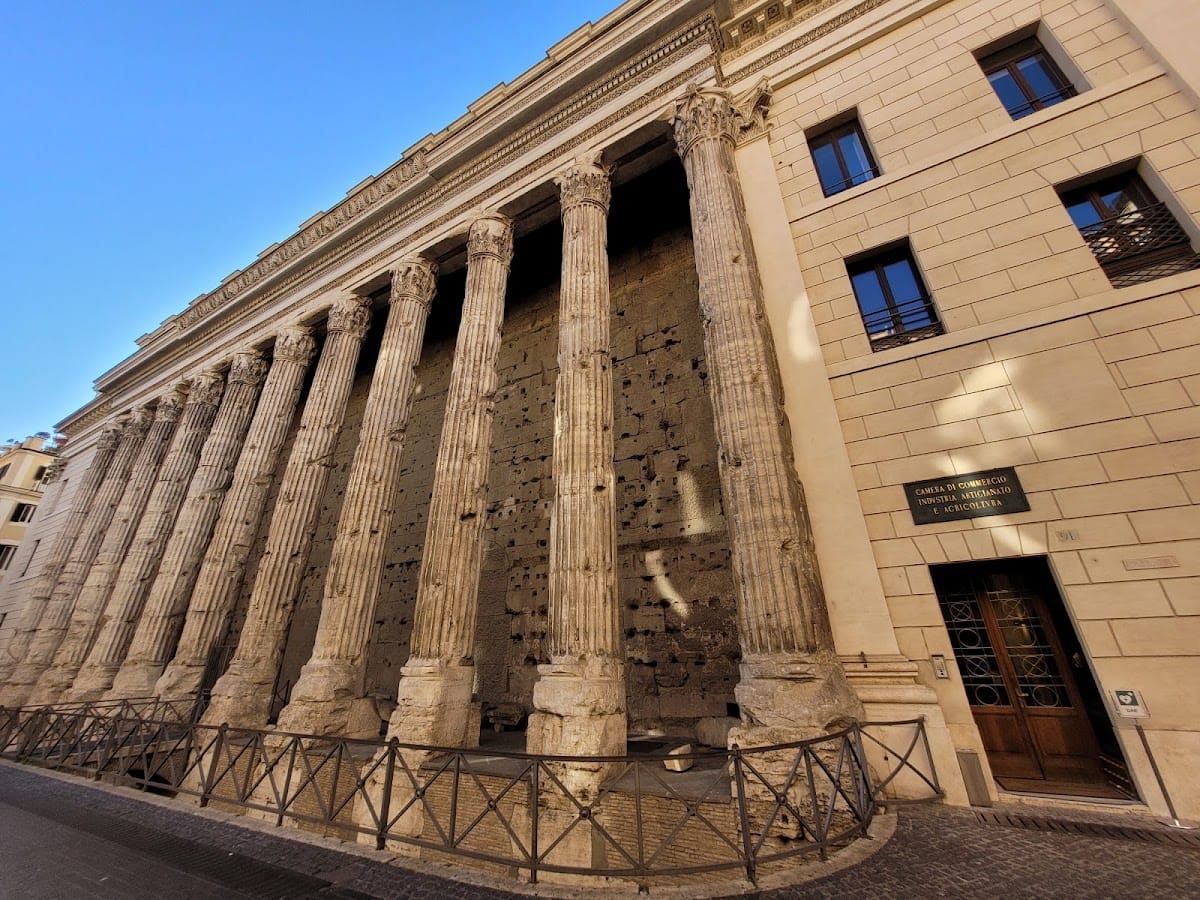
In later centuries, the temple’s remains were incorporated into new buildings. In 1695, architect Carlo Fontana integrated parts of the temple into a papal palace known as the Dogana di Terra. This building later became the Rome Stock Exchange in 1831 and now houses the Rome Chamber of Commerce. For a time, the temple was mistakenly identified as the Basilica of Neptune until archaeological research corrected this.
Excavations beginning in 1878 uncovered the temple precinct’s layout, revealing a large enclosure wall and a curved exedra, or semicircular seating area. The precinct was part of a broader monumental zone used for imperial funerary ceremonies and public events. Nearby, two cremation sites and honorary columns for Antoninus Pius and Marcus Aurelius were found, indicating the area’s ceremonial importance.
Decorative reliefs discovered near the temple depict Roman provinces and military trophies, reflecting Hadrian’s policies of peace and imperial organization. These reliefs, carved in high relief on marble, are now housed in various museums in Rome and Naples. The temple’s monumental archway, once opening onto the Via Lata (now Via del Corso), was known as the “arch of Antoninus” but was demolished in the 18th century due to deterioration.
Remains
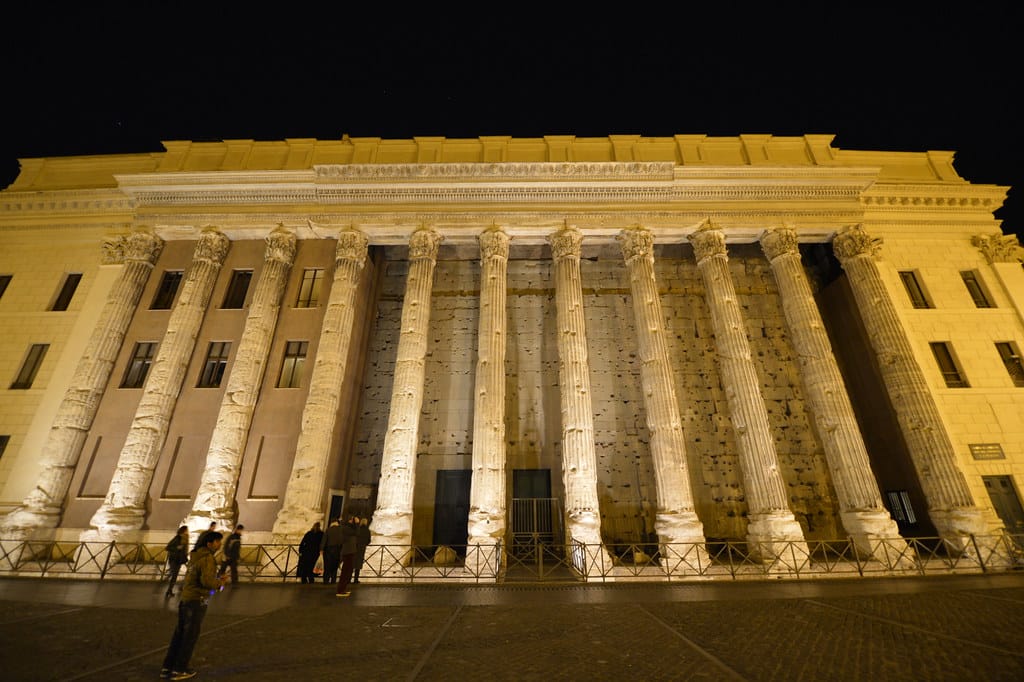
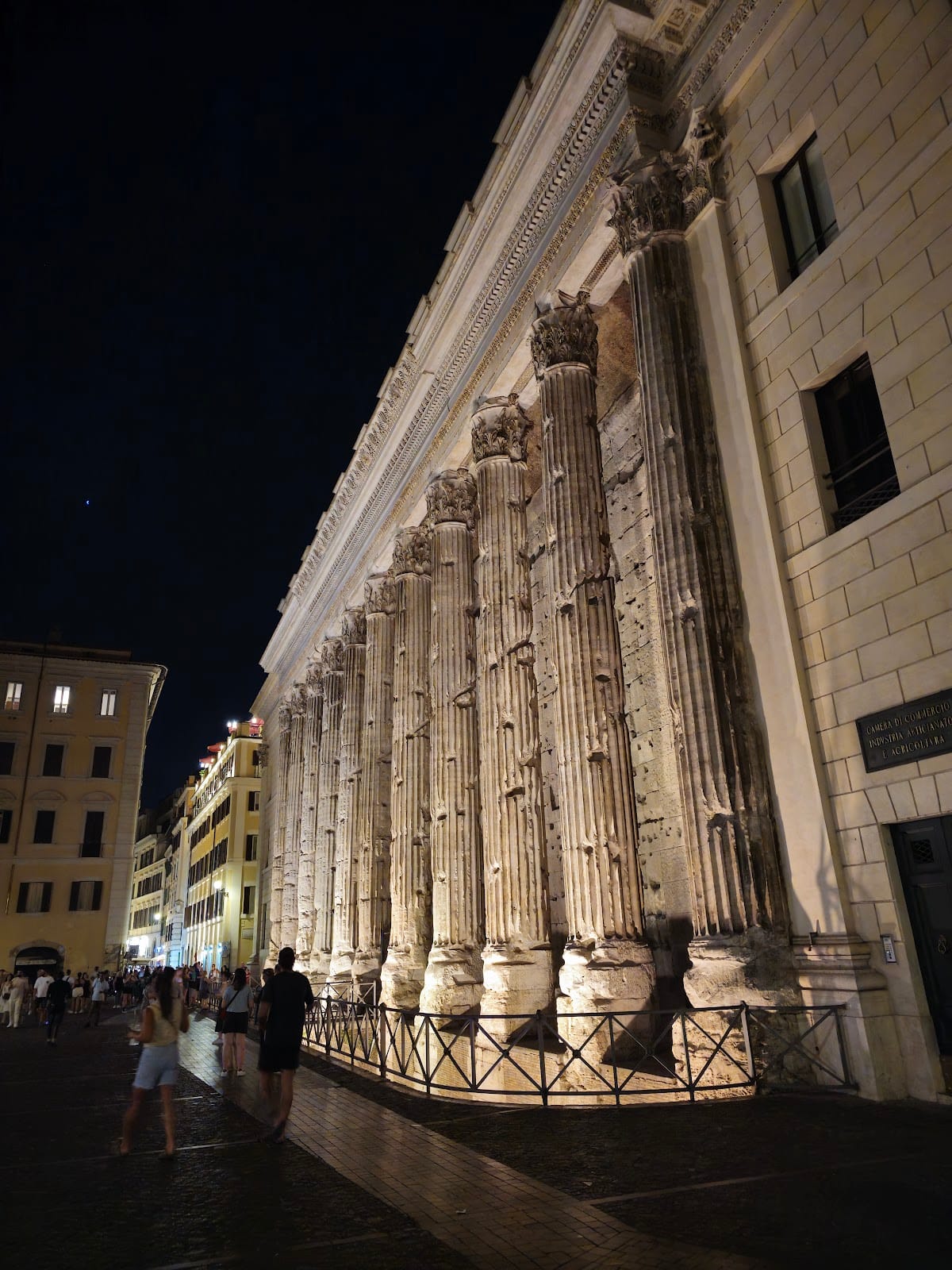
The Temple of Hadrian was an octastyle peripteral structure, meaning it had eight columns across the front and columns surrounding the building. Thirteen Corinthian columns lined each side. Today, eleven of these fluted columns remain along the north side, standing about 15 meters tall and made from Proconnesian marble, a grey and white stone imported from northwestern Turkey. This marble was introduced to Rome near the end of Hadrian’s reign and became popular during the Severan dynasty.
The temple rested on a high podium approximately four meters tall, built from peperino tufa, a volcanic stone, and faced with white marble. This podium is now buried beneath the modern street level due to later raising of the piazza. One side of the temple’s inner chamber wall, or cella, survives. It was constructed from peperino tufa with marble facing, indicated by holes where marble panels were fixed. The cella was rectangular without an apse and featured engaged columns or pilasters inside. Its ceiling was a coffered concrete barrel vault covered with marble plates.
The temple faced east toward the Via Lata, with traces of vaulting beneath the front steps and evidence of pilasters connected to the colonnade. The lower part of the entablature, the horizontal structure above the columns, survives with rich carvings. Upper sections were reconstructed in stucco during the 19th and 20th centuries, guided by 16th-century drawings that documented the original decoration. Ornamentation included a two-stepped architrave and cornice, a gutter decorated with palmettes and lion heads, and a frieze with garlands and acanthus leaf designs.
Surrounding the temple was a large square portico about 100 by 90 meters, lined with columns made of giallo antico, a yellow marble from Tunisia. The portico opened onto the Via Lata through a monumental arch, once called the “arch of Antoninus.” Relief panels decorating the pedestals of the portico’s columns showed allegorical figures representing Roman provinces alternating with military trophies. Sixteen provincial personifications and six trophies survive today in various museums.
The temple’s remains were incorporated into the 17th-century palazzo designed by Carlo Fontana, now the Rome Chamber of Commerce building. Inside, parts of the cella and some architectural elements remain visible. Recent archaeological work has identified the line of the monumental enclosure wall and large curved exedrae on the northern side of the precinct. These exedrae may have been mirrored on the southern side and were likely used for legal or public functions within the temple complex.