Serapeum of Alexandria: An Ancient Temple in Egypt



Visitor Information
Google Rating: 4.3
Popularity: Medium
Google Maps: View on Google Maps
Country: Egypt
Civilization: Byzantine, Greek, Roman
Remains: Religious

History
The Serapeum of Alexandria was located in the city of Alexandria, within the Karmouz district of the Alexandria Governorate in Egypt. It stood on a raised plateau known as the Acropolis of Alexandria, in the Egyptian quarter called Rakôtis. This temple was built by the Ptolemaic Kingdom, a Greek ruling dynasty established after Alexander the Great’s conquest, and was dedicated to Serapis, a syncretic deity combining Greek and Egyptian religious elements.
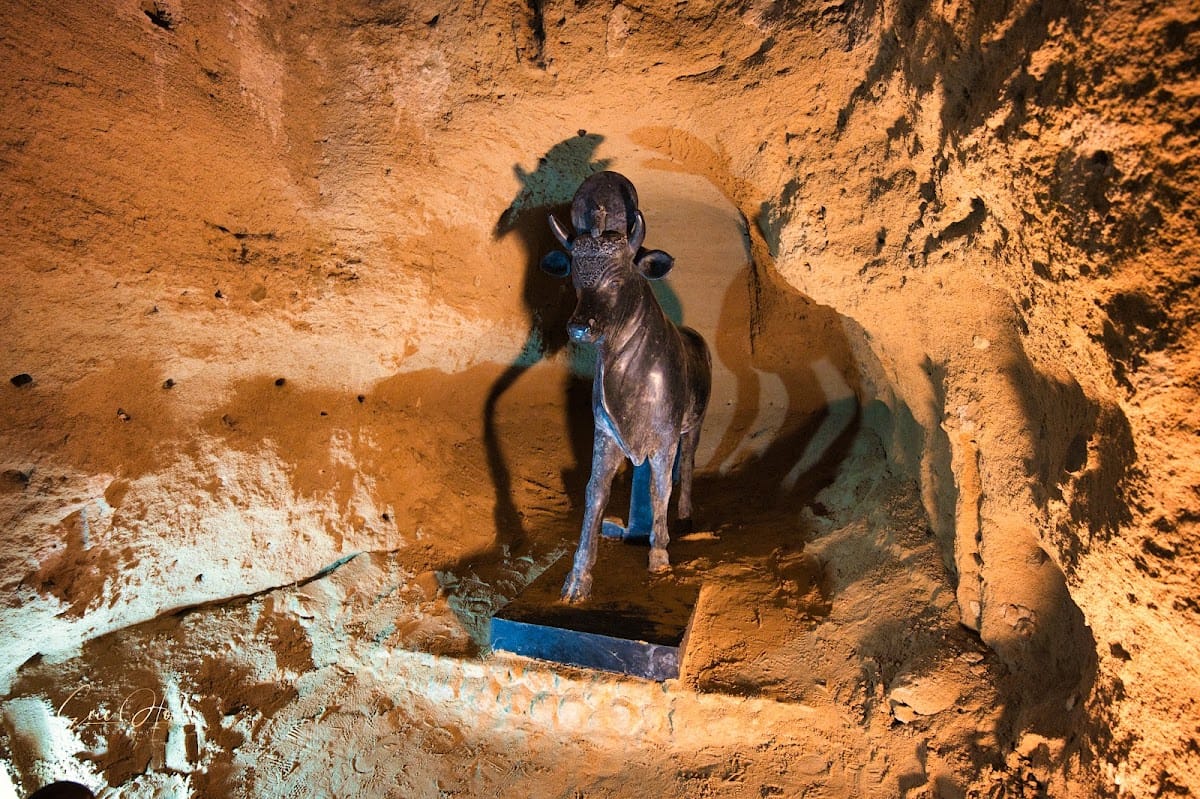
The temple’s foundation dates to the reign of Ptolemy III Euergetes (246–222 BCE). It served as a major religious center and protector of Alexandria. The cult of Serapis blended Greek and Egyptian traditions, reflected in bilingual inscriptions and statues such as the black granite Apis bull. The Serapeum also housed a significant annex library, considered a “daughter” to the famous Library of Alexandria, containing tens of thousands of volumes and serving scholars outside the main Museum.
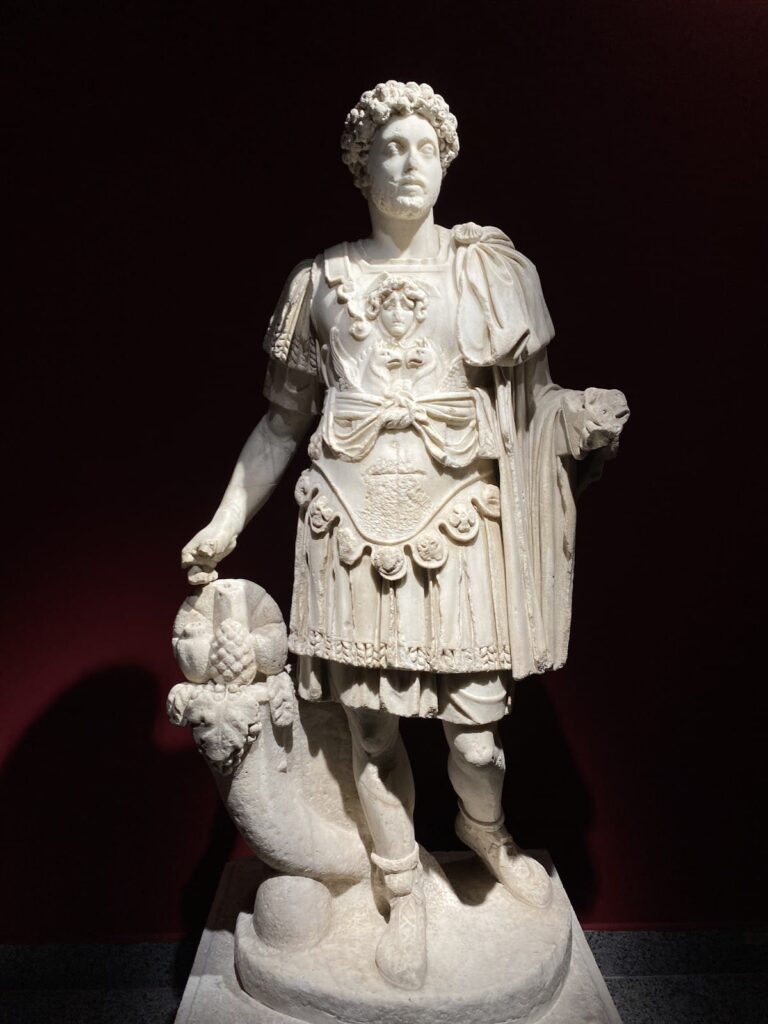
During the Roman period, the Serapeum experienced damage in the Kitos War (116 CE), a Jewish revolt across the Eastern Mediterranean. It was likely rebuilt or expanded under Emperor Hadrian (reigned 117–138 CE), as suggested by architectural elements and inscriptions. Coins and statues from this era indicate continued use and additions to the temple complex.
The temple’s destruction occurred in 391 CE amid rising Christian dominance in Alexandria. Following imperial orders from Theodosius I, Patriarch Theophilus led Christian forces to close the Serapeum. Pagans resisted by fortifying the temple, but after violent clashes, the temple was stormed, sacked, and razed. This event marked a significant moment in the decline of pagan worship and the ascendancy of Christianity in the city.
After its destruction, the site was repurposed for Christian use. A church dedicated to St. John the Baptist, known as the Angelium or Evangelium, was built on the temple grounds. This church was destroyed and rebuilt multiple times before falling into ruin by the 10th century.
Remains
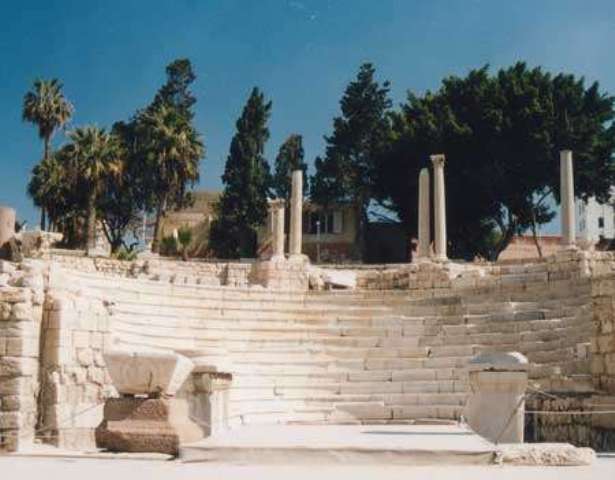
The Serapeum occupied a large rectangular area on a rocky plateau overlooking both land and sea. Its design featured extensive arcades and colonnades with large windows set above arches, creating a grand and luminous interior space. The main temple was constructed with marble exteriors and adorned with precious columns.
Inside, a colossal statue of Serapis dominated the temple. This statue was so large that its outstretched hands nearly touched the temple’s opposite walls. It was made from a combination of metals and wood. The interior chapels were richly decorated with gold, silver, and bronze laminates, designed to create optical effects such as sunlight illuminating the statue’s lips at dawn and magnetic forces giving the illusion that the statue levitated.
The temple precinct included two red granite obelisks and two red granite sphinxes. A black granite statue of the Apis bull, associated with Egyptian religious tradition, was also part of the complex and is now preserved in the Greco-Roman Museum of Alexandria. Beneath the temple, subterranean galleries likely hosted secret religious rites related to the mysteries of Serapis.
Excavations in 1944 uncovered foundation deposits consisting of ten plaques made from gold, silver, bronze, Egyptian faience (a glazed ceramic), Nile mud, and opaque glass. These plaques bore inscriptions in both Greek and Egyptian, confirming Ptolemy III as the founder and naming the architect Parmeniskos. Roman rebuilding and expansion between 181 and 217 CE are evident from granite columns and other architectural elements found on site.
No above-ground remains of the temple survive today except for Pompey’s Pillar, which stands near the site’s acropolis and serves as a landmark. The temple was dismantled in the late 4th century CE, with its materials either destroyed or reused elsewhere. Archaeological finds also include coins dating up to 211 CE and a marble torso of the god Mithras, indicating the temple’s continued religious significance during the Roman period.
Nearby sites