Súľovský hrad: A Medieval Castle in Slovakia



Visitor Information
Google Rating: 4.8
Popularity: Medium
Official Website: www.hrady.sk
Country: Slovakia
Civilization: Unclassified
Site type: Military
Remains: Castle

History
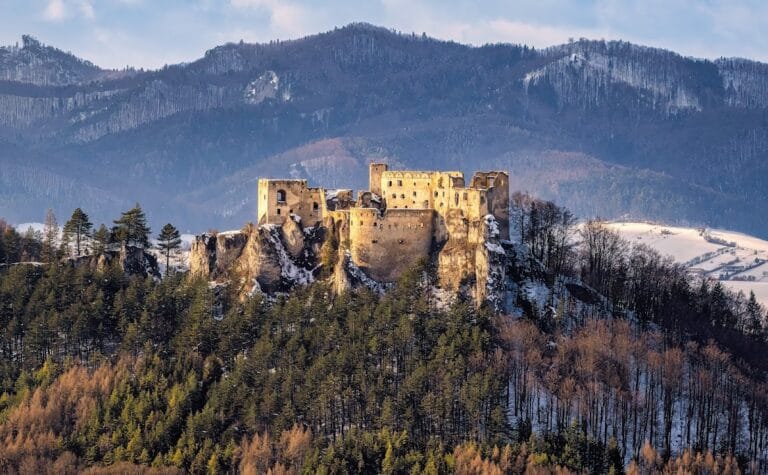
Súľovský hrad, situated near the village of Súľov in present-day Slovakia, was originally established by medieval Slavic inhabitants as a defensive stronghold. Its location in the rugged Súľovské Skaly mountains offered a strategic vantage point controlling a trade route along the Váh river valley.
The earliest fortifications on the site likely appeared in the first half of the 15th century as a modest stone tower or small keep intended to guard this important passage. By 1470, the site—then known as Roháč or Rohach—was officially recognized when King Matthias Corvinus granted permission to expand and strengthen the existing structure into a full castle. This reconstruction phase probably employed Italian craftsmen and transformed the defensive position into a more formidable fortress suitable for the late medieval period.
Ownership of the castle initially rested with the local noble Súľovský family, whose name the fortress later adopted. However, in the early 16th century, control became disputed among regional aristocrats, notably Mikuláš Kostka and the Podmanický family. After lengthy legal struggles, the Sirmiensis-Súľovský family secured possession in 1552. That same century also saw the castle suffer a destructive fire in 1550, but it was swiftly rebuilt on its original footprint due to the challenging terrain that limited expansion.
The 17th century brought further renovations, highlighted by work beginning in 1682 under Katarína Bošániová, who obtained imperial authorization to improve the structure. Unfortunately, Katarína died before completing these enhancements. The castle maintained military relevance well into the early 18th century, with records indicating activity as late as 1730. However, as local noble families preferred residing in nearby manor houses, Súľovský hrad gradually fell into disuse and neglect. It was abandoned between 1752 and 1759 and was no longer guarded after 1780.
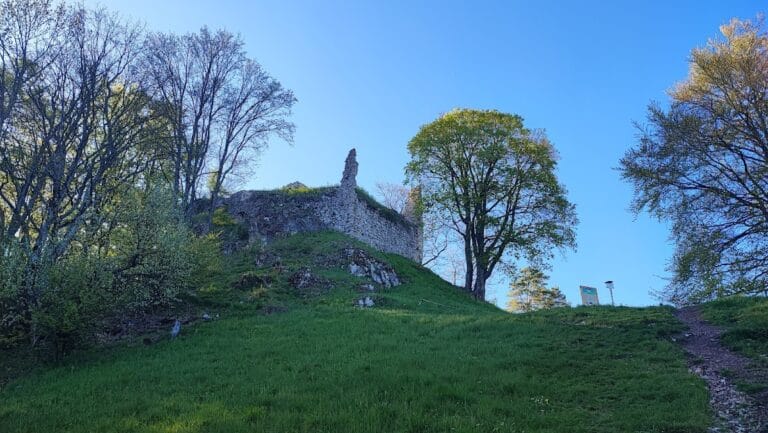
A devastating earthquake on January 15, 1858, severely damaged the castle ruins, and it was not restored. Subsequent fires and continued erosion further reduced the site to the remains visible today.
Remains
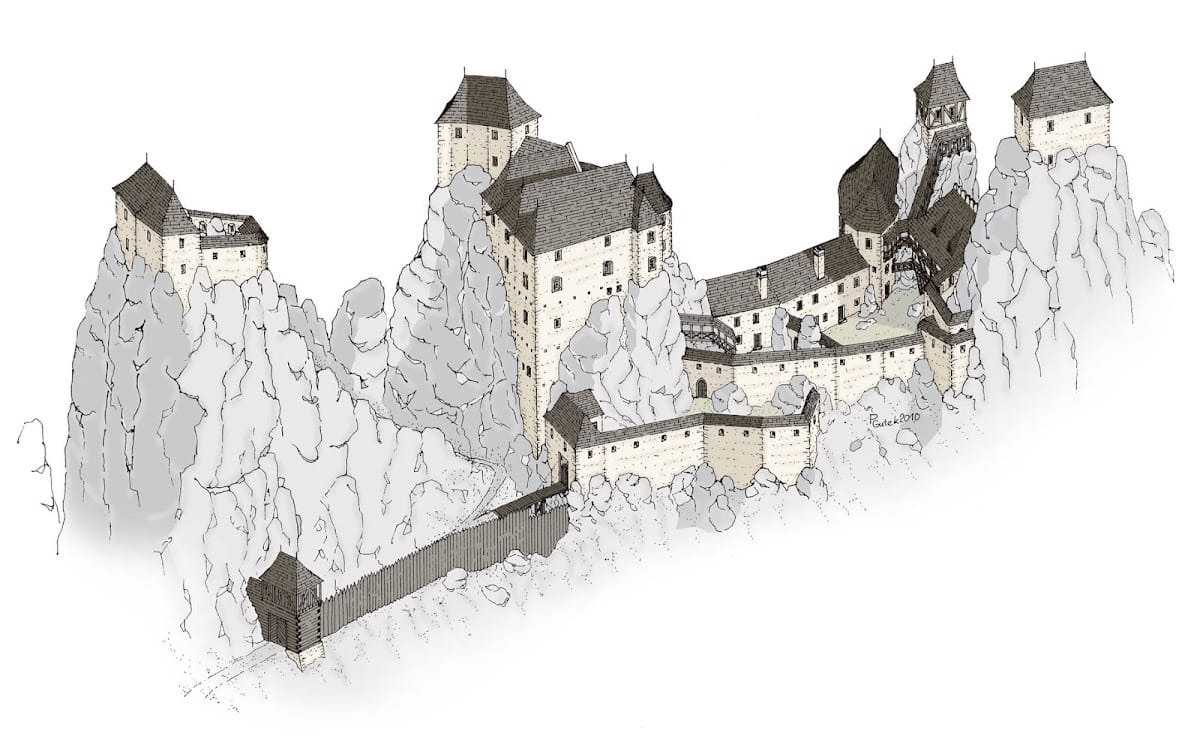
Súľovský hrad was ingeniously built among three prominent rock towers, with its foundations adapting closely to the uneven terrain of the Súľovské Skaly. The castle consisted of two principal sections—the upper and lower castles—which were separated horizontally by about 25 meters and vertically by approximately 14 meters. The surviving ruins of the structure rise up to some 18 meters at their highest points.
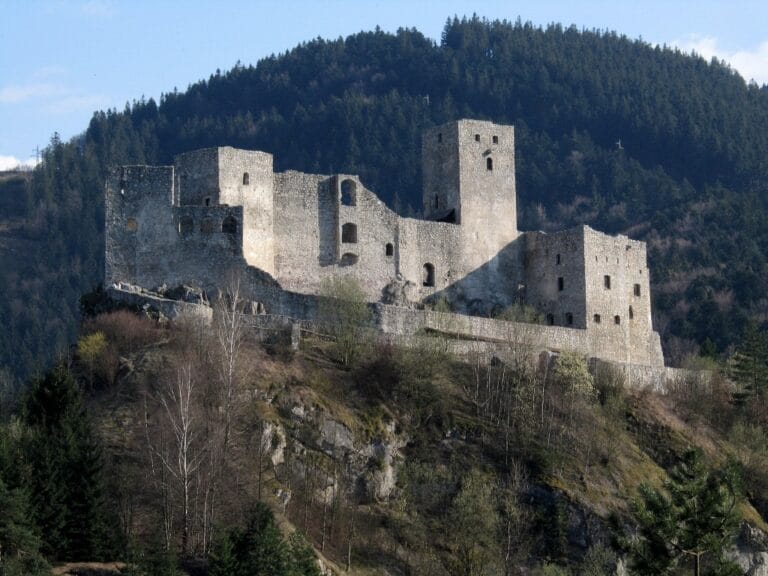
The lower castle contained a robust defensive entrance tower measuring roughly 5 by 10 meters with several floors. Its ground level room featured four windows alongside about eight narrow arrow slits, designed for archers or later firearm use. The walls here were notably thick, ranging between 80 and 120 centimeters, providing substantial protection against attack.
Access to the upper castle was gained through a very narrow cleft in the rock, just wide enough for a single person, which was secured by a drawbridge. This upper section likely housed around eighteen chambers, most covered by stone vaults—a form of arched ceiling that strengthened walls and made rooms more fire-resistant. Wall thickness here varied from 80 to 100 centimeters. The rooms stood on different levels and were interconnected by steep staircases carved directly into the natural rock, illustrating skillful integration of the castle architecture with the environment.
Notably, the upper castle contained a cistern carved into stone for collecting rainwater, measuring about 80 by 150 centimeters. While now filled with debris, this cistern was once essential for sustaining the castle’s inhabitants during sieges. At the highest point stood a watchtower that commanded extensive views over the surrounding valleys and mountains, serving as a lookout for approaching threats.
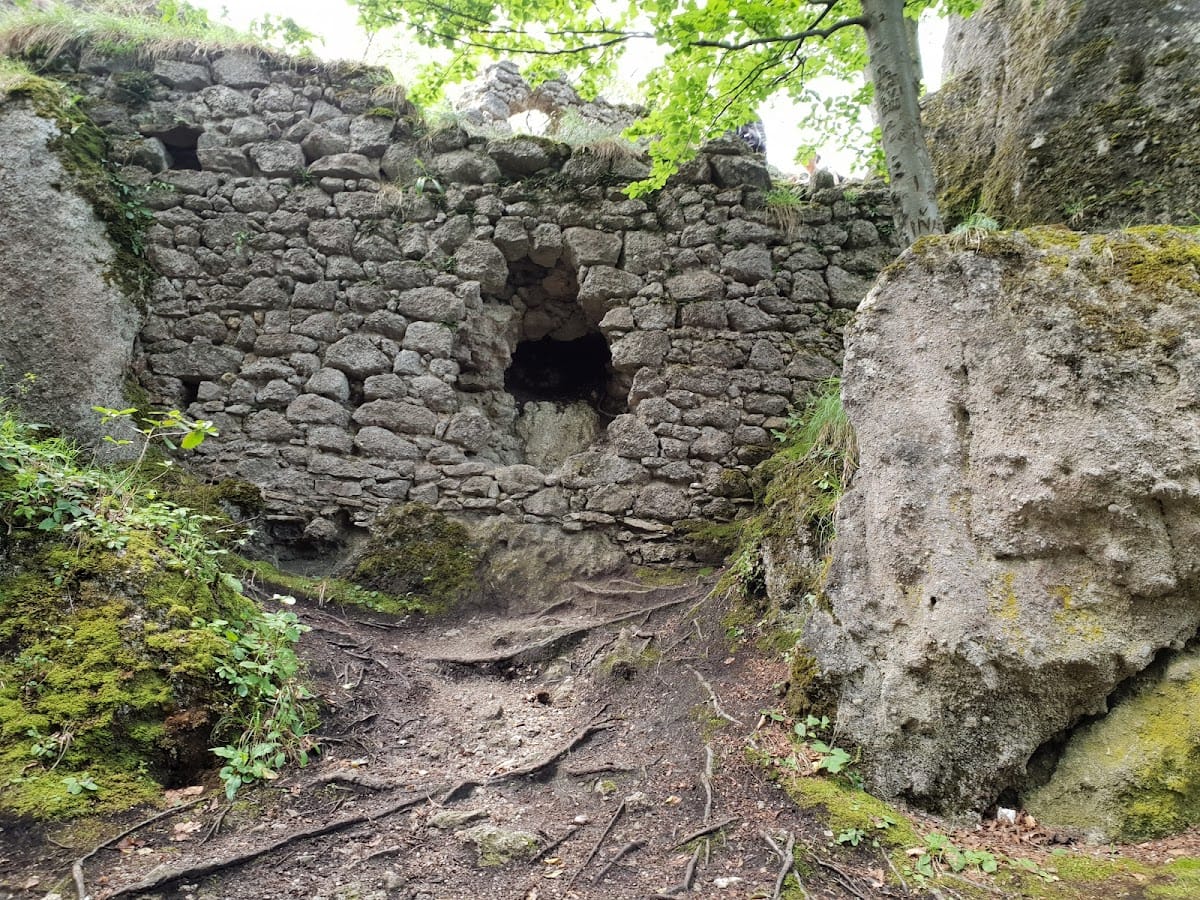
Today, visitors can observe foundations and wall fragments showing window openings, along with carved beam holes and supports that once held up vaulted ceilings. On the lower castle’s outcropping, part of the palace building remains visible, featuring a viewing platform. The defensive entryway is distinguished by an arrow slit cut directly into the rock.
Within the upper castle’s ruins, traces of stone vaults, steps chiseled into bedrock, and a stone pillar bearing stairs are discernible. Access to the highest tower ruins is possible via an iron ladder inserted through an opening in the wall near the cistern. This ladder leads to the remains of the watchtower, allowing a tangible connection to the castle’s former defensive function.
These remains collectively tell the story of a fortress carefully designed to maximize natural defenses, marrying medieval stone construction with the rugged mountain landscape.
Nearby sites