Považský hrad: A Medieval Castle Ruin in Slovakia

Site at a Glance
- Rating
- 4.7
- Popularity
- Medium
- Country
- Slovakia
- Primary era
- Medieval
- External website
- Open
- Eras represented
- Medieval, Early Modern
- Civilizations
- Hungarian
- Site type
- Military
- Remains
- Castle
On this page16 sections
History
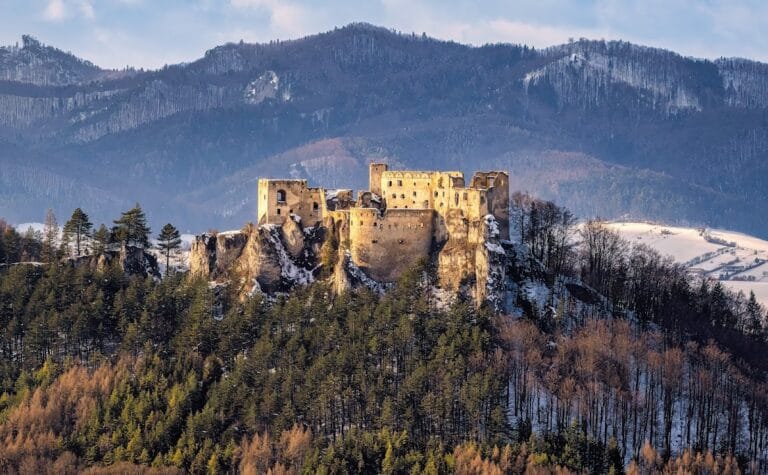
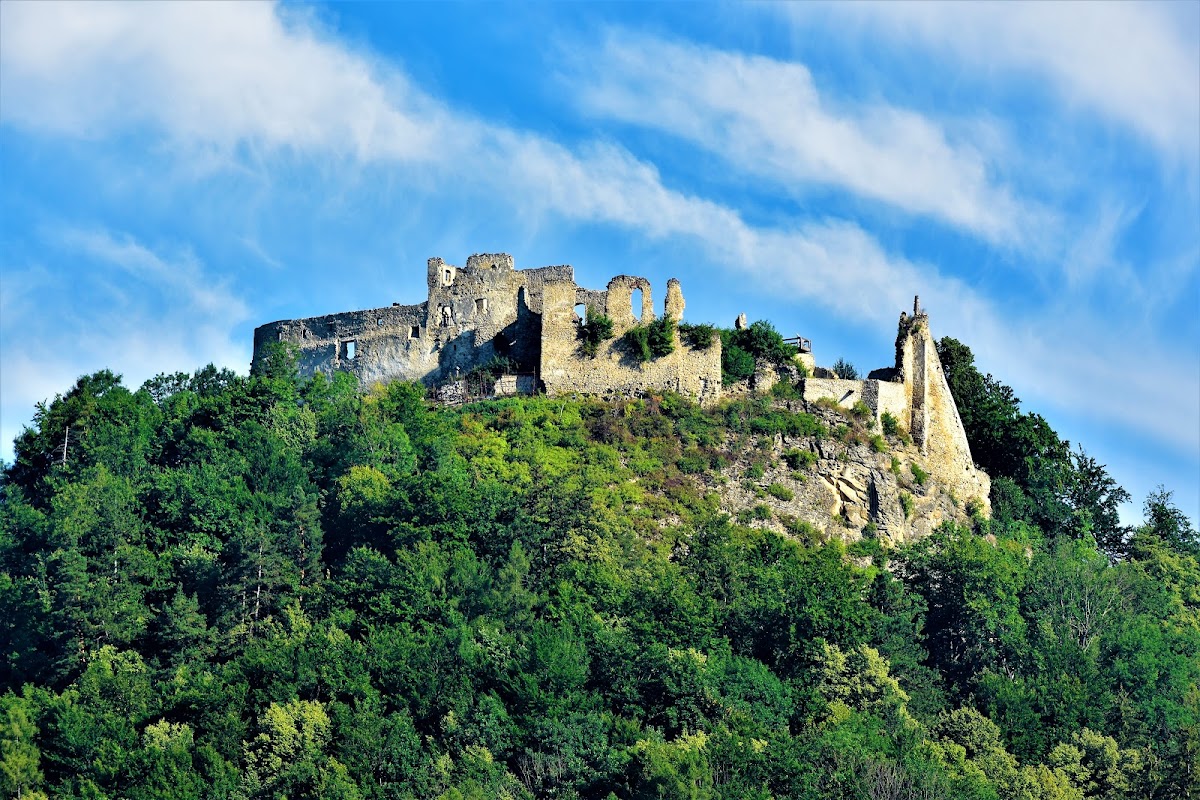
Považský hrad is a medieval castle ruin in Slovakia, above Považské Podhradie near Považská Bystrica on the right bank of the Váh River. It guarded the valley’s important waterway and route through the region and became one of the principal castles of the Váh valley. The earliest settlement on the hill belongs to the Púchov culture, an Iron Age culture associated with the northern Carpathian region, and a Celtic coin was also found there.
Origins and Medieval Lords
The castle’s exact foundation date is unknown. Later traditions place its establishment around 1126 or 1128, but the first confirmed written reference dates from 1316, when it was called Bystrica Castle or castrum Bestruche. The earliest fortress may have been built of wood. Its possible conversion into a stone stronghold has been linked with the defensive building programme promoted by King Béla IV after the Mongol invasion of 1241–1242.
In 1316 the castle was closely associated with Matthew Csák. It later belonged to the royal judge Alexander Köcski and his son Miklós, who controlled it from 1325 to 1354, followed by Pál Ugali. King Sigismund subsequently granted it to the palatine Sudivoj, a high-ranking royal official in medieval Hungary. From 1400 to 1425, the castle was held by Stibor of Stiboricz before returning to royal possession.
The Podmanitzky Stronghold
In 1458, King Matthias Corvinus granted the castle, the town, and sixteen surrounding villages to László Podmanitzky in recognition of his service. The Podmanitzky family repaired and enlarged the fortress, making it the center of their regional authority. Their holdings and influence grew around the castle, which became the base of János and Rafael Podmanitzky during the political division that followed the Battle of Mohács in 1526.
After Mohács, János Szapolyai and the Habsburg ruler Ferdinand I disputed the Hungarian crown. The Podmanitzky brothers supported Szapolyai, although much of the surrounding territory was controlled by Ferdinand. In 1528 they resisted an attack from a royal army led by Katzainer, and they launched raids that expanded their possessions. Their authority reached across the northern part of the county, which was effectively independent of Ferdinand’s territory.
During the 1530s, the brothers became involved in conflicts with the Protestant Kostka family. Their intervention brought them the manor of Veszprém. They divided their possessions in 1537, with Rafael remaining in the region and János establishing the Veszprém manor, although both continued raiding until their disputes were settled.
Fire, Noble Refuge, and Destruction
A major fire severely damaged Považský hrad in 1543. Rafael Podmanitzky rebuilt the castle, but later sought Habsburg protection because he no longer considered the fortress secure. He eventually became governor of the northern part of the Trenčín County region. The Podmanitzky family’s rule ended with Rafael’s death in 1558.
In 1560, the castle was granted to Gáspár Szerédi. After his death, his widow married András Balassa, and the fortress became a refuge for the Balassa family during the uprising led by Francis II Rákóczi, an early eighteenth-century anti-Habsburg rebellion. Its fortifications resisted attack, but the family later left the difficult fortress and moved to a manor below it.
During the uprising associated with Imre Thököly, an anti-Habsburg rebel leader, rebel troops occupied the castle. Imperial forces recaptured it in 1684. Emperor Leopold I then ordered its destruction so that it could not be used again as a rebel stronghold. Imperial troops burned and demolished Považský hrad in 1698.
Damage and Conservation
On 15 February 1858, an earthquake caused the prison tower to collapse. Natural deterioration and the removal of stone by local inhabitants for building materials caused further losses. Baron Popper bought the ruins and surrounding estates in 1895. The Czechoslovak state took over his properties, including the castle ruins and the two manors below the hill, in 1919. The nearby Szapáry manor had already been extensively vandalized in November 1918.
Považská Bystrica acquired the castle in 2007. Preservation work began in 2007–08 through a local heritage association formed to secure the ruins, organize repair workshops, and raise funds for continuing conservation. Further work remains necessary, and vandalism has continued to threaten the site. The castle has also appeared in paintings and written and artistic works associated with Imro Weiner-Kráľ, Ludwig Rohbock, Gaspar Bouttats, and Alojz Medňanský. János and Rafael Podmanitzky became subjects of local legends and narratives.
Remains
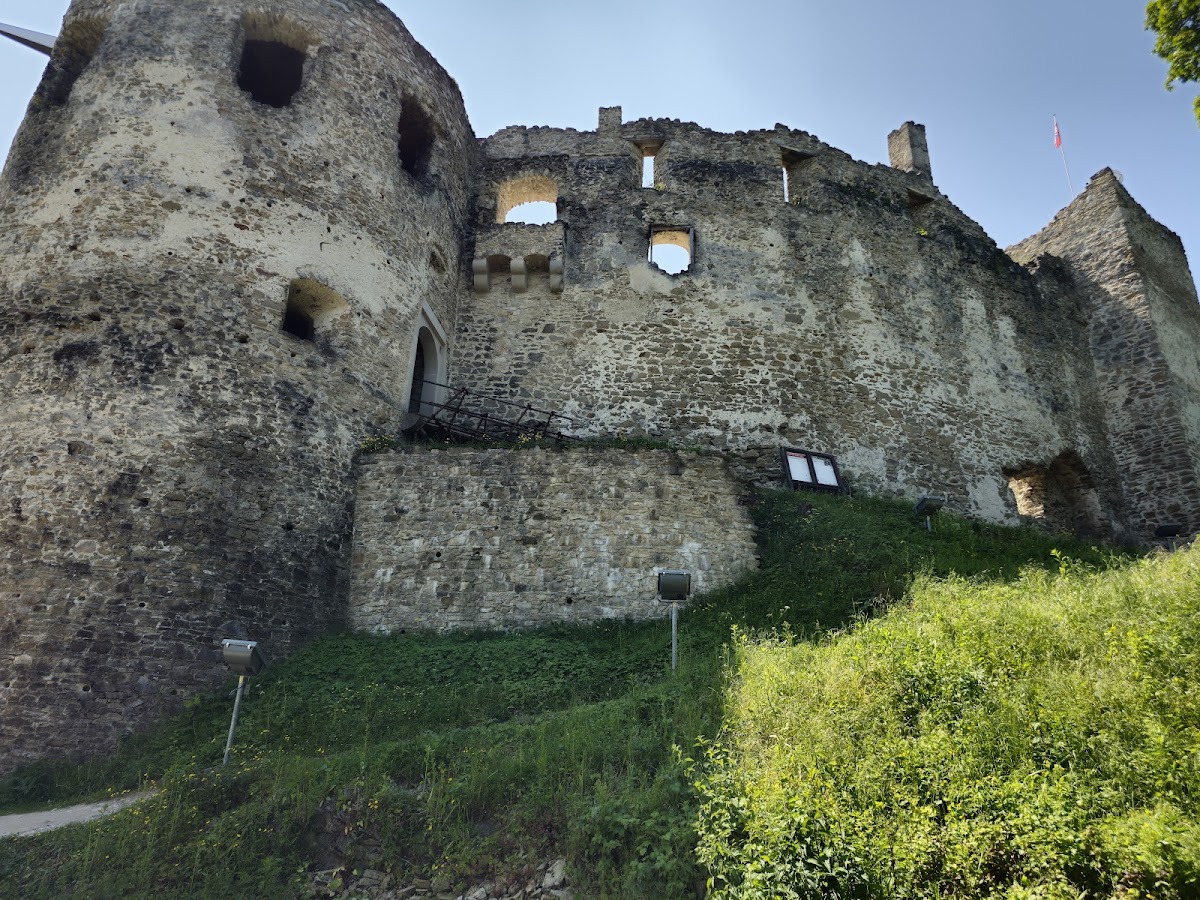
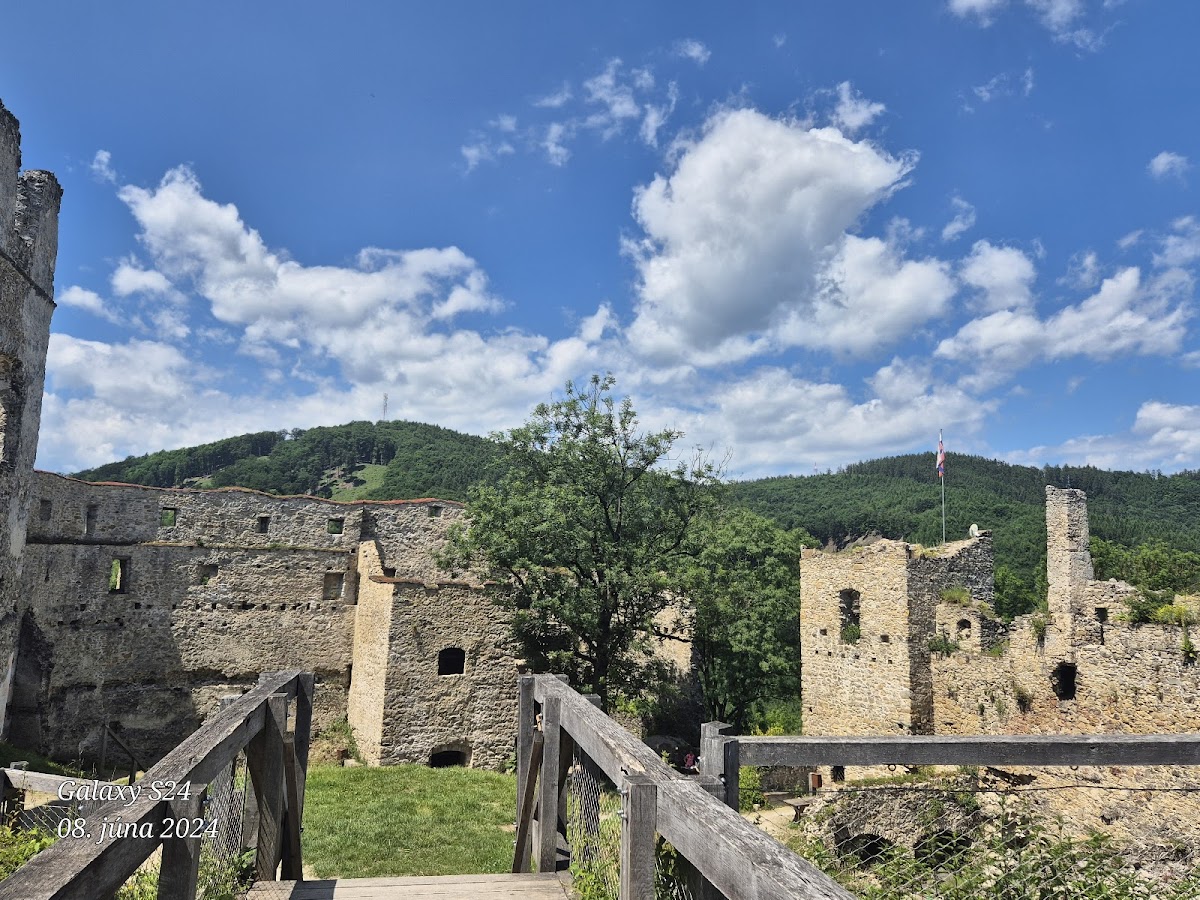
Považský hrad stands on a steep cliff at approximately 497 metres above sea level, above Považské Podhradie on the right bank of the Váh. The large fortified complex had a roughly fish-shaped ground plan, three floors, and a shingle roof during its period of greatest importance. Sandstone and limestone formed its principal building materials. Surviving palace walls, towers, and defensive structures occupy the rocky summit, while the approach road from the northeast can still be traced in the terrain.
Core Fortress and Outer Defences
Oldest Tower and Gothic Palace
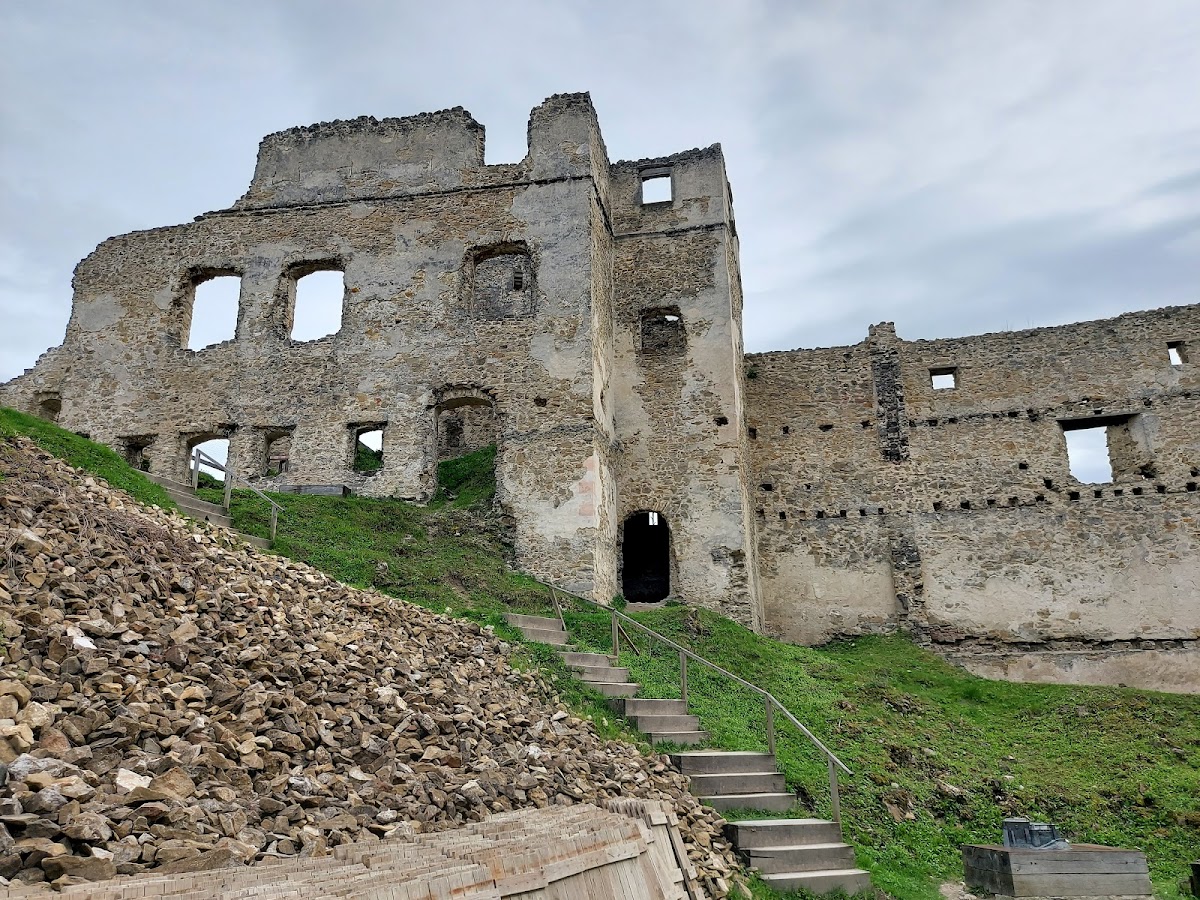
The oldest parts of the castle included a tower on the highest point of the rock and a Gothic palace. Parts of the palace survive with visible window openings, and some Renaissance cornices remain in place. Several rooms retain fragments of Renaissance vaults, while the former service buildings in the courtyard survive as wall fragments or foundations.
Oval Outer Bailey
A large oval outer bailey, or fortified area outside the inner castle, was enclosed by a curtain wall. Two rectangular towers stood on its northeastern side. Sections of the oval Gothic defensive walls and fragments of two towers remain, together with a Renaissance palace added along the eastern and southern sides. The outer bailey was enlarged during the Podmanitzky rebuilding after the fire of 1543.
Entrance Defences
The approach to the castle was protected by a rectangular entrance tower, a barbican, meaning an outer fortification guarding a gateway, two bastions, and a strong enclosing wall. The entrance tower’s ground floor served as a munitions store. A concealed gate may also have allowed supplies to enter when the principal entrance was blocked during an attack.
Residential and Service Areas
Prison Tower and Eastern Buildings
A cuboid prison tower stood on the northern side of the complex. To its east were the main carriage gate and a cannon warehouse. Noble residences and a chapel stood nearby. These parts of the castle are among the most severely ruined areas, and the former prison tower collapsed in the earthquake of 1858.
Southern Quarters and Water Supply
The southwestern part contained residential quarters. Warehouses, a granary, kitchens, and pantries occupied the area beneath them. Water reached the castle through underground wooden pipes from the Sklepita well, and remains of the pipes were found in the early twentieth century. A moat lay in front of the castle.
Manors Below the Castle
Burg Manor
At the foot of the castle stands the Renaissance manor known as Burg. Zsigmond Balassa commissioned it, construction began during the first third of the seventeenth century, and the building was completed in 1631, when the Balassa family moved down from the fortress. Baroness Popper later supported its reconstruction. The manor became state property in 1919 and subsequently passed into private ownership.
Szapáry Manor
A short distance east of Burg stands the Rococo Szapáry manor, built in 1676, probably by Péter Szapáry. Rococo was an eighteenth-century architectural style known for lighter and more ornate decoration. The manor contained a chapel and a school serving people from the surrounding area and is now in a dilapidated condition. A cemetery with Balassa family gravestones and a garden containing plants from various parts of the world formerly stood near the two manors.