Roman Theatre of Cádiz: An Ancient Cultural Landmark in Southern Spain

Visitor Information
Google Rating: 4.4
Popularity: Medium
Google Maps: View on Google Maps
Official Website: www.juntadeandalucia.es
Country: Spain
Civilization: Roman
Remains: Entertainment

History
The Roman Theatre of Cádiz is located in the city of Cádiz, in southern Spain. It was built by the Romans during the 1st century BCE as part of the urban expansion led by the Balbo family. This new district, called Neapolis or “new city,” was established next to the older Phoenician settlement known as Gades.
In the Roman period, the theatre was a prominent cultural site. It is mentioned by classical authors such as Cicero, Strabo, and Asinius Pollio. Balbo the Younger, a member of the founding family, famously staged a play there celebrating his political career and his connection to Julius Caesar. The theatre was the oldest known Roman theatre in the Iberian Peninsula and the second largest in Hispania, after the theatre of Córdoba.
By the late 3rd century CE, the theatre was abandoned. From the 4th century onward, it suffered looting and gradual decay. During the late Roman era and through the Islamic and Christian medieval periods, the ruins were repurposed for practical uses such as warehouses, stables, and parts of homes.
In the 13th century, King Alfonso X the Wise reconquered Cádiz and constructed the medieval Castillo de la Villa fortress over the theatre’s remains. Subsequent urban development, including 19th-century buildings, covered much of the site, limiting archaeological access. Excavations beginning in 1980 have gradually revealed parts of the theatre, and restoration efforts in recent years have aimed to preserve and integrate the site within the city.
Remains
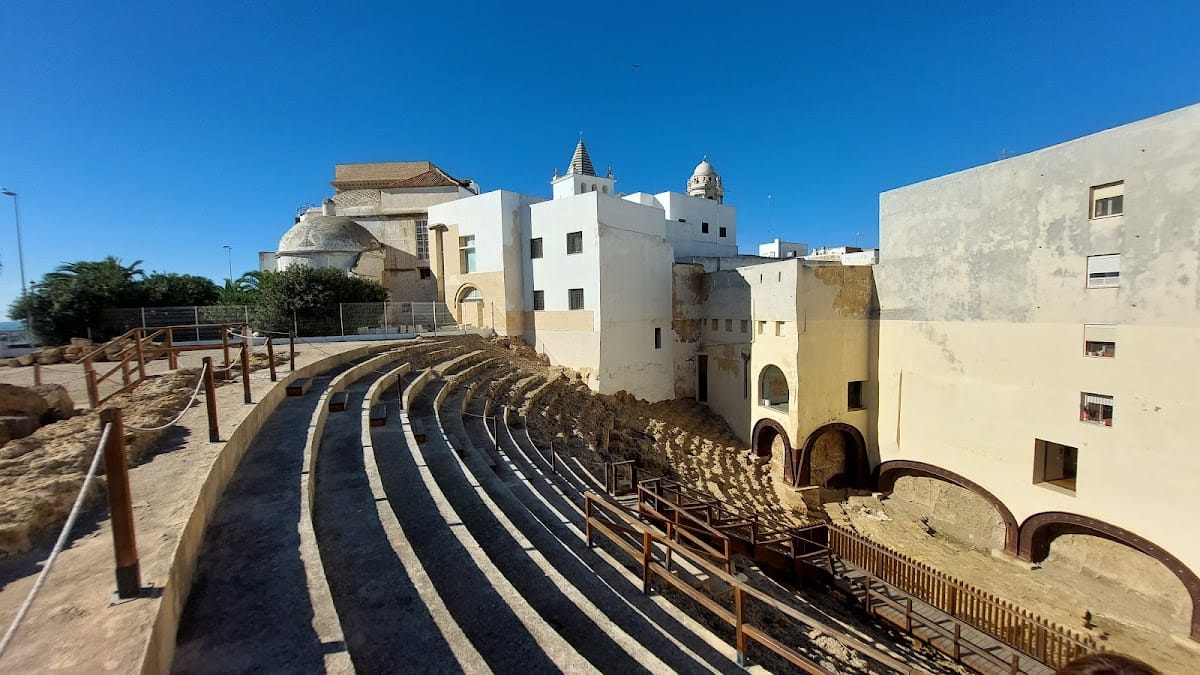
The Roman Theatre of Cádiz was built into the natural slope of Campo del Sur hill, using the terrain to support the seating area, known as the cavea. The cavea measures approximately 118 to 120 meters in diameter, making it the second largest in Hispania. It could hold between 10,000 and 20,000 spectators, a significant number for the city’s population at the time.
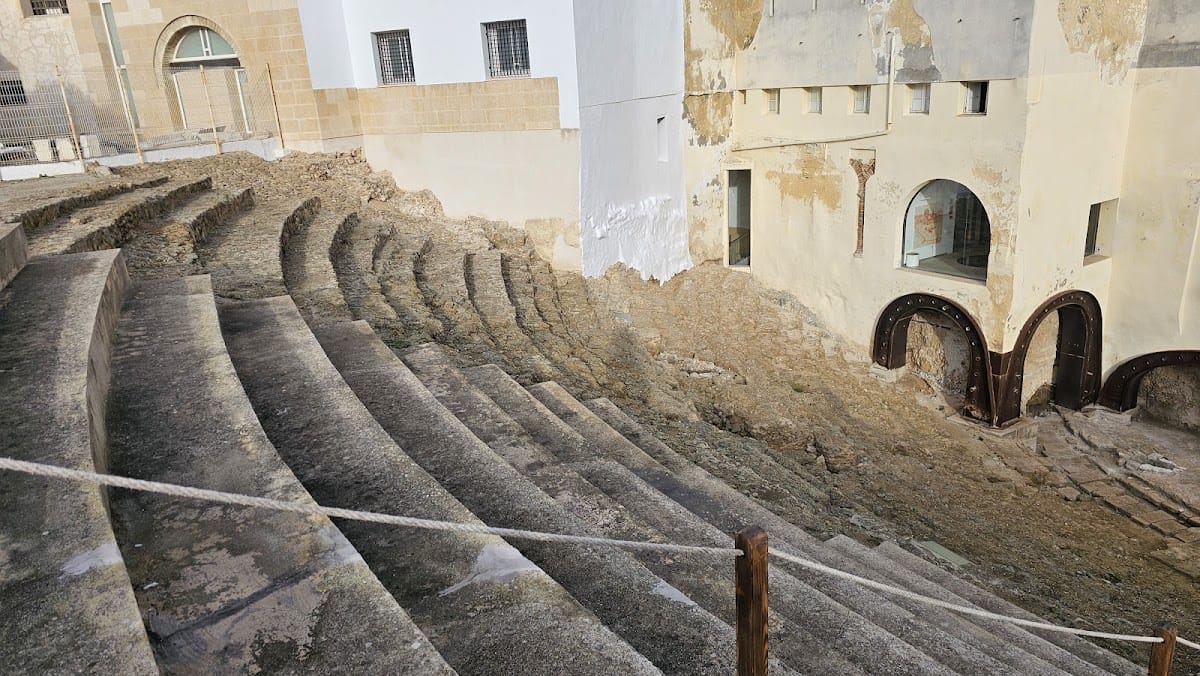
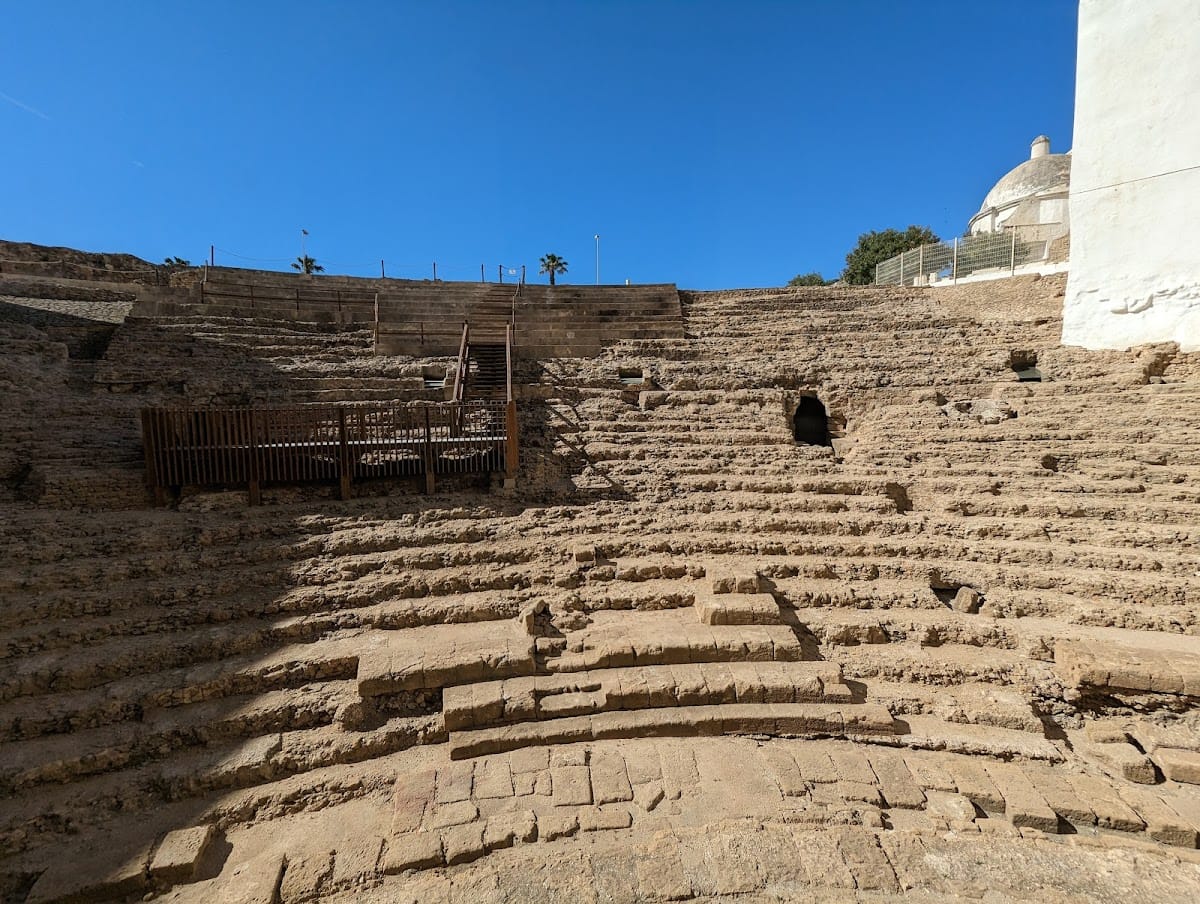
The cavea is divided into three sections that reflect Roman social hierarchy. The lowest section, the ima cavea, was reserved for the wealthy equites class and included 14 rows of seats. The middle section, media cavea, was for free workers, citizens, and officials. The upper section, summa cavea, was designated for women, children, freedmen, slaves, and lower classes. The three front rows, called the proedria, were reserved for senators, magistrates, and priests.
Between the cavea and the stage lies the orchestra, a semicircular space reserved for notable citizens. Unlike Greek theatres, where the orchestra was used for performances, here it served as a seating area. The stage, or scaena, featured a multi-story backdrop decorated with columns and statues of emperors and gods. It included advanced stage machinery such as revolving panels and platforms for special effects.
Construction materials include Roman concrete (opus caementicium), mortar with lime and stones, and local ostionera limestone. Marble was used for the orchestra and stage front, while alabaster and African marble adorned columns and decorative elements. The cavea seating blocks were made of ostionera stone, with decorative fragments such as marble cornices featuring vegetal motifs and column capitals with acanthus leaves and volutes recovered from the site.
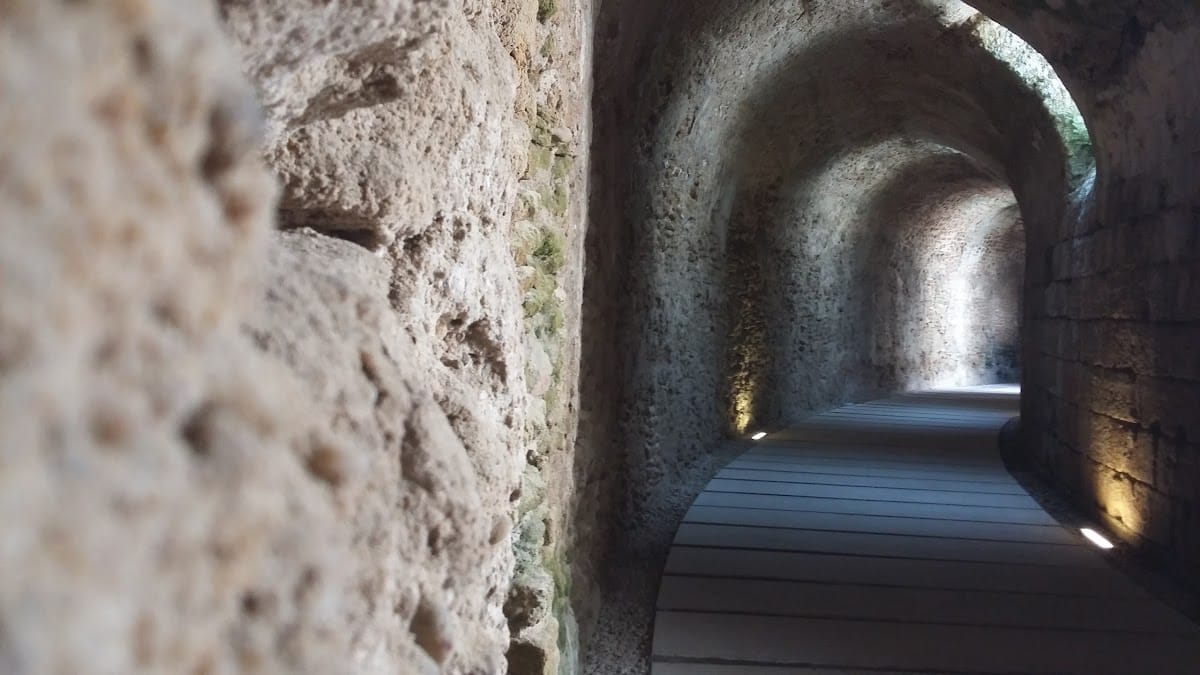
The summa cavea has mostly disappeared due to medieval reuse of materials and marine erosion, but parts of the curved rear façade wall and supporting framework remain well preserved. Beneath the cavea is a vaulted gallery covered by a semicircular barrel vault made of concrete and stone. This corridor allowed spectators to move through the theatre and connected to the seating area via four vomitoria, or passageways. Modifications to this gallery include raised floor levels and altered steps.
The theatre was oriented northward toward the sea, offering views of the bay from the upper seats. It originally featured a velarium, a large awning supported by wooden poles, which protected spectators from the sun and improved acoustics.
Today, the theatre lies partially beneath modern and medieval buildings, including the Guardería Municipal, Posada del Mesón, Casa de Estopiñán, Casa de Contaduría, and the foundations of the medieval castle. These overlying structures restrict full excavation but allow for the preservation of key sections such as the stage, orchestra, and proedria.
Nearby sites