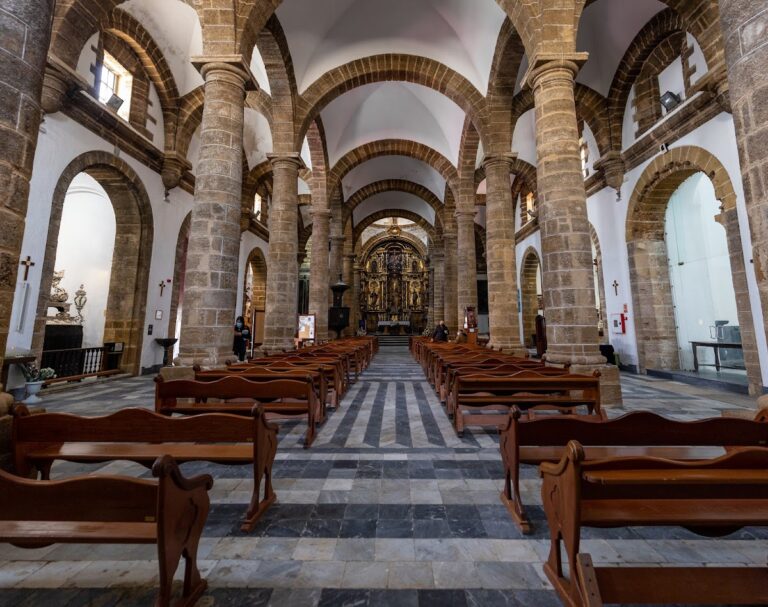
Castillo de Luna (Rota): A Historic Fortress and Town Hall


Site at a Glance
- Rating
- 4.5
- Popularity
- Medium
- Country
- Spain
- Primary era
- Medieval
- External website
- Open
- Eras represented
- Medieval, Early Modern
- Civilizations
- Crown of Castile, Spanish
- Site type
- Military
- Remains
- Castle
On this page6 sections
History
Castillo de Luna (Rota) is a fortress in Spain, built between the thirteenth and sixteenth centuries. Its origins may lie on the site of a Muslim ribat, a fortified Islamic religious and military establishment associated with frontier defense and religious practice. This earlier building is identified in some descriptions as Rábita Ruta, a name apparently derived from the Latin Speculum Rotae, although the identification remains uncertain.
Christian conquest and the Ponce de León lineage
Fernando III, the Castilian king associated with major Christian conquests in Muslim-ruled Iberia, conquered Rota in 1251. Alfonso X, known as “the Wise,” reconquered it definitively in 1264 after the Mudéjar revolt, an uprising by Muslims living under Christian rule.
In 1297, the nobleman Guzmán el Bueno received the lordship of Sanlúcar, which included Rota, and the castle has consequently been attributed to him. That attribution is not confirmed by documentary evidence. The courtyard and staircase are stylistically later than his period, providing a further reason to question the association.
Rota was separated from the lordship of Sanlúcar in 1309. The change formed part of the marriage dowry of Isabel de Guzmán, daughter of Guzmán el Bueno, when she married Fernán Ponce de León, founder of the House of Arcos. The castle then passed to the Ponce de León lineage, whose arms appear in several parts of the building.
Residence, institutions, and municipal use
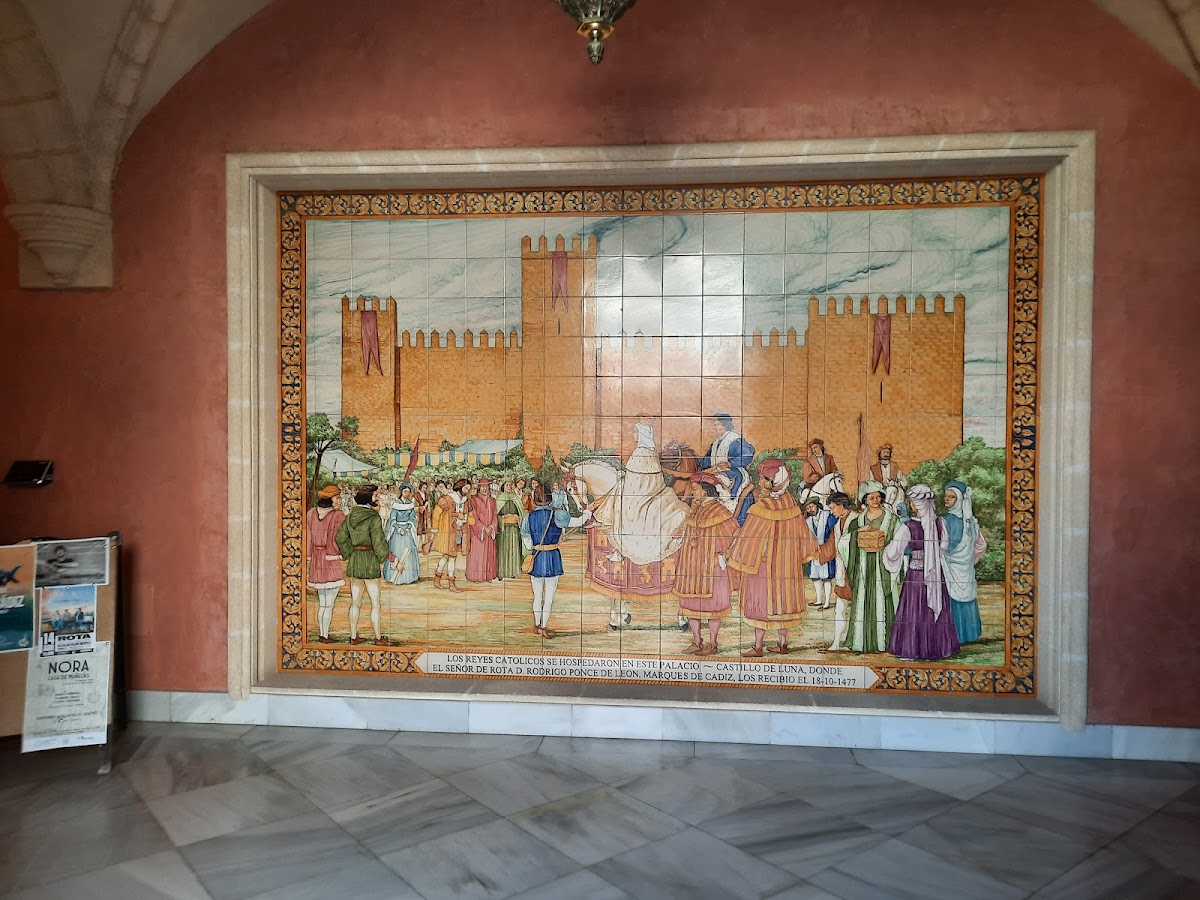
Under the Ponce de León family, the castle served as the residence of the town governor and as the capitular house until 1750. Its name apparently reflects the marriage of Pedro Ponce de León, the unfortunate eldest son and heir of the first Marquis of Cádiz, to a daughter of Álvaro de Luna, a powerful fifteenth-century Castilian nobleman and royal favorite.
In 1909, the Marquis of San Marcial purchased the castle for use as a summer residence and carried out major reforms. José León de Carranza acquired it in 1943 and converted it into San Ramón College and San José Hospital. The institutions were administered by the Daughters of Mary Help of Christians, a Catholic congregation devoted to educating and caring for young people within the Salesian family.
After the religious community donated the building to Rota Town Council, it left the castle in 1982. Following years of abandonment, the council began restoration works in 1987. The work continued until 1999, when the building was inaugurated as the municipal government headquarters. It remains municipally owned and serves as the town hall.
Castillo de Luna has generic legal protection as one of Spain’s historic castles under the 1949 decree and the 1985 Historic Heritage Law. It is designated a Site of Cultural Interest in the category of Monument.
Remains
Fortress layout
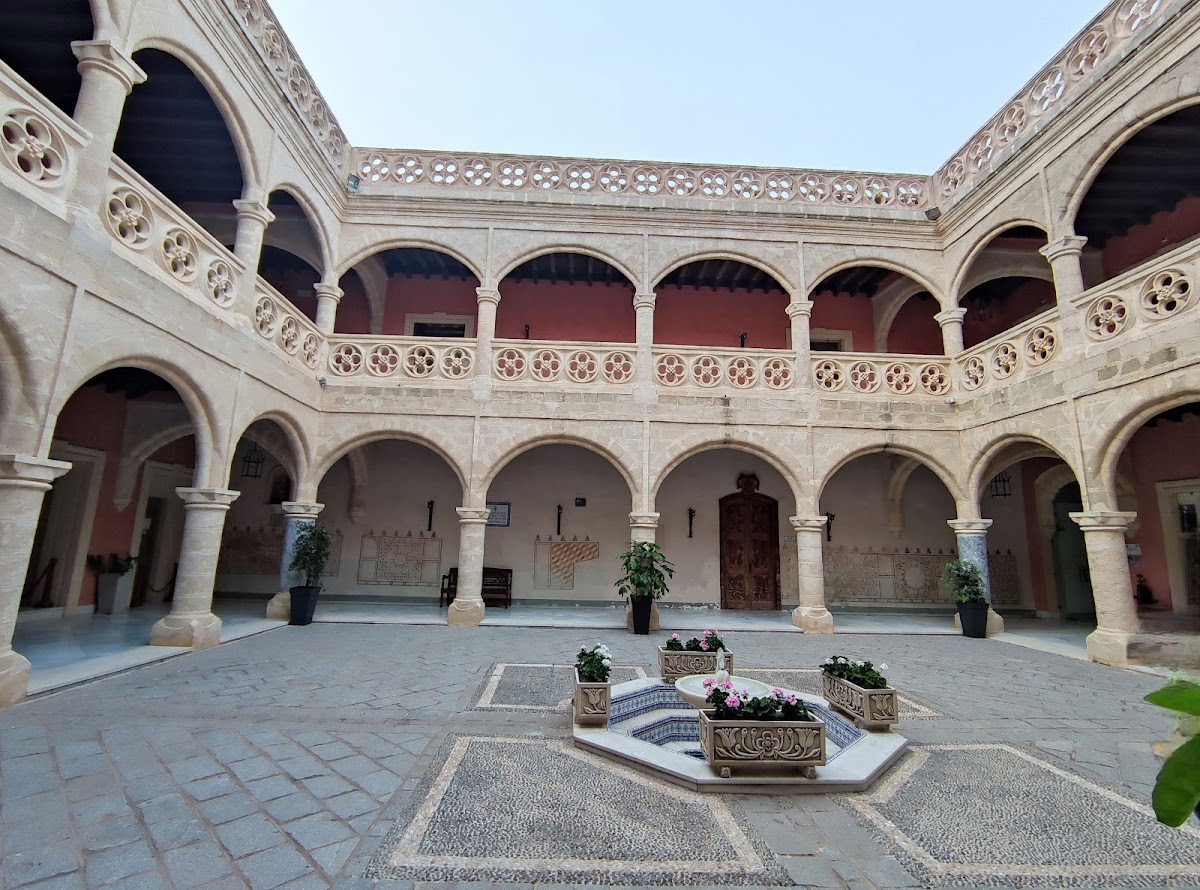
The surviving building is a rectangular fortress with five towers arranged around its perimeter. Its defensive form has been retained alongside the changes made for residential, educational, medical, and administrative purposes. The combination of enclosed fortification and later civic adaptation reflects the building’s changing functions over time.
Central courtyard and staircase
The interior is organized around a central Gothic courtyard. Its plinths are painted with Mudéjar motifs, an artistic approach that combines Islamic traditions with Christian-period buildings. The courtyard and staircase belong stylistically to a period later than Guzmán el Bueno, and their form helps distinguish the surviving interior from the traditional attribution of the castle’s construction to him.