Roman Bridge of Córdoba: A Historic Crossing in Andalusia, Spain



Visitor Information
Google Rating: 4.7
Popularity: Very High
Google Maps: View on Google Maps
Official Website: www.turismodecordoba.org
Country: Spain
Civilization: Early Islamic, Roman
Remains: Infrastructure

History
The Roman Bridge of Córdoba is located in the city of Córdoba, within the province of Andalusia in southern Spain. It crosses the Guadalquivir River, linking the neighborhoods of Campo de la Verdad and the Cathedral area. The bridge was originally built by the Romans, serving as a key crossing point in the region.
The earliest known crossing at this site dates back to the late Roman Republic. According to the historian Aulus Hirtius, Julius Caesar ordered the construction of a temporary wooden bridge here between 49 and 45 BCE during his military campaign against Pompey. This marked the first recorded use of the river crossing. Soon after, in the late 1st century BCE or early 1st century CE, a permanent stone bridge was constructed under Emperor Augustus. This development coincided with Córdoba’s elevation to the status of Colonia Patricia, a Roman colony. The bridge formed part of the Via Augusta, a major Roman road connecting Rome to Cádiz, facilitating military movements and trade.
In the early 8th century, during the Muslim conquest of the Iberian Peninsula, the bridge underwent significant rebuilding. The governor Al-Samh ibn Malik al-Khawlani ordered repairs and modifications around 719 to 721 CE. Later, in 918 CE, further renovations shaped much of the bridge’s current form. Defensive structures were added in subsequent centuries, including the Calahorra Tower in the 12th century and the northern gate known as La Puerta del Puente. The gate was rebuilt in 1572 by Renaissance architect Hernán Ruiz II, replacing earlier medieval fortifications.
Throughout the Reconquista and into modern times, the bridge remained a vital entrance to Córdoba. It housed a toll office and was part of the national N-4 highway until vehicular traffic was prohibited in 2004. Since 1931, the bridge and its adjacent defensive structures have been protected as cultural monuments. The site is included within Córdoba’s historic center, which UNESCO designated a World Heritage Site in 1994. A major restoration took place between 2006 and 2008, involving structural conservation and aesthetic changes.
Remains
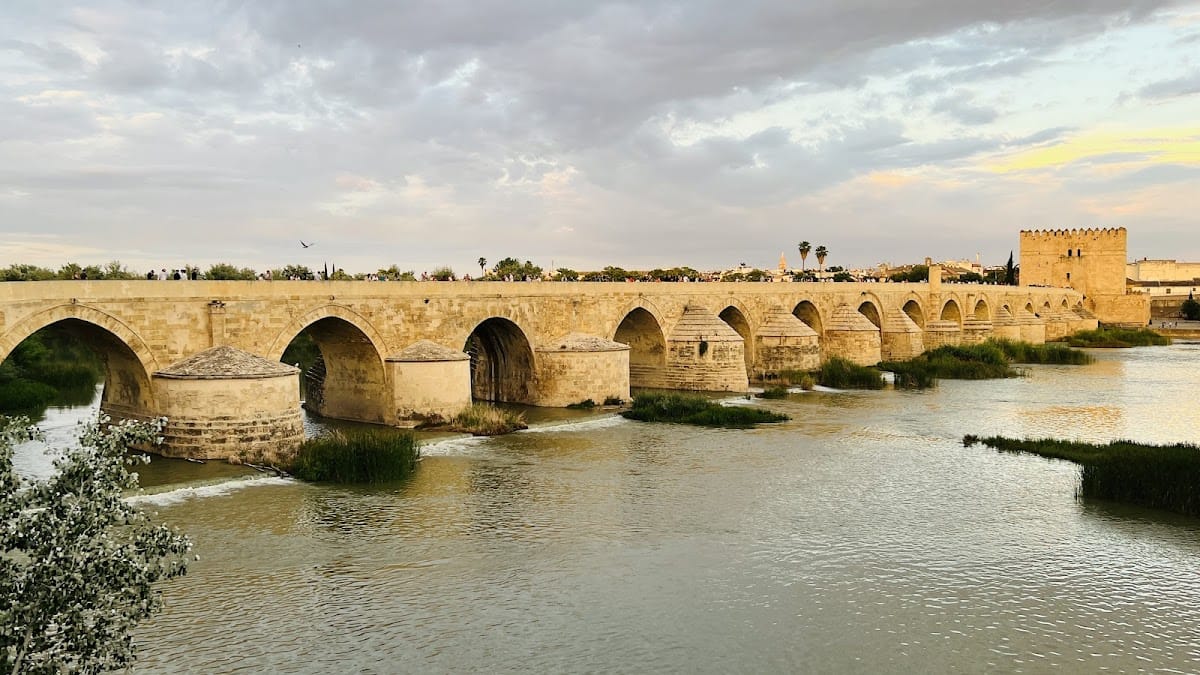
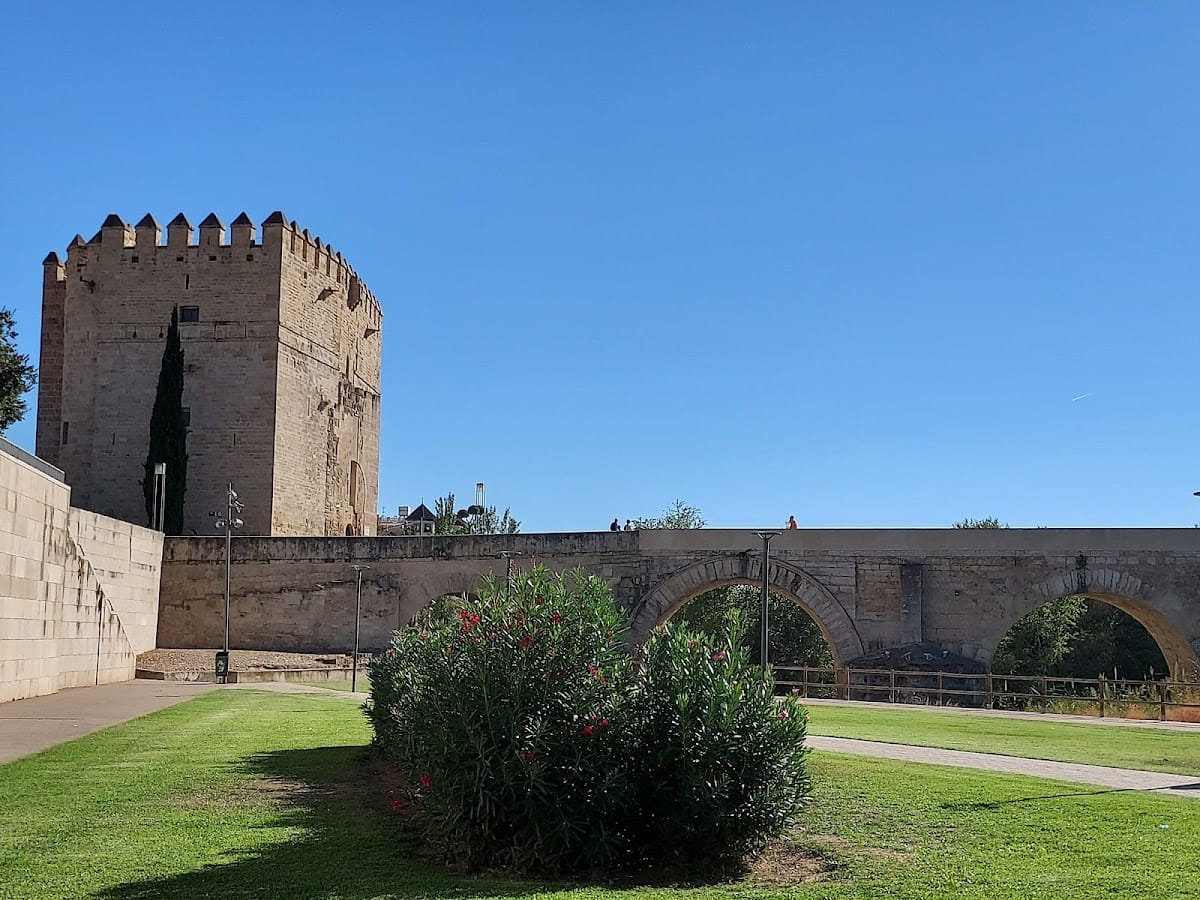
The Roman Bridge of Córdoba stretches approximately 331 meters long and 9 meters wide. It rests on 16 stone arches, although originally it had 17. Most of the current arches and piers reflect construction techniques from the Muslim period renovations, with only two arches retaining original Roman stonework. The bridge is built mainly from large stone blocks called sillares, some of which were reused from earlier Roman walls during the Islamic rebuilding.
At the southern end stands the Calahorra Tower, a defensive structure dating from the 12th century. The northern end features La Puerta del Puente, a gate rebuilt in 1572 during the Renaissance. This gate was part of the city’s fortifications and is often mistaken for a triumphal arch. A statue of Saint Raphael, created in 1651 by Bernabé Gómez del Río, is positioned near the center of the bridge.
The 2006–2008 restoration cleaned the bridge’s cutwaters, revealing original stone surfaces. The cobblestone pavement was replaced with smooth, half-polished pink granite slabs. Old 19th-century lampposts were substituted with modern lighting fixtures. The northern end’s height was adjusted to align with the gate and the riverside promenade. Several niches on the bridge were restored, including one dedicated to Saints Acisclus and Victoria, although some original sculptures were moved elsewhere.
The bridge lies within the Sotos de la Albolafia, a small natural reserve known for its birdlife and historic water mills. Among these mills is the Molino de la Albolafia, which appears on Córdoba’s coat of arms. Since 2004, the bridge has been closed to vehicles, preserving its structure and heritage.
Nearby sites