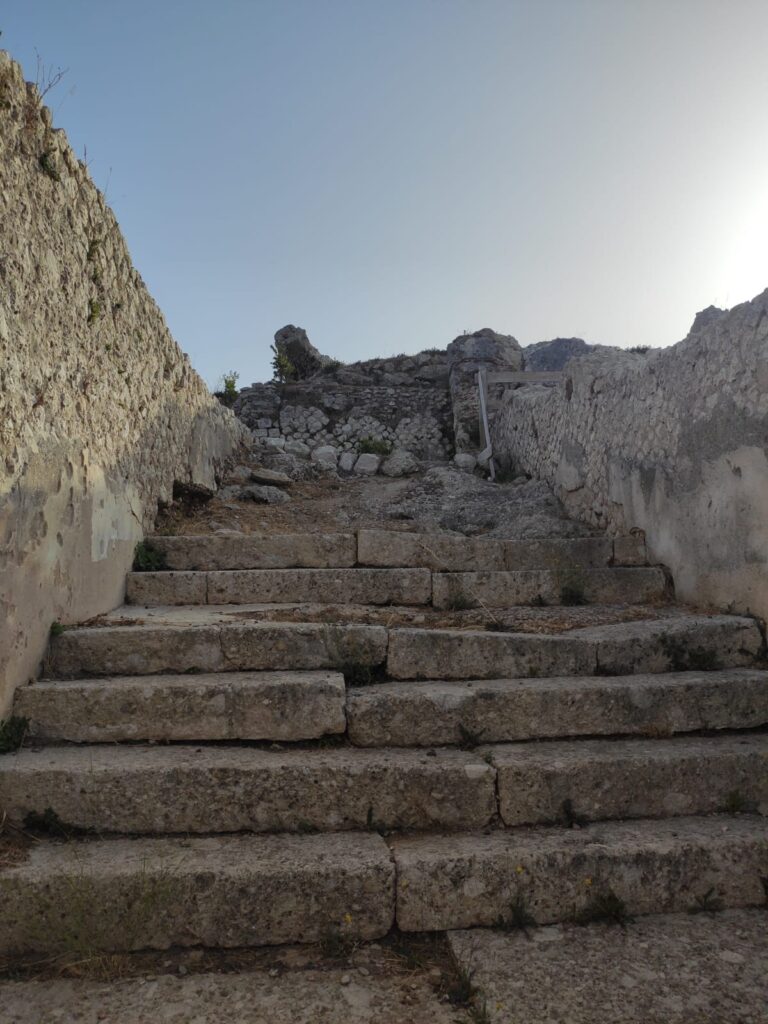
Rocca Montis Dragonis: A Medieval Fortress on Monte Petrino, Italy



Visitor Information
Google Rating: 4.7
Popularity: Low
Official Website: www.fondoambiente.it
Country: Italy
Civilization: Unclassified
Site type: Military
Remains: Castle

History
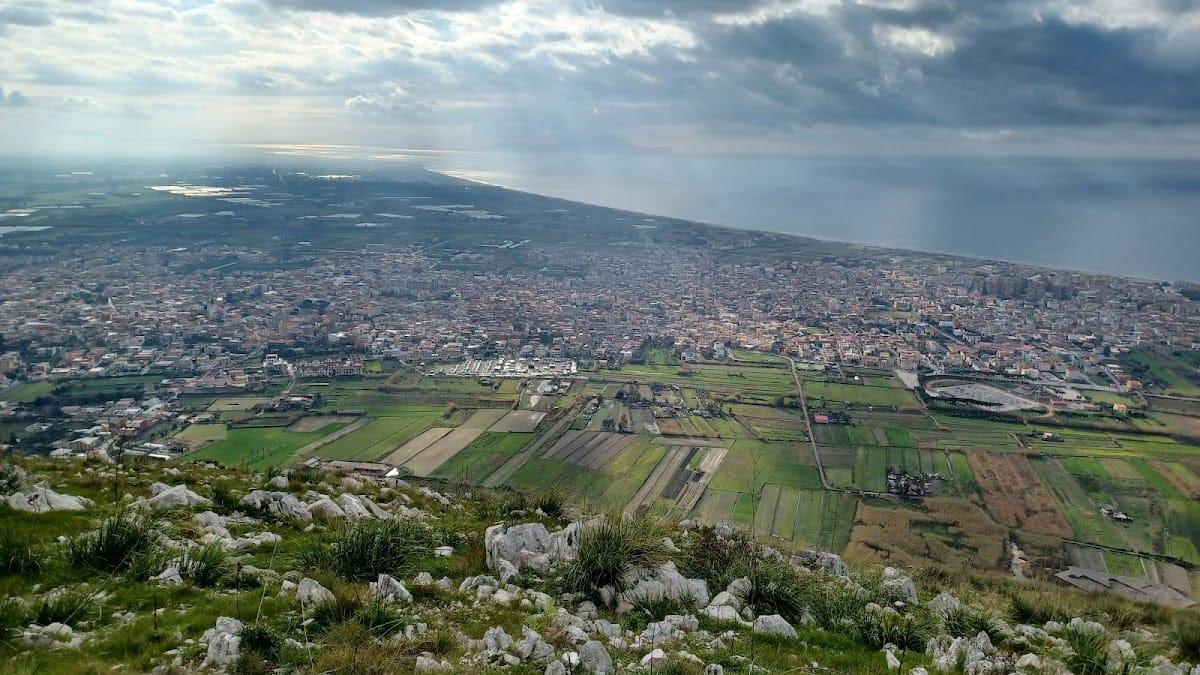
Rocca Montis Dragonis is a medieval fortress situated on the summit of Monte Petrino near Mondragone, Italy. Its origins are closely linked to the early settlers who survived the ancient Roman colony of Sinuessa and established communities atop the mountain. The fortress reflects a long history of occupation and military use spanning from the early Middle Ages through the Renaissance.
The earliest fortifications at the site date back to the Longobard period, who initially constructed defensive works on Monte Petrino. Later, the Normans, particularly the Altavilla family, expanded these fortifications significantly. Under their rule, the site became a strategic stronghold overseeing coastal routes between Gaeta and Naples. The fortress continued to play a prominent military and administrative role through the Swabian era under Frederick II and into the Angevin period, witnessing several sieges and conflict-driven modifications during these centuries.
From the 15th century onward, the fortress came under Aragonese control, during which the final significant architectural changes were made. The Rocca was part of a feudal estate, passing through the hands of prominent noble families including the Marzano and Carafa, and later owned by the Grillo family until the abolition of feudalism in 1806. By the late 1400s, the fortress’s military function diminished, and its inhabitants gradually relocated to settlements at the base of Monte Petrino, leading to its eventual abandonment as confirmed by archaeological findings.
Beneath the medieval layers, the site contains the remains of a much older village known as “Villaggio dei Ciclamini,” dating from the 9th to 7th centuries BCE. This protostoric settlement, with about eighty circular huts, provides evidence of prehistoric occupation of the area before Roman, Longobard, Norman, and later rulers shaped its history. The region also has connections with the Aurunci people before Roman conquest, adding to the complex historical tapestry visible at Rocca Montis Dragonis.
Remains
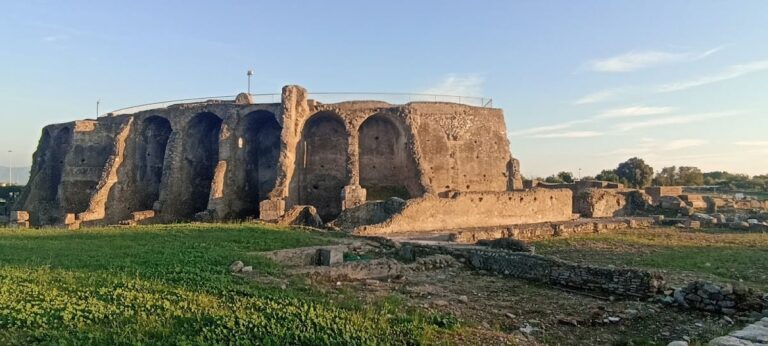
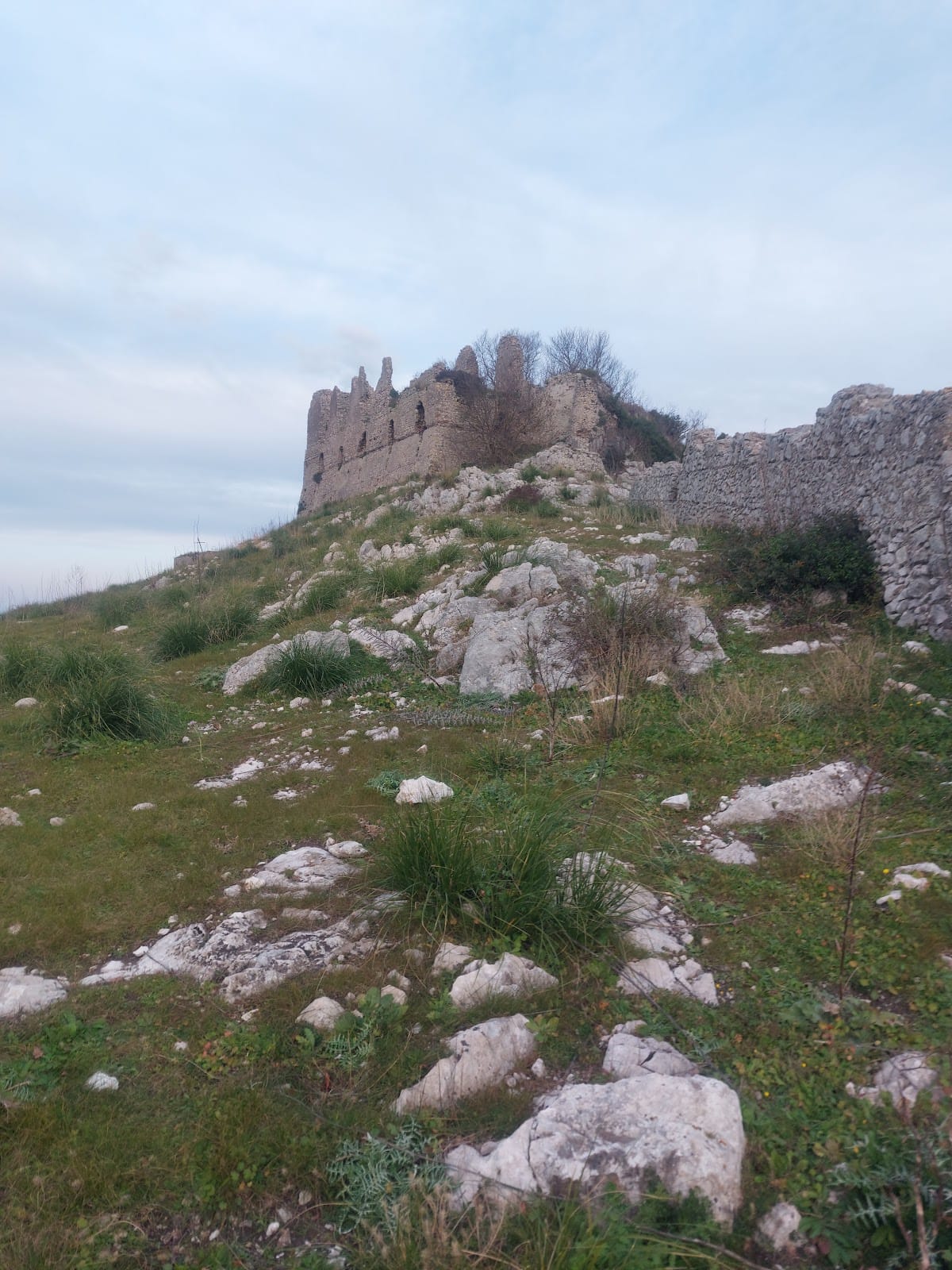
The archaeological remains at Rocca Montis Dragonis reveal a complex layout of medieval military and residential structures built primarily in stone. The main stronghold crowns the summit of Monte Petrino at 412 meters above sea level, centering on a large L-shaped palace with two floors. The upper floor has suffered significant erosion and damage from wartime bombings, while the ground floor contains five gun ports roughly 70 centimeters wide, designed for defense. The upper level featured five large, triangular-capped windows each about 1.80 meters wide and 3.10 meters high, permitting light while maintaining security. Internally, the palace included five rooms, notably a large hall. The principal entrance likely sat on a lateral or rear wall, chosen for strategic defense due to difficult frontal access.
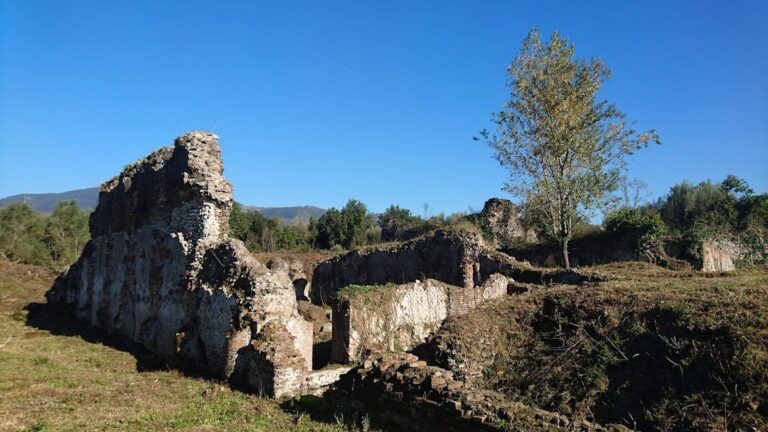
Approximately one hundred meters west along the mountain ridge, a round tower once connected the castle to an elevated walkway offering expansive views. Surrounding the palace are smaller single-story buildings descending the northern slope, whose origins date back to early Longobard settlement and were later expanded by Norman and Aragonese occupants. Many foundations show beam holes indicating attic floors corresponding to the size of the main rooms. Several cisterns for rainwater collection are evident, including a notably large one near the summit measuring approximately 15 by 4 by 4 meters. This cistern is lined with a durable double coat of plaster designed to ensure water retention.
Excavations uncovered thirteen buildings in total across the site. Behind the small mono-apsed church in the eastern village lies a multi-room structure with two cisterns, probably serving as a combined warehouse and residential space. This church was later converted into a cemetery, with the removal of its original flooring to accommodate burials. The eastern village is surrounded by a secondary wall featuring two gates and a pentagonal tower at its western end. The southern village contains houses built of several rooms—three or four in each—highlighting the domestic aspect of the complex.
Defensive structures dominate the site’s perimeter, including a third curtain wall stretching east and west with two separate north-south aligned sections. On the northern slope, a large antemural or outer wall protected the main accessible approach, reinforced by two towers now preserved only at foundation level. This defense shielded the fortress from the comparatively easier northern access, while steep cliffs and vegetation blocked the southern side.
Among the unique finds is a circular limestone furnace dating to the 12th century, located near the summit, almost entirely preserved. This furnace likely served for the production of glass and ceramics, a rare example not known elsewhere in Italy. Additionally, subterranean features have been speculated upon. Local tradition mentions possible underground passages, perhaps connecting the fortress to the Ducal Palace below, though only one nearby cave on the ancient Appian Way, discovered at San Rocco, is documented and currently sealed under cultural protection.
Together, these remains illustrate the site’s evolution from prehistoric village through medieval stronghold, revealing the military and domestic life it supported over many centuries.
Nearby sites