Castle of Sessa Aurunca: A Medieval Fortress and Civic Museum in Italy


Site at a Glance
- Rating
- 4.7
- Popularity
- Very Low
- Country
- Italy
- Primary era
- Medieval
- Eras represented
- Medieval
- Civilizations
- Kingdom of Sicily, Lombard, Norman
- Site type
- Military
- Remains
- Castle
On this page7 sections
History
The Castle of Sessa Aurunca is a medieval fortress and civic cultural complex in Sessa Aurunca, Italy, begun in the late ninth century on the town’s ancient acropolis. Landone, the Lombard gastald, an administrative and military official, probably initiated the castle after losing Capua. By around 963, its rooms were being used for the acts of the Placito of Sessa Aurunca, showing that the stronghold had been completed by that time.
Norman and Swabian Fortification
During the Norman period, when Norman rulers and institutions became established across southern Italy, the castle was rebuilt as both a castrum, or fortified military stronghold, and a palatinum, a palace for the city’s lord. Under Frederick II of Swabia, the medieval Holy Roman Emperor and ruler of the Kingdom of Sicily, the complex gained additional towers and became a center of military defense within the territories that later formed the Kingdom of Naples.
From Lordly Residence to Municipal Property
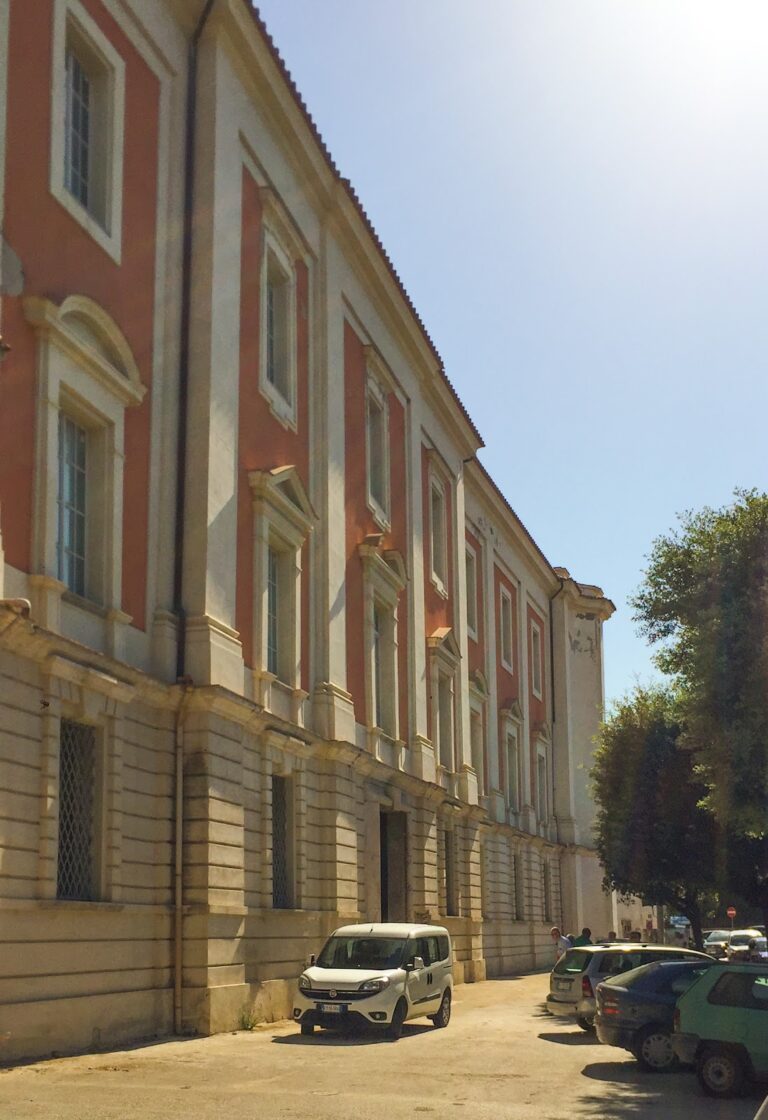
From the fifteenth century, the palace was adapted for court life and residential use. Governors and a viceroy occupied the complex, while ownership passed from the Marzano family, who held it until 1466, to the Carafa family of Stigliano from 1522 to 1664. The Paternò dukes then owned the castle until 1806. Among its distinguished guests were Frederick III, a fifteenth-century Habsburg Holy Roman Emperor, and Charles V, the sixteenth-century Habsburg emperor and king of Spain. Charles V’s presence is commemorated in a painting preserved in the Salone dei Quadri of Sessa Aurunca’s town hall.
An earthquake in 1688 severely damaged the castle. Don Andrea Guerriero D. Torres directed the repairs, and an interior fresco represents this work. In 1806, following the end of Paternò ownership, the complex became municipal property. The municipality first used it as a prison and later as a school.
Restoration and Museum Use
Restoration between 2007 and 2014 removed additions made during the twentieth century and adapted the castle for cultural purposes. The complex now houses the Civic Museum and the Caio Lucilio Municipal Library, while its rooms also accommodate archaeological displays and events. The castle is recognized as Italian national heritage, remains in municipal ownership, and is in restored condition.
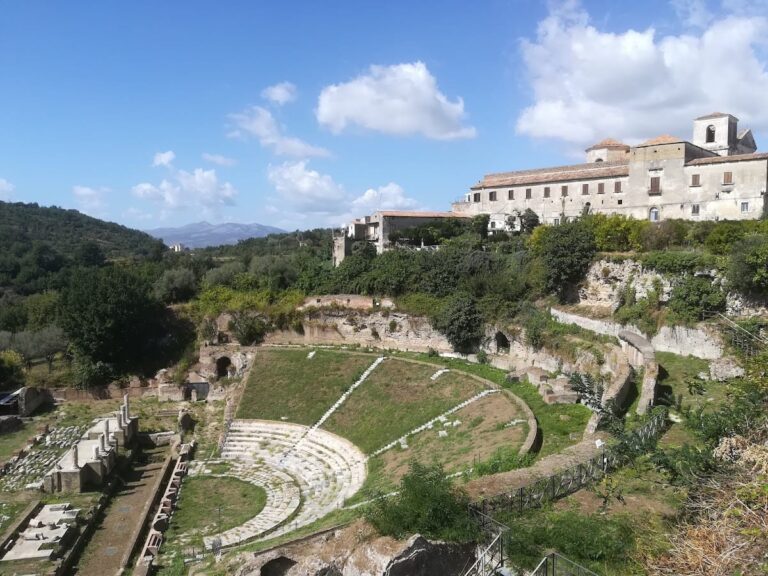
A small collection from the Roman Theatre area was formerly displayed in the castle as the Civic Archaeological Museum. An agreement reached in 2024 between the Regional Directorate of National Museums of Campania and the Municipality led to the creation of the National Archaeological Museum of Sessa Aurunca. The museum was inaugurated on 18 December 2024 with the involvement of the National Archaeological Museum of Naples and universities in the area.
Remains
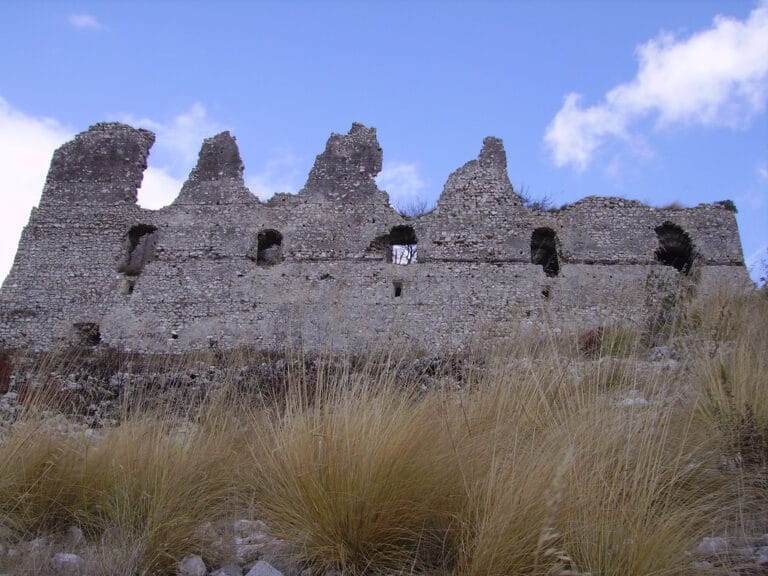
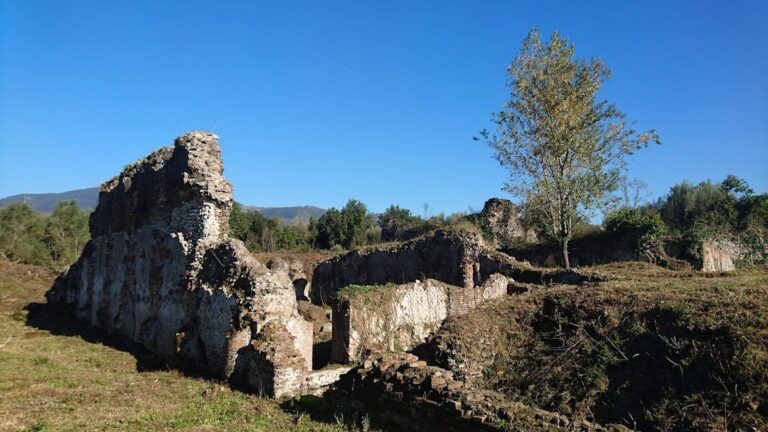
The castle occupies the ancient acropolis and follows an irregular quadrangular plan. It is a Romanesque masonry building that includes rubble-stone construction. Its surviving form brings together the defensive fabric of a medieval fortress, later residential alterations, and spaces adapted for museum and library use.
Towers and Medieval Windows
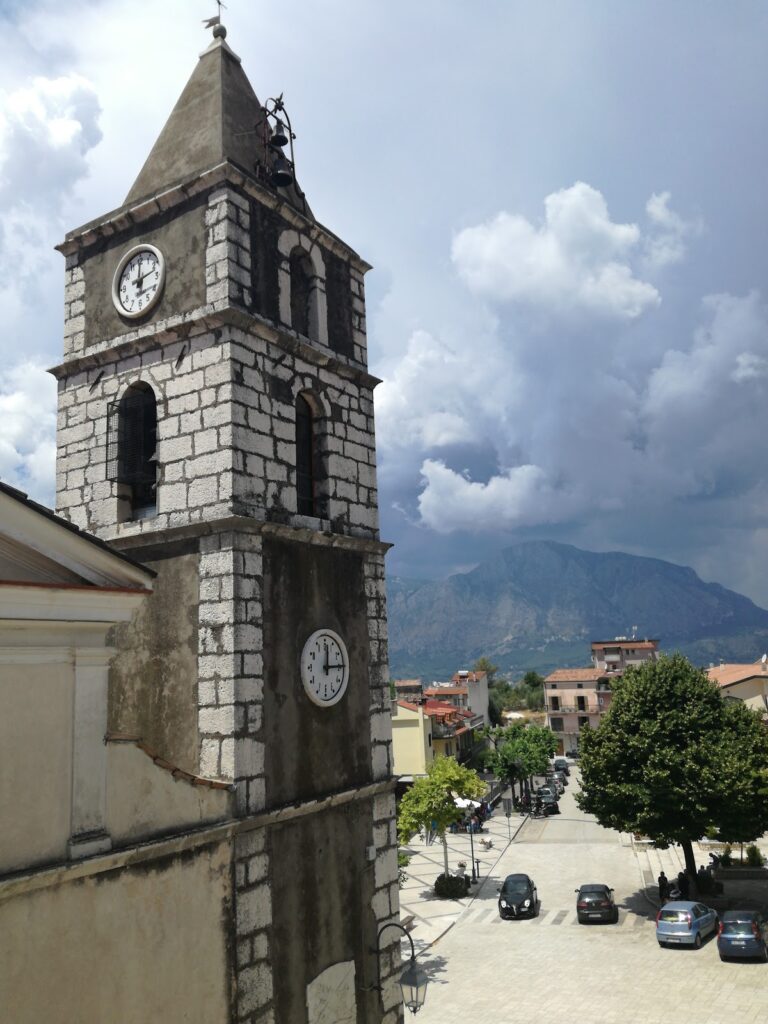
Additional towers were incorporated during the expansion under Frederick II, reinforcing the castle’s military character. Its characteristic bifore, or two-light windows divided by a central column or pier, date approximately from the thirteenth century. Some were later replaced by ordinary windows. The interiors were progressively altered over time, while the most recent restoration removed twentieth-century structures to recover more of the monument’s medieval character.
Museum and Cultural Rooms
The restored rooms contain archaeological and cultural facilities, including displays from the Roman Theatre of Sessa Aurunca. They also present material recovered from the seabed of Sinuessa, an ancient Roman settlement on the coast whose remains are partly submerged. The finds came from ENEA initiatives connected with the development of an underwater route along the rocky coast. Among the notable works displayed there is the statue known as Vivia Matidia, or Matidia the Younger.