Rocca Borromeo di Angera: A Historic Fortress in Northern Italy


Visitor Information
Google Rating: 4.5
Popularity: Medium
Google Maps: View on Google Maps
Country: Italy
Civilization: Unclassified
Remains: Military

History
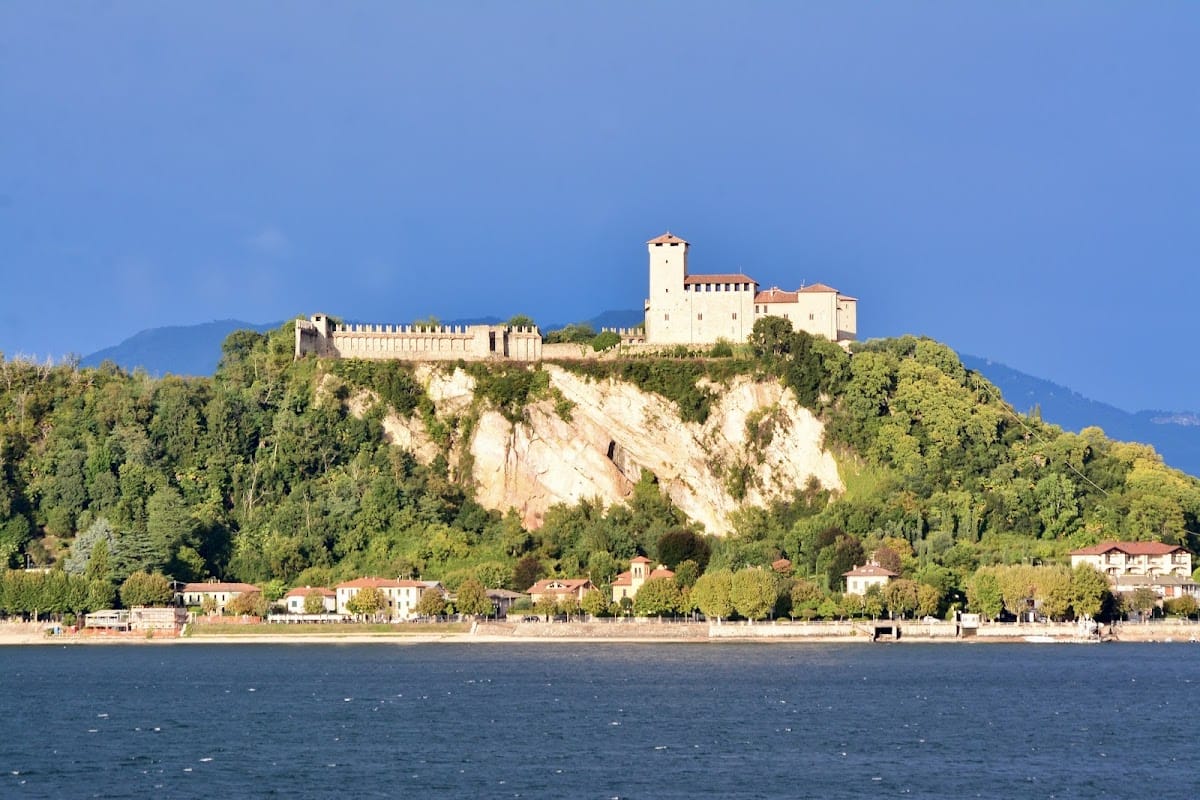
The Rocca Borromeo di Angera is a historic fortress located in the town of Angera in northern Italy. Its origins trace back to the early medieval period, possibly as early as the Lombard era, when it functioned as a watchtower under the ownership of the Milanese archbishopric.
In the 13th century, the fortress played a crucial role as a sanctuary for Archbishop Leone da Perego following his banishment from Milan during internal conflicts involving the Della Torre family. After the Visconti family decisively defeated the Della Torre clan in the Battle of Desio in 1277, Ottone Visconti—who was both archbishop and the first lord of Milan—expanded the structure. He added what is now called the Ottonian wing. The Visconti saw Angera as the legendary birthplace of their family and incorporated the fortress, alongside other former church properties, into their holdings.
Later in the 14th century, specifically between 1375 and 1385, Bernabò Visconti further enlarged the castle by constructing a new wing named Ala Scaligera, honoring his wife, Regina Della Scala. The death of Gian Galeazzo Visconti in 1402 led to a period of instability. During this time, control of Angera briefly passed to Gaspare Visconti, related to Uberto Visconti. However, a significant shift occurred in 1439 when Duke Filippo Maria Visconti transferred the nearby town of Arona to Vitaliano Borromeo. By 1449, the Borromeo family had acquired jurisdiction over Angera and its fortress, thus integrating it into their dominion around Lake Maggiore. Except for a short interval after 1497 when the Sforza dukes assumed power, the Rocca has remained under Borromeo ownership ever since.
The Borromeo family also reshaped the fortress’s architecture, transforming the existing Visconti-built fourth wing during the period between 1564 and 1631. After centuries of relative decline, restoration efforts began in the early 1600s under Cardinal Federico Borromeo. These refurbishments continued with significant work by Giulio Cesare III and Antonio Renato Borromeo. The interior was enhanced with frescoes by well-known artists, including the Santagostino brothers, Antonio Busca, and Filippo Abbiati.
Throughout the 20th and 21st centuries, the Rocca was developed into a center interpreting medieval history, which included reconstructing medieval gardens based on historical manuscripts. Since 1988, it has also housed the Museo della Bambola e del Giocattolo, founded by Princess Bona Borromeo Arese. This museum holds over a thousand dolls dating from the 18th century to modern times.
Remains
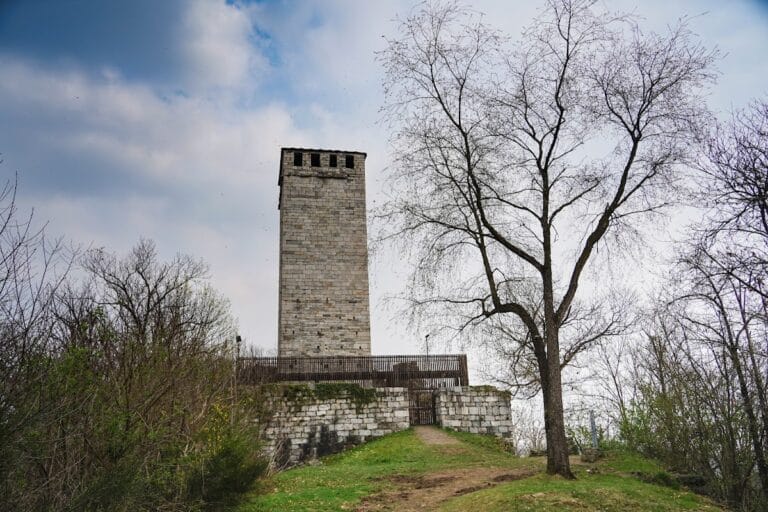
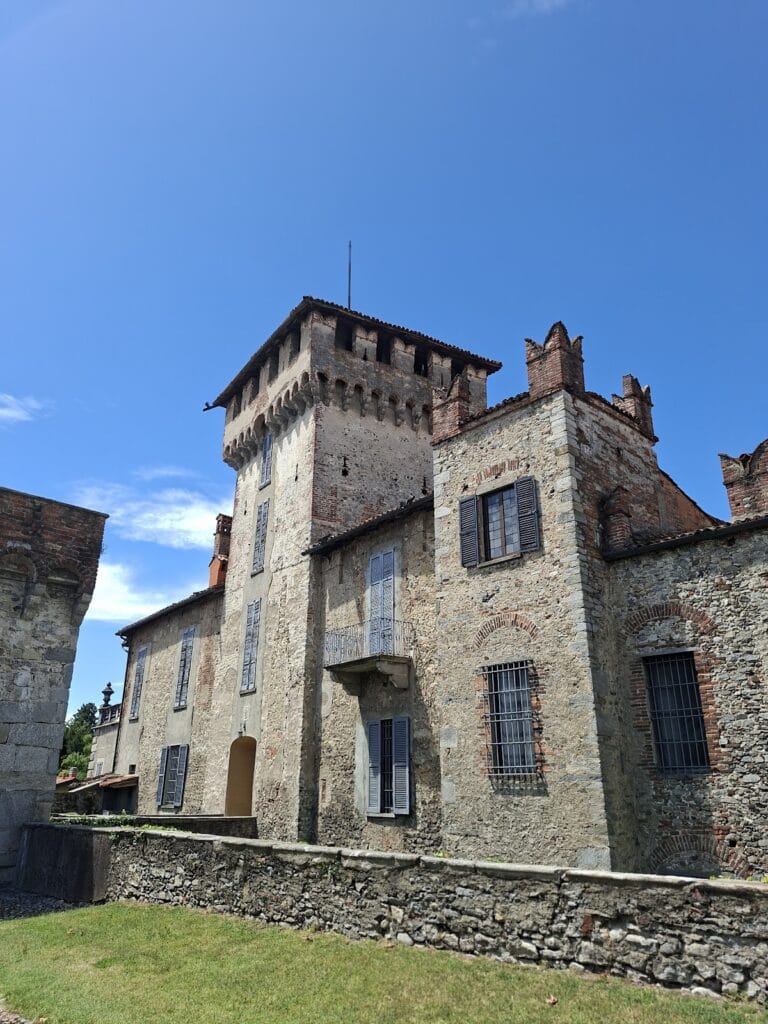
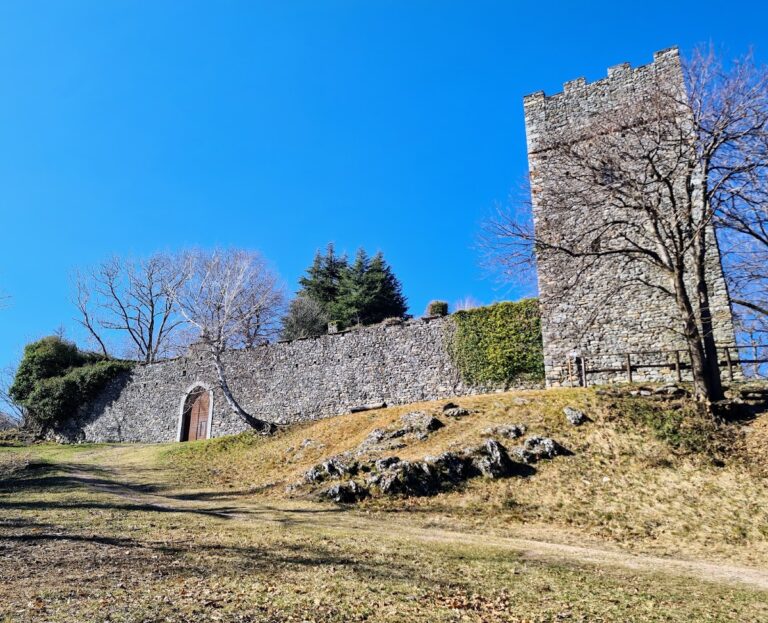
Perched on a hill overlooking the southern shore of Lake Maggiore, the Rocca Borromeo di Angera consists of five principal sections, each reflecting different stages in its development. These include the Ala Scaligera (Della Scala wing), the Ala Viscontea (Ottonian wing), the ancient keep known as Torre di Giovanni Visconti, and the Borromean wing. Together, they enclose an internal courtyard known as the Corte Nobile. A distinctive northeastern wall with corner turrets wraps around the cliff edge, creating a protected medieval garden that contains medicinal plants, aromatic herbs, and a vineyard.
The Ottonian wing is built entirely from smoothly cut local stone blocks arranged in squared courses, illustrating residential building techniques of the 13th century. Its ground floor features simple, narrow windows, while the upper-floor windows are divided vertically by stone mullions. This wing was constructed adjacent to the original keep, effectively sealing the original entrance to the tower. Inside this wing lies the Hall of Justice, which preserves frescoes from the 13th century painted by an unknown master. These paintings portray scenes from Archbishop Ottone Visconti’s life, his triumph over the Della Torre, and the subsequent peace established in Milan. The imagery combines Christian themes, the twelve signs of the zodiac, and a partially surviving Wheel of Fortune, an ancient symbol illustrating the unpredictable rise and fall of ruling families.
The castle also contains the Sala dei Fasti Borromeo, where 15th-century frescoes by Michelino da Besozzo have been installed. Originally created for the Borromeo Palace in Milan, these paintings were relocated to the Rocca after the wartime bombings of World War II, representing important examples of late Gothic secular art in the Lombardy region. Additional rooms include the Sala delle Cerimonie, decorated with 15th-century frescoes saved from Milan, and the Sala della Mitologia, which holds a large collection of over three hundred maiolica ceramics originating from various European and Asian workshops.
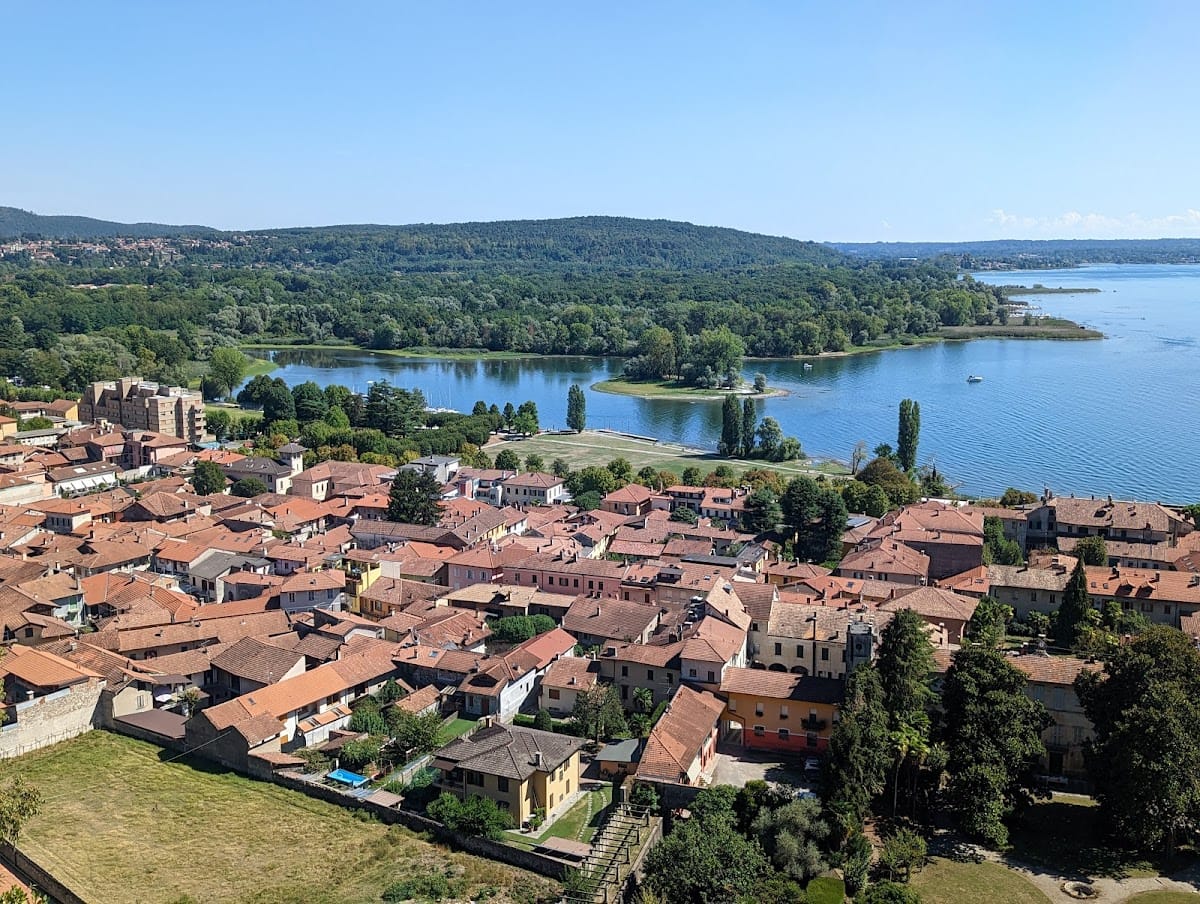
Near the entrance courtyard, the former stables house a significant medieval winepress. Notably large, this press is among the biggest of its kind in Europe. The Rocca’s well-preserved condition allows visitors to access the keep, where panoramic views of the southern Lake Maggiore area can be enjoyed, reflecting the fortress’s longstanding strategic position.
Nearby sites