Revište Castle: A Medieval Fortress in Slovakia


Visitor Information
Google Rating: 4.7
Popularity: Low
Google Maps: View on Google Maps
Official Website: www.hradreviste.sk
Country: Slovakia
Civilization: Unclassified
Remains: Military

History
Revište Castle stands in the village of Revištské Podzámčie, Slovakia. This medieval fortress was built by the Kingdom of Hungary during the second half of the 13th century, at a time when much of the region was under Hungarian rule. Its construction coincided with that of Šášov Castle, positioned 18 kilometers away across the Hron River, both serving to guard strategic passages along trade routes heading into important mining towns like Banská Štiavnica and Kremnica.
The castle first appears in written documents in 1265, with another mention in 1331, indicating its early significance. The 14th century marked the height of its development as a royal stronghold. Over time, Revište changed hands several times. Notably, the prominent Dóczy noble family owned the castle for almost two hundred years, solidifying their regional influence.
In the 1440s, Revište was seized by supporters of the Hussite military leader Ján Jiskra of Brandýs, reflecting the turbulent conflicts associated with religious and political upheavals in Central Europe. King Matthias Corvinus regained control in 1467 and leveraged the castle as part of a deal involving nearby Šášov Castle. The following year, ownership passed to Ján Vitéz, the Archbishop of Esztergom, before returning to royal possession. In 1479, the castle was granted to Bishop Urban Dóczy of Veľká Lúča, cementing its role under ecclesiastical nobility for decades to come.
The Dóczy family maintained stewardship of Revište until 1647, when the castle’s last lord, Žigmund Dóczy, died at the hands of Ottoman forces during their incursions into the region. Approximately three decades later, around 1679, the castle suffered extensive damage during the rebellion led by Imrich Thököly, a nobleman challenging Habsburg rule. Despite repairs made after this turmoil, the fortress’s military importance waned by the late 18th century. It was then repurposed as barracks before being abandoned and gradually falling into ruin by the 19th century. In recent decades, efforts to stabilize and conserve the remains have been underway to preserve this historic site.
Remains
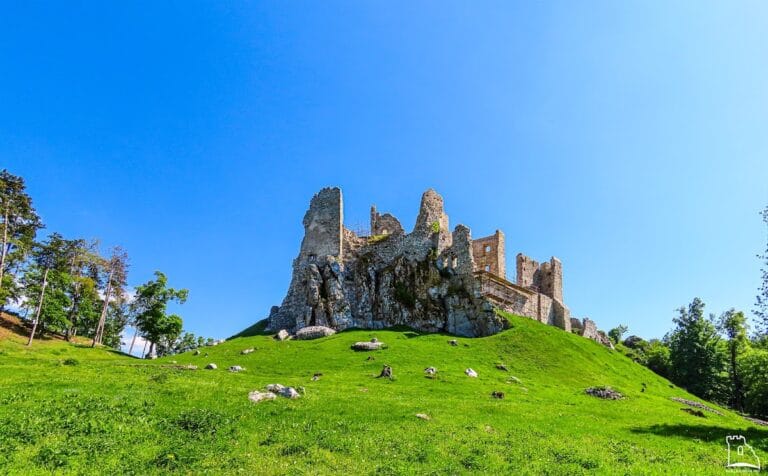
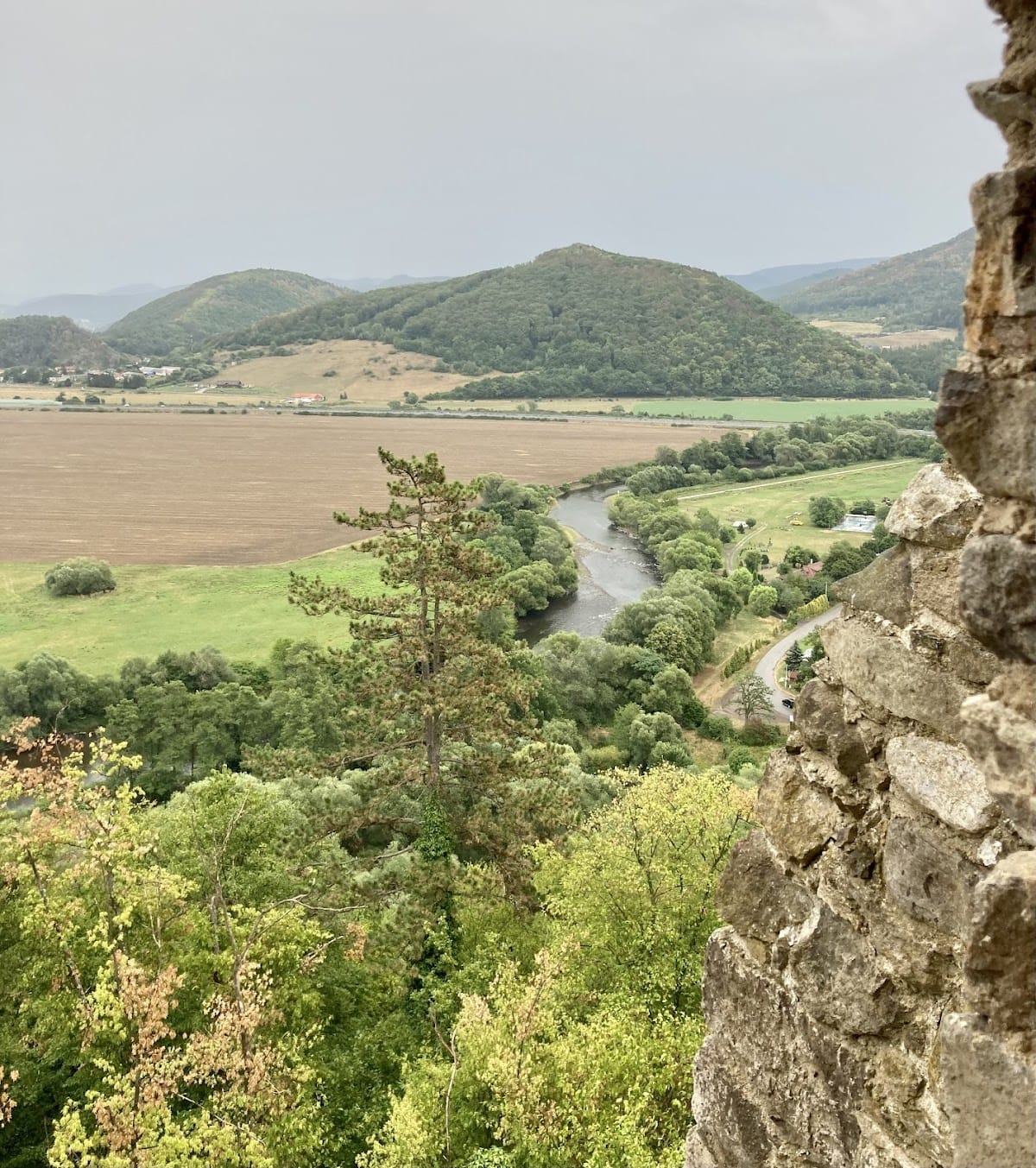
Perched on a rocky promontory overlooking the right bank of the Hron River, Revište Castle displays an irregular footprint shaped by the natural terrain. Its design includes an inner keep with defensive walls enclosing a courtyard that once housed a palace. This arrangement provided a fortified center for residence and protection during times of conflict.
Access between the lower and upper courtyards was fortified by a circular bastion, which served as an artillery tower or lookout point, enhancing the castle’s defense capabilities. During the Renaissance period, additional fortifications were constructed, expanding the defenses to include a southern outer bailey—a type of enclosed courtyard used for various purposes such as stabling horses or accommodating troops.
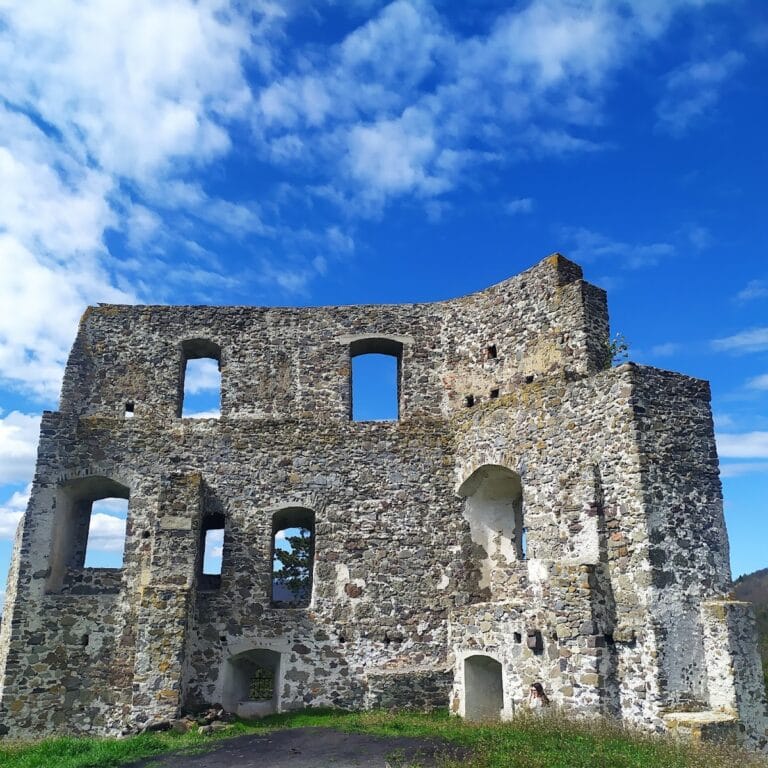
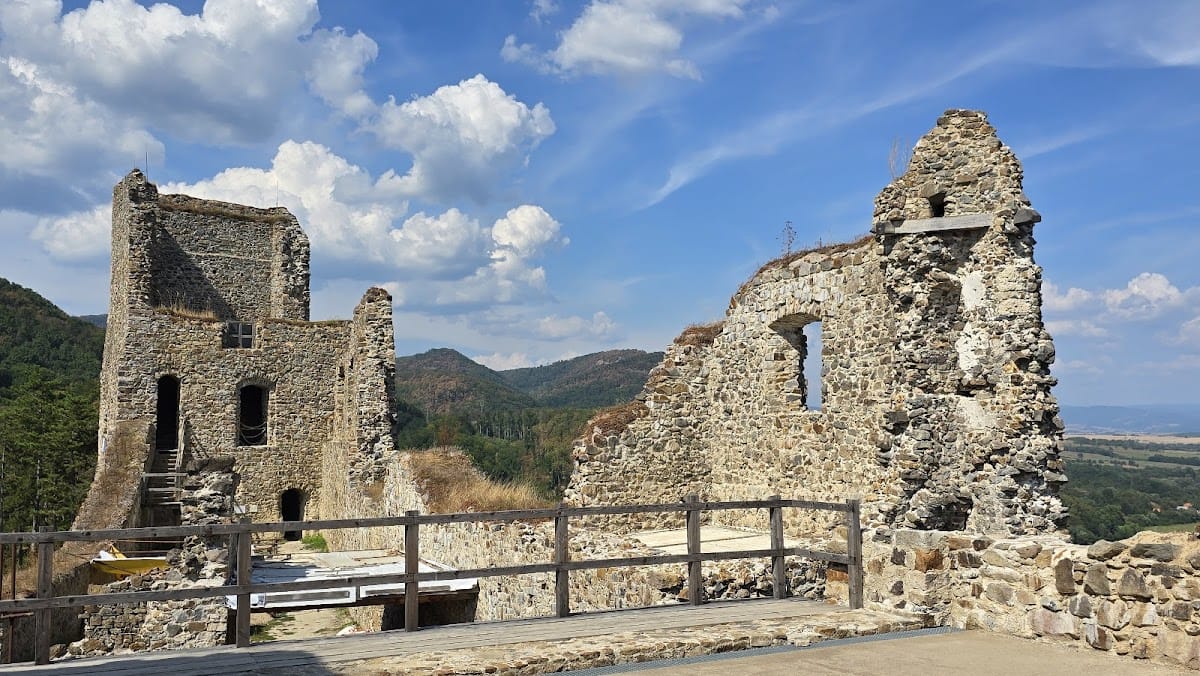
Today, the site contains fragmented perimeter walls showing signs of age and damage but still outlining the castle’s former boundaries. Among the ruins lie portions of residential buildings where inhabitants once lived and worked. These remains sit amid dense forest, preserved as stone fragments amid the natural surroundings. No inscriptions or decorative stonework have been documented on site, highlighting the castle’s primarily military and residential function rather than ornamental design.
The ruins provide insight into the layered history of defense, noble residence, and adaptation over several centuries as warfare and ownership shifted across the region. Ongoing preservation seeks to protect the remaining structures from further decay while allowing the castle’s story to endure through its surviving stones.
Nearby sites