Dobrá Niva Castle: A Gothic Hilltop Fortress in Slovakia
Site at a Glance
- Rating
- 4.5
- Popularity
- Low
- Country
- Slovakia
- Primary era
- Medieval
- External website
- Open
- Eras represented
- Medieval
- Civilizations
- Hungarian
- Site type
- Military
- Remains
- Castle
On this page8 sections
History
Dobrá Niva Castle is a Gothic castle ruin at Podzámčok in Slovakia, probably built in the second half of the thirteenth century after the Mongol invasion. That invasion of the Kingdom of Hungary encouraged the construction or strengthening of fortified sites across the region. The castle guarded an old trade route south of Zvolen, linking Krupina and Zvolen, and one of the counts of Zvolen County was probably responsible for its construction.
Royal Estate and Medieval Ownership
The castle first appears in written records from 1305 to 1306, when a document names it castrum de Dobronya. It became the centre of the royal Dobroniv estate and retained that administrative role until the sixteenth century. For a period it belonged to the domain of Matthew Csák, a powerful Hungarian oligarch who controlled extensive territories in the early fourteenth century. After his death in 1321, the castle passed to the royal chamber, the institution responsible for administering royal revenues and crown estates.
From 1424 to 1486, Dobrá Niva Castle belonged to royal queens. Barbara of Cilli held it from 1427 to 1437, followed by her daughter Elisabeth of Luxembourg. The castle suffered severe damage during the civil war over the Hungarian succession. A document issued by Ladislaus the Posthumous in 1455 records the destruction.
Ottoman Pressure and Decline
The castle regained strategic importance in the second half of the sixteenth century, when the Ottoman Empire expanded into neighbouring areas of central Europe. Ottoman forces generally restricted their activity in the Dobroniv estate to raids, but in 1583 the beys of the Szécsény and Fülek sanjaks, Ottoman administrative districts, organized an expedition against the castle. Timely assistance from the captain of Zvolen helped repel the attack. The castle was then so dilapidated that administration of the estate moved to a new building below it.
That estate-administration building was constructed in 1609, while only a military garrison remained at the castle. Ownership changed several times during the late Middle Ages and Renaissance. The Esterházy family held Dobrá Niva from 1614 to 1804 and restored the castle on several occasions, including in 1731. From the end of the eighteenth century, however, the fortress entered a prolonged period of abandonment and decline.
State Ownership and Conservation
In 1805 the state acquired the castle for the Mining Chamber, a state institution responsible for mining administration and revenues. With little maintenance, the ruins continued to deteriorate, and local residents later reused parts of the abandoned structures as building material for their houses. The surviving remains are now conserved. Recent repairs were restrained, using little unnecessary concrete and leaving only faintly visible traces of intervention. The municipality of Podzámčok owns the castle, which is publicly accessible.
Remains
Hilltop Fortress
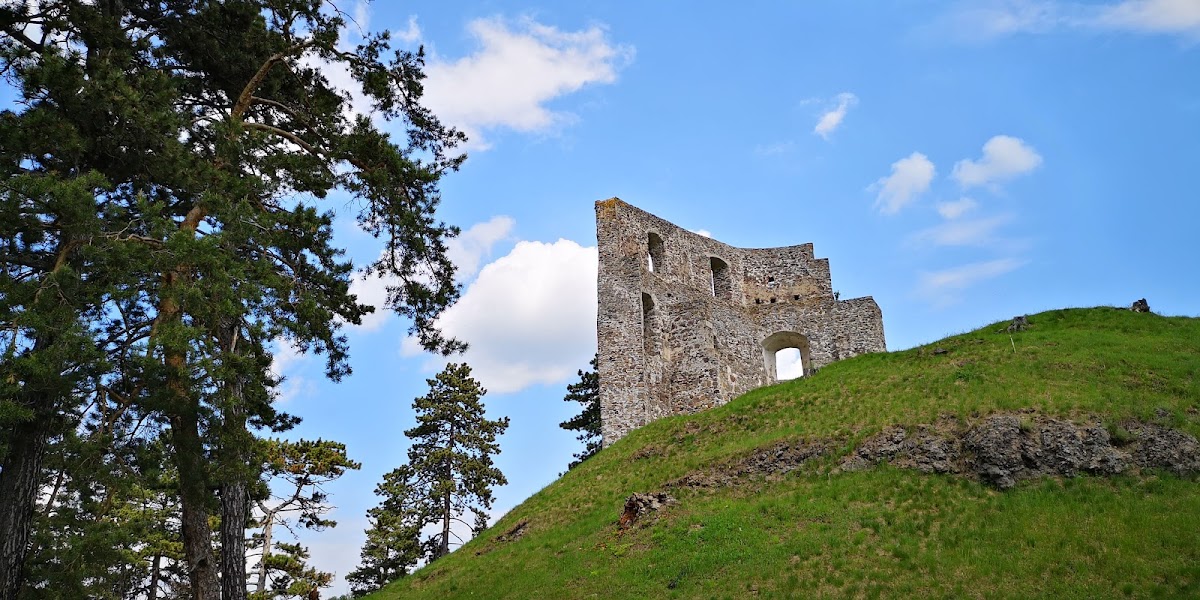
Dobrá Niva Castle occupied the highest point of a conical, 447-metre-high hill north of Podzámčok, where the Javorie Mountains meet the Pliešovská basin to the south. The Gothic hilltop fortress consisted principally of a two-storey palace, a tower, and stone curtain walls. Around this upper enclosure, an outer earthwork system formed a ring of deep ditches and broad ramparts.
Outer Defences
The earthen fortification includes traces of projections resembling flanking bastions, projecting defensive works that allowed fire along adjoining walls or earthworks. The arrangement has been interpreted as suitable for defending the ditches and ramparts with firearms. A description from 1668 presents the palace as a stone building protected by two gates, a bastion, and strong fortifications.
Palace Remains
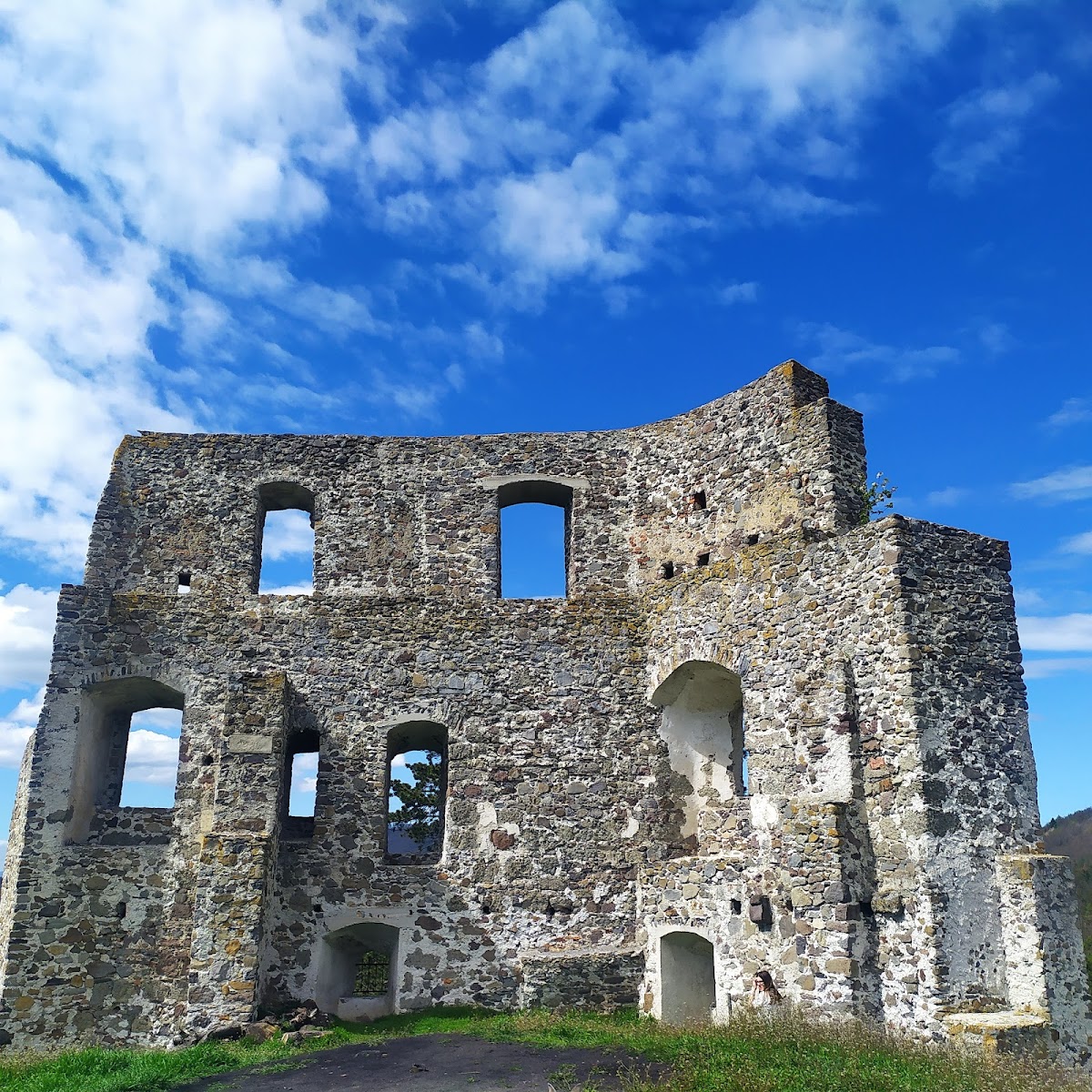
Almost the entire former castle has disappeared. At the summit, a fragment of the palace survives as the principal substantial remnant. These palace remains have been conserved and preserve the clearest physical evidence of the former stone stronghold and its position within the hilltop defensive system.