Potaissa: A Roman Legionary Fortress in Dacia (Modern Turda, Romania)



Visitor Information
Google Rating: 3.7
Popularity: Low
Google Maps: View on Google Maps
Official Website: castrulpotaissa.ro
Country: Romania
Civilization: Roman
Remains: Military

History
Potaissa is located in present-day Turda, Romania, on Strada Castrului Roman. The site began as a Dacian settlement before Roman conquest. Between AD 101 and 106, during Emperor Trajan’s campaigns known as the Dacian Wars, the Romans captured the area but retained the name Potaissa.
Following the conquest, Potaissa developed into a municipium, a self-governing town, and later achieved the status of a colonia, a Roman settlement with special privileges. It became an important military and urban center within the province of Roman Dacia. Around 168 AD, the Roman army stationed Legio V Macedonica at Potaissa to strengthen the northwestern frontier. The legion built a fortress on the “Cetate” Hill, which served as their base.
The fortress and its surrounding settlement remained active until about 274 AD. At that time, Emperor Aurelian ordered the withdrawal of Roman forces from Dacia, including Legio V Macedonica. After the legion left, urban life at Potaissa declined, and the area gradually became more rural.
Ancient sources mention Potaissa under different names. The Tabula Peutingeriana, a Roman road map, refers to it as Patavissa. The Milliarium of Aiton, a milestone dated to 108 AD, records the construction of a road from Potaissa to Napoca by the Cohors I Hispanorum miliaria during Trajan’s reign. This inscription confirms the military and infrastructural importance of the site in the early 2nd century.
Archaeological interest in Potaissa dates back to the 16th century, with early reports of ruins. Systematic excavations began in 1958 and intensified from 1971 onward. Notable archaeologists such as Constantin Daicoviciu, Mihai Bărbulescu, and since 2014 Sorin Nemeti have led research efforts. Their work uncovered military and civilian structures, inscriptions, coins, and artifacts that illuminate the Roman military presence and cultural influence in the region.
Remains
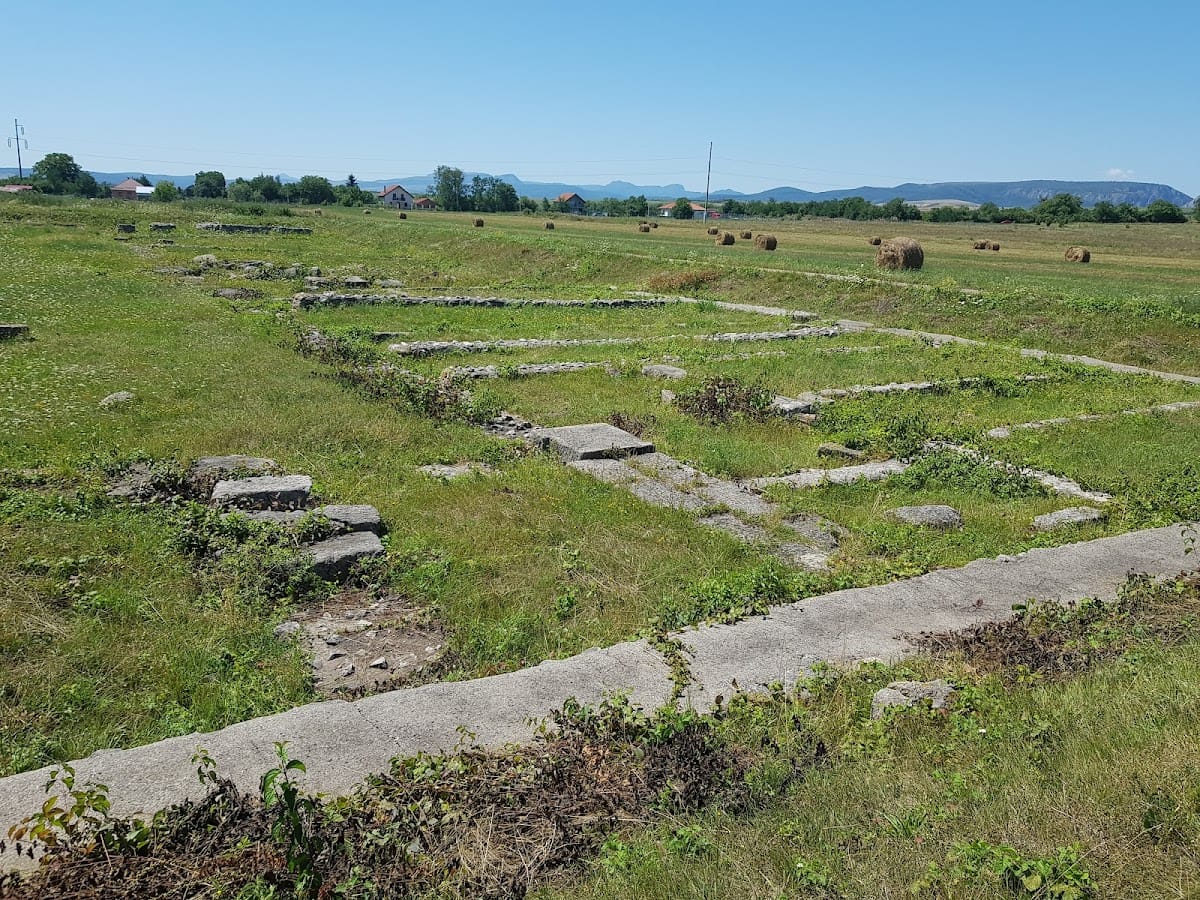
The legionary fortress at Potaissa covers about 23.4 hectares and is enclosed by walls nearly 2 kilometers in length. The fort’s layout is trapezoidal, with bastions at each corner and gates on all four sides. The walls, originally 4 to 5 meters high, rest on foundations between 1.7 and 2.25 meters wide. Builders used local stone materials including limestone, ofiolite (a type of volcanic rock), tuff, and sandstone quarried nearby.
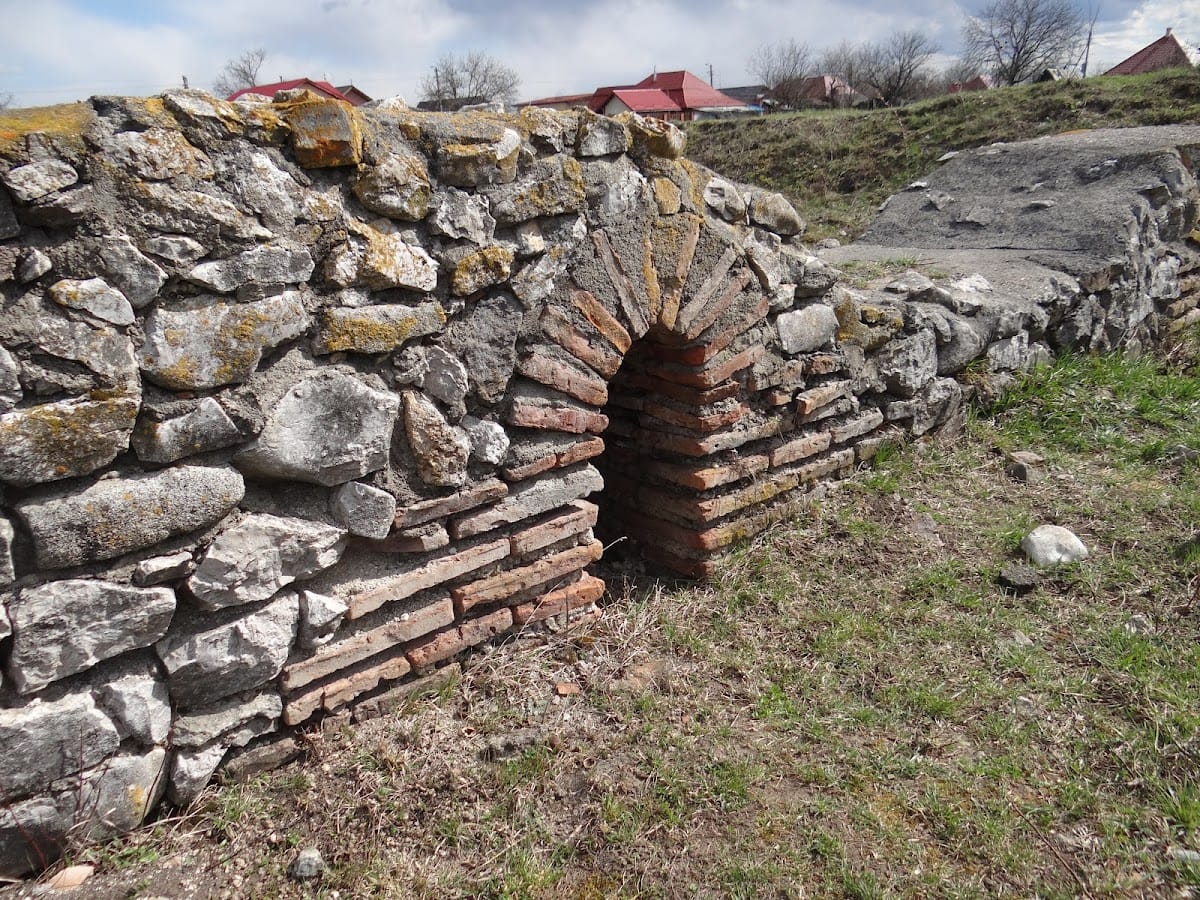
Defensive features include a ditch 12 meters wide and 3 meters deep surrounding the walls. An earthen rampart called an agger, 7 to 10 meters wide, supported a road along the rampart’s top. The northwest corner bastion is notable for its curved wall with an 18-meter radius. The western gate, known as the porta decumana, has foundations built in opus incertum, a Roman technique using irregular stone blocks. This gate is 12.5 meters wide, flanked by two towers, and features a central wall 2.8 to 3 meters thick supporting stone arches. Drainage channels for wastewater run through this gate area.
At the fortress center lies the principia, or headquarters building, a large rectangular complex measuring approximately 125 by 72 meters. It occupies nearly 0.9 hectares, about 3.8% of the fortress area. The principia sits at the crossroads of the main internal roads, the via principalis and via praetoria. Its eastern entrance is monumental, featuring a triple-arched triumphal gate. Inside, a large courtyard is surrounded by porticoes. Fourteen rooms line the north and south sides, used for storing weapons and administrative offices. A basilica hall measuring 70 by 17 meters contains tribunalia podiums at each end, where commanders addressed troops. The western wing houses the aedes principiorum, a sanctuary with an apse that held the legion’s standards.
Beneath the sanctuary is the aerarium, or treasury room, sunk about 1.5 meters below courtyard level. This secure chamber stored soldiers’ pay. The sanctuary is flanked by offices related to legion administration.
Barracks for the soldiers are arranged in cohorts. Six barracks measure roughly 70 by 89 meters each. Each barrack is divided into 11 rooms, with ten regular rooms and one L-shaped room. Each room housed eight soldiers, allowing accommodation for about 480 men per cohort.
The fortress roads include the via principalis, about 10.3 meters wide, running east-west; the via praetoria, 9.3 meters wide, leading from the eastern gate to the principia; the via decumana, connecting to the western gate; and the via sagularis, which encircles the fortress base. Roads were built with layers of volcanic tuff and gravel but generally lacked stone paving.
The military baths, or thermae, occupy approximately 2,700 square meters in the fortress’s right praetentura (front area). These are the largest known military baths in Roman Dacia. The bath complex includes typical Roman features: an apodyterium (changing room), frigidaria (cold pools), tepidaria (warm pools), caldaria (hot pools), latrines, and a palestra (exercise yard) covering 2,133 square meters. Walls were painted in Pompeian red, black, green, and white. Construction used thick stone and brick walls with concrete vaults supported by lightweight clay tube coffering. The baths had hypocaust heating systems and advanced water supply and drainage connected to an aqueduct.
Decorative finds in the baths include statues of Hercules and Serapis, altars dedicated to Aesculapius (god of healing), Hygia (goddess of health), and Fortuna (goddess of luck), as well as ornamental fountain sculptures.
Water supply came from a spring known today as “Izvorul Romanilor,” located about 5 kilometers southwest of the fortress near Copăceni village. Two aqueducts channeled water, one to the fortress and another to the city of Potaissa.
Construction materials were locally sourced. Limestone came from Săndulești, while ofiolite and volcanic tuffs were quarried from Cheile Turzii. Calcareous sandstones were also used. Dressed blocks and architectural elements were carved from calcareous sandstone, conglomerates, microconglomerates, and breccia containing limestone and volcanic rock. Marble was imported in smaller amounts from Runc and Poșaga.
Excavations uncovered a well-preserved drainage canal within the fortress. This canal is paved with bricks and lined with opus incertum walls, used to evacuate wastewater.
Numerous artifacts have been found, including stamped roof tiles marked with legion abbreviations such as LVM, LEGVM, and LEGVMAC. Ceramics are dominated by red ware and terra sigillata fragments. Military equipment includes pilum (javelin) tips, lorica squamata (scale armor) scales, and fibulae (brooches). Coins from the Severan period and earlier were discovered, along with artistic items like gilded bronze statues of Jupiter and votive figurines.