Parco Archeologico di Tindari: A Strategic Coastal Archaeological Site in Northeastern Sicily
Table of Contents

Visitor Information
Google Rating: 4.4
Popularity: Low
Google Maps: View on Google Maps
Official Website: www.parcoarcheologicoditindari.it
Country: Italy
Civilization: Byzantine, Greek, Roman
Remains: Burial, City, Civic, Domestic, Economic, Entertainment, Infrastructure, Military, Religious, Sanitation

Context
The Parco Archeologico di Tindari is located on a prominent coastal promontory overlooking the Tyrrhenian Sea, near the modern town of Patti in northeastern Sicily. This elevated site commands extensive views over the Gulf of Patti to the west and the Gulf of Milazzo to the east, strategically positioned along the northern Sicilian coastline. The natural plateau and steep cliffs provided a defensible setting, facilitating control over maritime routes and local fishing grounds, notably tuna fisheries in the surrounding waters.
Archaeological investigations have revealed that the site’s occupation began in prehistoric times, with significant urban development occurring during the Classical and Hellenistic periods following its foundation by Dionysius I of Syracuse in the late 4th century BCE. Subsequently, Tindari evolved into a Roman municipium and remained inhabited into the early Byzantine era. Excavations have uncovered a well-preserved urban layout and architectural remains, reflecting the city’s adaptation to its topography and its role within regional political and economic networks. The site’s decline after the 7th century CE corresponds with broader transformations in Sicily’s settlement patterns and political control.
Systematic archaeological work commenced in the early 20th century, uncovering public buildings, fortifications, and residential quarters. Conservation efforts continue to address environmental challenges, aiming to preserve the ruins for ongoing research and educational purposes while maintaining the integrity of the site’s historical fabric.
History
The archaeological site of Tindari encapsulates a multifaceted historical evolution shaped by the geopolitical dynamics of Sicily and the central Mediterranean. Established in the late 4th century BCE under the auspices of Dionysius I of Syracuse, the settlement functioned as a strategic coastal outpost controlling northern maritime routes. Over subsequent centuries, Tindari transitioned from a Hellenistic foundation to a Roman municipium, integrating into imperial administrative and economic systems. Its occupation extended into the early Byzantine period, after which the site experienced decline amid regional upheavals and shifting political dominions. The combined archaeological and literary evidence situates Tindari within the broader context of Sicilian history, reflecting its military, civic, and religious roles.
Hellenistic Period
The foundation of Tindari around 396 BCE occurred during a period of Syracusan territorial expansion under Dionysius I, who sought to consolidate control over Sicily’s northern coast against Carthaginian influence. The site was established on a naturally defensible promontory with commanding views of the Tyrrhenian Sea and proximity to the Aeolian Islands, facilitating maritime surveillance and control. Colonists comprised Locrians, Messenians, and Medmean mercenaries, settled as compensation for military service, reflecting a deliberate policy of populating strategic locations with loyal groups. The city’s name and religious identity were closely linked to the Dioscuri (Castor and Pollux), patrons of the settlement, as evidenced by numismatic finds depicting their iconography.
During this era, Tindari was fortified with substantial walls initially constructed under Dionysius and later reinforced with a double stone wall and bastions along the southern ascent. The city supported Timoleon’s democratic reforms in Syracuse in 344 BCE, entering a period of relative peace and urban development lasting approximately six decades. Tindari allied with Syracuse against the Mamertines in the late 4th century BCE, contributing to the defeat of the Mamertines at the Battle of Longanus in 269 BCE. Archaeological remains of early Greek houses from this period form the basis for later Roman residential structures, indicating continuity in urban occupation and development.
Roman Period
Following Rome’s conquest of Sicily in the 3rd century BCE, Tindari was incorporated into the Roman provincial system as a municipium, reflecting its integration into imperial governance with local self-administration under Roman law. The city’s strategic coastal position remained significant for controlling northern maritime routes during the Punic Wars. Historical sources document naval engagements nearby, including the Battle of the Lipari Islands (260 BCE) and the Battle of Tindaride (257 BCE), underscoring the area’s military importance. Tindari’s loyalty to Rome was rewarded by Scipio Africanus in 204 BCE with a golden statue of Mercury, symbolizing its civic status and alliance.
During the Roman civil wars, Tindari served as a stronghold for the Pompeian faction under Sextus Pompey until its capture by Octavian in 36 BCE. Epigraphic evidence attests to its status as Colonia Augusta Tyndaritanorum, an imperial colony. Under Augustus, the city functioned as a civitas decumana, obligated to pay agricultural tithes. Urban development continued with the construction and renovation of public buildings, including the conversion of the Greek theater into a Roman amphitheater. The city hosted a diverse pantheon of Greco-Roman deities, with temples dedicated to Zeus/Jupiter, Venus Ericina, Cybele, and others, reflecting religious pluralism and civic identity. Two large imperial villas from the 1st century BCE demonstrate elite domestic architecture and wealth.
Late Antiquity and Early Byzantine Period
In late antiquity, Sicily underwent administrative reorganization under the Roman Empire’s division into dioceses and provinces, with Tindari remaining occupied into the early Byzantine period. The city’s fortifications were maintained and reinforced, reflecting ongoing defensive concerns amid increasing threats from Germanic invasions and later Arab incursions. Earthquakes in 365 and 374 CE caused significant damage to the urban fabric, contributing to the city’s gradual decline. The Vandal conquest in 440 CE and subsequent Ostrogothic control further destabilized the region, though direct references to Tindari during these events are limited.
By the late 6th century, correspondence from Pope Gregory I attests to an established Christian diocese at Tindari, with bishops Eutichius and Benenatus documented alongside other high-ranking clerics. This ecclesiastical presence indicates the city’s continued religious significance despite demographic and economic contraction. The urban settlement contracted, with a shift toward subsistence agriculture and reduced commercial activity. The transformation from a pagan civic center to a Christian ecclesiastical hub marks this period’s cultural transition.
Abandonment and Later History
Following the early Byzantine period, archaeological evidence for sustained occupation at Tindari diminishes markedly. The site was destroyed in 836 CE by the Arab commander al-Fadl ibn Ya’qub, leading survivors to relocate to the nearby fortified town of Patti. By 886 CE, ecclesiastical records mention a Christian cult site, the “Diva Virgo in Castello Tindaritano,” situated within a fortification likely constructed over a former pagan temple. The Norman conquest and subsequent re-Christianization in the 11th and 12th centuries brought renewed attention to the area, with descriptions by Muhammad al-Idrisi documenting the ruins and surrounding settlements.
During the Aragonese and Spanish periods (14th–16th centuries), Tindari experienced gradual decline, with limited habitation and the site largely in ruins except for the church of Santa Maria da Tindaro. Early modern scholars such as Tommaso Fazello and Francesco Maurolico documented the remains, while numismatists and archaeologists published studies on the city’s coinage and medals. The 18th and 19th centuries saw increased interest from European travelers and antiquarians, leading to the first systematic excavations and the collection of artifacts now dispersed in various museums and private collections.
Daily Life and Importance by Period
Hellenistic Period
During the Hellenistic period, Tindari’s inhabitants comprised primarily Greek colonists from Locri, Messenia, and Medme, including mercenaries and their families. The social structure centered on a citizen body with military and civic responsibilities, supported by artisans and laborers. Religious devotion to the Dioscuri was prominent, as reflected in coinage and temple dedications. Economic activities included fishing—particularly tuna—agriculture on the fertile plateau, and control of maritime trade routes. Urban residences were arranged around courtyards, with interiors likely featuring painted plaster and modest furnishings consistent with Greek colonial norms. Public spaces such as the agora facilitated commerce and civic gatherings, while festivals reinforced communal identity.
Roman Period
Under Roman rule, Tindari evolved into a municipium with a mixed population of Roman settlers and indigenous Sicilians. Inscriptions attest to local magistracies, including duumviri, indicating formal civic administration. The social hierarchy included elite landowners, freedmen, artisans, and slaves. The economy diversified, combining agriculture—grain, olives, vineyards—with maritime commerce supported by a harbor at Panicastro. Archaeological evidence of baths, tabernae, and warehouses points to active commercial and artisanal production. Two large imperial villas reveal elite domestic life with peristyles, mosaic floors, and decorated interiors. Diet included cereals, olives, fish, and wine, while clothing followed Roman fashions. Public buildings such as the forum, gymnasium (later basilica), and theater served as centers for social, cultural, and educational activities. Religious practices encompassed a broad Greco-Roman pantheon alongside emerging Christian communities.
Late Antiquity and Early Byzantine Period
In late antiquity, Tindari’s population declined but maintained its role as a fortified coastal settlement under Byzantine administration. The community included Christian clergy, as evidenced by bishops named in papal correspondence, alongside Romanized inhabitants. Economic activity contracted to subsistence agriculture and local fishing, with reduced commercial exchange. Fortifications were reinforced to address external threats, and domestic architecture became simpler, with less emphasis on luxury. Religious life centered on Christian worship, with established diocesan structures replacing earlier pagan cults. The city functioned as a minor ecclesiastical center, with cultural life oriented around liturgical practices and Christian instruction.
Abandonment and Later History
Following the early Byzantine period, Tindari’s urban population dispersed, correlating with the Arab conquest and regional political realignments. The site ceased to function as a significant civic or economic center, with survivors relocating to fortified towns such as Patti. Archaeological evidence indicates the cessation of organized domestic and commercial activities, though Christian cultic presence persisted in a fortified sanctuary documented in the 9th century. The surrounding region’s economy and social life shifted inland, with maritime routes controlled by new powers. Tindari’s abandonment reflects broader patterns of urban contraction and political transformation in medieval Sicily.
Remains
Architectural Features
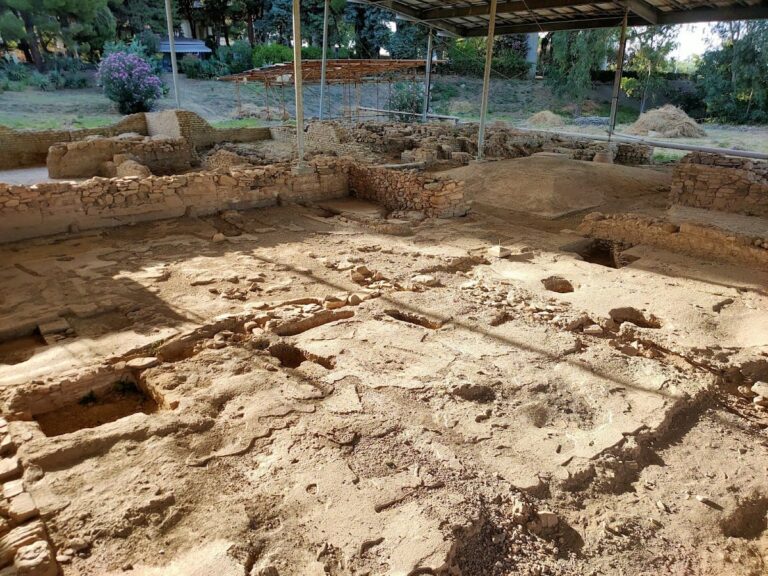
The archaeological remains at Tindari occupy a natural plateau on a coastal promontory, with the urban layout reflecting a predominantly orthogonal grid characteristic of Hellenistic city planning, subsequently modified during the Roman period. Construction techniques include ashlar masonry in public buildings and opus caementicium (Roman concrete) in structural elements. The city’s topography influenced the arrangement of streets and terraces, adapting to uneven terrain. Fortification walls, public edifices, and residential quarters survive in varying states, documenting construction and reuse phases from the 4th century BCE through the 7th century CE. The defensive circuit incorporates large limestone blocks and rectangular towers, exploiting natural cliffs on the seaward side and enclosing approximately 15 hectares.
Stone fortifications date initially to the late 4th century BCE, with substantial Byzantine-era repairs and reinforcements. The main landward gate features a double entrance flanked by towers, with evidence of a portcullis mechanism. Within the walls, the street network and building foundations delineate civic, religious, and domestic zones. Local limestone and tuff were primary building materials, with surviving paving and wall fragments attesting to their use.
Key Buildings and Structures
Theater
The Hellenistic theater, constructed in the 3rd century BCE, is situated on the southern slope of the plateau, utilizing the natural incline for seating. The cavea (seating area) is partially preserved, with stone benches arranged semicircularly around the circular orchestra. The stage building (scaenae frons) survives in fragmentary form, with foundations and some wall sections visible. The theater’s design follows Greek architectural conventions, with later Roman repairs to seating and drainage systems. No in situ decorative elements have been documented.
Forum and Basilica
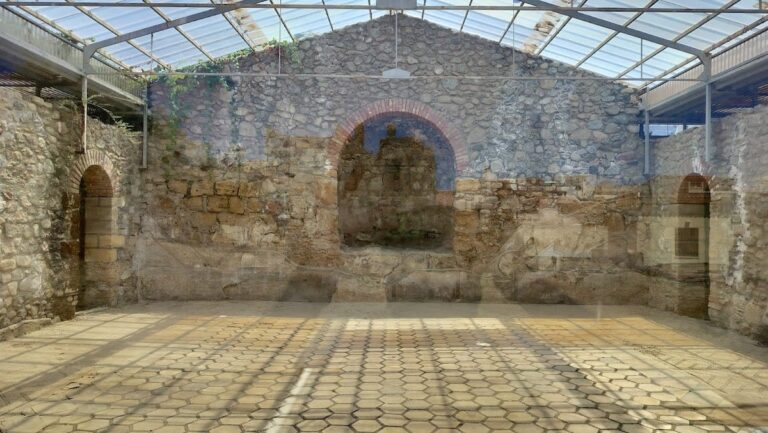
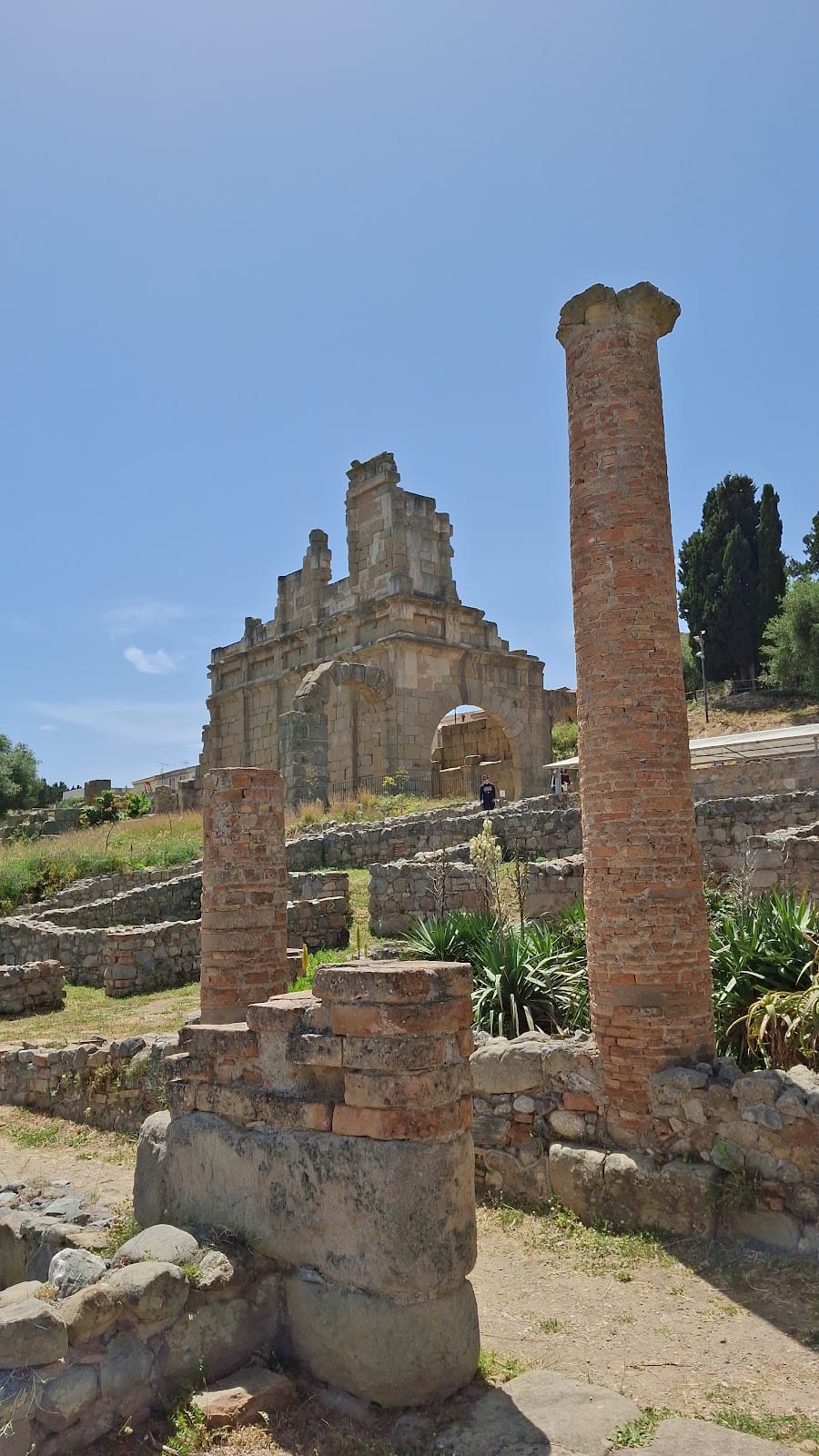
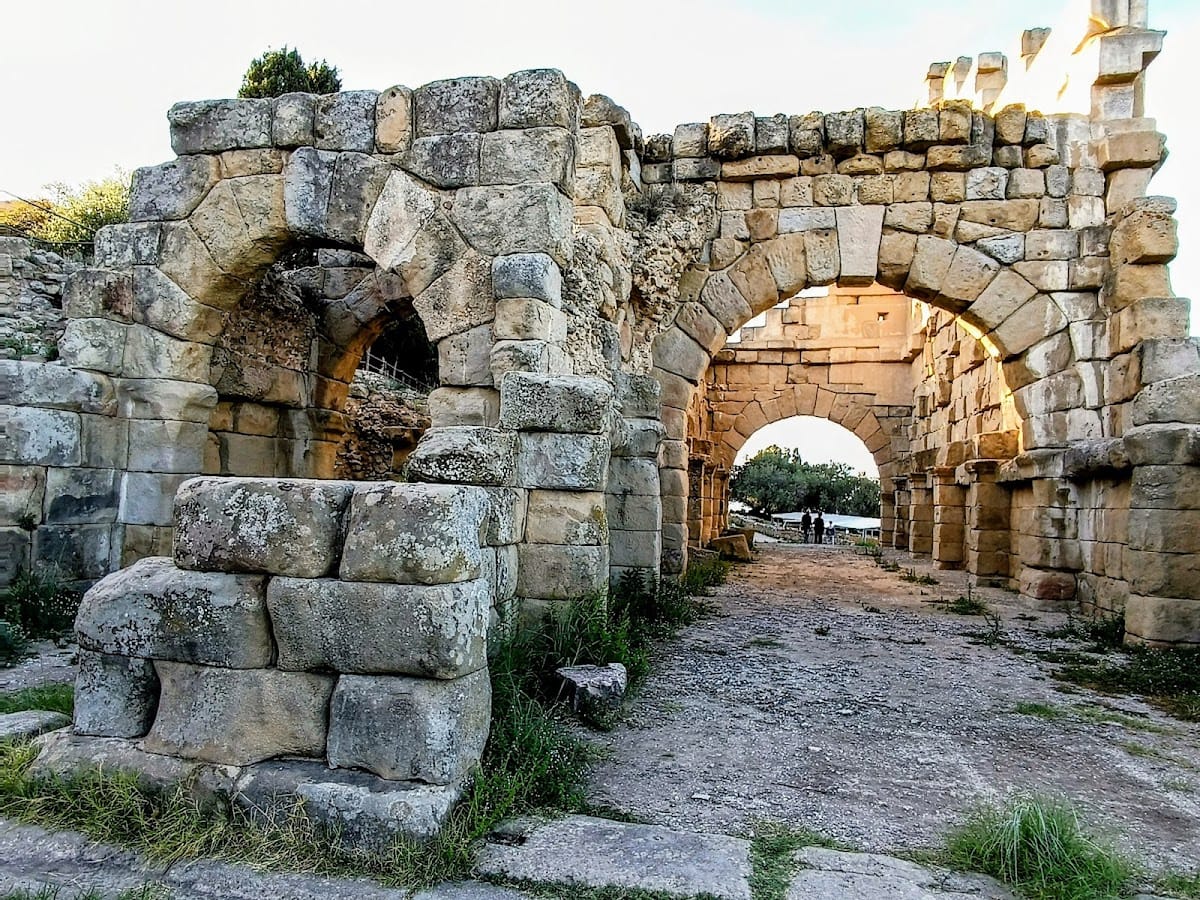
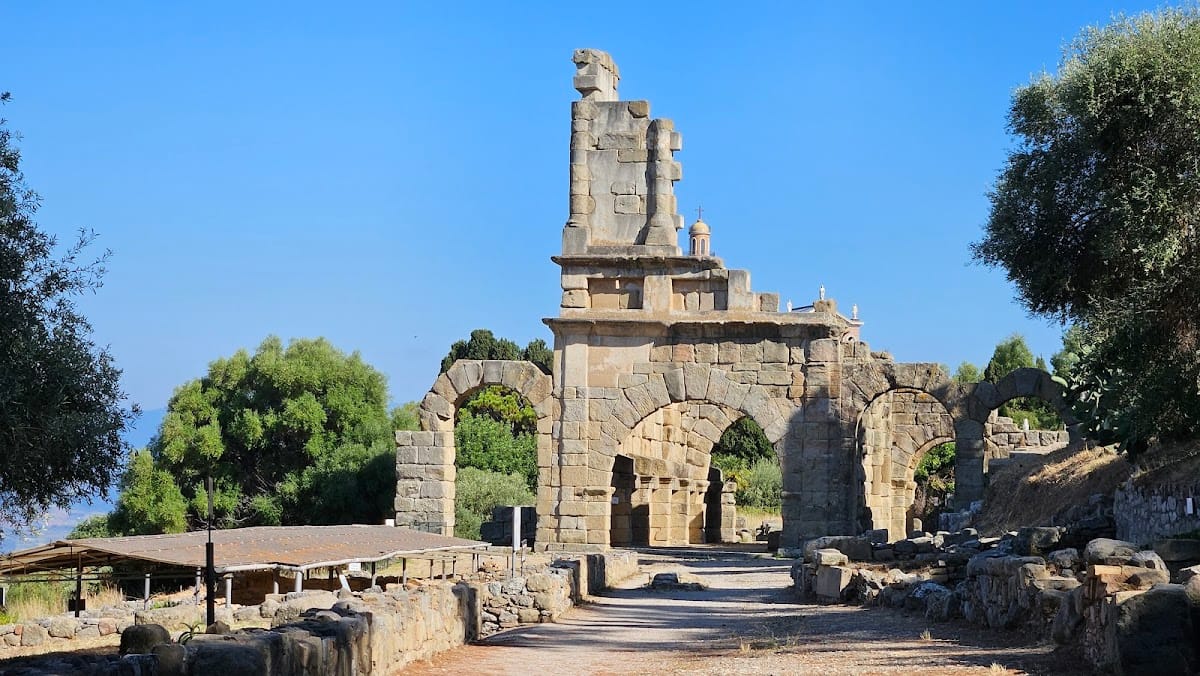
The forum complex, dating to the 1st century BCE, occupies a central urban position. The rectangular open space is bordered by porticoes supported by stone columns, some partially preserved. Adjacent is a basilica building with an elongated rectangular plan, featuring a central nave and side aisles separated by rows of columns. Flooring includes opus signinum (waterproof mortar) and stone slabs. Roman architectural features such as arches and vaults are evident. Byzantine modifications include partial wall rebuilding and the addition of smaller rooms along the basilica’s perimeter.
Public Baths
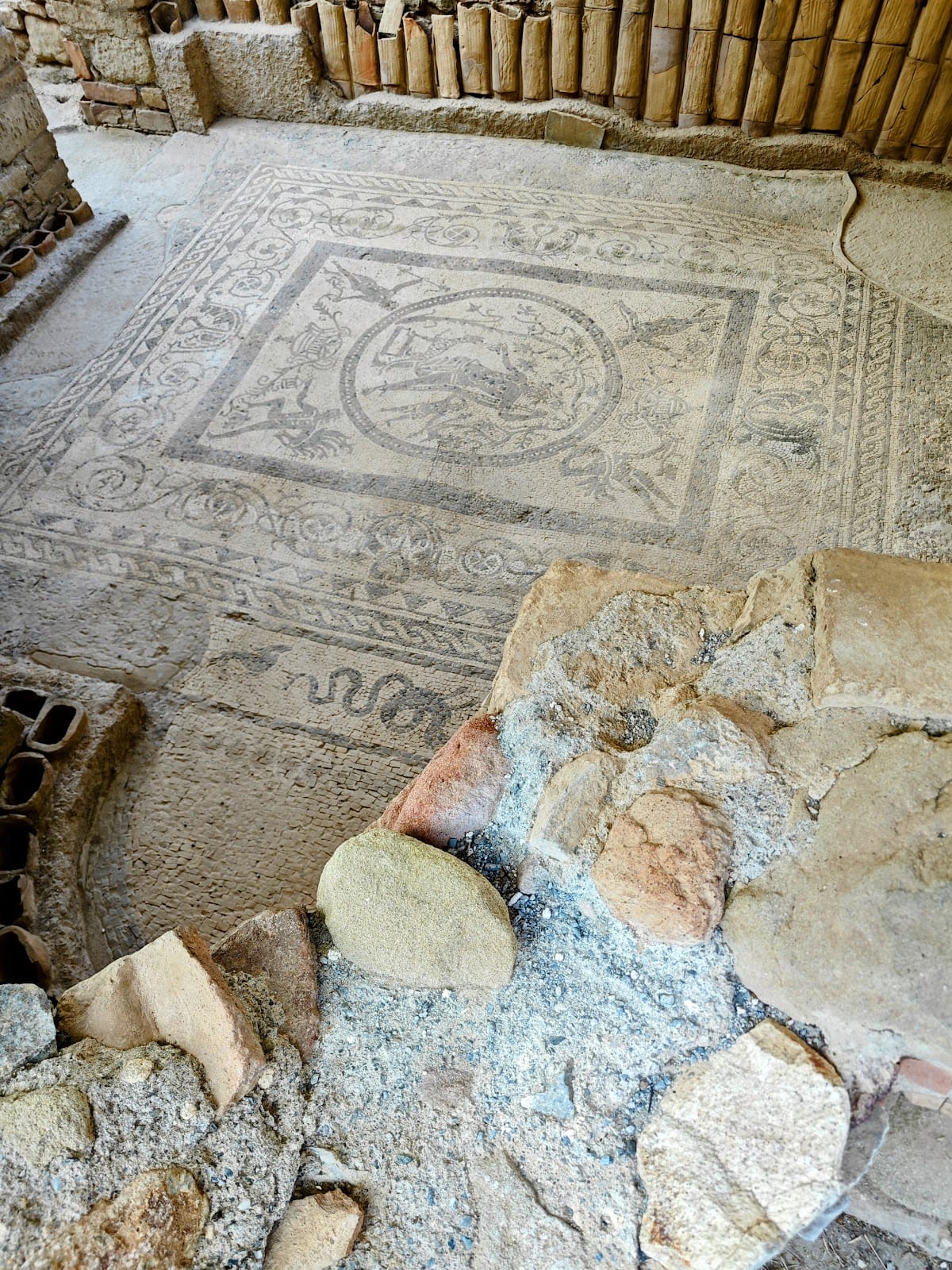
The bath complex, constructed in the 1st century CE and renovated in the 4th century CE, comprises a series of rooms arranged around a central courtyard. Hypocaust heating systems are preserved beneath the caldarium (hot bath) and tepidarium (warm bath), consisting of brick pilae stacks supporting the floor and channels for hot air circulation. Walls are built in opus mixtum, combining brick and stone. Mosaic fragments with geometric patterns have been recovered from the frigidarium (cold bath). Water supply was managed through cisterns and lead pipes, some partially intact. The layout reflects typical Roman bath architecture adapted to the site’s terrain.
Fortifications
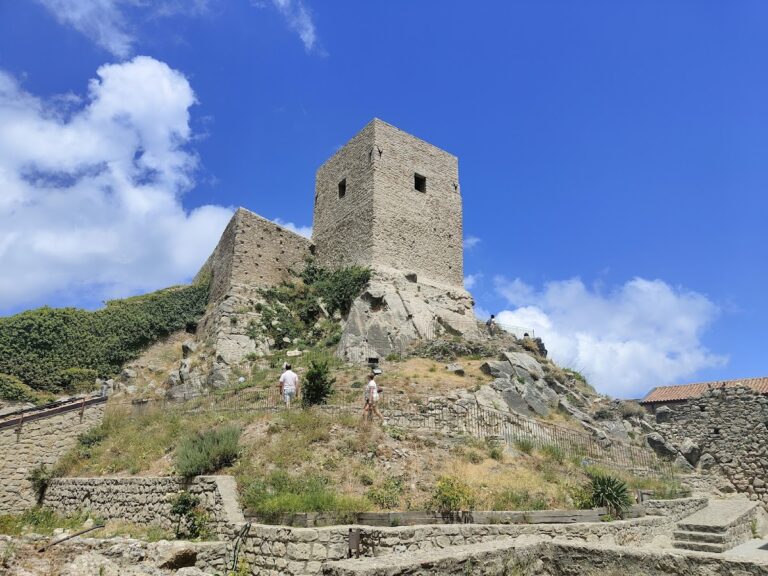
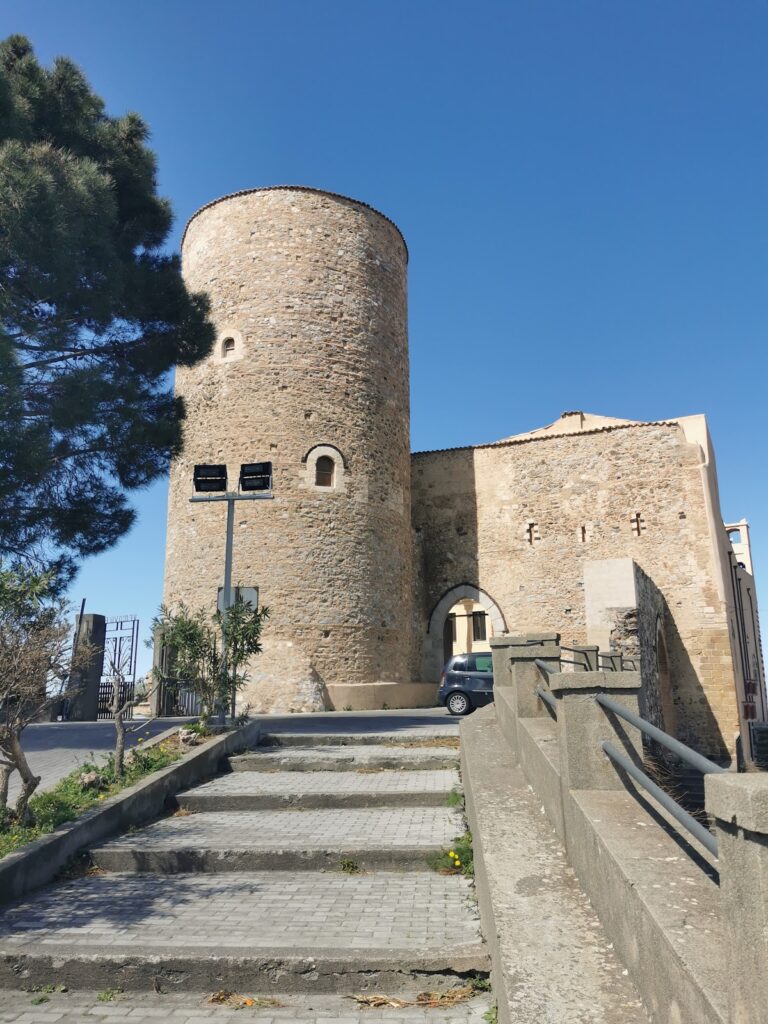
The city’s defensive walls, initially erected in the late 4th century BCE, were substantially repaired and reinforced during the 6th century CE Byzantine period. Constructed of large limestone blocks laid in regular courses, the walls include rectangular towers spaced along the perimeter. The main landward gate features a double entrance flanked by towers and evidence of a portcullis. Sections of the curtain wall show Byzantine-era patching with smaller stones and mortar. The fortifications enclose residential and public buildings, with the seaward side relying on steep cliffs for natural defense.
Religious Structures
Remains of at least one Hellenistic temple or sanctuary have been identified, dating to the late 4th to 3rd century BCE. The foundations outline a rectangular cella (inner chamber) with a pronaos (porch) supported by columns, constructed in ashlar limestone masonry. Later Roman and Byzantine phases show partial reuse of temple stones in nearby buildings. No complete altars or cult statues have been found in situ, but fragments of architectural decoration such as column capitals and cornices have been recovered. The temple is tentatively associated with the Dioscuri cult, consistent with historical sources and numismatic evidence.
Necropolis
Funerary areas located outside the city walls date primarily from the Hellenistic through Roman periods. Tomb types include rock-cut chamber tombs and arcosolia (arched recesses) carved into limestone bedrock. Funerary inscriptions and reliefs are fragmentary but indicate diverse burial practices. Some tombs contain sarcophagi made of local stone with simple decorative motifs. The necropolis remains partially excavated, with many tombs still covered or inaccessible due to terrain and vegetation.
Archaeological Discoveries
Excavations have yielded a broad range of pottery spanning from the late Classical through Byzantine periods. These include locally produced amphorae for storage and transport, fine tableware such as red-slip ware and black-gloss ceramics, and imported wares from Campania and North Africa, indicating trade connections. Pottery fragments are found in domestic quarters, workshops, and street layers.
Inscriptions primarily in Latin from the Roman municipium period record magistrates’ names and civic dedications on stone altars and public building plaques. Funerary inscriptions have also been documented in the necropolis. Coins recovered range from late Hellenistic issues to Byzantine coinage of the 6th and 7th centuries CE, including portraits of emperors Augustus, Trajan, and Constantine.
Tools made of iron and bronze, including agricultural implements and craft tools, have been excavated in workshop and domestic contexts. Domestic artifacts such as oil lamps, cooking vessels, and glass fragments reflect everyday activities. Religious artifacts include small terracotta statuettes and altar fragments, mainly from the Hellenistic and Roman periods.
Preservation and Current Status
The preservation of Tindari’s ruins varies by structure. The theater’s cavea and stage foundations are partially intact but lack superstructures. The forum and basilica retain column bases and wall sections, though many elements are fragmentary. The bath complex’s hypocaust system is visible in several rooms, with some mosaic floors preserved. Fortification walls survive in substantial stretches, though some towers are reduced to foundations. Temple remains are limited to foundations and scattered architectural fragments.
Restoration efforts have stabilized key structures, particularly fortifications and public buildings, employing original materials supplemented by modern supports to prevent collapse. Vegetation clearance has reduced damage from root growth. Environmental threats include erosion and occasional vandalism. Conservation is ongoing under regional heritage authorities, with periodic archaeological investigations continuing to document and protect the site.
Unexcavated Areas
Significant portions of the urban area, especially in the northern and eastern sectors of the plateau, remain unexcavated. Surface surveys and geophysical studies suggest buried remains of residential districts and possible additional public buildings. The necropolis areas outside the walls are only partially explored, with many tombs still covered by soil and vegetation. Modern land use and conservation policies prioritize preservation in situ, limiting extensive excavation. Future archaeological work is planned but constrained by funding and environmental considerations.
Nearby sites