Castello di Montalbano Elicona: Norman Fortress and Royal Residence in Sicily


Site at a Glance
- Rating
- 4.5
- Popularity
- Medium
- Country
- Italy
- Primary era
- Medieval
- Eras represented
- Medieval
- Civilizations
- Crown of Aragon, Kingdom of Sicily, Norman
- Site type
- Military
- Remains
- Castle
On this page8 sections
History
Castello di Montalbano Elicona is a medieval fortress in Montalbano Elicona, Italy, founded by the Normans between the eleventh and twelfth centuries. It began as a military post and later became a Swabian stronghold, a royal summer residence, a noble possession, a Jesuit monastery, and the seat of the municipality.
Norman Origins and Swabian Reconstruction
The first fortification occupied the summit above the medieval village, formerly associated with Val Demone in northeastern Sicily. The geographer Idrisi described it in the 1154 Book of Roger as a square watchtower south of the settlement, protected by defensive walls. Although the site stood more than 900 metres above sea level, the original position controlled only a limited part of the Tyrrhenian coast and its approaches, which reduced its effectiveness as a defensive bastion.
During the reign of Frederick II of Sicily, the rebellious settlement was reorganized after the promulgation of the Constitutions of Melfi. Part of the earlier structure was demolished, much of the population was deported to Agrigento, and the fortress was rebuilt. The work continued under Frederick III of Sicily, whose reign formed part of the later Aragonese phase of Sicilian rule.
During the Swabian period, the castle was enlarged and substantially reorganized. The architect Riccardo da Lentini is associated with this intervention. The building retained its military character, but Montalbano’s mild, healthy climate also made it suitable for use as a royal leisure residence. Its development was connected with the Statutum de reparatione castrorum, a medieval regulation requiring citizens to repair and maintain royal castles. The castle was not included in the Castra exempta compiled in 1239, a register of castles and royal fortifications, apparently because some royal leisure residences and hunting lodges were excluded or because certain sites were not yet complete.
War, Royal Residence, and Factional Control
The castle and settlement were drawn into the conflicts surrounding the Sicilian Vespers, the revolt that began in 1282 against Angevin rule and led to prolonged rivalry between Angevin, Latin, and Aragonese interests in Sicily. On 1 September 1299, James II of Aragon landed at Patti and opposed his brother Frederick III, the recognized Sicilian claimant. After the Peace of Caltabellotta, the inhabitants recovered Montalbano in 1303, after the settlement had been largely destroyed.
Under Frederick III, the castle became a substantial summer residence equipped with contemporary systems of surveillance and defense. In 1348, Louis of Sicily and his mother, Elizabeth of Carinthia, withdrew to Montalbano. The complex and its surrounding possessions then changed hands repeatedly during the factional struggles of the fourteenth century. In 1350 they were assigned to Matteo Palizzi, a leading member of the Latin faction. In 1356, Louis of Taranto granted the castle to Nicolò Cesareo as Count of Montalbano. Three years later, Frederick IV of Sicily assigned the castle and its possessions to Vinciguerra of Aragon, a member of the Catalan faction.
The property later passed through the Alagona and other aristocratic families. By the late fourteenth century, it had become a feudal holding associated with Sicilian branches of the Lancia, or Lanza, and Romano families. Through Antonia Romano, the property passed as a dowry to Filippo Bonanno and La Rocca. On 31 August 1623, Giacomo Bonanno Romano Colonna received the title of first Duke of Montalbano under the Spanish crown.
From Noble Estate to Municipal Cultural Site
During the Spanish viceregal period, ownership passed to the Bonanno family in 1587 and later to the Bonanno-Branciforti line. Giuseppe Bonanno Filangieri del Bosco, Prince of Cattolica and Duke of Montalbano, held the title on 24 December 1740. In 1805, Giuseppe Bonanno Branciforti transferred the building to the Jesuit order, which converted it into a monastery.
The castle became the seat of the municipality of Montalbano Elicona in 1921. It opened to the public in 1967 and is now municipally owned. Two major restoration campaigns placed the complex in very good condition and made all of its spaces usable. Its principal modern role is exhibition-oriented, including an arms museum and a center devoted to the development of the medieval village.
On 7 May 2015, during an international conference on Arnaldo da Villanova, a tomb was inaugurated and given prominent treatment in recognition of his importance. Arnaldo was a medieval physician, mathematician, and alchemist who advised the Crown of Aragon.
Remains
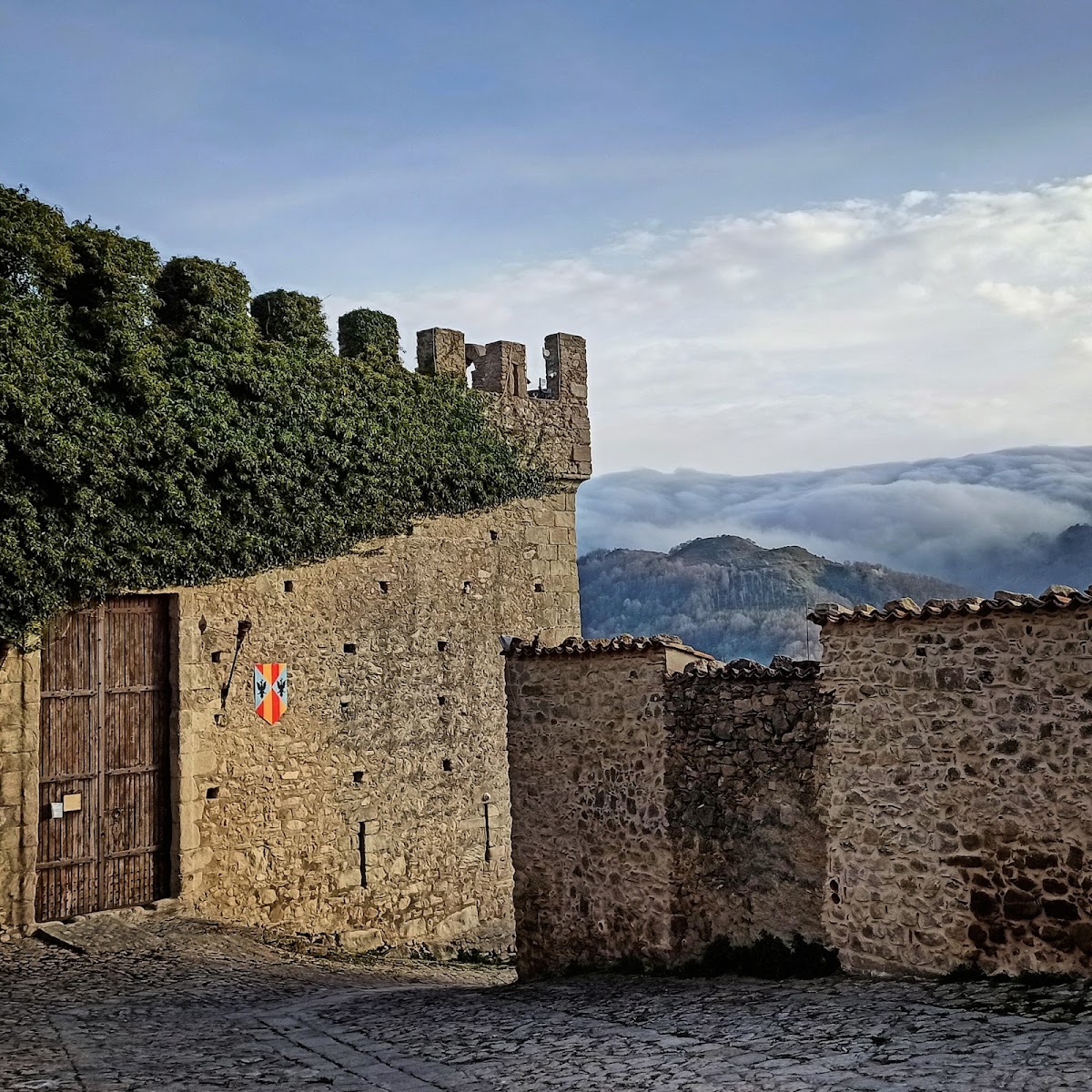
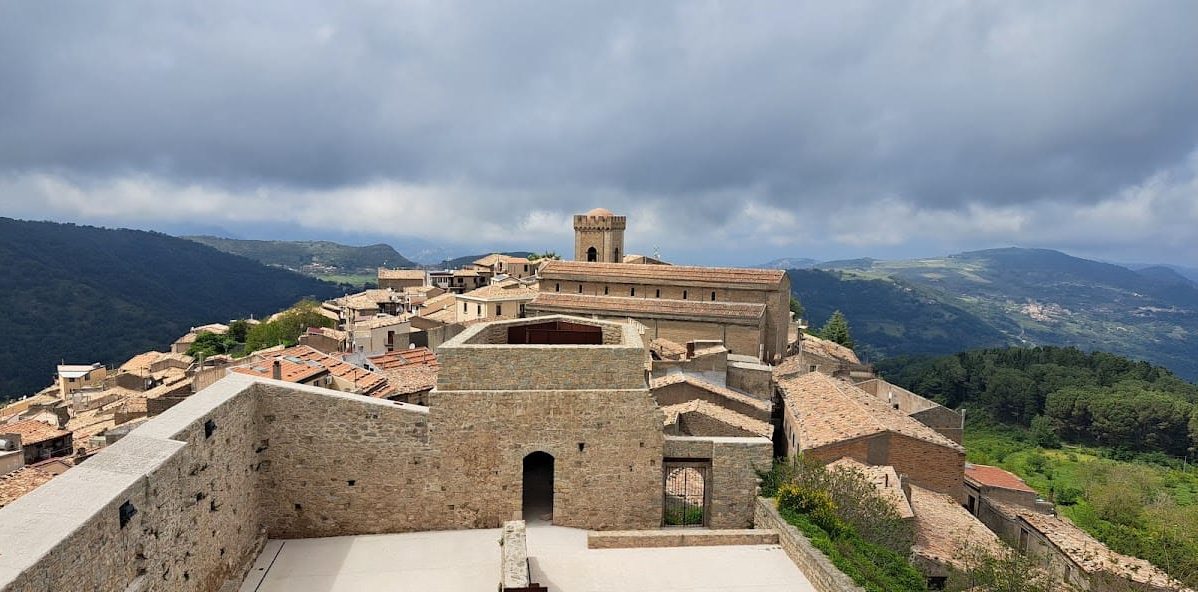
The surviving castle forms a powerful quadrilateral with its principal facade facing south. It combines a lower defensive level, upper passageways and battlements, residential rooms, and the Palatine Chapel of the Holy Trinity. The arrangement of narrow firing openings below and large windows on the noble floor expresses the building’s combined role as a fortified residence and royal retreat.
Fortifications and Towers
The upper nucleus began as a quadrangular watchtower and military stronghold. Later building campaigns transformed it into the larger quadrilateral visible today. On the northern side, a polygonal tower belongs to the Swabian period. Massive rectangular building walls form the lower fortifications, while the northwestern side preserves the original bastion together with evidence of successive interventions.
The lower level contains numerous loopholes, arranged to provide an exploration range of more than 270 degrees. Above them, passageways and battlements belong to the castle’s defensive organization. These military elements are integrated with the residential spaces rather than forming a separate structure, reflecting the complex’s development as both a fortress and a royal residence.
Royal and Exhibition Rooms
The main floor is arranged in wings with different present uses. The west wing contains a conference room and the ticket-office entrance. Rooms in the south wing display armor, royal clothing, and the insignia of local districts. The east wing contains a room devoted to medieval musical instruments. The restored interior is used as an exhibition venue, and the museum installations include an arms museum.
Palatine Chapel of the Holy Trinity
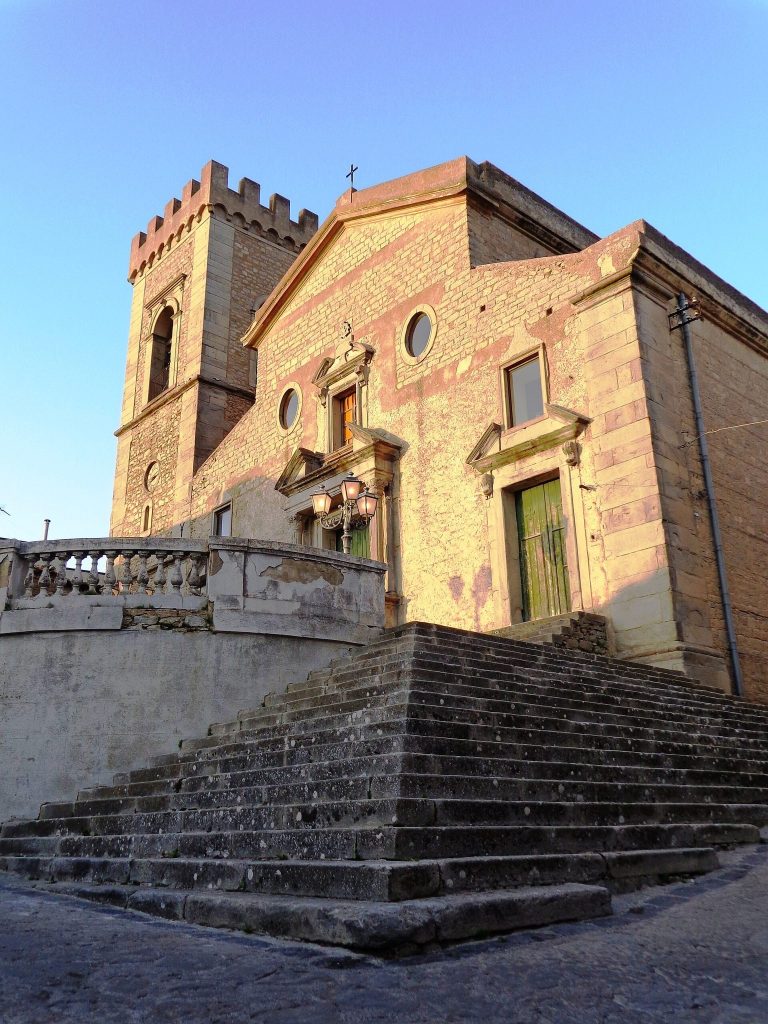
The Palatine Chapel of the Holy Trinity stands within the castle. Its plan is identified as a tricora, a three-lobed architectural form, or a cuba, a small domed or centrally organized church type associated with Byzantine architecture. The chapel is considered contemporary with the Church of the Holy Apostles Peter and Paul, which stood in the citadel outside the perimeter of the Palatium, the royal or princely palace complex. That church later became the minor basilica of Saint Mary of the Assumption and Saint Nicholas the Bishop.
Inside the chapel is a plain marble memorial plaque associated with Arnaldo da Villanova. Since Arnaldo died while travelling near the port of Genoa, the plaque is considered likely to commemorate him rather than mark his actual burial place.