New Castle of Manzanares el Real: A Historic Noble Residence in Madrid



Visitor Information
Google Rating: 4.6
Popularity: Medium
Google Maps: View on Google Maps
Country: Spain
Civilization: Medieval European
Remains: Military

History
The New Castle of Manzanares el Real stands in Manzanares el Real, Madrid, Spain. It was built beginning in 1475 by the Castilian noble House of Mendoza on the site of a 13th-century Romanesque-Mudéjar church. This earlier church, dedicated to Nuestra Señora de la Nava, was incorporated into the castle’s eastern wing, preserving parts of its original structure.
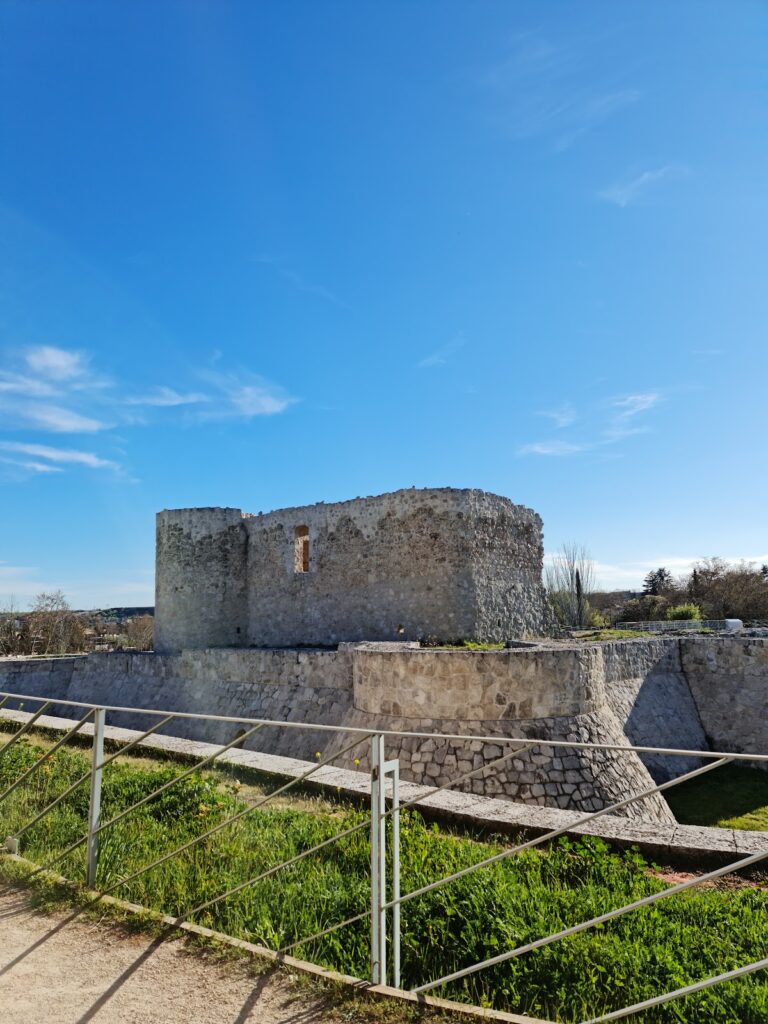
The castle replaced an older fortress nearby, known as the Old Castle of Manzanares el Real, attributed to Diego Hurtado de Mendoza (1367-1404), Admiral of Castile. The new construction was initiated by Diego Hurtado de Mendoza y de la Vega, the 1st Duke of the Infantado, who sought a grand palace-fortress residence. After his death in 1479, his son Íñigo López de Mendoza y de la Vega took over the project, commissioning architect Juan Guas to unify and enhance the design, blending defensive and residential functions.
For about a century, the castle served as a noble residence for the Mendoza family. However, after the death of Íñigo López de Mendoza y Pimentel, the 4th Duke of the Infantado, in 1566, the castle fell into decline. Economic difficulties and family disputes led to its abandonment as a primary residence, and it gradually lost its former prominence.
In the 20th century, restoration efforts began in 1914 under architect Vicente Lampérez y Romea. He applied historicist methods and anastylosis, a technique of reconstructing ruins using original materials, notably rebuilding the porticoed courtyard. Further restorations took place in 1964 and from 1965 onward, allowing the castle to open to the public in 1977. The castle was declared a Monumento Histórico-Artístico in 1931.
In 1982, the castle hosted the founding session of the Parliamentary Assembly of Madrid, where the draft Statute of Autonomy was presented. Ownership remains with the Duchy of the Infantado, while administration was managed by the Community of Madrid until early 2025.
Remains
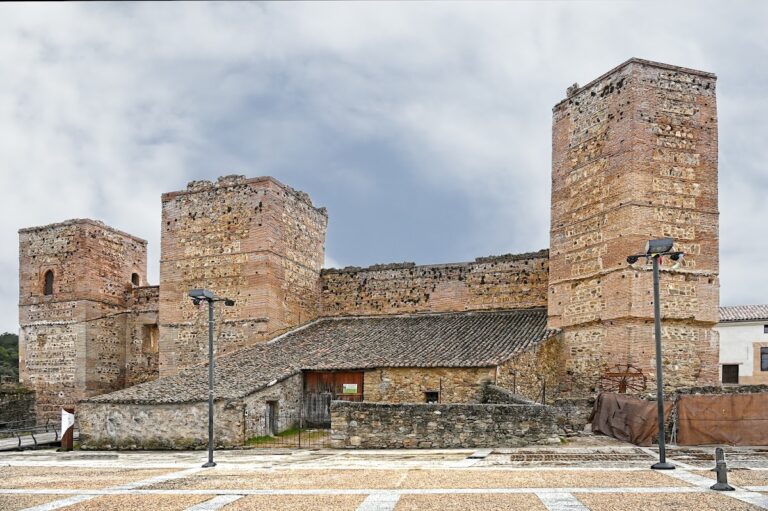
The castle has a roughly square main body measuring about 30 by 30 meters, with an attached rectangular wing on the east side. It rises six stories plus a basement, including a ground floor, two mezzanines, a main floor, an upper gallery, and a roof gallery. The structure combines defensive and residential features.
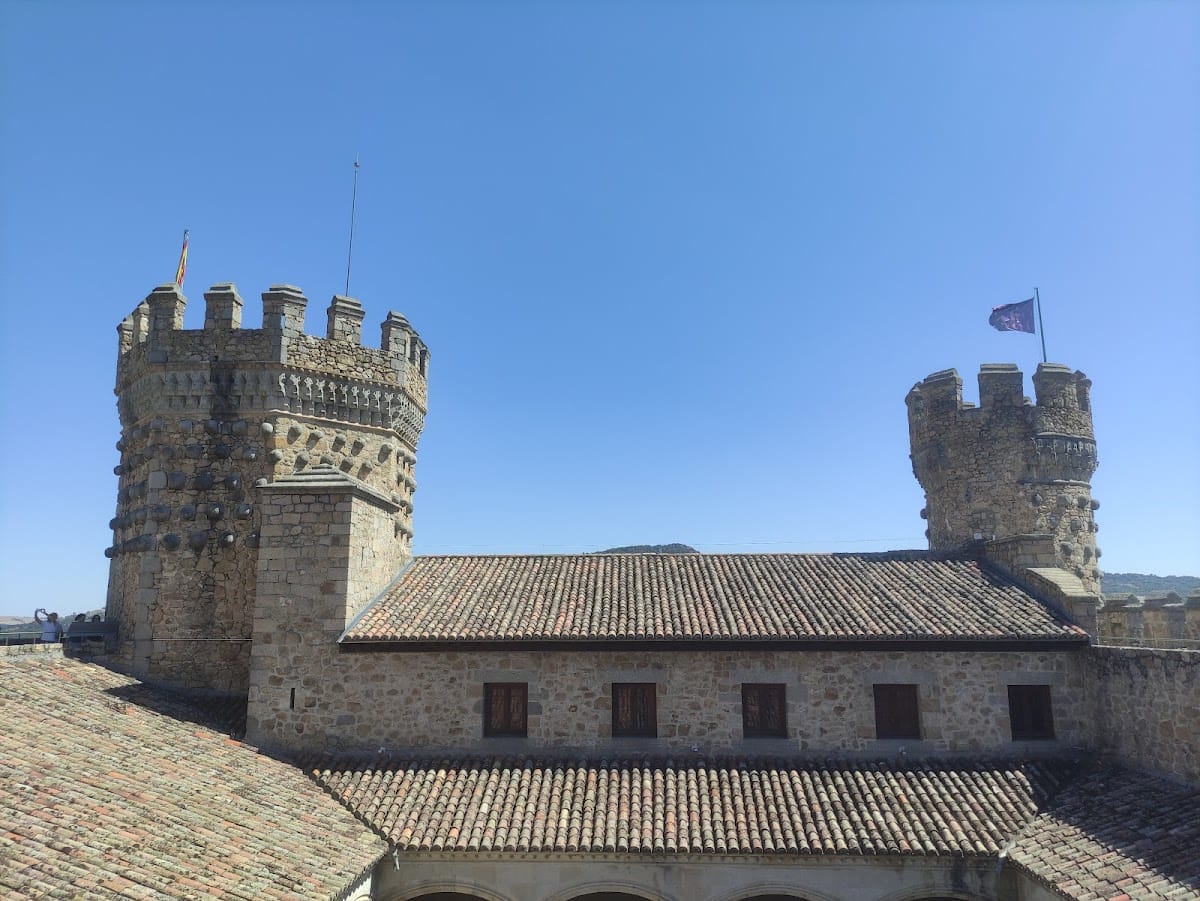
Four towers stand at the corners: three cylindrical ones and a taller square keep tower with an octagonal top at the southeast corner. Defensive elements include a five-meter-high barbican with loopholes adapted for artillery, decorated with the cross of the Holy Sepulchre of Jerusalem in low relief. A moat, now mostly filled, once surrounded the castle. Additional defenses include a firing gallery, machicolations (openings for dropping objects on attackers) on the walkway, battlements, and a main gate on the west side flanked by two small towers.
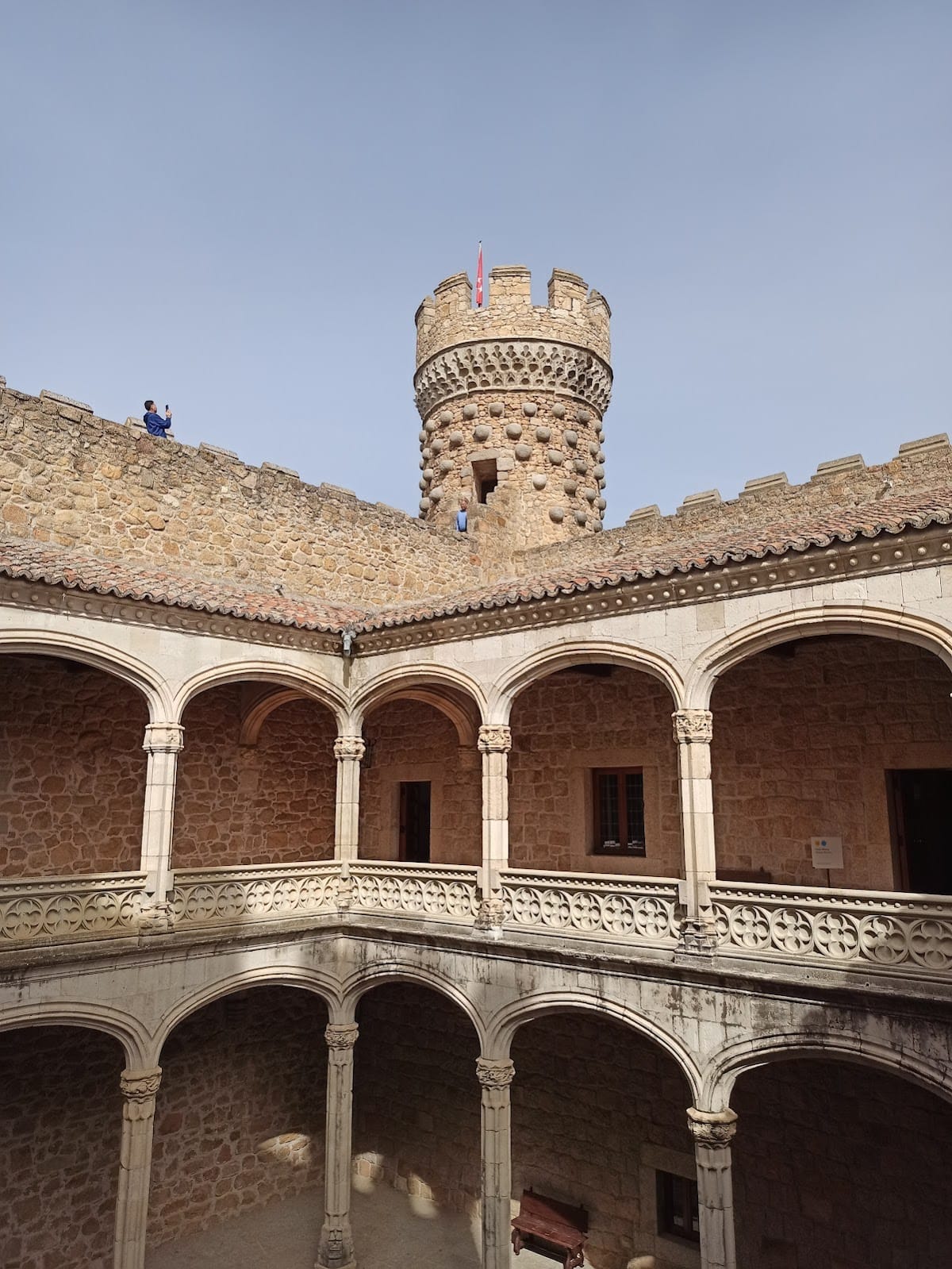
The interior centers on a porticoed courtyard originally designed by Juan Guas and fully reconstructed in the early 20th century by Vicente Lampérez. The courtyard features two stacked galleries with segmental arches supported by octagonal columns with floral and figurative capitals. The upper gallery has a balustrade decorated with rosettes. Three 16th-century mural coats of arms in the courtyard represent the Mendoza, Enríquez, and Álvarez de Toledo families, all connected to the Duchy of the Infantado.
The southern gallery, called the Gallery of Juan Guas or Paseador, is a loggia with lowered arches and double ogival and lobed tracery. It exemplifies the Isabelline Gothic style and offers views over the Manzanares valley. Decorative motifs show strong Hispano-Muslim influences, such as sebka-style diamond patterns supporting the southern gallery, muqarnas (stalactite-like) moldings on the machicolations, and large four-lobed diamond shapes framing stone balls atop the towers, though some decorations have faded.
The castle chapel, located in the eastern wing’s lower level, preserves the Romanesque-Mudéjar apse and presbytery arch from the original 13th-century church. A later Gothic arcade forms three naves with octagonal pillars and a mix of semicircular and pointed arches. The upper floors above the chapel, once containing rooms including a library, are now ruined and unrestored.
Construction materials include granite from the nearby Sierra de Guadarrama, limestone in the courtyard galleries, and brick visible in the medieval church remains. Walls are mainly rubble masonry with small ashlar stones, while finely worked ashlar is used for ornamental elements such as portals, loopholes, the southern gallery, and the courtyard.
The castle’s interior rooms are arranged to reflect a noble residence atmosphere. They display original and replica furnishings, paintings, armors, and a notable collection of 17th-century Flemish tapestries. These tapestries include series depicting the Life of Julius Caesar and the Life of Man, some attributed to artists linked to Rubens’ workshop.
Nearby sites