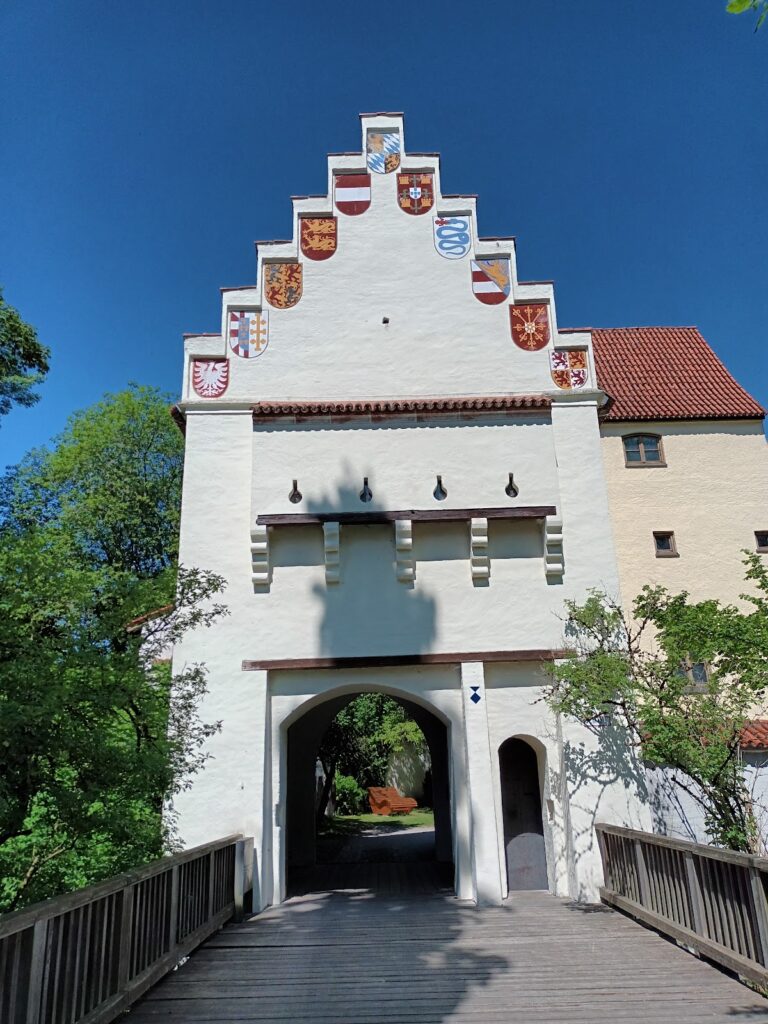
Menzing: A Historic Settlement and Blutenburg Castle in Munich


Visitor Information
Google Rating: 4.5
Popularity: Medium
Google Maps: View on Google Maps
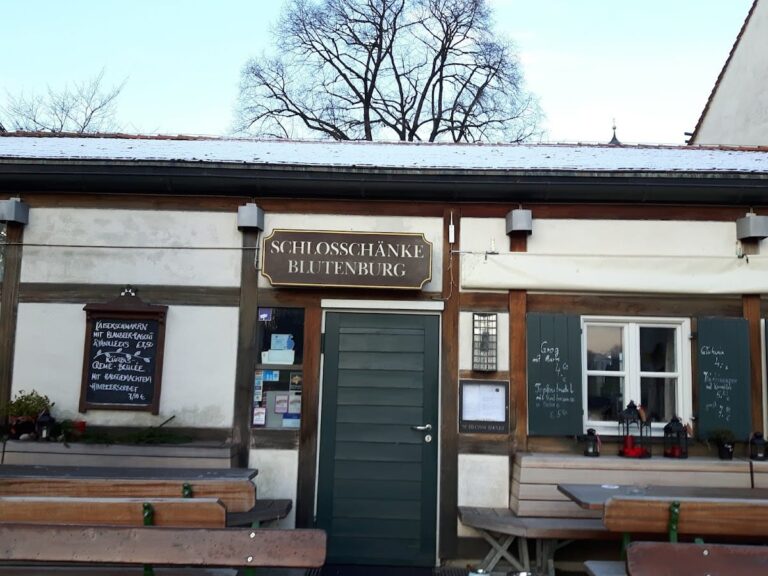
Official Website: www.schlossschaenke-blutenburg.de
Country: Germany
Civilization: Unclassified
Remains: Military

History
Menzing is a historic settlement located within the modern city of Munich, Germany. Its earliest recorded name, “Menzinga,” appears in a document from the year 817, showing its long-standing presence in the region, which was first settled by early European communities. The name derives from the male personal name Manzo, indicating its origin as a family or clan settlement.
Archaeological findings reveal that the area around Menzing was inhabited as far back as the Early Bronze Age, more than 4,000 years ago. This deep history is underlined by the discovery of an ancient tomb in Obermenzing in 1910, which emerged during roadworks. By the late Bronze Age, around the 12th century BCE, the settlement known as “Siedlung Blutenburg” was established on a hill called Plüdenberg. Its location at a pronounced curve of the Würm River created a natural defense, essentially isolating the site on a river island and providing protection to its inhabitants.
During the Roman period, a fort named “Villa Uuirma” was built on this strategic position. This reflects the continued importance of the site through different epochs due to its defensible location and resources nearby.
In the 13th century, a castle was constructed atop Plüdenberg. By the early 15th century, however, the fortress had suffered damage from conflict, being partly destroyed and burned. Significant restoration took place between 1431 and 1440 under the direction of the future Duke Albrecht III of Bavaria, who made this castle a residence along with his wife Agnes Bernauer until her untimely death in 1435.
Blutenburg Castle was not only a noble residence but also associated with pioneering health practices. Kaspar Bernauer, Agnes’s father and a skilled surgeon and herbalist, established the area’s first known European health complex that combined thermal springs with herbal medicine, laying foundations for balneology (therapeutic use of baths) and phytotherapy (plant-based treatments) to serve the Wittelsbach ruling family.
Historically, the landscape around Menzing was heavily forested and rich in wildlife, making it a popular hunting area for local nobility. A carefully maintained visual corridor once linked Blutenburg Castle directly with the distant Nymphenburg Palace, forming a long line of sight through the forests, although natural growth eventually obscured this feature.
By the early 14th century, the original settlement had divided into two parts, emerging as Obermenzing and Untermenzing. The legacy of the Blutenburg Castle is reflected in Obermenzing’s coat of arms, which features the castle’s image. In recognition of its historical importance, Menzing marked its 1,200th anniversary in 2017 with a variety of commemorative events, including a musical theatrical production dedicated to the story of Agnes Bernauer, staged near the castle grounds.
Remains
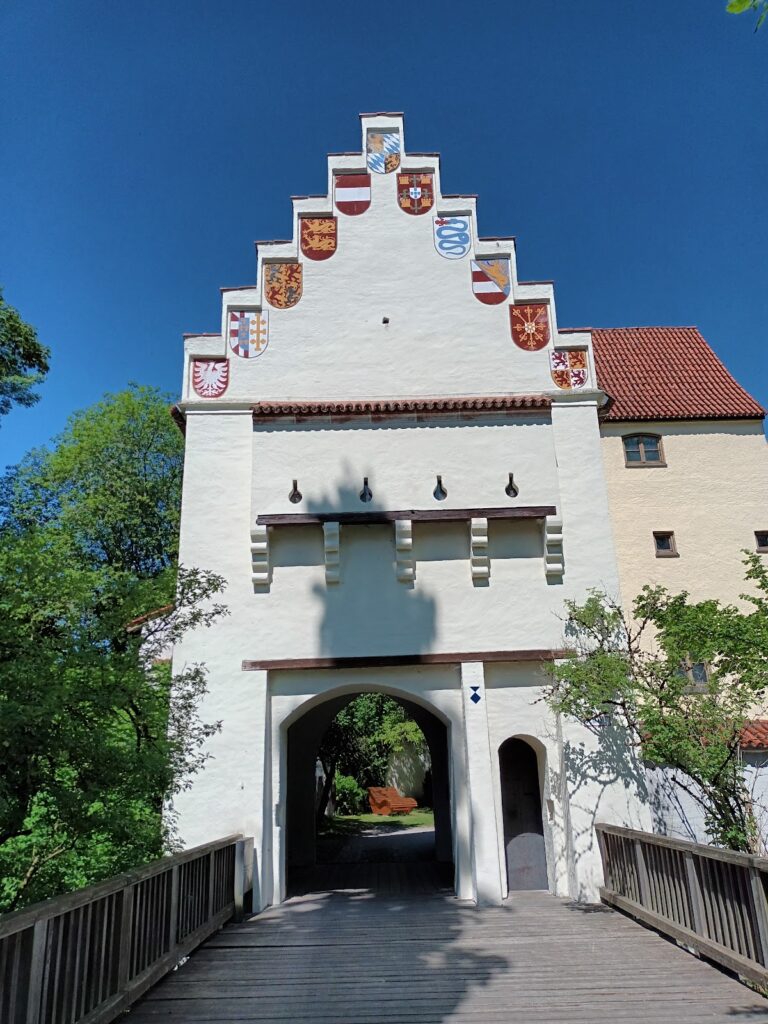
The remains of Menzing’s historical importance are centered around the site of Blutenburg Castle, positioned on Plüdenberg hill. This castle originated in the 13th century, constructed to take advantage of the hill’s natural defense provided by the sharp bend of the Würm River, which surrounds it and effectively forms an island. This strategic placement was carefully selected to enhance protection against potential attackers.
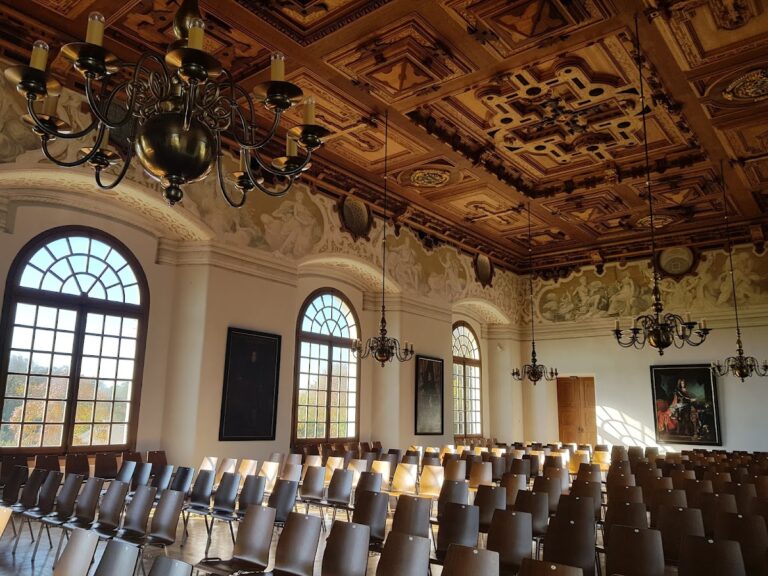
Blutenburg Castle underwent significant reconstruction in the early 15th century under Duke Albrecht III. The layout reflects medieval fortification styles, blending defensive considerations with residential purposes. Nearby, the castle grounds included a remarkable health complex established by Kaspar Bernauer, which utilized thermal springs. This complex is identified as the first in Europe to offer a combination of balneological and phytotherapeutic treatments, highlighting the early integration of natural springs and herbal healing within a noble estate.
Surrounding the castle is a park known as “Am Durchblick,” historically linked to Nymphenburg Palace through a direct and carefully maintained visual axis. This straight line of sight enhanced the connection between the two sites, serving both aesthetic and practical purposes. Over time, tree growth has obscured this previously clear corridor.
In the vicinity of the castle’s main entrance, a modern monument titled “Monument to Love,” created by sculptor Joseph Michael Neustifter and installed in 2013, commemorates the tragic narrative of Agnes Bernauer and Duke Albrecht III. The castle and its surroundings have inspired various artists, including Jan Pollack and Wassily Kandinsky, underscoring its cultural as well as historical importance.
Today, the castle remains as a preserved historical site, with its layout and parts of its structure still visible. The area continues to reflect its layered history, from Bronze Age settlement through medieval nobility to early modern health practices. The discoveries and monuments connected to Blutenburg Castle help visitors and scholars alike appreciate the depth of history rooted in Menzing’s landscape.
Nearby sites