Limesmuseum Aalen: A Roman Cavalry Fort and Museum in Germany

Visitor Information
Google Rating: 4.5
Popularity: Medium
Google Maps: View on Google Maps
Official Website: www.limesmuseum.de
Country: Germany
Civilization: Roman
Remains: Museum

History
The site of the Limesmuseum Aalen in Germany, was originally established by the Romans as a cavalry fort. This fort was the largest of its kind north of the Alps, serving as a key military installation along the Roman frontier known as the Limes. It was positioned to control and monitor the border region of the Roman Empire.
Between the late 1st and early 3rd centuries CE, the fort was actively used and adapted to meet military and administrative needs. The principia, or staff building, functioned as the administrative and religious heart of the fort. It housed offices, archives, and a sacred flag sanctuary called the capitolium, where the unit’s standards were kept. The fort was garrisoned by a cavalry unit, whose barracks were modeled after those found at the nearby Heidenheim fort, the previous base of the same unit.
Religious practices played an important role at the fort, with altars and statues honoring Roman emperors and deities such as Neptune, the god of water. The principia’s courtyard included a spring sanctuary, reflecting the soldiers’ reverence for natural elements. The site remained in use for an extended period, with continuous modifications reflecting changing military and religious functions.
After the Roman period, the fort’s remains influenced medieval construction in the area. The St.-Johann Church was built directly in front of the fort’s main gate, incorporating Roman stone elements discovered during 20th-century renovations. This reuse of Roman materials illustrates the lasting impact of the fort on the local landscape and architecture.
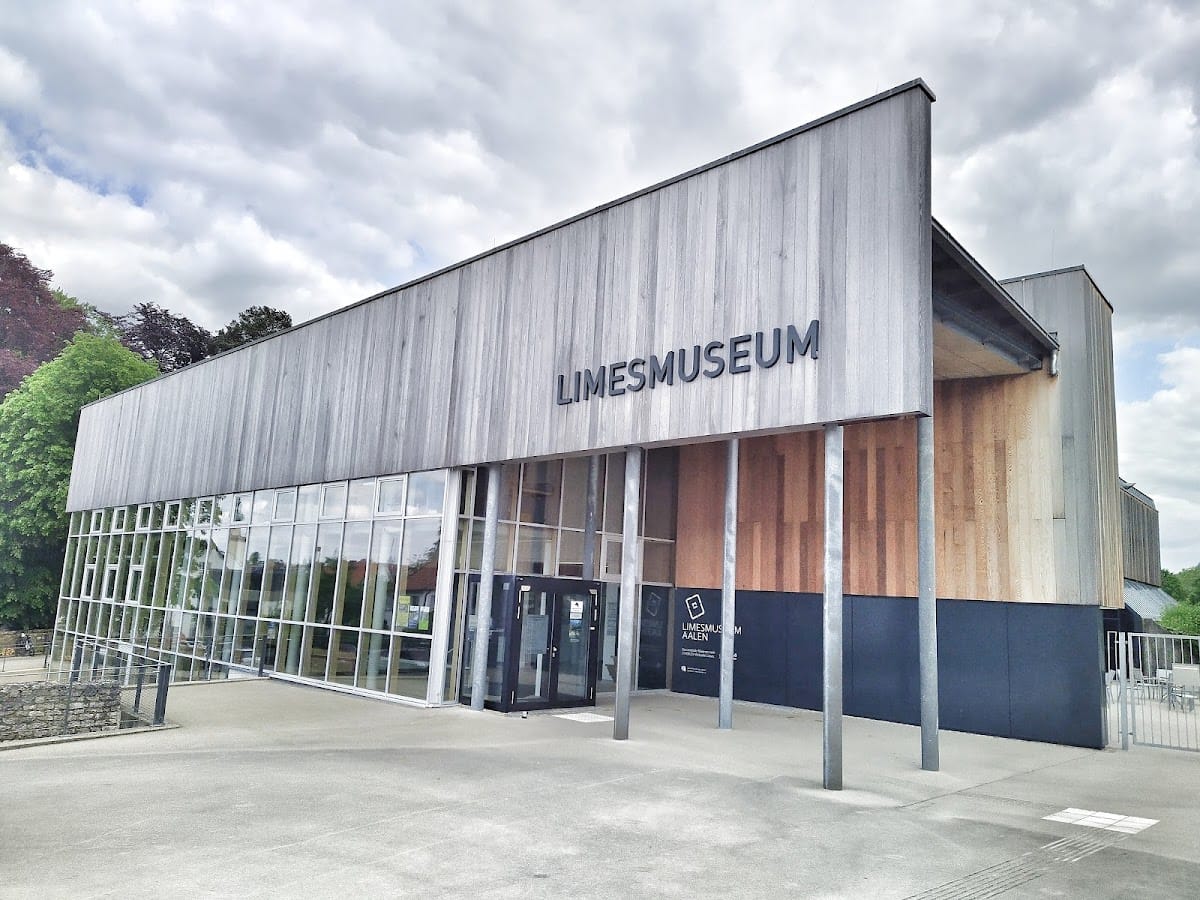
The Limesmuseum Aalen is now part of the UNESCO World Heritage Limes site and operates as a branch of the Archaeological State Museum Baden-Württemberg. Nearby, the Limes-Informationszentrum occupies a former Roman stone building that may have served as the prefect’s residence or a guesthouse, highlighting the administrative importance of the area beyond the fort itself.
Remains
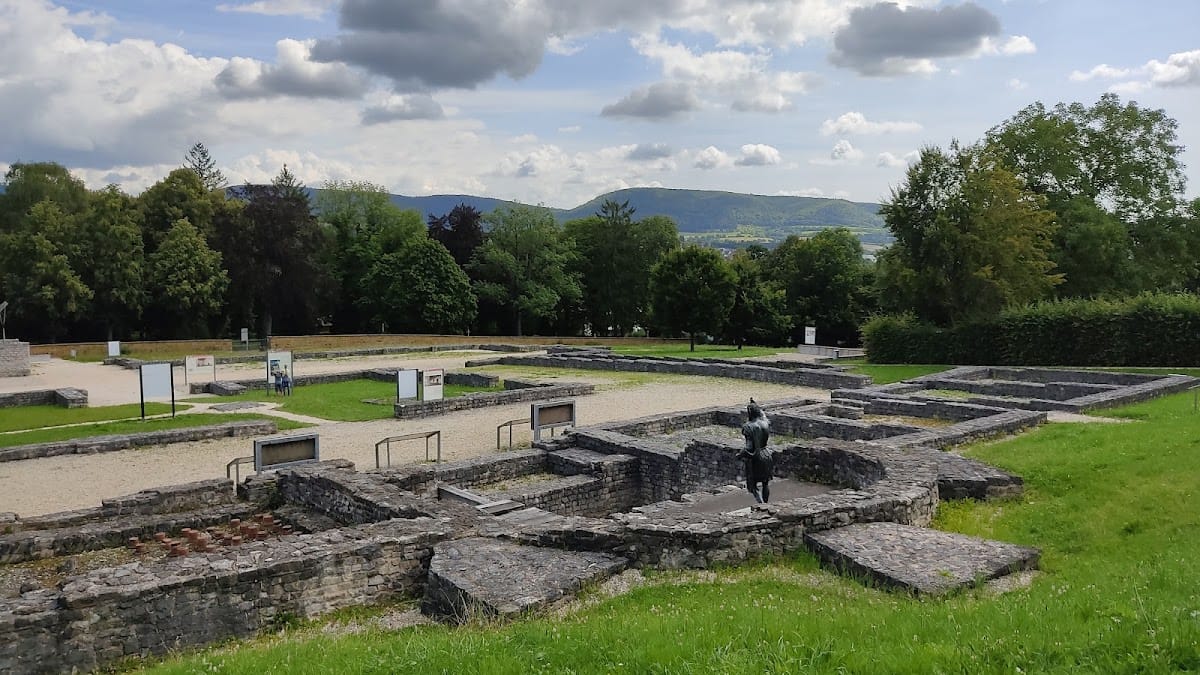
The archaeological site of the Limesmuseum Aalen reveals a well-preserved Roman cavalry fort constructed primarily of stone. The layout centers on the principia, the largest known staff building along the Roman Limes, which served as the fort’s administrative and religious hub. This building features a grand entrance hall approximately 68 meters long and 18 meters high, with three elaborately designed doorways. The hall covered about 1430 square meters and was used for military assemblies, issuing orders, and training exercises.
Surrounding the principia’s courtyard is a covered walkway called a porticus. The courtyard contains foundations for an altar or statue pedestal, likely for an imperial image, and two wells: one for drinking water and another, a nymphaeum or spring sanctuary, probably dedicated to Neptune. The offices and archives around the courtyard include rooms equipped with underfloor heating, known as a hypocaust system.
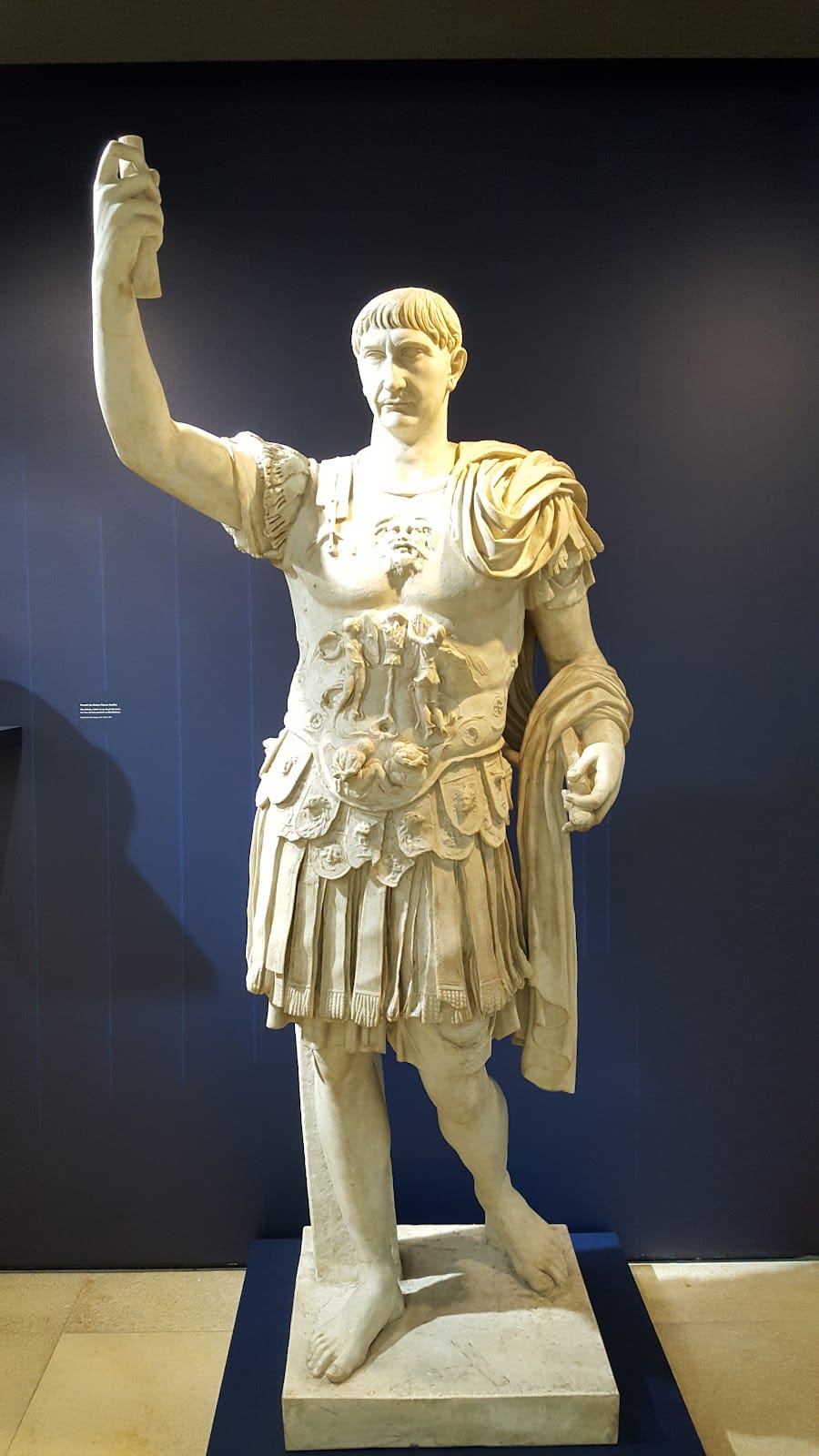
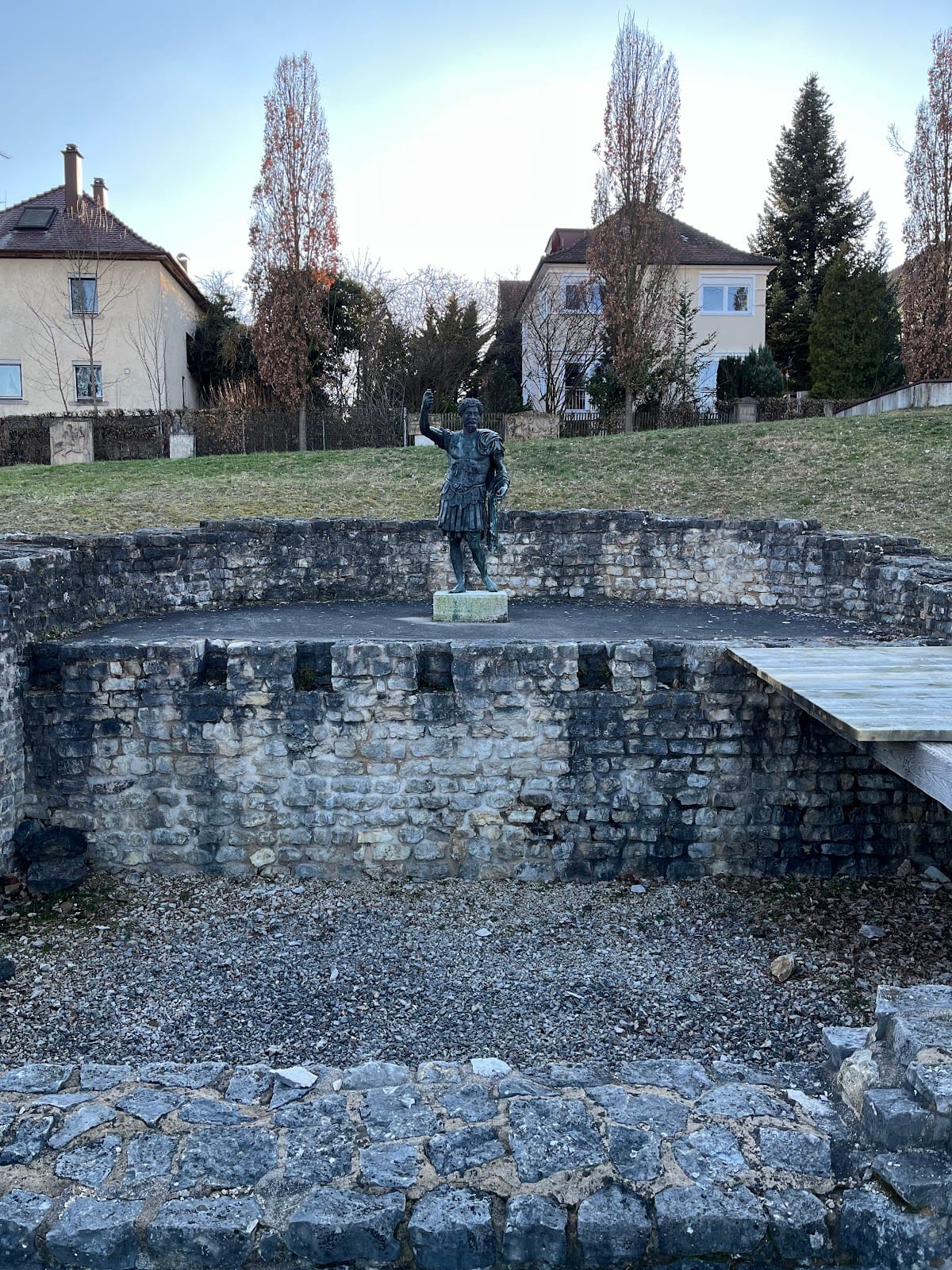
The flag sanctuary, or capitolium, within the principia housed the unit’s standards and featured statues of emperors slightly larger than life size. Beneath this sanctuary was the unit’s treasury, located in the cellar. The principia’s religious function is evident in the altars and statues honoring emperors and deities.
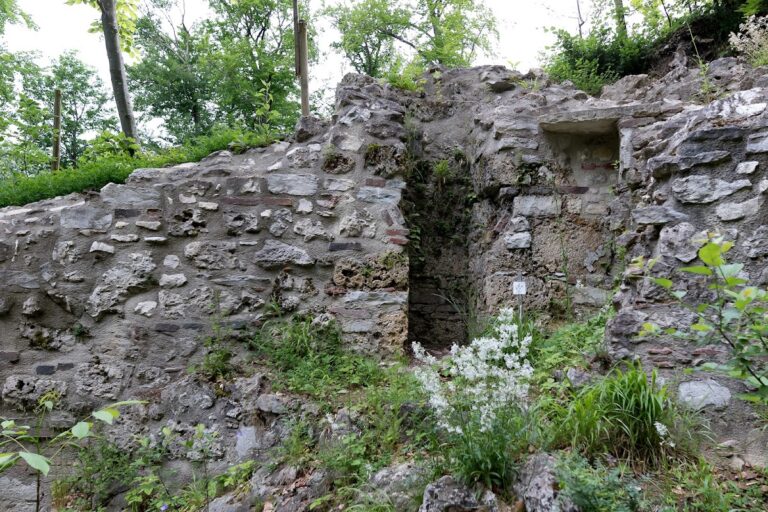
The fort’s left side gate, called the porta principalis sinistra, survives as conserved masonry. It originally stood about 12 meters high and had two passageways, each 3 meters wide and 5 meters high. The gate’s walls retain original white plaster with red joint lines and crenellations topped by a wooden battlement walkway. This gate likely led to an exercise ground outside the fort.
A reconstructed double barrack building illustrates the soldiers’ living quarters, based on archaeological evidence from the nearby Heidenheim fort. Each contubernium, or shared room, had two parts: a front stable for horses and a rear living and sleeping area for soldiers. The barracks were probably two stories high, allowing natural light through upper windows, though the upper floor’s exact use remains unknown.
Along the western edge of the archaeological park, casts of statues, altars, and tombstones found along the Limes provide insight into the social and religious life of the fort’s inhabitants. A replica Roman construction crane, built in 1997 and renewed most recently in 2022, demonstrates ancient building techniques. This crane operated with a treadmill mechanism to lift heavy stone blocks.
The nearby St.-Johann Church incorporates Roman stone spolia in its western wall, directly linking the medieval structure to the Roman fort. The Limes-Informationszentrum occupies a Roman stone building with hypocaust heating and an apsidal room, located outside the fort’s main gate. This building likely served as the prefect’s palace or a representative guesthouse.
Nearby sites