Latakia Tetraporticus: A Roman Monument in Syria


Visitor Information
Google Rating: 4.6
Popularity: Very Low
Google Maps: View on Google Maps
Country: Syria
Civilization: Roman
Remains: Civic

History
The Latakia Tetraporticus stands in the southern part of Latakia city, located in modern-day Syria along the Mediterranean coast. This monument was built by the Romans during their control of the region. Latakia, known in antiquity as Laodicea ad Mare, was an important city within the Roman Empire.
The arch was constructed in 194 AD after a civil war erupted over the Roman imperial throne. Two commanders, Cinius Niger and Septimius Severus, vied for power. Latakia supported Septimius Severus but suffered temporary occupation and damage by Niger’s forces. Following Severus’s victory, he rewarded the city’s loyalty by commissioning this monumental arch, which became known locally as the “Victory Arch.”
In later centuries, the arch fell out of its original use and was buried underground. During this period, it was converted into a mosque, with its openings sealed by walls. Residential buildings gradually surrounded and encroached upon the structure, causing damage and obscuring its original form. Locals sometimes refer to the arch as the “Hanging Church,” a name reflecting its unique appearance or its historical religious use.
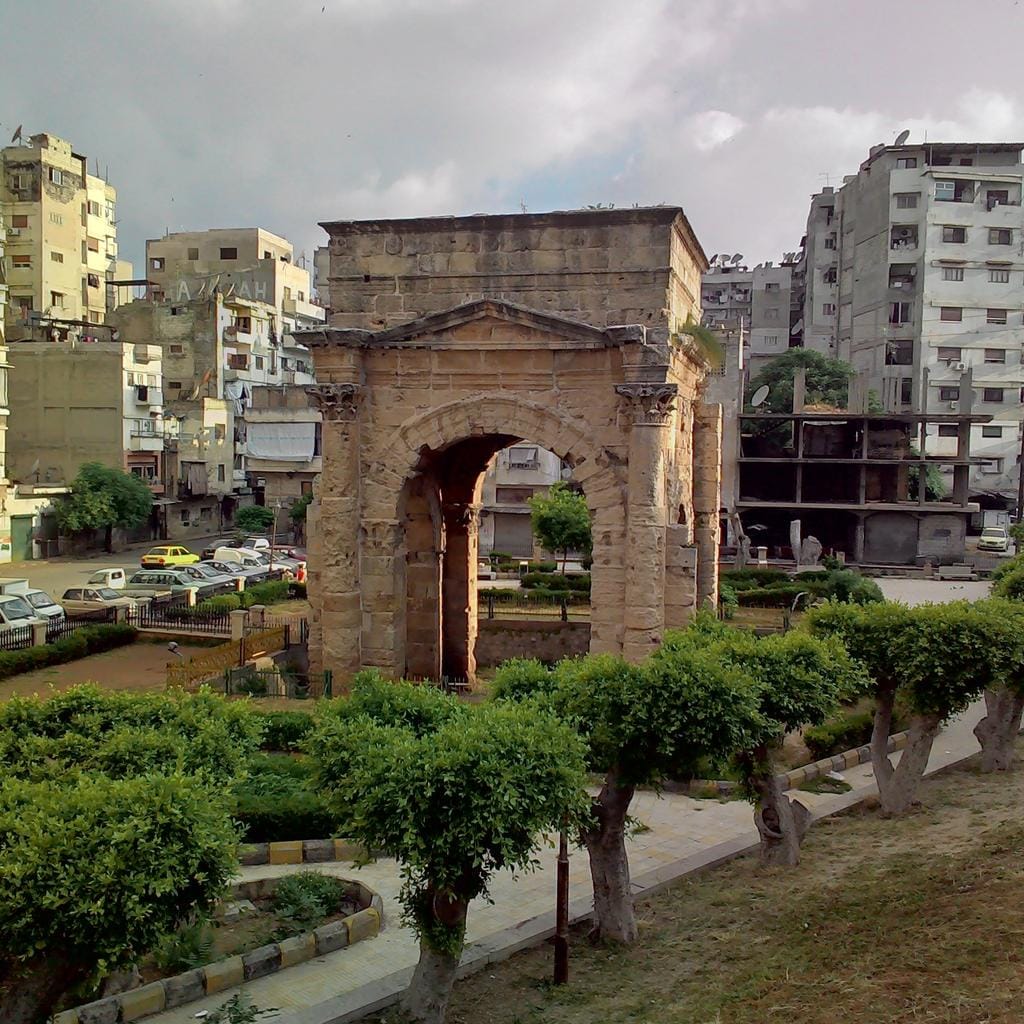
In recent times, the Syrian government undertook efforts to clear the surrounding area, remove the walls blocking the arch’s openings, and partially restore the monument. Despite these efforts, the arch remains about two meters below the current ground level. A small public garden now surrounds the site, preserving its historical presence within the city.
Remains
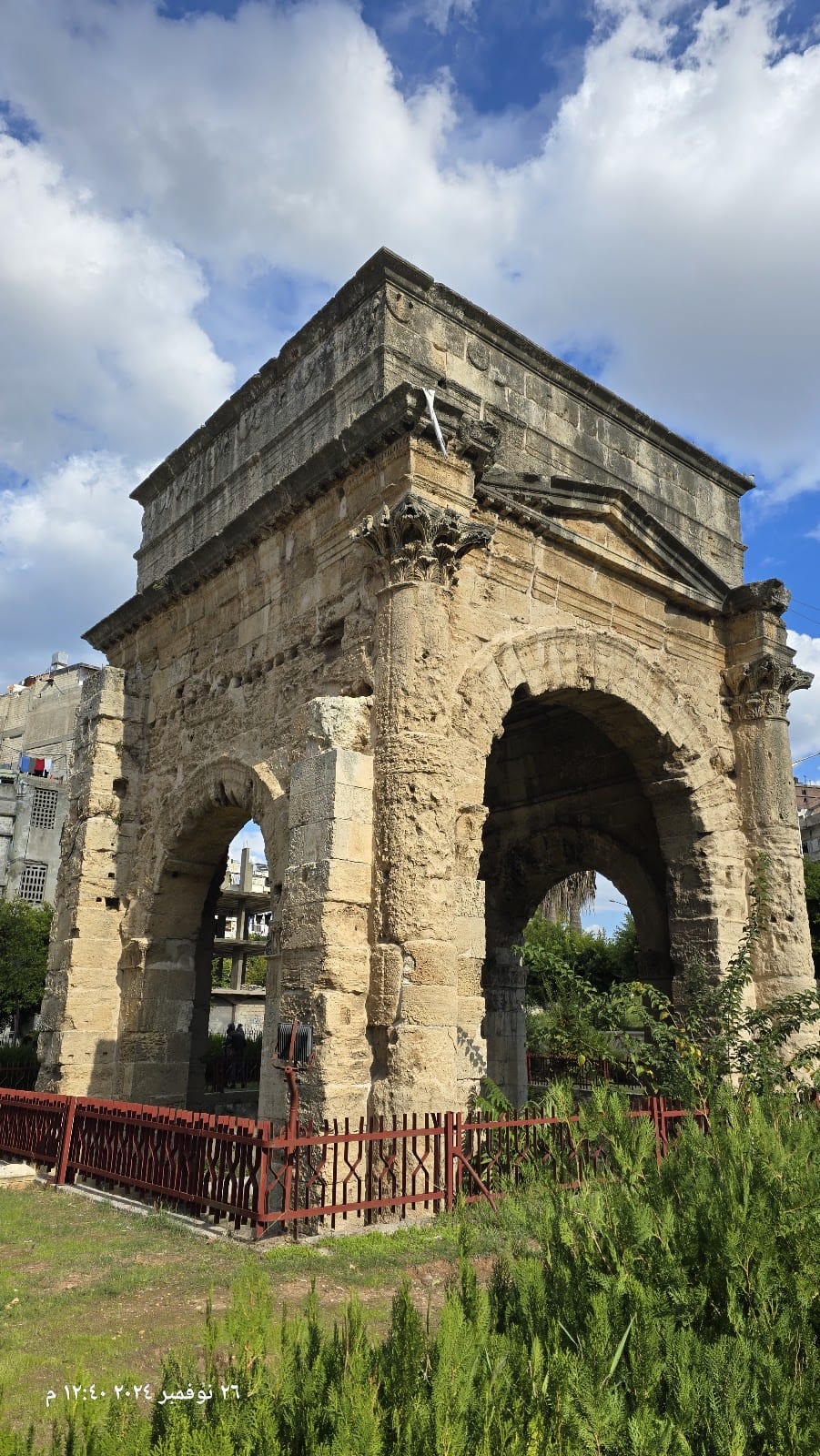
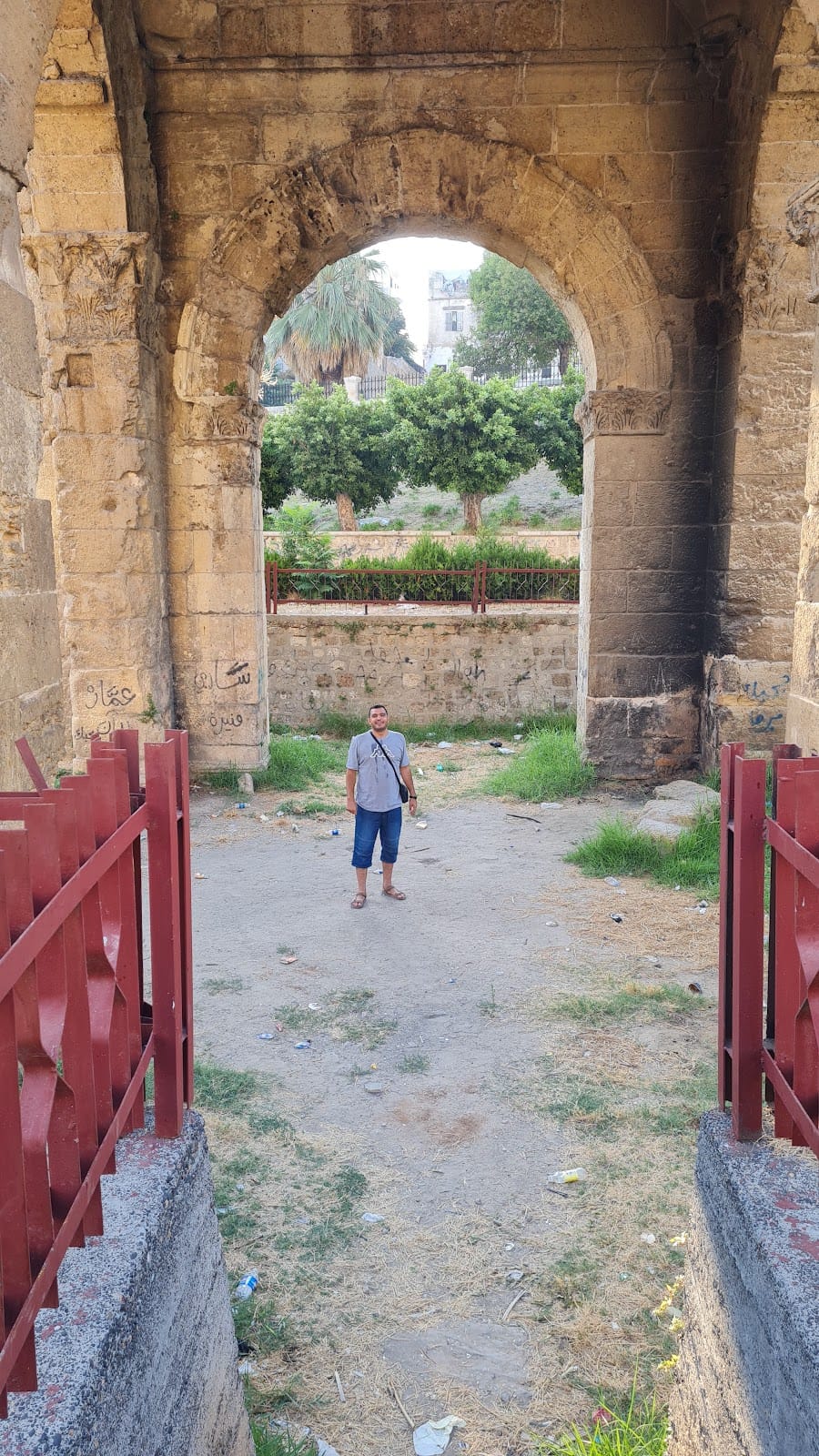
The Latakia Tetraporticus is a large, square-shaped arch made of sandstone, measuring approximately 12 meters on each side and rising to about 16 meters in height. It features a hemispherical dome at the top and four openings of different widths. Each opening is topped by a finely carved stone arch supported by columns.
The columns are decorated with Corinthian capitals, a classical style characterized by ornate, leaf-like designs. These capitals support entablatures, which are horizontal bands adorned with cornices and friezes. Both the inner and outer surfaces of the arch display detailed relief sculptures. These carvings depict Roman military symbols such as swords, shields, helmets, spears, and emblems of victory.
The arch originally marked the eastern boundary of the Roman city. Scattered classical Roman columns found in nearby streets suggest the presence of other Roman structures in the area. The arch’s solid cubic form helped it survive earthquakes that damaged other ancient buildings in Latakia.
Over time, the arch suffered weathering and damage due to the humid climate and the passage of centuries. Its openings were walled up during its conversion into a mosque, and residential buildings once pressed close against it. Today, the arch stands restored within a small public park. Much of its original decoration and form have been revealed, although it remains partially buried below ground level.