Karababa Fortress: An Ottoman Military Stronghold in Chalcis, Greece

Visitor Information
Google Rating: 4.5
Popularity: Medium
Google Maps: View on Google Maps
Country: Greece
Civilization: Unclassified
Remains: Military

History
Karababa Fortress is situated on a hill within the municipality of Chalcis, Greece. It was constructed in 1684 by the Ottoman Empire as a military stronghold designed to protect the area from Venetian incursions.
Before the fortress was built, the site was home to the ancient city of Kanithos. This earlier settlement featured public buildings such as a theater, gymnasium, and stadium, with archaeological remains including structures and tombs still evident today. The hill, known as Fourka, saw fortifications during the Roman era until around 146 BCE, indicating its strategic significance; however, there is no evidence of substantial fortification during either the Byzantine or Venetian periods.
The fortress itself was erected to strengthen Ottoman defenses against Venetian military ambitions. In 1688, the fortress withstood a Venetian siege led by Francesco Morosini, who attempted without success to capture the stronghold. Karababa remained within Ottoman control well into the 19th century, ultimately passing to the modern Greek state after 1833.
During the Second World War, Italian troops utilized the fortress as an observation post. They fortified it further by installing machine guns and anti-aircraft guns in response to wartime needs. Following the war, the fortress underwent restoration from 1985 to 2000, preserving its historical fabric for future generations.
Remains
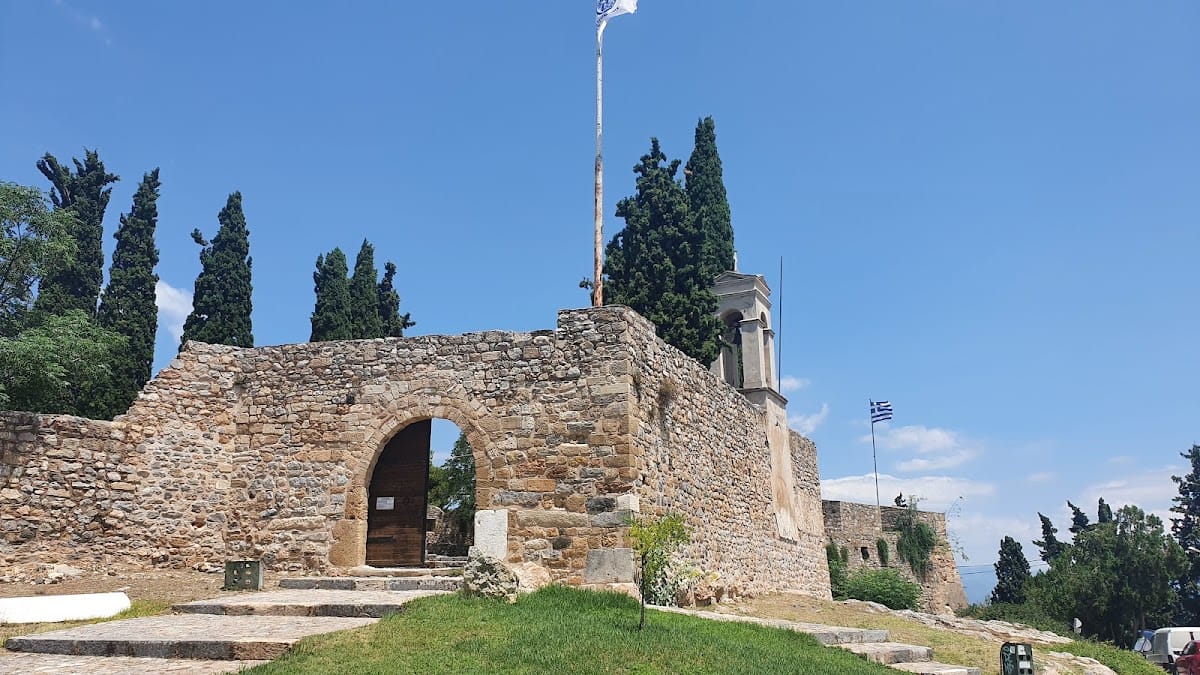
Karababa Fortress occupies an elongated hilltop area, stretching approximately 240 meters from east to west and about 54 meters wide. The defensive walls, reaching roughly six meters in height, are built vertically and feature battlements and embrasures—openings through which soldiers could fire weapons. The northern side is strengthened by a rampart and three bastions, notably including a hexagonal bastion on the eastern end that faces the town of Chalcis. On the western high point of the hill stands a substantial seven-sided tower with wall thicknesses up to 3.5 meters, containing an internal water reservoir to supply its occupants.
Access to the fortress is provided by a single entrance gate located on the southeastern slope, the lowest point of the fortification. Near this gate were military buildings supporting the fortress’s operations. Between the gate and the eastern bastion rises a bell tower equipped with an alarm bell, functioning historically as a warning system.
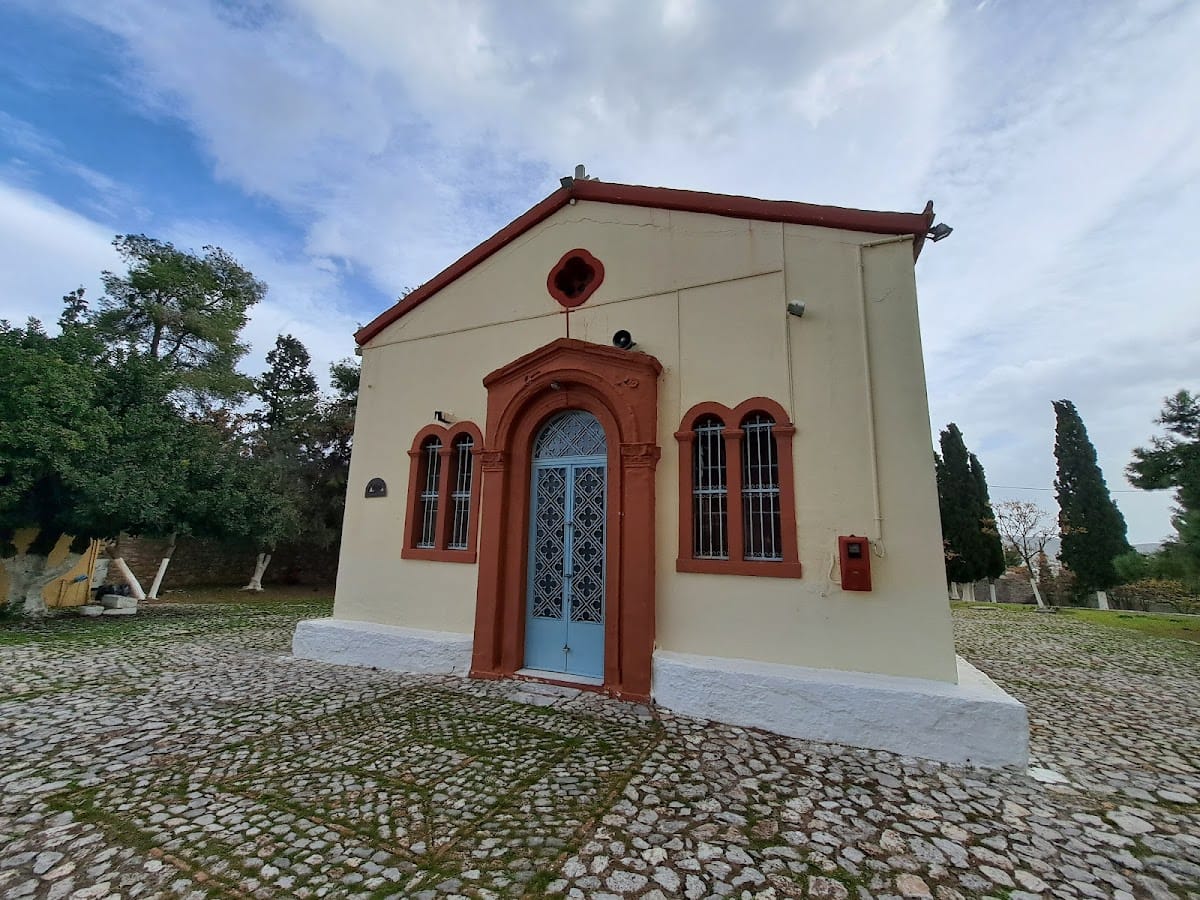
Within the enclosure, the Church of Prophet Elijah, erected in 1895, remains the only surviving building from the fortress’s later occupation. Historical artillery is represented by two Russian cannons from the 19th century, preserved on the eastern bastion’s ramparts. Additionally, rifle embrasures set into the northern wall reflect the defensive adaptations made to the fortress’s design.
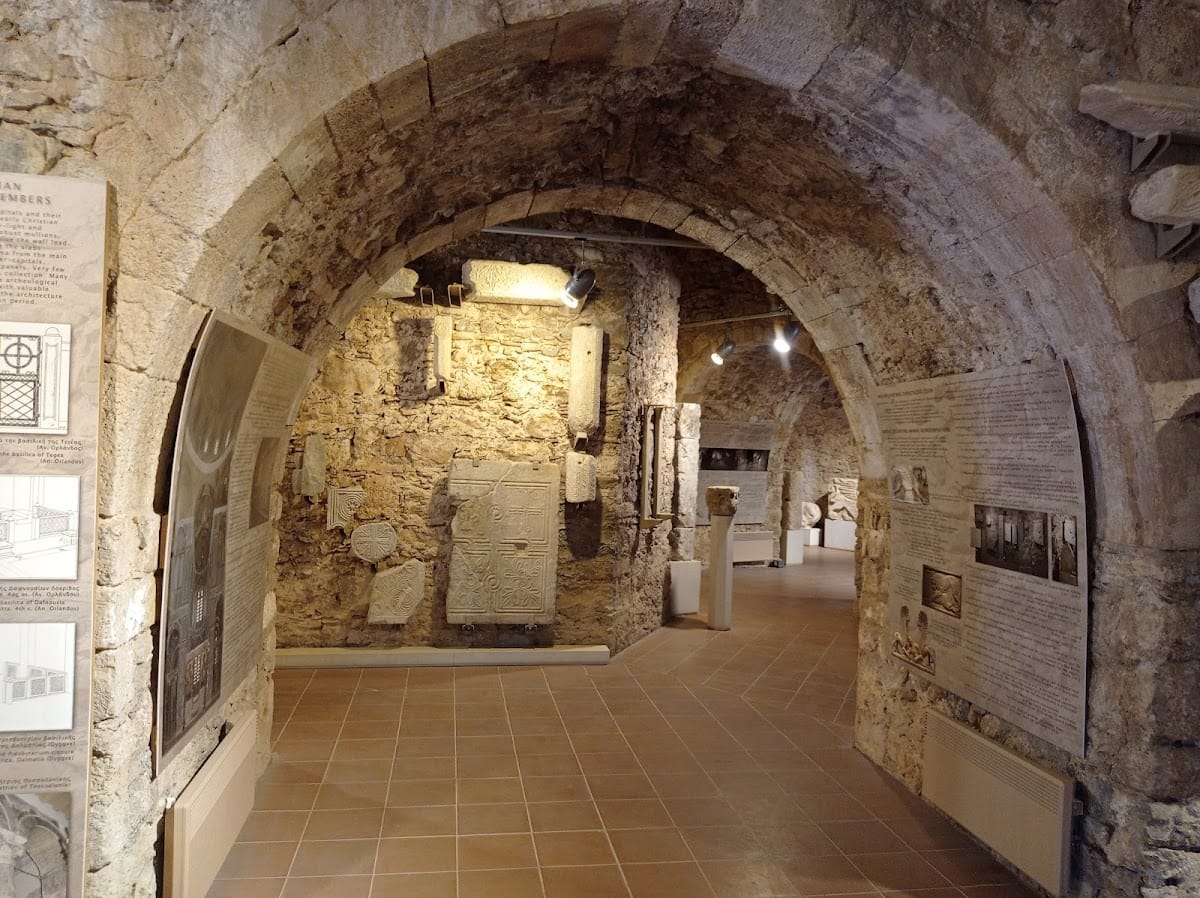
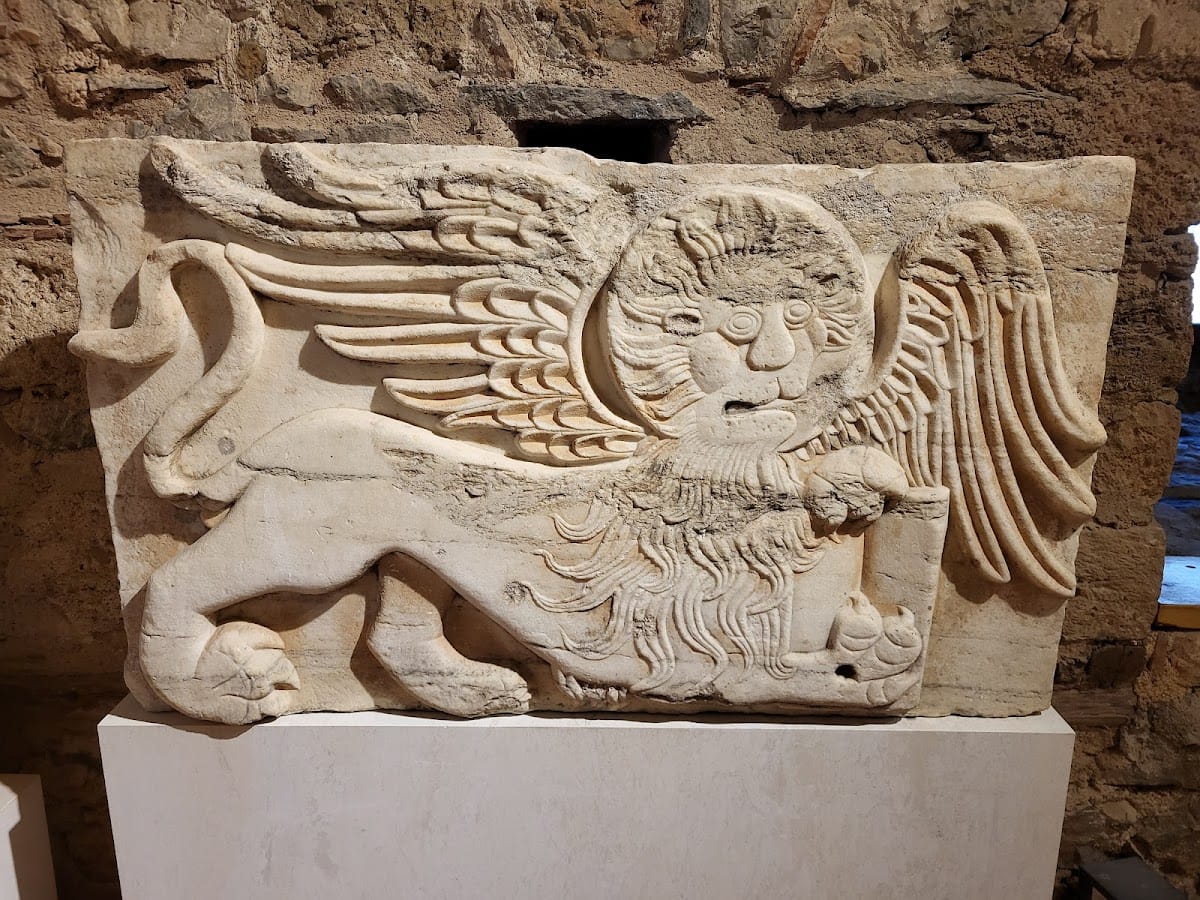
Inside the western tower, the internal corridor has been repurposed into an exhibition space showcasing sculptures, reliefs, and architectural elements spanning several eras—Paleochristian, Byzantine, Venetian, and Ottoman—highlighting the long and varied history of the site. These artifacts provide tangible connections to the changing cultures that influenced the region over many centuries.