Flavia Solva: A Roman Municipium in Noricum (Modern Austria)
Table of Contents


Visitor Information
Google Rating: 3.9
Popularity: Low
Google Maps: View on Google Maps
Official Website: www.museum-joanneum.at
Country: Austria
Civilization: Roman
Remains: City

Context
Flavia Solva is situated near the present-day town of Wagna in the Austrian state of Styria, positioned on the floodplain of the Mur River. The surrounding landscape is characterized by gently undulating terrain with fertile soils conducive to agriculture, framed by low hills and river terraces. This geographic setting provided natural advantages for settlement and land use during antiquity. Strategically, Flavia Solva occupied a key location in southeastern Austria, near Roman-era routes that linked the Danube frontier with the Adriatic coast, facilitating regional connectivity and trade.
Established as a Roman municipium in the 1st century CE, likely under Emperor Vespasian, Flavia Solva functioned as a local administrative and economic center within the province of Noricum. Archaeological evidence attests to continuous occupation through the Roman Imperial period until at least the late 3rd or early 4th century CE. The site’s decline appears gradual, with stratigraphic and material culture data indicating a slow abandonment rather than abrupt destruction. Excavations have revealed urban structures and artifacts, although preservation varies due to modern agricultural activity and development. Conservation efforts aim to protect exposed remains and integrate the site into regional heritage frameworks, underscoring Flavia Solva’s significance for understanding Roman provincial urbanism in the eastern Alpine region.
History
Flavia Solva represents a notable example of Roman urbanization in Noricum, illustrating the imperial policy of transforming indigenous settlements into municipia to consolidate control and administer key transit corridors between the Danube and Adriatic regions. The site’s evolution from a modest pre-Flavian vicus to a municipium with distinctive public architecture reflects broader political, military, and social dynamics in southeastern Alpine provinces. Its history encompasses phases of growth, conflict, recovery, and eventual decline aligned with the shifting fortunes of the Roman Empire in the region.
Augustan and Early Roman Period (circa 15 BCE – 69 CE)
During the Augustan period, the territory of Noricum was incorporated as a Roman protectorate, with increasing Roman influence over Celtic populations. The initial settlement at the future site of Flavia Solva consisted of a small cluster of wooden buildings without formal urban planning, located on the western bank of the Mur River. Archaeological remains from this phase are limited to wooden structural elements, indicating a vicus-level community. The population likely included Celtic inhabitants relocated from the nearby Frauenberg hill settlement, which had a long-standing occupation dating back to the Neolithic and was abandoned during the Claudian period. This transition marks a shift from hilltop Celtic centers to riverside settlements under Roman influence, reflecting early stages of Romanization in the region.
Flavian Municipal Foundation and Urban Development (circa 69–2nd century CE)
Following the Year of the Four Emperors, Emperor Vespasian elevated the settlement to municipium status around 69 CE, renaming it Municipium Flavia Solva in honor of the Flavian dynasty. This promotion rewarded local loyalty and initiated a comprehensive urban redevelopment. The original vicus was cleared to establish a planned Roman town laid out on a regular grid system inspired by Italian urban design. The city comprised rectangular insulae approximately 60 by 70 meters, separated by broad gravel-paved streets about six meters wide. The urban core featured stone-built public and residential buildings, while peripheral areas retained wooden houses with wattle and daub walls. Notably, Flavia Solva lacked defensive walls, an uncommon feature for a municipium in a frontier province.
Public architecture included an ellipsoid amphitheater measuring roughly 80 by 35 meters, the only known amphitheater in Noricum, with wooden seating supported on stone foundations. The forum and public baths (thermae) were likely situated within insulae 25 and 26, although no temples or sanctuaries have been excavated within the city limits. Religious activities were centered on a cult complex at the nearby Frauenberg hill, where the worship of Isis Noreia—a syncretic local deity combining Egyptian and indigenous elements—was prominent. Despite the absence of aqueducts or sewer systems, the presence of thermae and the hilly terrain suggest water was supplied from springs or wells. Residential insulae combined housing and workshops, with metalworking activities such as bronze fibulae casting concentrated in the northern quarter, while the southern sector contained larger, more luxurious stone houses.
Mid-2nd Century Destruction and Recovery (circa 166–early 3rd century CE)
In approximately 166 CE, Flavia Solva experienced partial destruction associated with the Marcomannic Wars, during which Germanic tribes breached the Danube frontier and advanced through Noricum. Archaeological evidence indicates that damage was localized rather than widespread, affecting certain city sectors. Concurrently, a plague likely contributed to population decline, compounding the effects of military incursions. Following this period of disruption, the city underwent reconstruction under Emperor Commodus, albeit on a reduced scale. By the early 3rd century, Flavia Solva had regained some prosperity and administrative complexity, as demonstrated by the establishment of a public fire brigade documented in a membership list dated to 205 CE. This reflects organized urban governance and community services during the recovery phase.
Late Roman Period and Economic Development (late 3rd – 4th century CE)
After 275 CE, Flavia Solva experienced significant renovations and expansions of residential buildings, including the installation of hypocaust (underfloor) heating systems, indicative of increased domestic comfort and wealth among urban elites. Despite the broader political instability of the late 3rd and 4th centuries, no major destruction layers have been identified at the site, suggesting relative stability and economic continuity. The municipium remained inhabited through the second half of the 4th century, maintaining its role as a local administrative center. Its territory encompassed subordinate vici such as Gleisdorf and Kalsdorf near modern Graz, reflecting a network of dependent settlements. Military presence during this period is attested by artifacts, underscoring the region’s ongoing strategic importance.
Decline and Late Antiquity (early 5th century CE)
By the early 5th century, Flavia Solva was largely abandoned or significantly depopulated amid the collapse of Roman authority in Noricum and increasing pressures from migrating peoples. Archaeological data suggest that inhabitants relocated to more defensible nearby heights, particularly the Frauenberg hill, which became the site of a fortified settlement. Finds including lead seals bearing the name of Emperor Marcian (reigned 450–457 CE) and animal-shaped fibulae indicate a late antique military or administrative presence in the area during the mid-5th century. The Frauenberg also contains the largest known late Roman cemetery in the eastern Alpine region, marking continued occupation and a shift in regional settlement patterns following Flavia Solva’s decline.
Medieval to Early Modern Period and Rediscovery
Throughout the Middle Ages, the ruins of Flavia Solva remained visible and were frequently quarried for building materials, resulting in the loss of many original structures. Over time, the Roman identity of the site was forgotten. Interest in the site revived during the Renaissance and Romantic periods, when Roman gravestones and sculptures were collected and displayed at nearby Schloss Seggau, preserving funerary monuments and artistic artifacts. The definitive identification of the site as Flavia Solva was made in 1845 by Richard Knabl, a local parish priest and amateur historian, laying the foundation for systematic archaeological research.
Modern Archaeological Investigations (19th century – present)
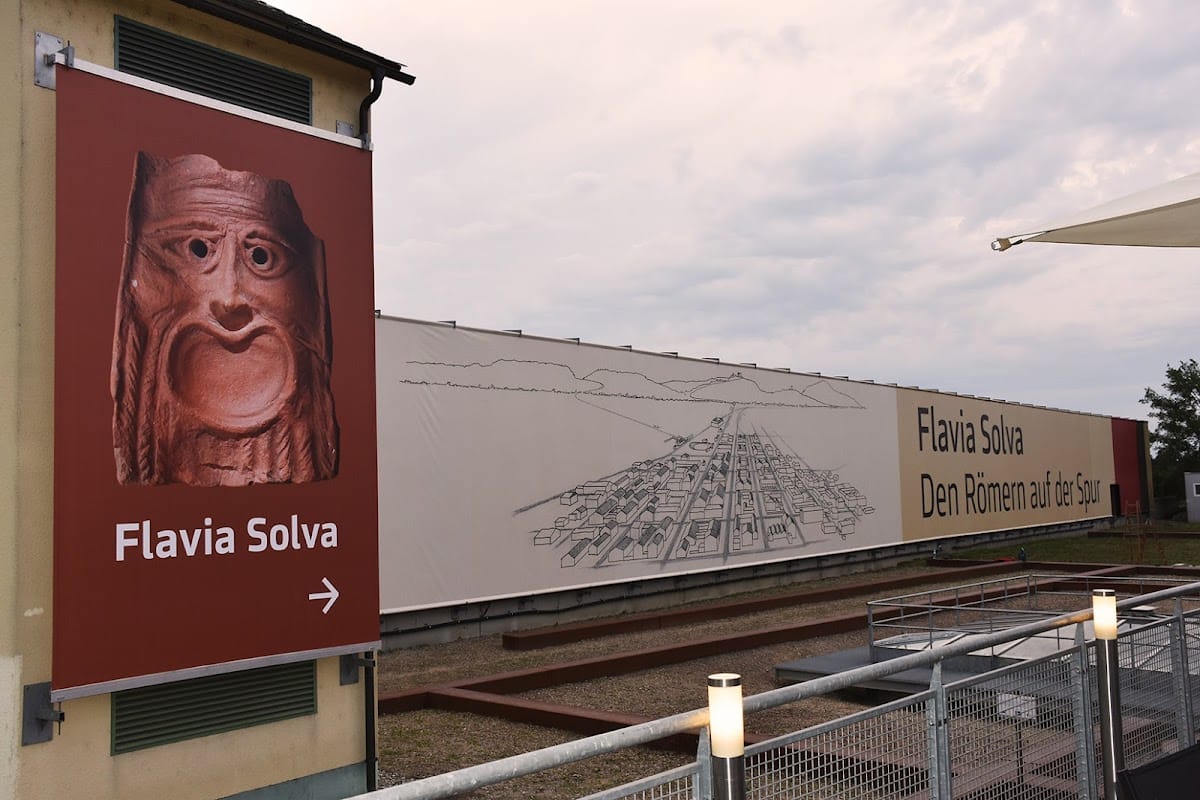
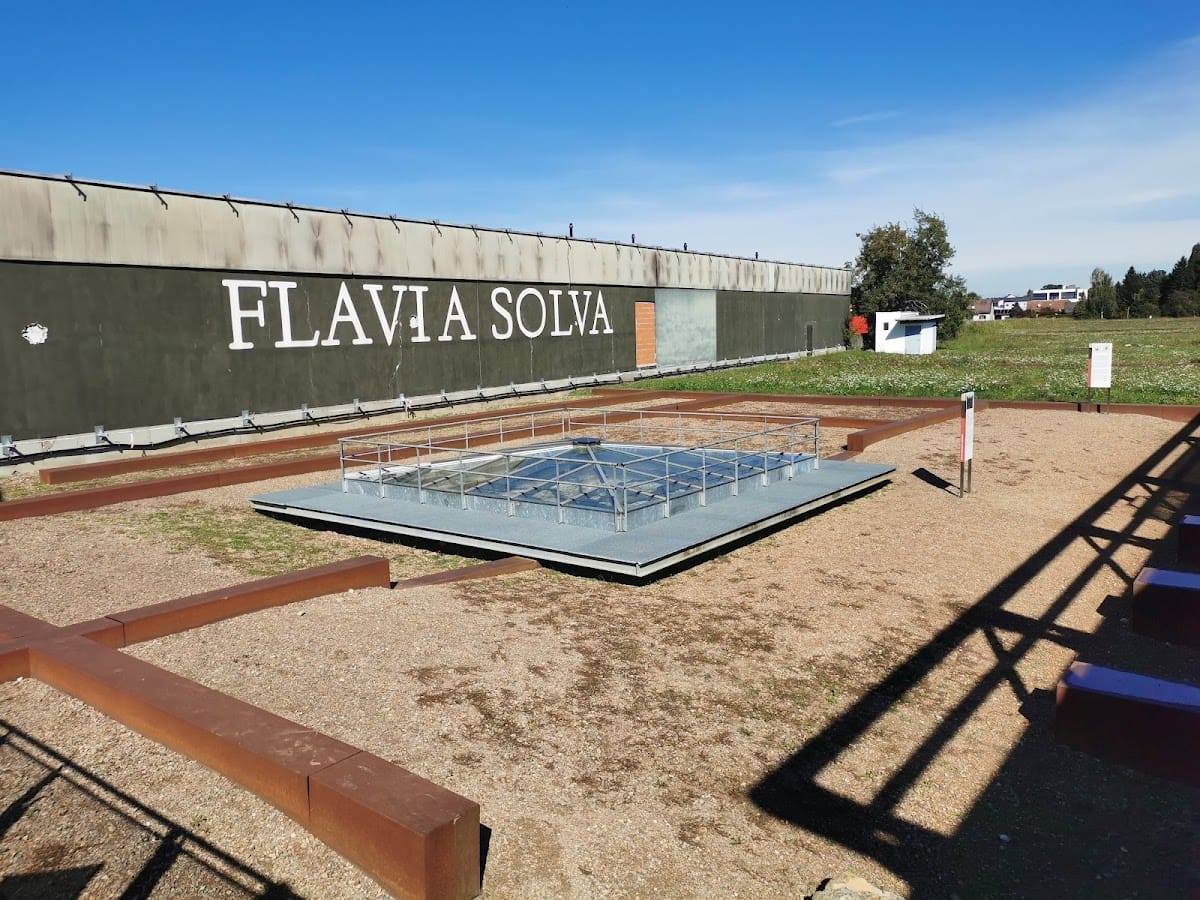
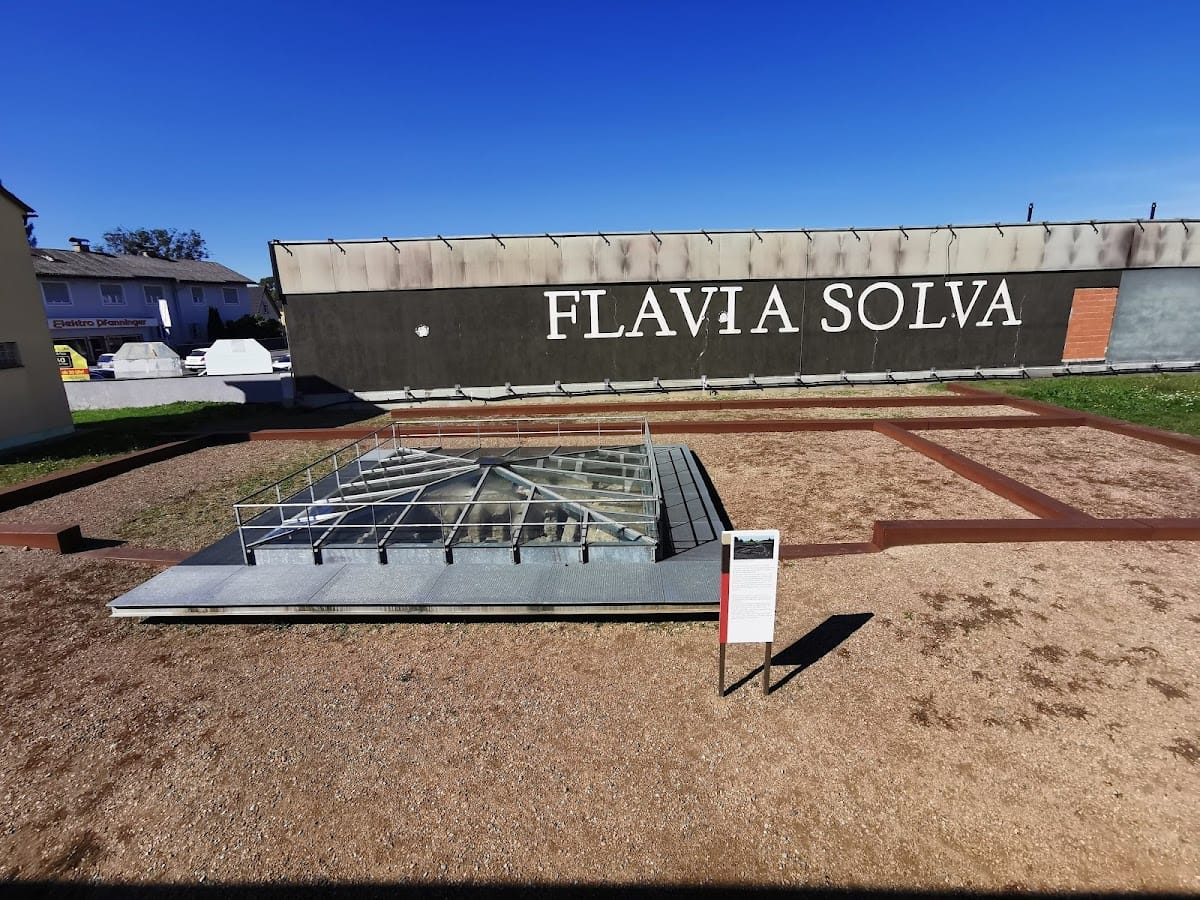
Archaeological investigations at Flavia Solva commenced in the 19th century, with extensive excavations conducted in the early 20th century by the Landesmuseum Joanneum. Rescue excavations in the late 20th century, prompted by urban expansion and infrastructure projects, uncovered approximately 40 insulae over an area of about 650 by 600 meters, despite damage from modern development. Key discoveries include foundations of Roman houses, hypocaust heating systems, and the unique amphitheater. Noteworthy artifacts such as a playable bone flute have contributed to understanding the site’s cultural heritage. Since 1986, the Archäologischer Verein Flavia Solva has actively promoted research and conservation. The 2004 Styrian state exhibition highlighted the site’s significance, and the Joanneum museum in Wagna maintains a permanent exhibition dedicated to Flavia Solva. Presently, visible remains include protected foundations beneath a pavilion, glass-covered hypocaust floors, and metal markers delineating walls and insulae. Numerous Roman funerary monuments are exhibited at Schloss Seggau, preserving the city’s legacy.
Daily Life and Importance by Period
Augustan and Early Roman Period (circa 15 BCE – 69 CE)
During its initial phase, the settlement that would become Flavia Solva was a small vicus inhabited by a population of mixed Celtic and Roman origin. The community likely included families relocated from the nearby Frauenberg hill settlement, reflecting a transition from a hilltop Celtic center to a riverside habitation. Domestic structures were simple wooden buildings without formal urban planning, indicative of small-scale subsistence economies based on agriculture and local crafts. The diet probably consisted of cereals, legumes, domesticated animals, and river fish. Clothing would have conformed to provincial Roman styles, including woolen and linen tunics and cloaks. Religious practices were syncretic, blending Celtic traditions with emerging Roman cults, though no dedicated temples or shrines have been identified within the vicus. The settlement functioned primarily as a local habitation point without formal civic institutions or marketplaces.
Flavian Municipal Foundation and Urban Development (circa 69–2nd century CE)
The elevation to municipium status under Vespasian brought profound changes to daily life. The original vicus was replaced by a planned Roman town with a regular grid layout. The population now included Roman citizens, local elites, artisans, and merchants, organized into social strata with magistrates and duumviri attested epigraphically. Housing ranged from modest wooden dwellings on the periphery to substantial stone-built residences in the city center and southern districts, some with courtyards and multiple rooms. Economic activities diversified, with workshops producing bronze fibulae and other metal goods concentrated in the northern quarter. Agriculture remained vital in the surrounding territory, supporting urban and rural populations. Diet expanded to include bread, olives, wine, and fish, reflecting integration into Roman trade networks. Public amenities included the unique ellipsoid amphitheater and thermae, which required reliable water sources likely drawn from springs or wells. Religious life centered on the cult of Isis Noreia at the Frauenberg sanctuary. The municipium served as a regional administrative hub, facilitating governance, commerce, and cultural exchange.
Mid-2nd Century Destruction and Recovery (circa 166–early 3rd century CE)
The mid-2nd century brought disruption from the Marcomannic Wars and a concurrent plague, resulting in localized destruction and population decline. Residential and workshop areas suffered damage, and social hierarchies may have been strained. Recovery under Commodus involved rebuilding on a smaller scale, restoring essential urban functions. The establishment of a public fire brigade by 205 CE, documented epigraphically, reflects renewed civic organization. Economic activities resumed, though likely at reduced intensity, with agriculture and craft production continuing. Religious practices persisted, centered on the Frauenberg cult complex. Markets and transport routes remained operational, supporting trade and communication despite regional instability.
Late Roman Period and Economic Development (late 3rd – 4th century CE)
Following the mid-3rd century crisis, Flavia Solva experienced relative stability and economic renewal. Residential architecture was renovated and expanded, with hypocaust heating systems indicating increased wealth among urban elites. The population comprised local inhabitants, artisans, merchants, and military personnel, reflecting the town’s strategic importance. Economic activities included metalworking, craft production, and agriculture from surrounding estates. Dietary habits incorporated cereals, olives, wine, and fish, supported by trade networks. Public amenities such as the amphitheater and thermae remained central to social life. Religious observances continued around the cult of Isis Noreia, though no new temples were constructed. The municipium maintained administrative oversight of subordinate vici, serving as a local governance and economic center. Military artifacts attest to ongoing strategic significance.
Decline and Late Antiquity (early 5th century CE)
By the early 5th century, Flavia Solva underwent significant depopulation and abandonment amid the collapse of Roman authority and increasing external pressures. Inhabitants relocated to defensible sites such as the Frauenberg, where a fortified settlement and large late Roman cemetery developed. Daily life shifted toward rural and militarized forms, with evidence of continued military or administrative presence indicated by lead seals and fibulae. Social organization adapted to defensive priorities, with diminished civic amenities. Economic activities contracted to subsistence agriculture and localized crafts. Religious life persisted in late antique forms, though the urban cult center ceased operation. Transport and trade declined as regional instability curtailed long-distance exchange. Flavia Solva’s role as a municipium ended, supplanted by the fortified Frauenberg settlement during the transition to early medieval structures.
Medieval to Early Modern Period and Rediscovery
Following abandonment, the ruins of Flavia Solva remained visible throughout the Middle Ages, primarily serving as a quarry for building materials. The Roman identity of the site faded, and no continuous settlement persisted on the original urban footprint. Interest revived during the Renaissance and Romantic periods, when Roman artifacts were collected and displayed at Schloss Seggau, preserving funerary monuments and sculptures. This cultural rediscovery laid the groundwork for systematic archaeological investigation.
Modern Archaeological Investigations (19th century – present)
Since the 19th century, archaeological research has illuminated Flavia Solva’s urban layout, economy, and cultural heritage. Excavations revealed house foundations, hypocaust systems, and the unique amphitheater, while artifacts such as a playable bone flute provide insight into daily and cultural practices. Preservation efforts balance protection of exposed remains with integration into regional heritage. The site’s importance as a Roman municipium in Noricum is well established, highlighting its role as a local administrative center, economic hub, and cultural crossroads from the Flavian period through late antiquity. Ongoing research continues to refine understanding of its social structures, economy, and regional significance.
Remains
Architectural Features
Flavia Solva was constructed according to a planned grid system established in the 1st century CE following its elevation to municipium status. The urban layout comprises rectangular insulae approximately 60 by 70 meters, separated by broad gravel-paved streets about six meters wide. Archaeological excavations have identified around 40 insulae within an area measuring roughly 650 by 600 meters. Construction techniques include stone foundations for public buildings and wealthier residences, while peripheral houses often employed wood and wattle-and-daub walls. Hypocaust heating systems were installed in some houses during renovations in the late 3rd and 4th centuries CE, indicating advanced domestic heating technology.
The city lacked defensive walls or fortifications throughout its occupation. Military presence in the late Roman period is documented only on the nearby Frauenberg hill, where a fortified settlement was established after the city’s decline. No aqueducts, sewer systems, or canalization have been uncovered, though the presence of public baths implies some form of water management, likely supplied by springs or wells in the surrounding hills. The urban fabric reflects a primarily civic and residential character, with workshops concentrated in northern insulae and more spacious stone houses in the southern sectors.
Key Buildings and Structures
Amphitheatre
Constructed in the 1st century CE, the amphitheatre at Flavia Solva is the only known structure of its kind in the province of Noricum. It has an ellipsoid shape measuring approximately 80 by 35 meters. Seating consisted of wooden benches supported on stone foundations. Excavations have revealed the amphitheatre as the sole public building securely identified within the city. Its long-oval arena and surrounding seating areas suggest use for gladiatorial games or other spectacles during the Roman period. Although fragmentary, the remains are sufficient to establish its layout and dimensions.
Forum and Public Baths (Thermae)
The precise location of the forum remains hypothetical but is currently placed within insulae 25 and 26. This area also contained the city’s public baths, constructed in the 1st century CE and renovated in later periods. The baths included rooms equipped with hypocaust heating systems, demonstrating advanced heating technology. No aqueduct or drainage infrastructure has been found, but the baths’ operation would have required a reliable water source, presumably from nearby springs. The forum area was surrounded by stone buildings consistent with Roman municipal centers, though no direct archaeological remains of the forum itself have been conclusively identified.
Residential Insulae
Residential blocks date primarily from the 1st century CE, with significant rebuilding after mid-2nd century destruction. Northern insulae near the forum contained workshops, including evidence of metalworking such as bronze fibulae casting. Southern insulae featured larger, more luxurious stone houses with hypocaust heating installed during the late 3rd and 4th centuries CE. Peripheral houses were often constructed with wood and wattle-and-daub. After destruction around 166 CE, some insulae divisions in the city center were partially dissolved during reconstruction. Foundations and floor plans of many houses have been excavated, with some hypocaust floors preserved under glass coverings.
City Walls and Fortifications
Flavia Solva did not possess city walls or fortifications at any point in its history. Despite its administrative role, the city remained unfortified. Military presence in the late Roman period is attested only on the Frauenberg hill, where a fortified settlement was established after the city’s decline. No defensive structures have been found within the urban area itself.
Infrastructure and Roads
The city’s internal roads were broad, approximately six meters wide, and paved with gravel. Flavia Solva was situated at the intersection of important Roman roads connecting Poetovia (modern Ptuj) to Ovilava (modern Wels) and the Danube, as well as a trade route linking Virunum to Pannonia. No aqueducts, sewers, or canalization systems have been excavated, though the presence of baths and the terrain suggest water was supplied from local springs or wells.
Religious Sites
No temples or sanctuaries have been discovered within the city limits. Religious activities were centered on the nearby Frauenberg hill, which contained a large cult area associated with the worship of Isis Noreia, a syncretic local deity combining Egyptian and indigenous elements. The Frauenberg later became a fortified refuge and contains the largest known late Roman cemetery in the eastern Alpine region.
Burial Sites
Roman funerary monuments and gravestones from Flavia Solva have been preserved and are displayed in the courtyard of Schloss Seggau near Leibnitz. The Frauenberg hill hosts the largest late Roman cemetery in the region, associated with the settlement phase following the city’s decline in the early 5th century CE.
Other Remains
Surface traces and foundations of Roman houses are visible near Wagna, some protected by glass coverings to preserve hypocaust heating remains. Metal shafts mark the outlines of walls and insulae on the excavation field. A half-relief on a column was found at the site. Evidence of craft activities, including bronze fibulae casting, has been documented in northern insulae. No water supply or drainage systems have been excavated, but the presence of baths indicates some form of water management existed.
Archaeological Discoveries
Excavations have uncovered a variety of artifacts dating from the 1st to the 5th centuries CE. Pottery includes local and imported amphorae and tableware, found primarily in domestic and workshop contexts. Numerous inscriptions have been recovered, including dedicatory formulas and a membership list of a public fire brigade dated to 205 CE. Coins from various emperors, including lead seals (plombae) bearing the name of Emperor Marcian (450–457 CE), have been found, indicating continued occupation into late antiquity.
Tools related to metalworking and craft production have been discovered in northern insulae workshops. Domestic objects such as lamps and cooking vessels are common in residential areas. Religious artifacts are limited but include items connected to the Isis Noreia cult on the Frauenberg. A well-preserved bone flute with three finger holes was found, capable of being played today, providing insight into the site’s cultural material.
Preservation and Current Status
The preservation of Flavia Solva’s remains varies across the site. Foundations of houses, hypocaust floors, and the amphitheatre’s stone supports survive in fragmentary form. Some hypocaust heating systems are protected under glass pavilions. Metal markers delineate the outlines of walls and insulae on the excavation field. Many structures have suffered damage from modern agriculture and construction, leading to partial loss of archaeological layers.
Conservation efforts focus on stabilizing exposed remains and protecting them from environmental and human threats. The Archäologischer Verein Flavia Solva, founded in 1986, actively promotes research and site protection. The Joanneum museum in Wagna maintains a permanent exhibition of finds. The site benefits from partial legal protection following geophysical surveys, though some areas remain vulnerable due to ongoing land use.
Unexcavated Areas
Significant portions of Flavia Solva remain unexcavated or only partially studied, particularly peripheral insulae and the hypothesized forum area. Surface surveys and geophysical studies suggest buried remains extend beyond currently excavated zones. Urban expansion and modern agriculture limit excavation opportunities. Future research is planned but constrained by conservation policies and land ownership. No comprehensive excavation of the city’s full extent has yet been completed.
Nearby sites