Compierre Archaeological Site: A Gallo-Roman Vicus in Central France
Table of Contents

Visitor Information
Google Rating: 4.2
Popularity: Very Low
Google Maps: View on Google Maps
Official Website: compierre.wordpress.com
Country: France
Civilization: Celtic, Roman
Remains: Burial, City, Civic, Domestic, Economic, Entertainment, Infrastructure, Military, Religious, Sanitation

Context
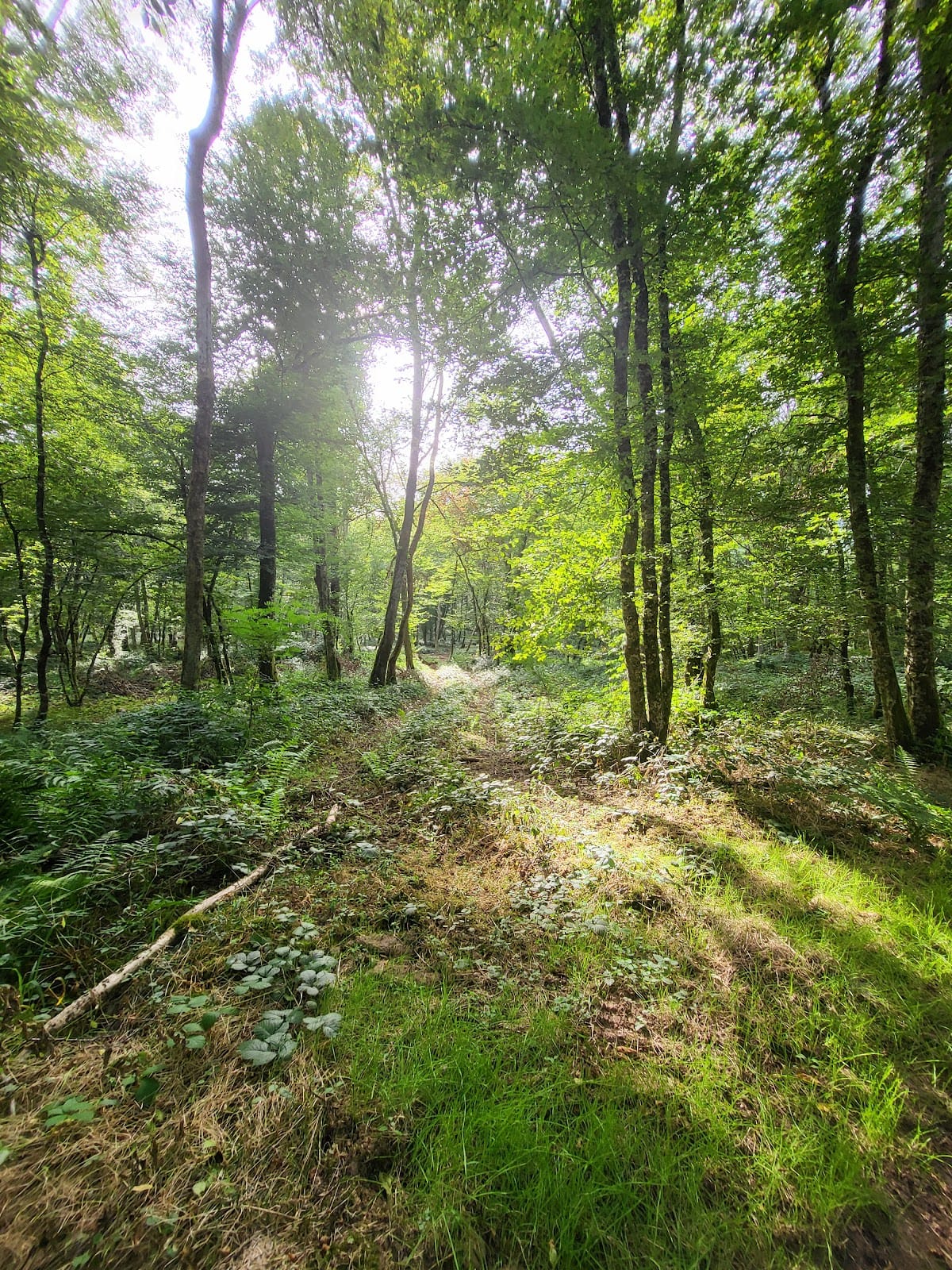
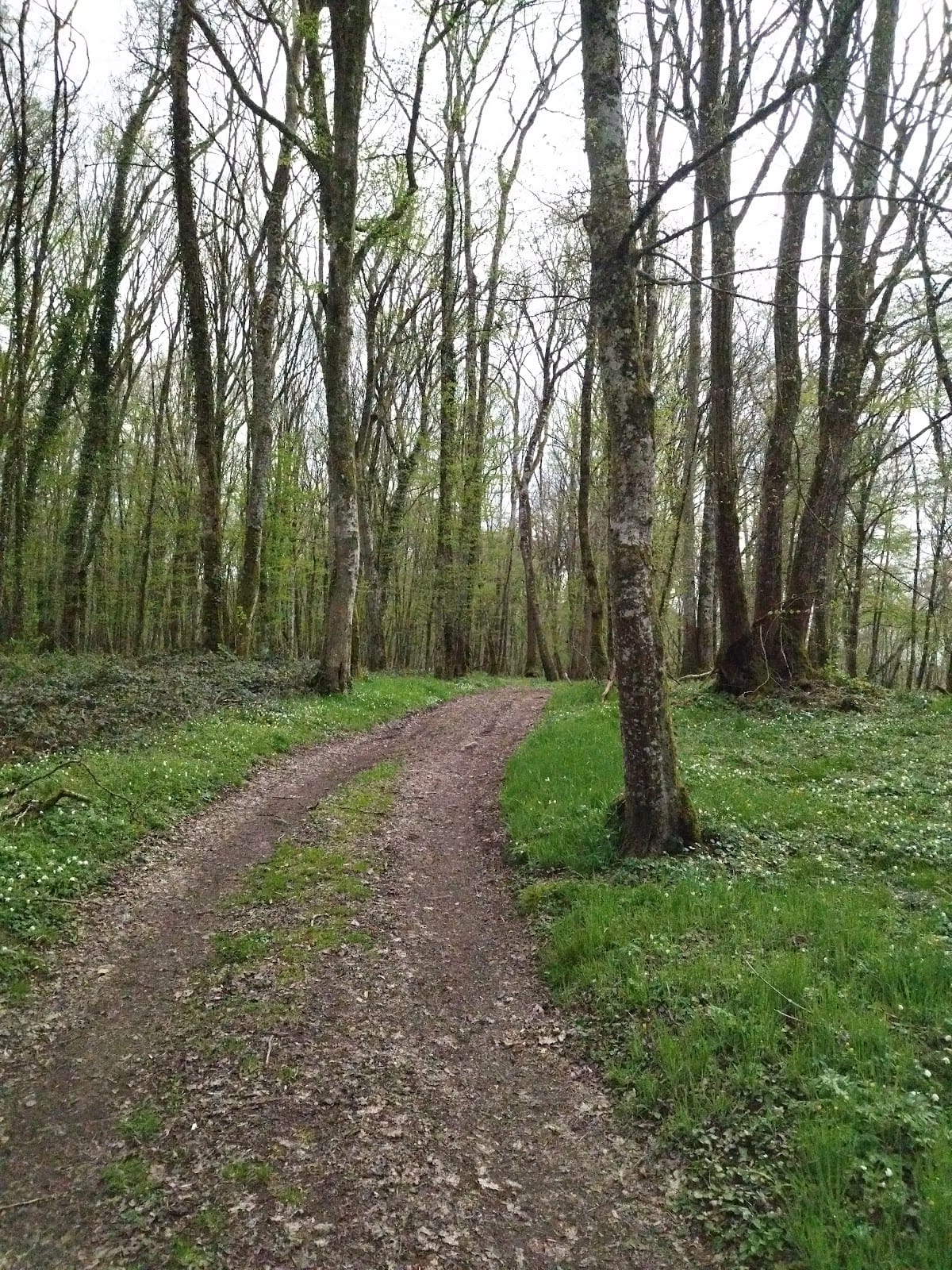
The Archaeological Site of Compierre is situated near Champallement in the Nièvre department of central France, within the Morvan regional natural park. Positioned atop a plateau, the site overlooks adjacent valleys and forested landscapes, offering strategic visibility and natural defensive advantages. The surrounding terrain is characterized by rolling hills, dense woodlands, and proximity to water sources, including springs and the nearby Férolle river, which would have supported settlement and resource exploitation.
Compierre’s location reflects a deliberate choice to balance defensive considerations with access to essential natural resources such as local sandstone for construction, clay for pottery, iron ore for metalworking, and abundant timber. Archaeological evidence indicates primary occupation during the Iron Age La Tène period, with continued use into the Roman era. The site’s preservation benefits from its rural setting and limited modern disturbance, allowing for detailed study of settlement patterns and fortification systems characteristic of central Gaul’s prehistoric and Roman periods.
Excavations have focused on mapping earthworks, domestic structures, and public buildings, contributing to understanding regional cultural transitions. Conservation efforts within the natural park framework aim to protect the site’s archaeological integrity while facilitating ongoing research and controlled public engagement.
History
The Archaeological Site of Compierre documents a continuum of human occupation from the Iron Age through the late Roman period, reflecting broader political and administrative developments in central Gaul. Initially established during the La Tène phase, the site later evolved into a Gallo-Roman vicus within the territory of the Aedui tribe. Its development was closely linked to Roman provincial integration, including the construction of roads and urban infrastructure. Although the settlement declined and was abandoned by the 4th century CE, its remains provide valuable insights into rural urbanism, religious architecture, and artisanal activity in the region.
Iron Age (La Tène Period)
During the La Tène period, Compierre functioned as a fortified settlement typical of Celtic tribal organization in central Gaul. The site’s elevated plateau location afforded natural defensive benefits and control over surrounding valleys. Archaeological features from this era include earthworks and structural remains consistent with fortified oppida, reflecting the socio-political landscape of the Aedui tribe prior to Roman conquest. Material culture aligns with La Tène artistic and technological traditions, although no inscriptions or written records survive to clarify the site’s precise political status or affiliations.
This phase predates Roman influence and illustrates the settlement’s role as a local stronghold within the Morvan region. The absence of extensive architectural remains suggests timber and earth construction predominated. The site’s strategic position likely facilitated control over nearby resources and trade routes, contributing to its regional significance during the Iron Age.
Roman Period (1st century BCE – 4th century CE)
Following Julius Caesar’s conquest of Gaul in the mid-1st century BCE, Compierre became integrated into the Roman province of Gallia Lugdunensis. It developed into a Gallo-Roman vicus situated within the Aedui territory, a tribe that had allied with Rome. The settlement occupied a strategic position along a major Roman road connecting Augustodunum (modern Autun), Intaranum (Entrains-sur-Nohain), and Autissiodorum (Auxerre), facilitating regional communication and commerce.
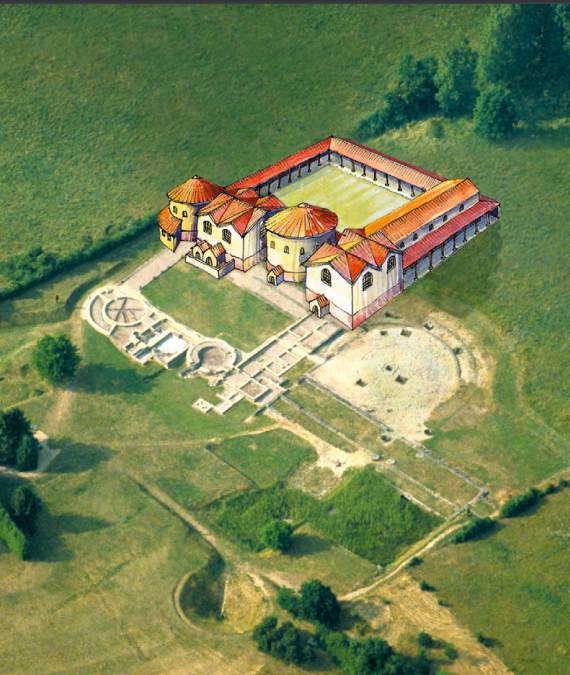
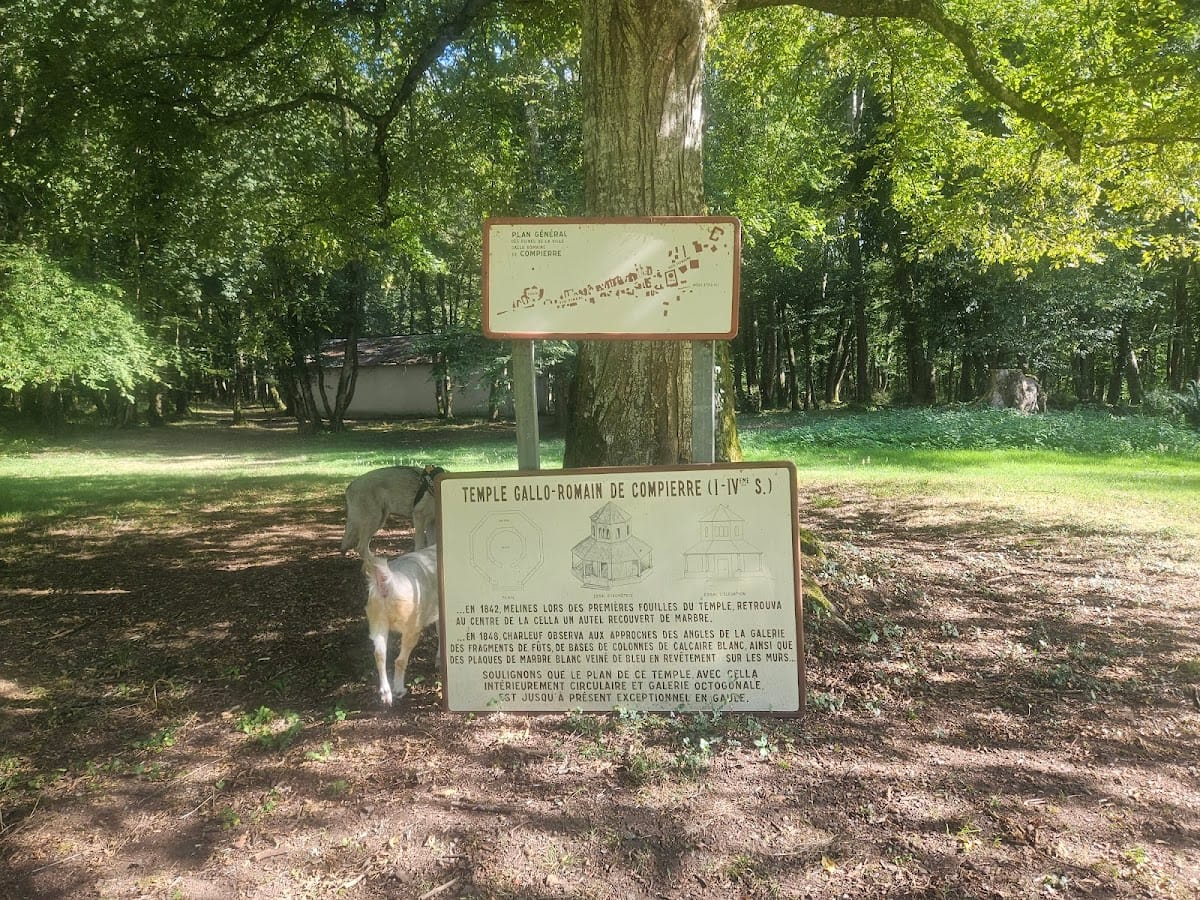
Compierre extended approximately 800 meters in length and up to 200 meters in width, supporting an estimated population of 1,000 to 2,000 inhabitants. Its urban plan centered on a forum oriented to cardinal points but adapted to the alignment of adjacent Roman roads. The forum served as the political and commercial core, surrounded by porticoes and shops. A distinctive religious structure, a fanum, occupied a central position near the forum. This temple featured an exceptional architectural design for Gaul, with an octagonal gallery encircling a circular inner cella. Excavations revealed a marble-covered altar, fragments of white limestone columns, and veined marble wall veneers, indicating a richly decorated interior. The specific deity worshipped remains unidentified.
South of the settlement, a theater capable of seating between 3,000 and 5,000 spectators was constructed, reflecting the community’s participation in Roman cultural practices. Additional buildings included artisanal workshops specializing in bone craftsmanship, ceramic production, and metalworking, as well as a butcher’s house functioning as a food supply point. The settlement’s location was likely selected for its access to natural resources such as sandstone, clay, iron ore, wood, and water from springs and the Férolle river.
Compierre’s integration into the Roman provincial system aligns with administrative reforms organizing Gaul into civitates and municipia. Although no inscriptions explicitly confirm municipium status, the presence of a forum, temple, and theater corresponds with features typical of Romanized settlements in the region. The settlement’s prosperity appears to have peaked during the early Imperial period.
By the 4th century CE, the vicus experienced decline and eventual abandonment. Archaeological evidence indicates that inhabitants departed with their possessions, and buildings were systematically dismantled, with materials repurposed in nearby villages. The reasons for abandonment remain unclear, but this pattern corresponds with broader rural contraction and instability in late Roman Gaul.
Rediscovery and Archaeological Research (19th–20th centuries)
The ruins of Compierre were rediscovered in 1824 by surveyor Monsieur Mélines, who initiated excavations focusing on the fanum and adjacent quarters. Early interpretations erroneously attributed the site to the Boian tribe, a view later corrected to confirm its location within Aedui territory. Subsequent 19th-century excavations revealed well-preserved sanctuary walls, the theater, necropolis, and artisanal workshops. In the 20th century, systematic archaeological campaigns employed modern methods, including a grid-based documentation system centered on the temple’s cella, enhancing understanding of the site’s layout and function.
In 1979, the French state acquired much of the site’s forested area, facilitating conservation and controlled public access. The association “Les Amis de Compierre” was established to promote preservation and cultural engagement. Although less than 10% of the site has been excavated, ongoing topographic surveys and archival research continue to refine knowledge of this significant rural Gallo-Roman settlement.
Daily Life and Importance by Period
Iron Age (La Tène Period)
During the La Tène period, Compierre was a fortified settlement inhabited by Celtic peoples associated with the Aedui tribe. The community likely consisted of kin-based groups with a social hierarchy that included warrior elites responsible for defense and agricultural families engaged in subsistence farming. While direct evidence of social roles is limited, regional parallels suggest men managed defense and metalworking, whereas women oversaw domestic tasks and textile production.
Economic activities centered on mixed agriculture, including cereal cultivation and animal husbandry, supplemented by hunting and gathering in surrounding forests. Defensive earthworks indicate a priority on protection, while domestic structures were probably constructed from timber and wattle with thatched roofs. Pottery and metal tools found in the vicinity reflect household production of everyday goods. Religious practices remain unclear due to lack of ritual deposits or inscriptions, though regional Celtic traditions included nature worship and ancestor veneration.
Roman Period (1st century BCE – 4th century CE)
Following Roman conquest, Compierre transformed into a Gallo-Roman vicus with a population estimated between 1,000 and 2,000 inhabitants. The community comprised Romanized Gauls, local elites, artisans, merchants, and laborers. Social organization included civic officials, possibly duumviri or decurions, although no inscriptions explicitly name magistrates. Residential units featured houses with cellars and workshops, reflecting a blend of urban and rural lifestyles. Gender roles conformed to Roman provincial norms, with men engaged in public affairs, crafts, and trade, and women managing households and religious observances.
The economy diversified, maintaining agriculture as a foundation with cereal cultivation, vegetable gardening, and livestock rearing supported by fertile land and water sources. Artisanal production included a tabletier’s workshop crafting bone objects such as combs and pins, a potter’s workshop producing decorated ceramics fired in kilns, and metalworking supplying tools and goods. The butcher’s house functioned as a commercial point for meat products. Trade was facilitated by the settlement’s location on a major Roman road linking Autun, Entrains-sur-Nohain, and Auxerre, enabling exchange of local and imported goods.
Diet likely included bread from local grains, imported olives and olive oil, wine, and freshwater fish. Clothing followed Roman provincial fashions, with woolen tunics, cloaks, and leather sandals common across social strata. Wealthier homes may have featured mosaic floors and painted walls, while simpler furnishings prevailed elsewhere. The forum served as the commercial and political center, hosting markets and social gatherings.
Religious life centered on the fanum near the forum, an architecturally unique temple with an octagonal gallery surrounding a circular cella. The richly decorated interior, including marble altars and limestone columns, suggests worship of a local or syncretic deity, though its identity remains unknown. Rituals likely integrated Roman and Celtic traditions. The theater south of the settlement, with seating for thousands, indicates participation in Roman cultural events such as plays and public assemblies.
Compierre’s civic role was that of a rural town within the Roman provincial system, serving as a local hub for administration, commerce, and religion. Although not confirmed as a municipium, its urban features reflect significant Romanization and integration into imperial infrastructure. The settlement’s prosperity peaked in the early Imperial period, supported by natural resource exploitation and strategic location.
By the 4th century CE, the town declined amid broader rural contraction in Gaul. Archaeological evidence shows inhabitants departed with possessions, and buildings were dismantled for reuse. This abandonment marked the end of Compierre’s regional significance, with no subsequent urban continuity.
Remains
Architectural Features
Compierre occupies a plateau extending approximately 800 meters in length and up to 200 meters in width. The settlement’s layout reveals a primarily civic and residential character with a clear urban organization centered on a public square (forum). Construction materials include locally sourced sandstone and white limestone, with decorative elements fashioned from veined white marble. The majority of surviving structures date from the 1st century BCE through the 2nd century CE, encompassing late Iron Age fortifications and Roman masonry buildings. The site was abandoned by the 4th century CE, with no evidence of medieval reoccupation.
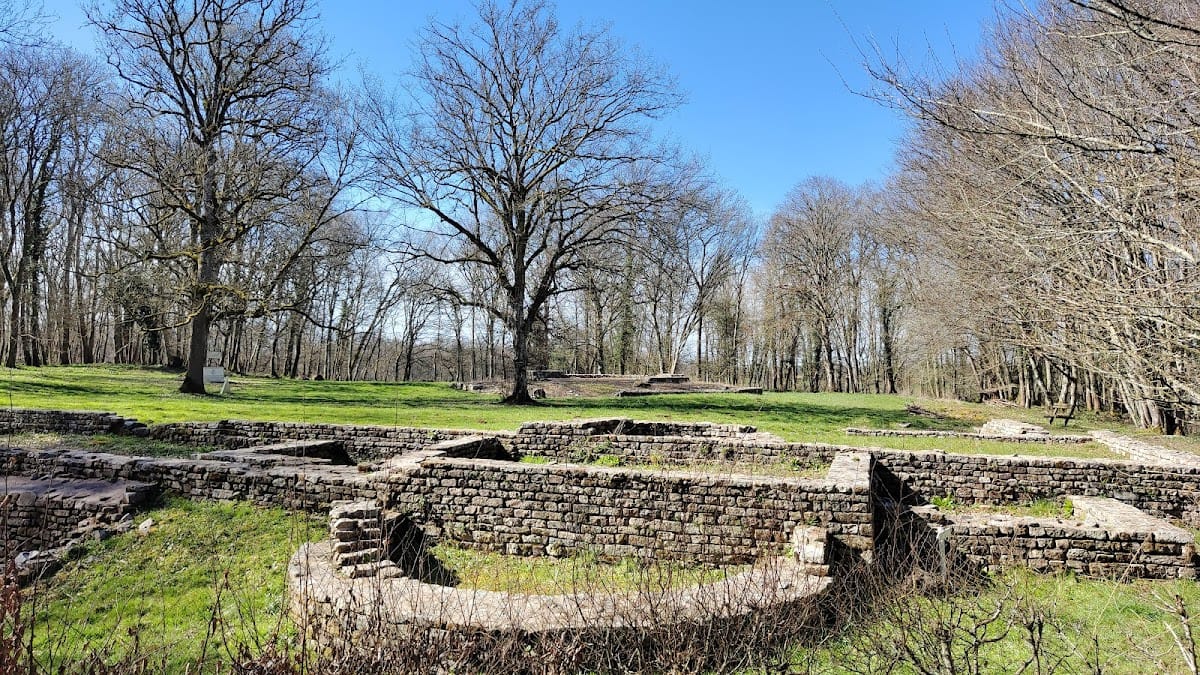
Natural resources such as clay, iron ore, and timber were exploited locally, supporting artisanal production. The urban plan incorporates two main Roman roads flanking the forum to the east and west, which influenced building orientation. Water management features include two underground watercourses beneath the temple cella and a well discovered in the 19th century. Traces of hypocaust heating systems north of the sanctuary indicate heated rooms or baths. Surviving remains consist mainly of foundations and low walls, with some walls preserved up to 1.3 meters in height.
Key Buildings and Structures
Temple (Fanum) of Compierre
Constructed in the 1st century CE, the temple occupies the center of the forum and served as the religious focal point of the settlement. Its architectural plan is exceptional for Gaul, featuring an octagonal gallery surrounding a circular inner cella. Excavations in 1842 uncovered a marble-covered altar at the cella’s center, along with fragments of white limestone columns and veined marble wall veneers, indicating a richly adorned interior. The temple walls have been preserved up to 1.3 meters in height, with foundations approximately 80 centimeters deep. Two underground watercourses and intersecting solar network lines run beneath the cella. The temple complex included surrounding porticoes and shops aligned according to cardinal points but adapted to the constraints imposed by adjacent Roman roads.
Theatre of Compierre
Located south of the main settlement, the theater was built in the 1st century CE and could accommodate between 3,000 and 5,000 spectators. Discovered during excavations in 1845, early interpretations misidentified it as a circus. Later topographical surveys in the 1980s refined its plan, revealing foundations and low walls without surviving superstructure. The remains include seating areas and stage foundations constructed primarily from local stone. No decorative elements or inscriptions have been documented within the theater remains.
Maison du Boucher (House of the Butcher)
This building, dating from the 1st to 2nd centuries CE, functioned as a commercial point for meat products. Excavated between 1969 and 1981, its foundations and partial walls have been exposed and stabilized. Situated within the urban fabric near artisan workshops and residential quarters, the structure includes multiple rooms and storage areas consistent with food processing and sale. No evidence of later reuse has been identified.
Atelier du Tabletier (Tabletier Workshop)
Adjacent to the temple sanctuary, this workshop specialized in bone craftsmanship, producing items such as combs, pins, and small boxes. Excavations led by J.-B. Devauges between 1969 and 1981 revealed tools and production debris related to bone working. Dating to the 1st and 2nd centuries CE, the workshop demonstrates the presence of skilled artisans within the settlement. Structural remains include workspaces and storage areas preserved as foundations and low walls.
Atelier du Bronzier (Bronze Worker’s Workshop)
Although less extensively documented, this workshop is recognized as an important artisan site within the settlement. Its remains, dating to the 1st and 2nd centuries CE, are fragmentary and include limited structural foundations. The exact location and extent remain less well defined compared to other workshops. No detailed architectural features or associated finds have been published.
Maison du Potier (Potter’s House)
Constructed in the 1st century CE, this building was dedicated to ceramic production. Excavations uncovered decorated ceramics, a kiln with a hearth at the entrance, and firing debris. The potter’s house is part of a neighborhood containing other artisan and storage buildings. Structural remains include foundation walls and floor surfaces. No evidence of later modifications or reuse has been reported.
Public Square (Forum) of Compierre
The forum, built in the 1st century CE, served as the civic and commercial center of the vicus. It is enclosed by porticoes and lined with shops and ancillary buildings. The forum’s orientation follows cardinal points but is adapted to the Roman roads running along its east and west sides. Archaeological remains include foundation walls of the porticoes and shop units. The forum’s layout is rectangular, with the temple occupying its center. No surviving pavement or decorative surface has been documented.
Roman Roads
Two main Roman roads flank the settlement’s forum on the east and west sides. These roads connected the vicus to major urban centers such as Augustodunum (Autun), Intaranum (Entrains-sur-Nohain), and Autissiodorum (Auxerre). Archaeological sondages conducted in 1979–1980 investigated the road structures, revealing layered construction with stone foundations and gravel surfaces. The roads influenced the urban layout and constrained the orientation of adjacent buildings.
Necropolis
A burial area associated with the settlement was identified near the potter’s workshop and artisan quarters. Excavations and sondages uncovered funerary monuments and tombs dating from the 1st to 3rd centuries CE. The necropolis includes inhumation graves with stone markers, although detailed descriptions of grave goods or inscriptions are limited. The necropolis remains partially excavated and is located outside the main urban area.
Other Urban Quarters
The vicus comprises several neighborhoods, including the Mélines, Tilleul, and Maiges quarters. These areas contain a mixture of artisan workshops, storage facilities, and domestic dwellings. Structural remains include foundations, low walls, cellars, shops, and taverns. The buildings date primarily from the 1st and 2nd centuries CE, with no evidence of significant later occupation. Surface traces and excavation reports document the spatial distribution of these quarters within the settlement’s overall plan.
Fortin (Small Fortress)
Excavated in 1852, this small fortress was initially thought to be part of the Roman city walls. Subsequent research identified it as a medieval structure unrelated to the Roman settlement. The remains consist of foundations and wall traces, with no standing elements. The fortin is located on the site but outside the main Roman urban area.
Infrastructure and Site Features
The site’s infrastructure includes two underground watercourses beneath the temple cella and a well discovered in 1824. Traces of hypocaust heating systems (underfloor heating) were found north of the sanctuary, indicating heated rooms or baths. Construction materials include local sandstone, clay, and iron ore, exploited from nearby natural resources. The settlement’s layout incorporates drainage and water management features consistent with Roman engineering practices.
Other Remains
Additional remains include foundations and low walls of artisan shops and ancillary buildings around the forum. Surface traces of cellars and storage areas are visible in residential quarters. Some areas remain inaccessible due to dense vegetation and private ownership. No significant standing structures survive beyond low walls and foundations.
Nearby sites