Château de Passy-les-Tours: A Medieval Fortified Castle in France



Site at a Glance
- Rating
- 4.4
- Popularity
- Low
- Country
- France
- Primary era
- Medieval
- External website
- Open
- Eras represented
- Medieval
- Civilizations
- French
- Site type
- Military
- Remains
- Castle
On this page11 sections
History
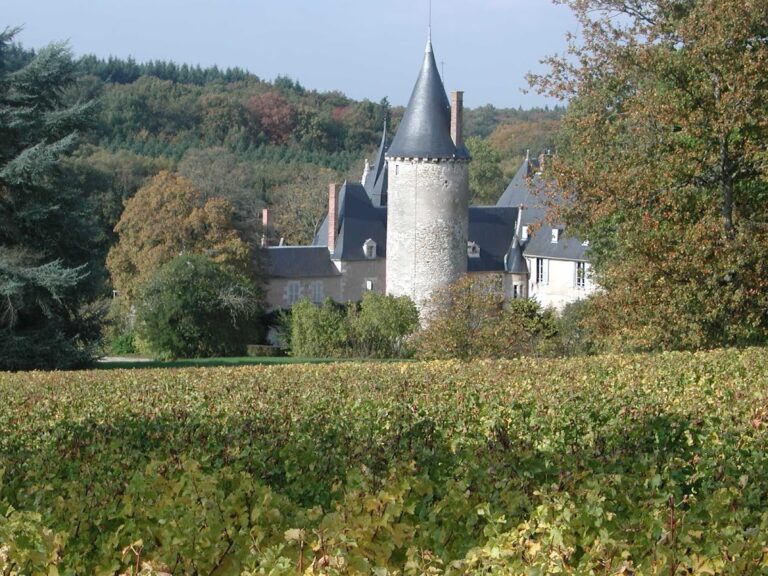
Château de Passy-les-Tours is a medieval fortified castle in France, in the hamlet of Passy-les-Tours within Varennes-lès-Narcy. Built at the end of the fourteenth century, it reflects the military architecture of the period and was designed under the influence of Château de Vincennes. Its imposing towers gave the village its name.
Construction and patronage
The castle’s original patron and builder remain uncertain. Jean de Chevenon, a counsellor of King Charles VI, is often identified as its patron, although no documentary proof confirms this attribution. The architectural form has also led to the probable association of its construction with the builder linked to Château de Chevenon.
The Hundred Years’ War
From 1422, during the Hundred Years’ War, the prolonged conflicts between the English and French crowns that affected France from the fourteenth to the fifteenth century, the castle served as the headquarters of Captain Perrinet Gressart. He was in English and Burgundian service.
In 1429, Gressart defended nearby La Charité-sur-Loire against a French army commanded by Joan of Arc, the French military and religious figure who supported the Valois monarchy. The siege lasted a month and ended unsuccessfully for the besiegers as winter approached.
Destruction and later ownership
The castle suffered severe damage during the Wars of Religion, the late-sixteenth-century civil and religious conflicts principally involving Catholics and Huguenots, the French Protestant movement. At the end of the sixteenth century, the corps de logis, the principal residential building, and the enceinte, the enclosing defensive wall circuit, were demolished. The castle was then abandoned to decay.
Later owners dismantled the dovecote, a building for domesticated pigeons, along with parts of the towers and sections of the walls, reusing the stone in other buildings. In 1782, the property passed to the Marquis de Vergennes, a politician and diplomat who did not restore it. Successive owners likewise allowed the ruins to deteriorate.
Protection of the ruins
The privately owned ruins have been protected as a monument historique since 1927. On 25 July 2018, they received classified status within France’s monuments historiques system, the national legal framework for protecting historically or architecturally important monuments. The classification followed preservation and enhancement efforts by the association Les Tours de Passy.
Remains
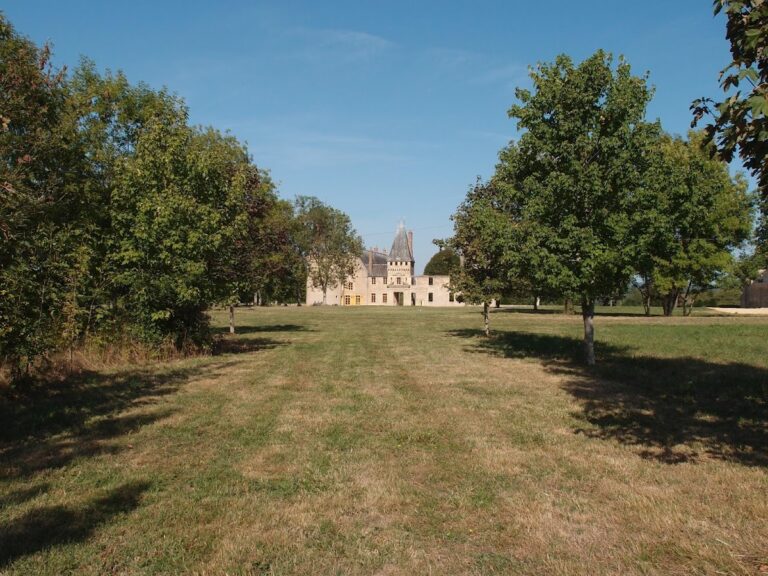
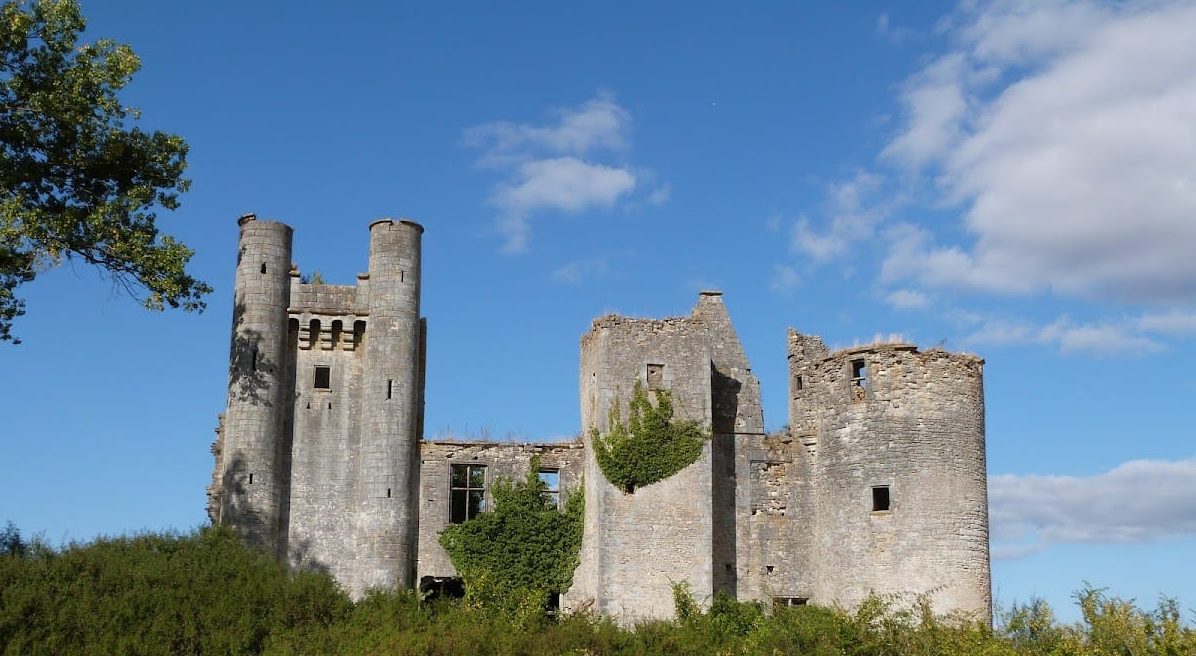
The castle occupied a plan extending roughly 50 metres, with four round towers originally placed at the corners. It stands within the Passy-les-Tours hamlet on pastureland. The surviving masonry is formed from smooth, carefully dressed stone blocks laid in regular courses, with arched openings and loopholes in several forms.
Corner tower and residential wing
Southeast tower
Only the southeast corner tower survives. Its walls are approximately 1.70 metres thick, and a vaulted room occupies its base. The tower meets the corps de logis, where the remains of an overhanging turret are still visible.
Residential wing
The upper floor of the residential wing retains stone window mullions, the vertical divisions within a window opening. The interior is ruined, while much of the outer wall circuit remains.
Entrance defences
Keep and gate
A keep, the principal fortified tower of a medieval castle, rises to roughly 25 metres and dominates the entrance. Two small round towers stood on buttresses and framed the approach. The entrance vault has collapsed, but parts of the upper parapet and the machicolations remain between the towers. Machicolations are projecting defensive structures with openings through which defenders could attack people below the walls or entrance.
Nearby sites