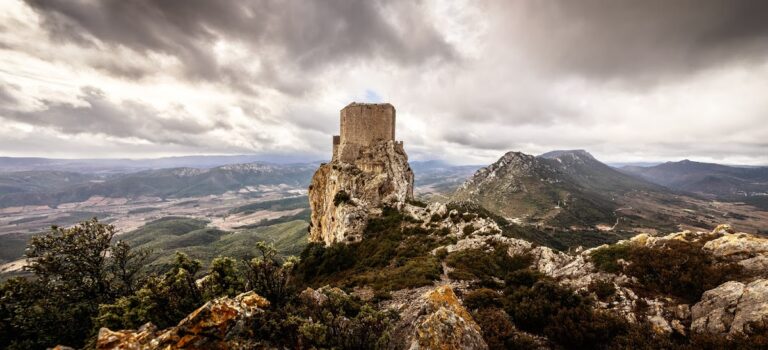
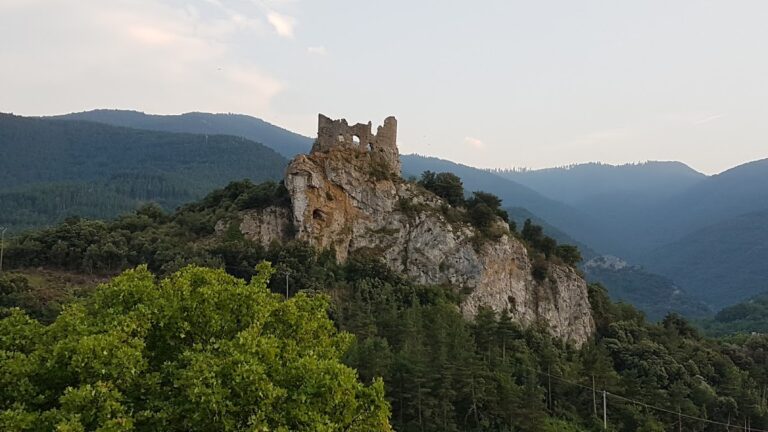
Château de Rodès: A Medieval Castle in France

Visitor Information
Google Rating: 4.4
Popularity: Low
Google Maps: View on Google Maps
Official Website: www.tourisme-roussillon-conflent.fr
Country: France
Civilization: Unclassified
Remains: Military

History
The Château de Rodès is a medieval castle situated in the municipality of Rodès, present-day France. Constructed during the Middle Ages, it was first recorded in the year 1068, evidencing its construction by the feudal lords of the time within the cultural context of medieval Catalonia.
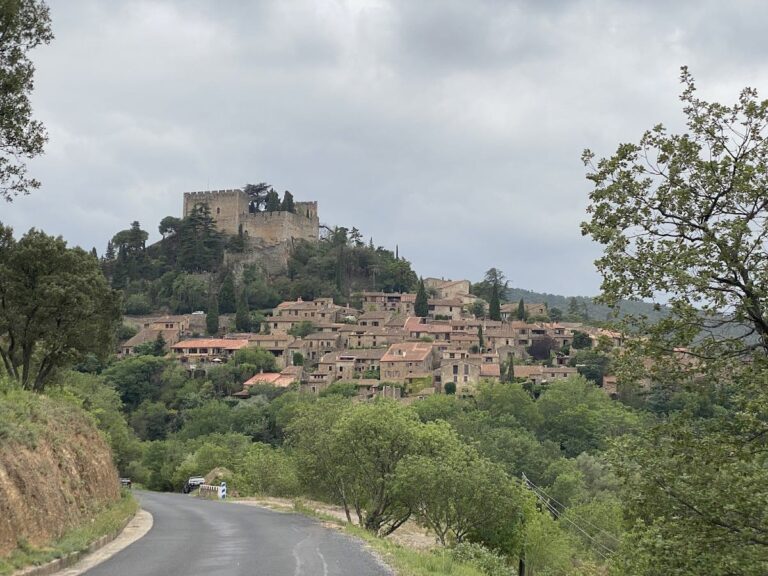
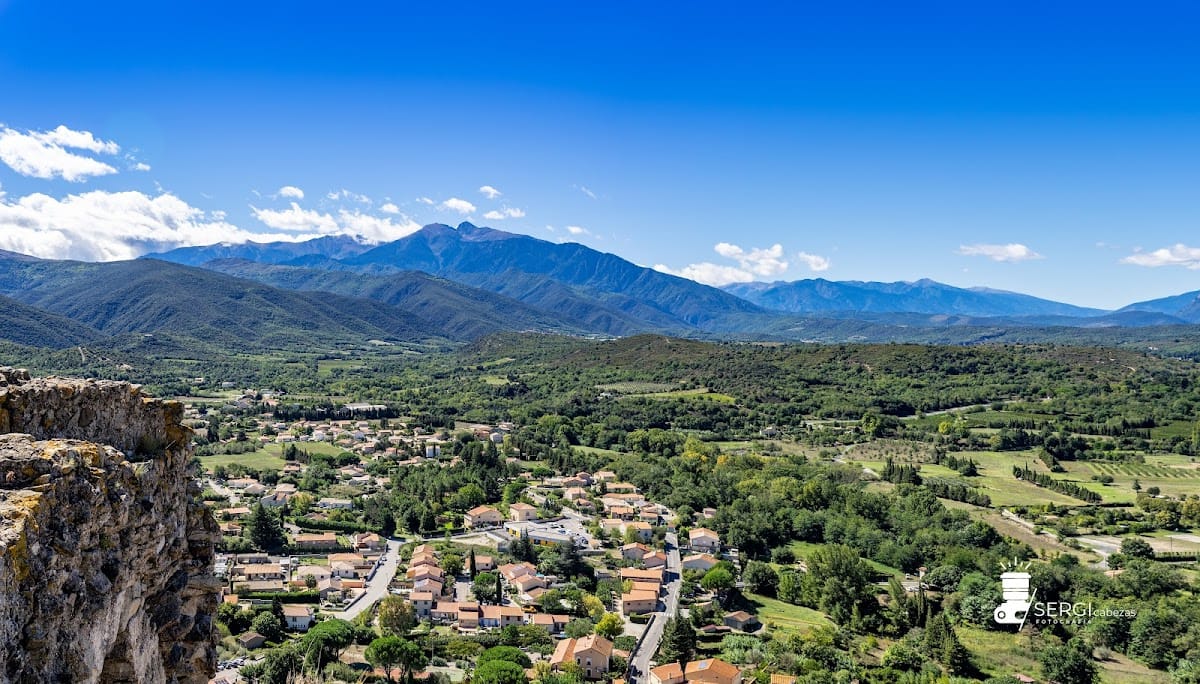
The earliest historical mentions identify the fortress as “castellum Rodenis,” documented when Bernat Pere de Domanova swore loyalty to Count Guillem Ramon I of Cerdanya. Around 1080, the castle’s origins are placed in this period, with Guillem Ramon I bequeathing the stronghold to his son Guillem Jordà in 1095. Positioned strategically above the Têt valley, the castle served as a fortress for the lords of Domanova, under the counts of the combined territories of Cerdanya and Conflent. Its commanding location contributed to the shifting of local populations away from the earlier Domanova settlement toward more secure areas.
Throughout the 12th and 13th centuries, the château transitioned through the ownership of prominent regional families, notably the houses of Domanova and Canet. This was supported by confirmations from local nobility such as Nunó Sanç and monarchs like Jaume II of Mallorca, who acknowledged Guillem de Canet’s control over the domain. Between 1311 and 1324, following the establishment of the Viscounty of Canet, the castle became royal property. Administration passed to a castellan bearing the title of batlle, or mayor, charged with governing the royal domain.
In 1359, King Pere III entrusted the role of batlle at Rodès to Ramon de Perellós, granting him hereditary claim to the position in 1370. This era saw the construction of the town’s defensive walls, including the notable Portal del Castell, fortifying the settlement. The castle remained listed as royal asset in a 1369 inventory. After Ramon de Perellós died, complications in ownership prompted King Joan I to reacquire the lordship, later selling it in 1393 to a relative of the Perellós family.
Entering the 15th century, royal commissioners obtained the castle from the local community before selling it to private individuals. Antoni Viader became one of its owners, followed by the Andreu family, and eventually Galceran de Vilardell in 1504. Later, in 1543, Francesc de Peyrepertusa purchased the lordships of Rodès and neighboring Ropidera. These lands were integrated into the Perapertusa barony, which persisted until its extinction in the 17th century.
The château’s last recorded military engagement took place on December 10, 1652, when French forces launched an assault. During this attack, the local batlle distinguished himself in the defense. By that time, the fortress had already diminished in strategic relevance as a border defense, reflecting broader political and military changes in the region.
Remains
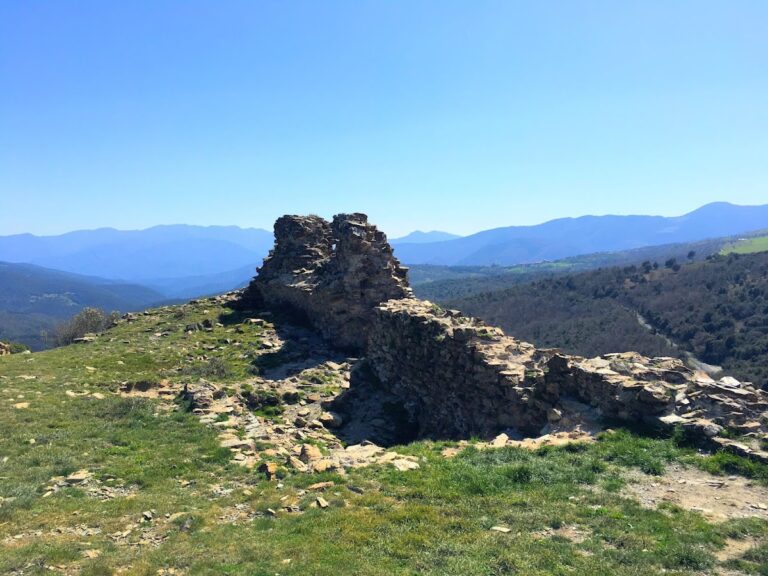
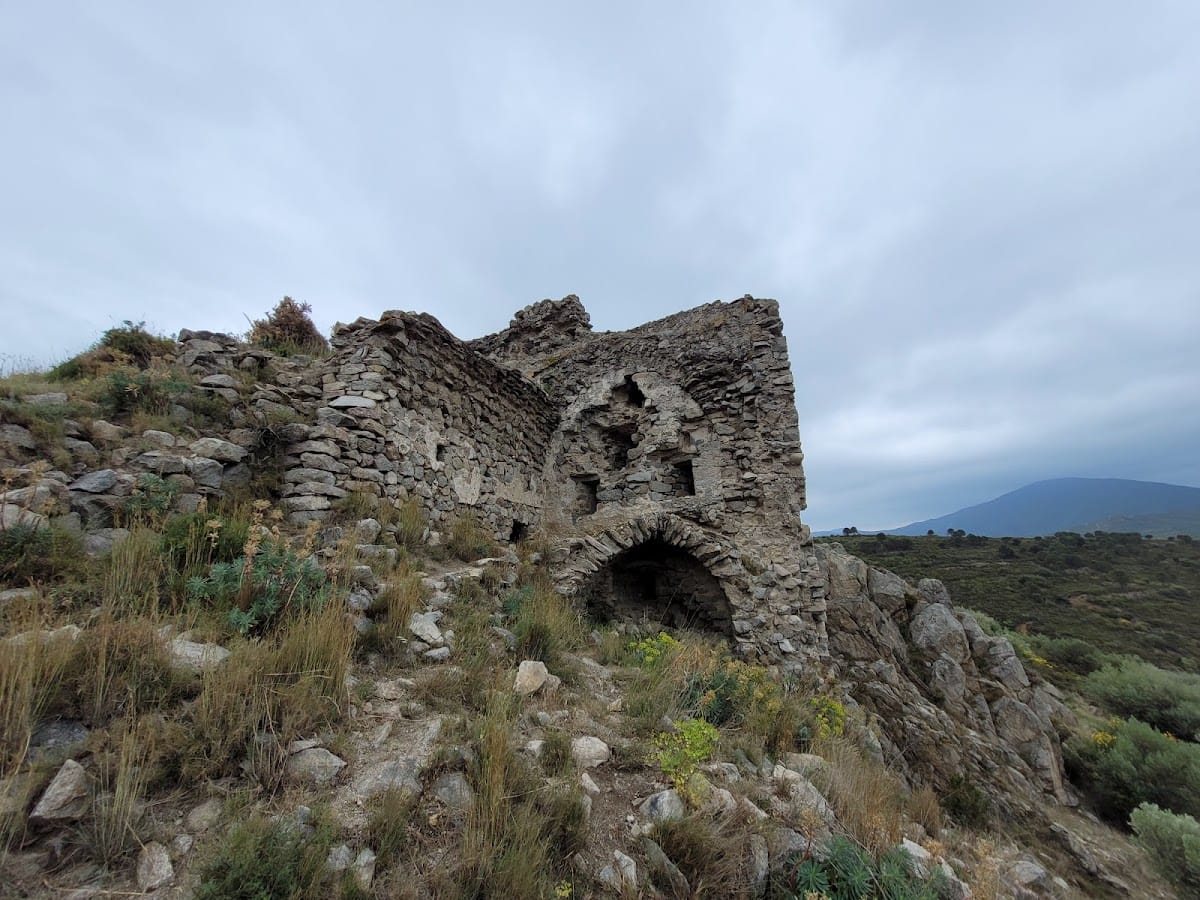
The Château de Rodès lies atop a steep, irregular ridge east of the modern village, taking advantage of natural defenses provided by cliffs overlooking the Têt river to the north and northwest, and by sharp slopes descending toward the village on the south and southwest. The castle’s defensive position is complemented by a man-made ditch protecting the eastern approach, historically the easiest route to the entrance.
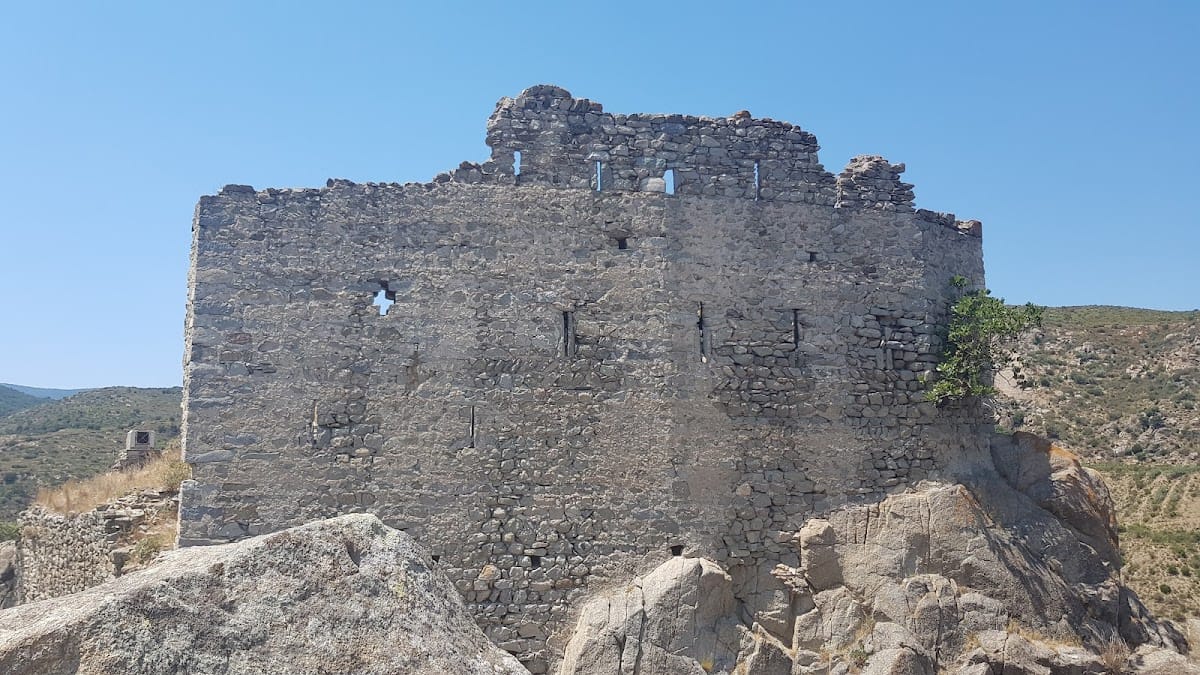
The layout of the castle is roughly pentagonal but irregular, and much of the structure dates back to the 11th century with adaptations from later centuries. Although heavily ruined today, the northern and eastern curtain walls remain largely standing. The eastern wall is the most intact segment, towering over ten meters high and preserving its original full width. This wall is pierced by around ten narrow arrow slits and a uniquely shaped small window in the form of a Greek cross. The window aligns with the location of the chapel, which occupied the castle grounds. The top of this wall still displays remnants of battlements where defenders once stood guard.
Opposite the east wall, the southern curtain is the most seriously damaged and its stones lie scattered downslope toward the village below. On the castle’s western side, a small section of wall remains, including a postern gate— a secondary entrance— which opens onto the cliff face above the Têt river. This gate likely provided a concealed route in and out of the castle in times of siege or reconnaissance.
The northern wall retains a sizable portion of its structure with arrow slits but does not rise as high as its eastern counterpart. This area would have offered defenders a clear line of sight over the northern approaches.
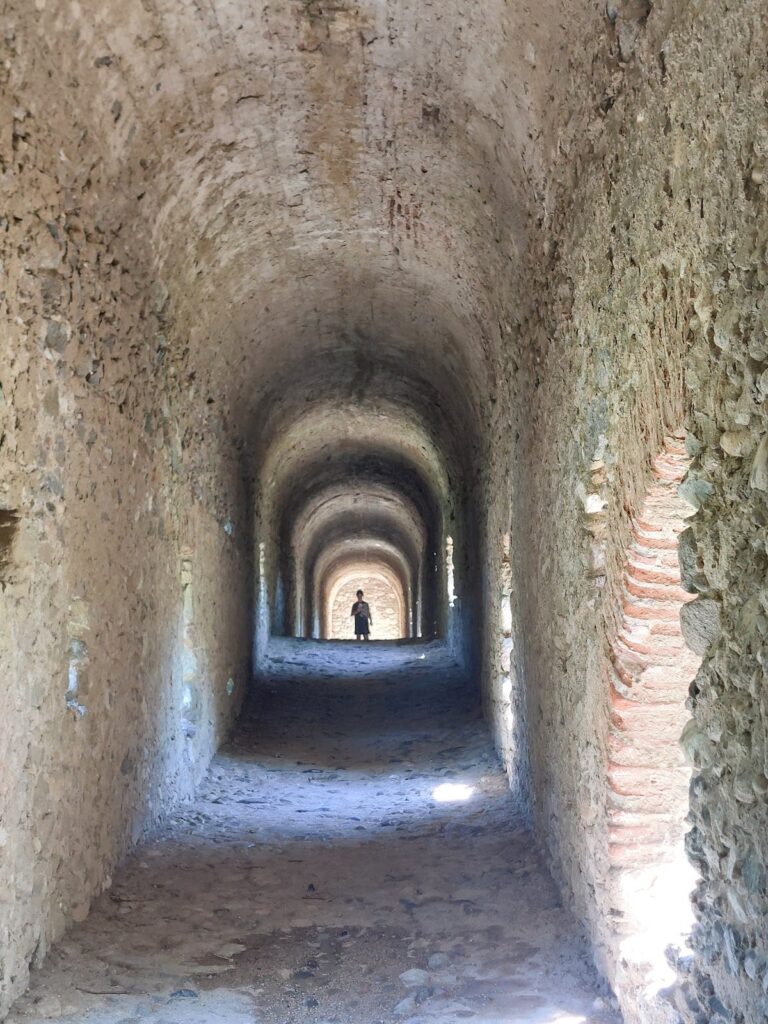
Inside the castle, the interior has collapsed into a rubble heap, but archaeological excavations carried out in 1979 and 1981 uncovered several vaulted chambers arranged around a central courtyard. Among these were a large hall likely used for gatherings or administrative functions, the chapel itself, and smaller rooms possibly serving as storage or living quarters. Near the chapel and main entrance lies the chapel of Saint-Valentin, once the parish church for residents, first mentioned in records from 1350.
An important feature within the ruins is a cistern, used historically to collect and store water. It is notable for its pink-colored waterproof coating, an enduring example of medieval waterproof plaster that protected the stored water from contamination.
The village of Rodès retains the Portal del Castell, the gate that marks the start of the path leading up to the castle and the chapel. This gate, constructed during the late 14th century, formed part of the walls that guarded the settlement and remains a visible link to the castle’s protective network in its later medieval phase.
Nearby sites