Château de la Grande Filolie: A Historic Medieval Estate in Saint-Amand-de-Coly, France

Visitor Information
Google Rating: 4.7
Popularity: Very Low
Google Maps: View on Google Maps
Country: France
Civilization: Unclassified
Remains: Military

History
The Château de la Grande Filolie stands near Saint-Amand-de-Coly in France, a region rich with medieval heritage. Its origins trace back to the civilization of late medieval France, with its construction spanning the 15th to the 17th centuries. The château’s name derives from a former oil mill located nearby on a local stream; records from the 19th century identify several sites named “La Filolie” within the Dordogne area, reflecting a common local toponymy connected to oil production.
The estate initially belonged to the Beaulieu family, a noble line with legal status from Montignac. In 1479, Antoine de Beaulieu formally acknowledged his noble house at Montignac, and a descendant of his, also named Antoine de Beaulieu, held the title of lord of La Filolie in 1536. This connection strongly suggests he was responsible for establishing the château as it stands. During the late 16th and early 17th centuries, the Beaulieu lineage continued through Jean de Beaulieu, who married Hipolite Angèle de Salignac Fénelon. This union linked the family to the distinguished Fénelon family, known for their significant regional influence.
By the early 18th century, ownership shifted to the Gaubert family. Jeanne Chapt de Rastignac, the widow of Nicolas de Gaubert, managed the estate until her death in 1768. She was noted for her philanthropic efforts toward the hospice in Sarlat, highlighting the family’s social role. The following year, the Marquis des Cars, Dominique, assumed lordship over the Gaubert de la Filolie holdings as well as other estates.
Just before the French Revolution, the château belonged to Dominique de Beauroyre, Marquis de Villar. His death in 1792 led to an inventory that revealed the property mainly served agricultural functions, with most rooms unoccupied for residential use. Despite the upheavals of the Revolution, the Beauroyre family retained ownership for some time afterward. In 1891, Frédéric de Beauroyre sold the château to Octave Rousselet, who documented it in an 1892 publication. Rousselet later sold the property in 1905 to M. Babaud de Prasnaud de la Croze, believed to have initiated restoration efforts to preserve the structure.
The château also holds personal historical significance as the birthplace of Eugène Révillon in 1907. After his death in 1928, the château changed hands several times. Among later owners was François Coty, a prominent figure who undertook further restorative work to maintain the château’s architectural heritage.
Remains
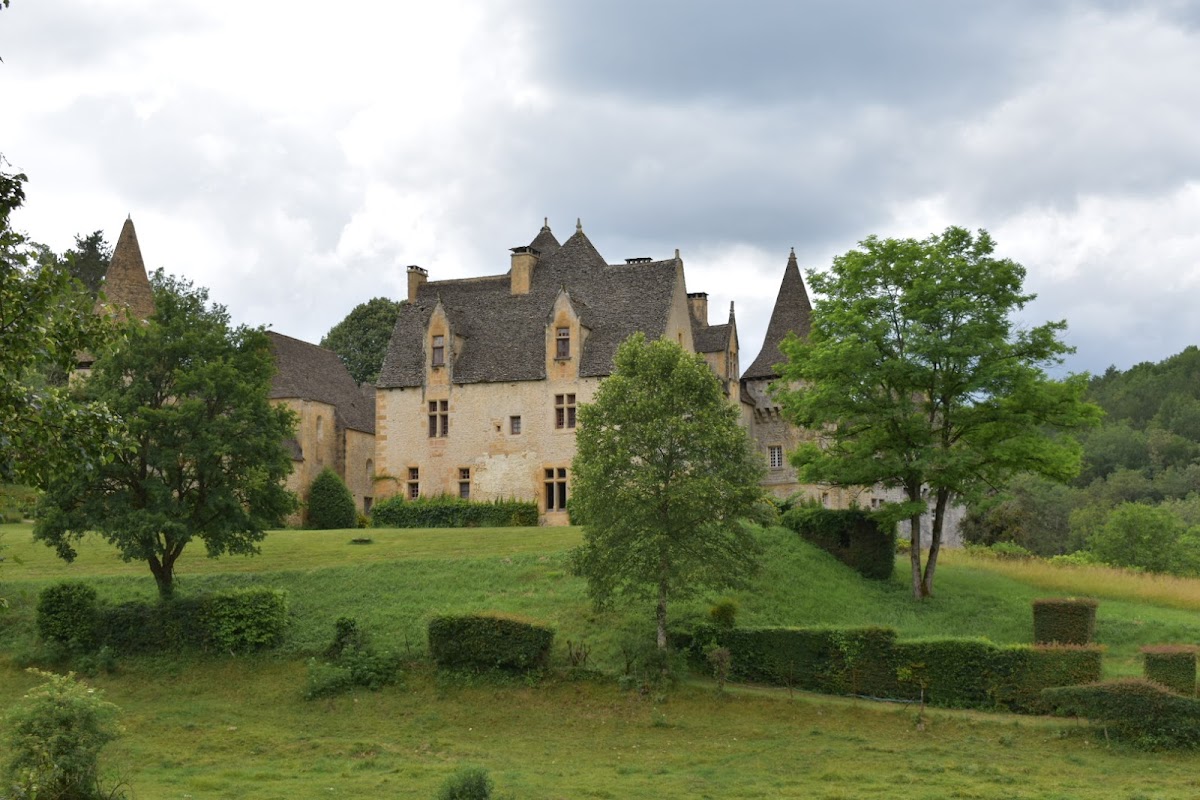
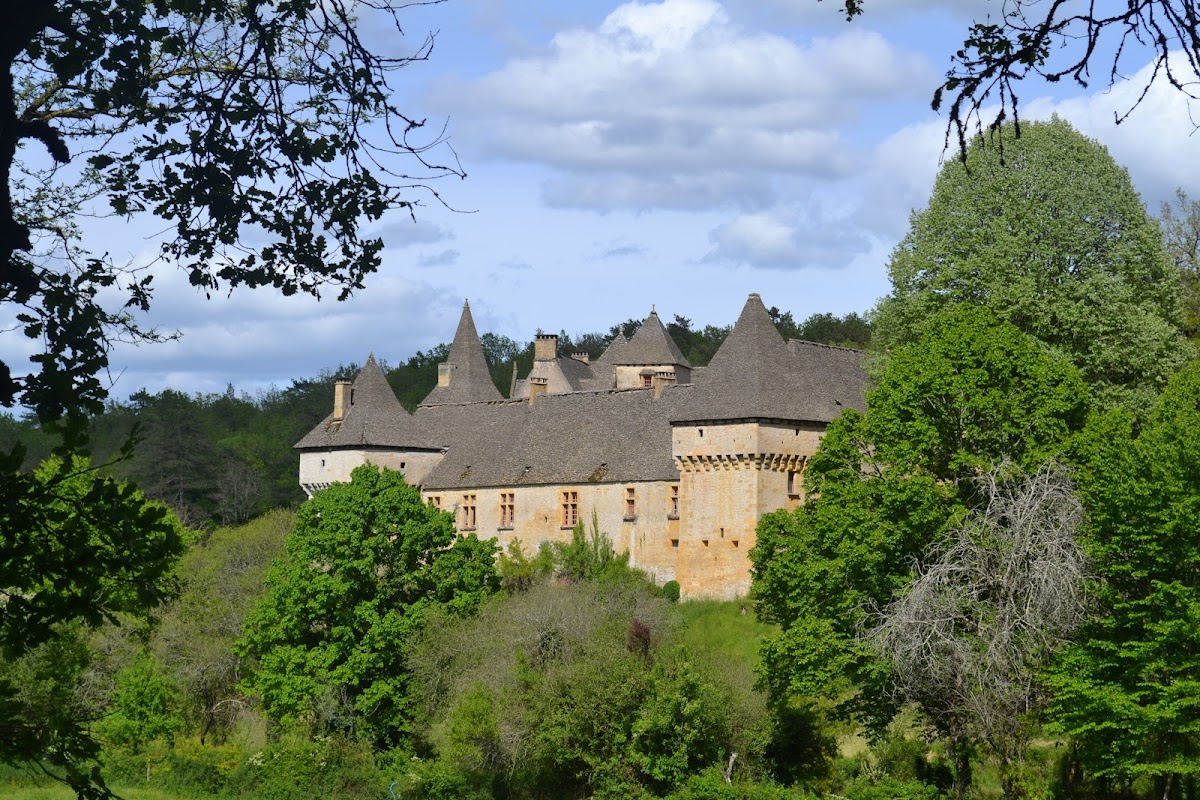
The Château de la Grande Filolie presents as a well-preserved complex combining defensive and residential elements typical of its period. Its layout includes a small northeastern building, one of the oldest sections, featuring an L-shaped plan dating back to the 15th century. This structure reflects the architectural style of the late medieval era, constructed with traditional materials suited to the region.
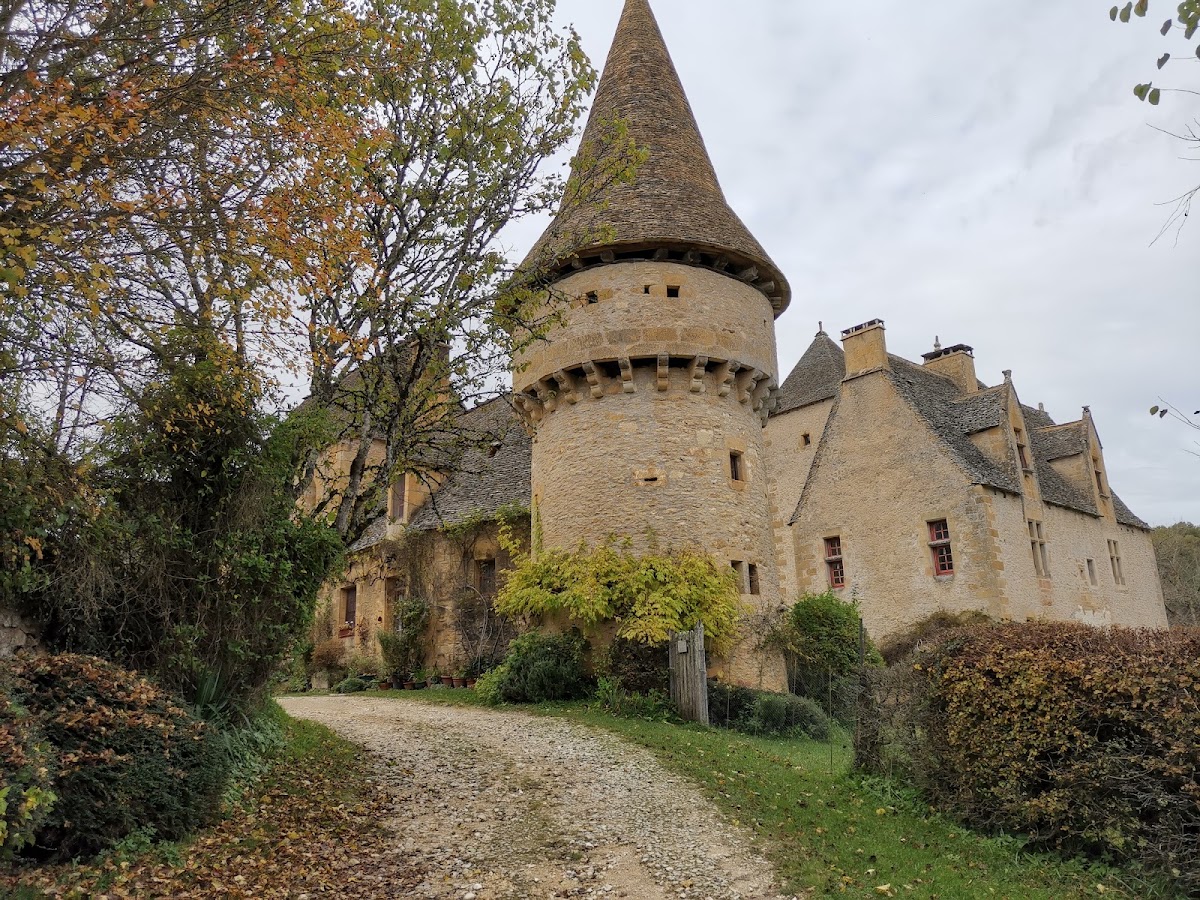
Dominating the western side is a large building erected in the early 17th century. It sits above an extensive vaulted cellar that historically functioned as a wine press, attesting to the estate’s agricultural activities. This main wing is framed by two square towers, both equipped with machicolations—openings in the parapets allowing defenders to drop projectiles on attackers below. The western wall itself is crenellated and pierced by firing holes, indicating the continuous need for security during a period of regional instability.
The courtyard side of the western wing features dormer windows adorned with pediments decorated by shell motifs, blending elements of Renaissance-style ornamentation. At the southeastern angle, the main entrance includes a passage with a bretèche, a small projecting defensive structure from which defenders could observe or attack assailants approaching the gate.
Adjacent to this entrance is a chapel dedicated to Sainte-Marie de la Conception, believed to have been constructed in the 17th century. This place of worship illustrates the estate’s religious dimension and the importance of private chapels in noble residences. Next to the chapel stands a building once housing the concierge, ending in a tower with a pepperpot roof— a distinctive steep, conical roof—also featuring machicolations, reinforcing the site’s defensive character.
In the past, the château’s eastern wing enclosed the courtyard and contained several outbuildings such as a drying room, workshop, and bakery. However, this section was demolished sometime after 1892, and today, the main surviving features convey the château’s blend of fortified and domestic architecture through its stone roofs, defensive towers, and preserved internal spaces. The ensemble reflects the complex history of a noble estate adapting over centuries to changing social and political conditions.
Nearby sites