Château d’Alleuze: A Medieval Fortress in France

Visitor Information
Google Rating: 4.6
Popularity: Low
Country: France
Civilization: Unclassified
Site type: Military
Remains: Castle

History
The Château d’Alleuze stands in the municipality of Alleuze in France and was initially constructed during the 12th century by the medieval Auvergnat nobility. Its earliest owner was Béraud VIII de Mercœur, who held the titles of constable of the Auvergne region and lord over both Aubijoux and Alleuze. Throughout its history, the castle played a key military role, particularly under the authority of the bishops of Clermont, serving as an advanced defensive position for the nearby fortress of Saint-Flour.
The earliest written record mentioning the castle appears in a 1277 agreement when Guy de la Tour, bishop of Clermont, expanded his territorial control through the acquisition of the adjacent village of La Barge. Over time, the Château d’Alleuze was fortified and modified to enhance its defensive capabilities, reflecting its strategic value amid regional conflicts. During the turbulent period of the Hundred Years War, around 1382 or 1383, the castle fell into the hands of mercenaries loyal to England, led either by Bernard de Garlan or Aymerigot Marchès. These forces roamed the surrounding area until 1390 when Jean de Blaisy, acting under the authority of the French king, secured their ransom and restored French control.
In response to the threat of renewed English occupation, the citizens of nearby Saint-Flour burned the castle in 1405 to deny its use to enemy forces. The owner at the time, Monseigneur de la Tour, later ordered its reconstruction in 1411, adhering faithfully to the original design. This rebuilding effort preserved the castle’s military purpose. In the 16th century, the stronghold was seized by Huguenot forces in 1575 amid the religious conflicts affecting France. Following this episode, the bishops of Clermont utilized the castle’s towers as prisons, marking a shift from purely military use to administrative detention.
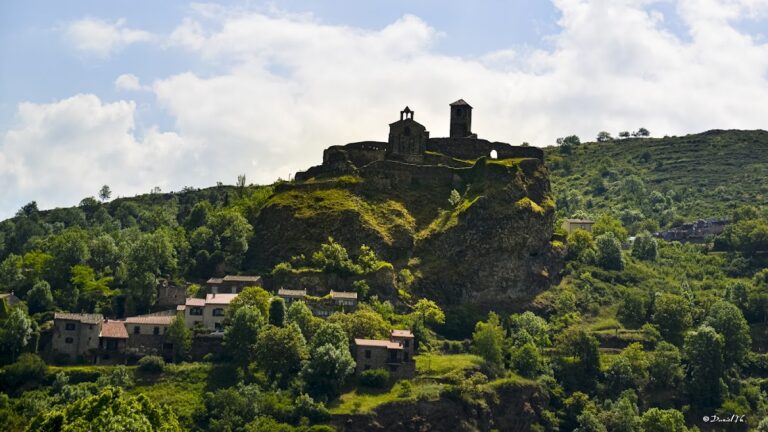
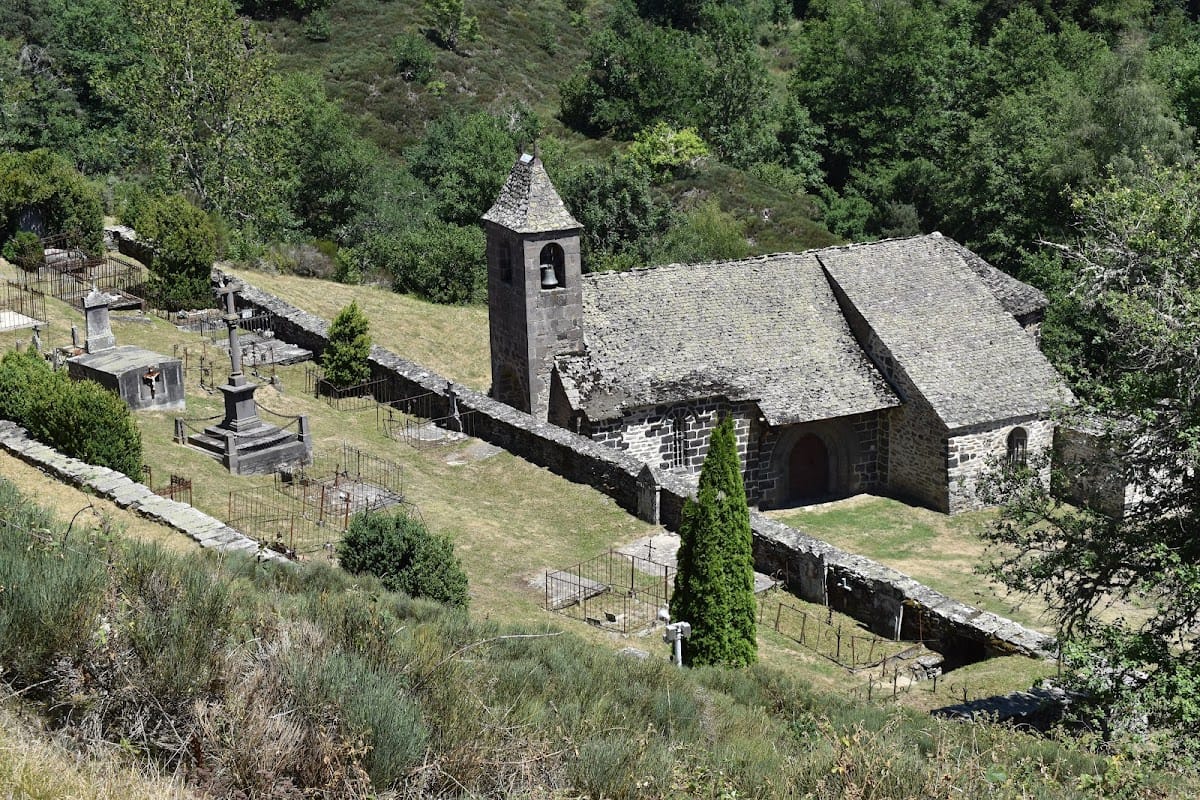
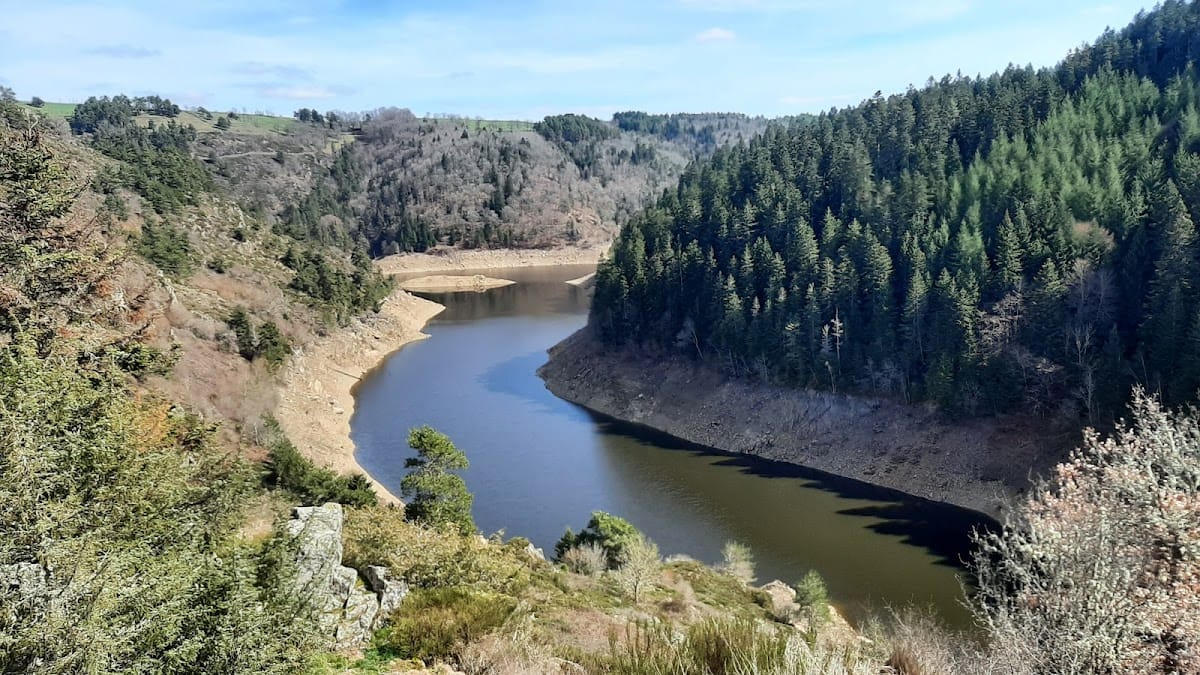
Later ownership passed to Archambaud de Bourbon, who maintained a permanent garrison at the site to protect Saint-Flour and its environs. Eventually, the castle was sold to Jean de Lastic-Sieujac, whose family inherited the property but allowed it to decline into ruin over time. Since 1927, the castle ruins, together with the neighboring Saint-Illide chapel—which was rebuilt in the 15th century after previous destruction—have been recognized and protected as a historic monument. The castle’s isolated position atop a promontory overlooking the Alleuze river and near the Grandval dam reservoir contributed to its preservation by allowing it to escape total destruction.
Remains
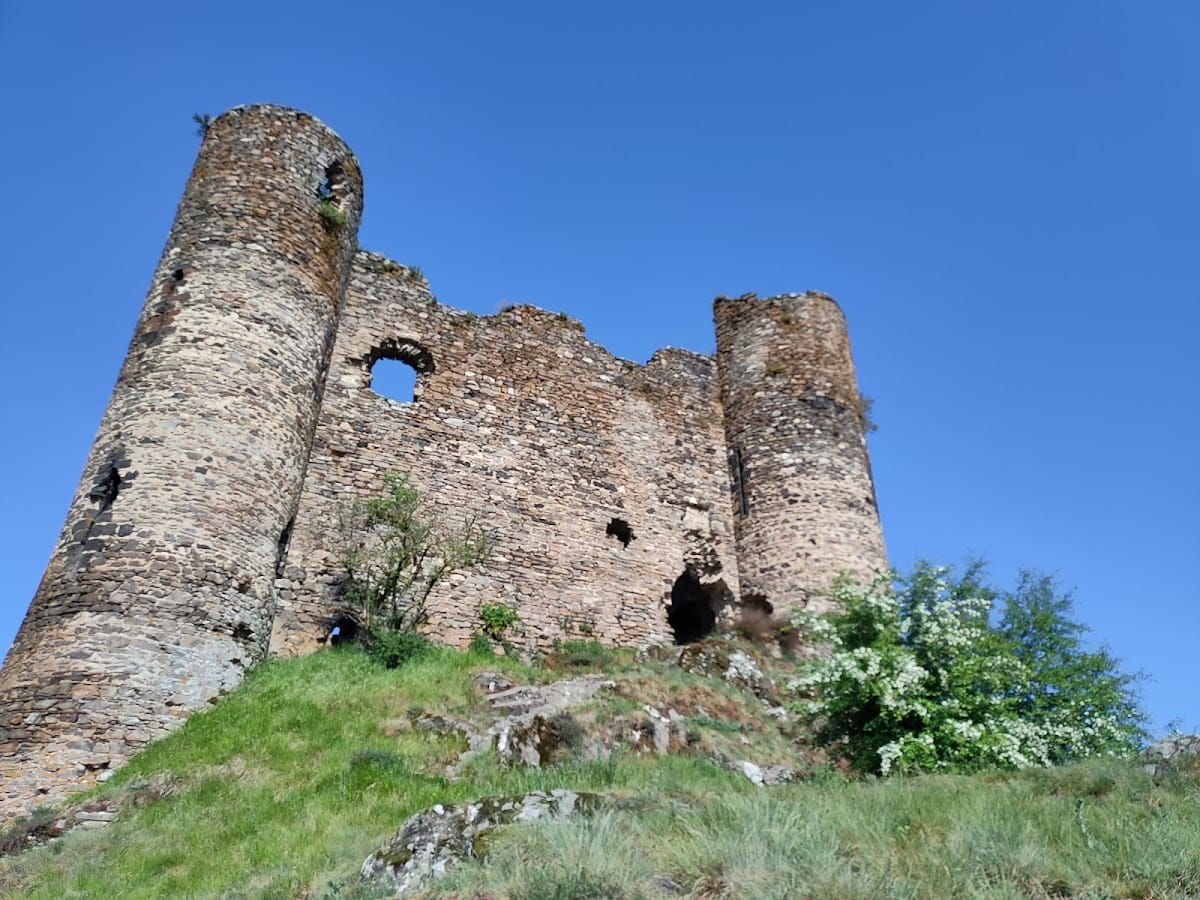
The Château d’Alleuze is characterized by a compact square layout typical of 14th-century military architecture, featuring a round tower positioned at each of the four corners. This plan was retained during the 1411 reconstruction following its partial destruction in the early 15th century. The entire complex occupies a commanding promontory above the Alleuze river, a strategic location chosen for its defensive advantages. The fortress’s construction primarily served military purposes, housing soldiers and their captains rather than royal occupants.
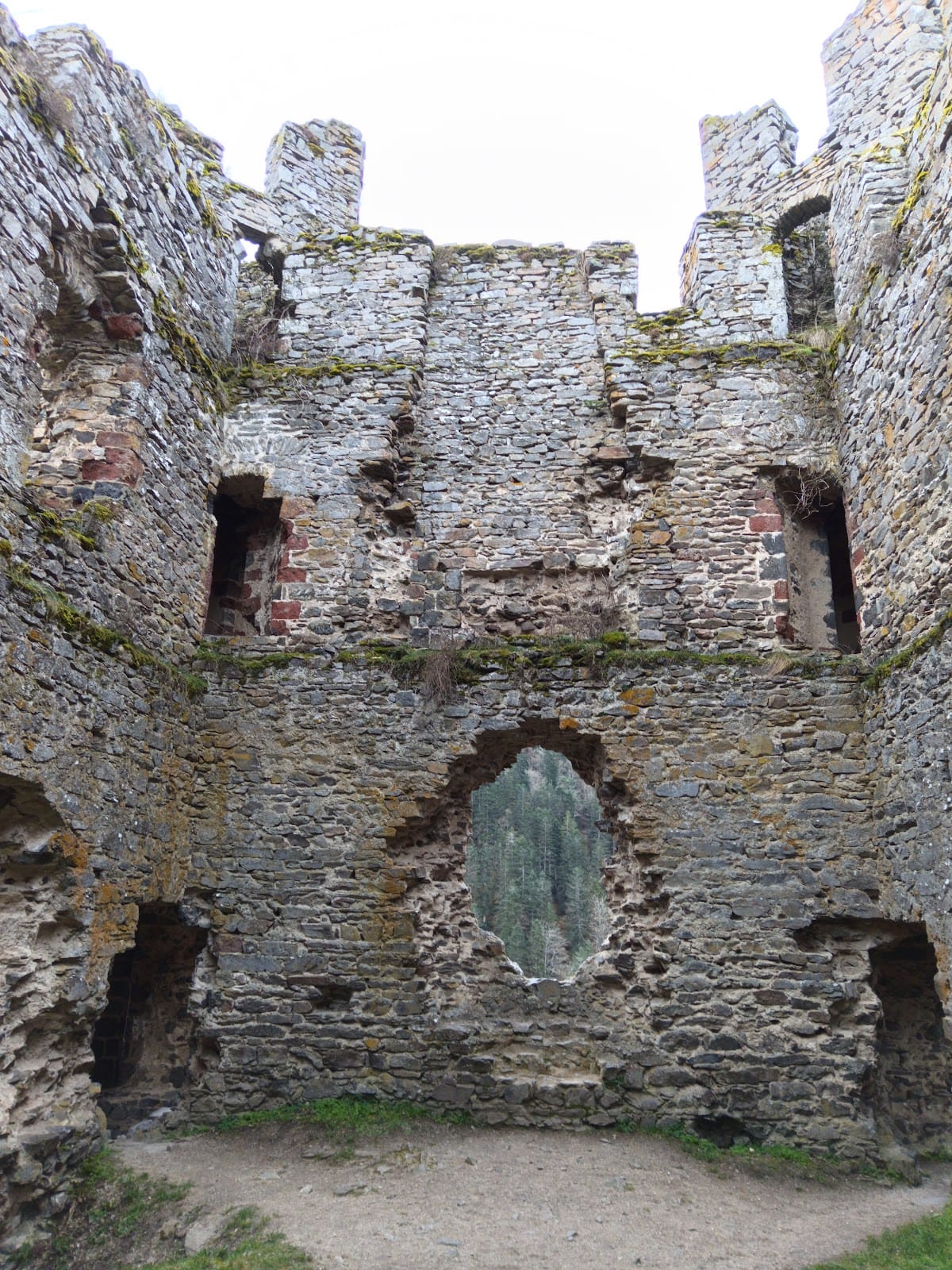
Present-day ruins include remnants from different historical layers. The lower sections of the castle walls date back to the 13th century, reflecting the earliest phases of the fortress’s construction. Above these, elements rebuilt during the 15th century can still be seen, evidencing the reconstruction carried out after the burning of 1405. The four towers, imposing in form, once fulfilled defensive roles and later served as prison cells administered by the bishops of Clermont following the castle’s occupation by Huguenot forces.
Adjacent to the castle ruins stands the Saint-Illide chapel, which itself was reconstructed during the 15th century after previous damage. This chapel is historically linked to the castle’s complex and adds to the site’s cultural significance. Today, the remains of the Château d’Alleuze are preserved as a ruin, offering visible testimony to its successive phases of defensive function, military upheaval, and ecclesiastical use, all anchored in a rugged natural setting that helped shelter it from complete disappearance.
Nearby sites