Castle of Veves: A Historic Fortress in Houyet, Belgium



Visitor Information
Google Rating: 4.4
Popularity: Medium
Google Maps: View on Google Maps
Official Website: www.chateau-veves.be
Country: Belgium
Civilization: Medieval European
Remains: Military

History
The site of the Castle of Veves, located near the Lesse River in present-day Houyet, Belgium, began as a villa established in the late 7th century by Pepin of Herstal. This early residence was strategically placed above the road connecting Dinant and Rochefort and close to the hermitage of Saint Hadelin in Celles, reflecting its importance in controlling local routes and religious sites.
In the 9th century, Pepin’s successors transformed the villa into a small fortress to strengthen its defensive role. Around the year 1200, this fortress was destroyed but was rebuilt approximately two decades later by the Beaufort family, who had held the fief of Celles-Vêves since the 12th century. The Beauforts maintained control of the castle through marriage alliances, including the union of Wauthier of Beaufort and Ode of Brittany, which helped secure their lineage and property.
During the 15th century, the castle faced destruction at the hands of the inhabitants of Dinant, notably in 1410. It was restored shortly after this event, continuing its role as a fortified residence. The castle also suffered damage during the French Revolution in 1793 but was repaired by the Liedekerke de Beaufort family, descendants of the Beaufort line, who took ownership in the 18th century.
The castle’s military function declined by the late Middle Ages. During the Renaissance and the reign of Louis XV, it underwent significant remodeling. Defensive features were altered, and the interiors were updated to reflect contemporary tastes, moving away from purely military use toward a more comfortable noble residence.
In 1609, a terracotta statue of the Virgin Mary was discovered on the castle grounds. This find attracted pilgrims and led to the construction of the nearby Église Notre-Dame de Foy, linking the site to a religious tradition and local devotion.
The last family member to live in the castle was Count Hadelin de Liedekerke Beaufort. After his residence, the heirs preserved the property and created a nonprofit association to maintain and open the castle to the public. Between 1969 and 1979, Christian de Liedekerke de Beaufort led extensive restoration efforts, with ongoing care by his descendants ensuring the castle’s preservation.
Remains
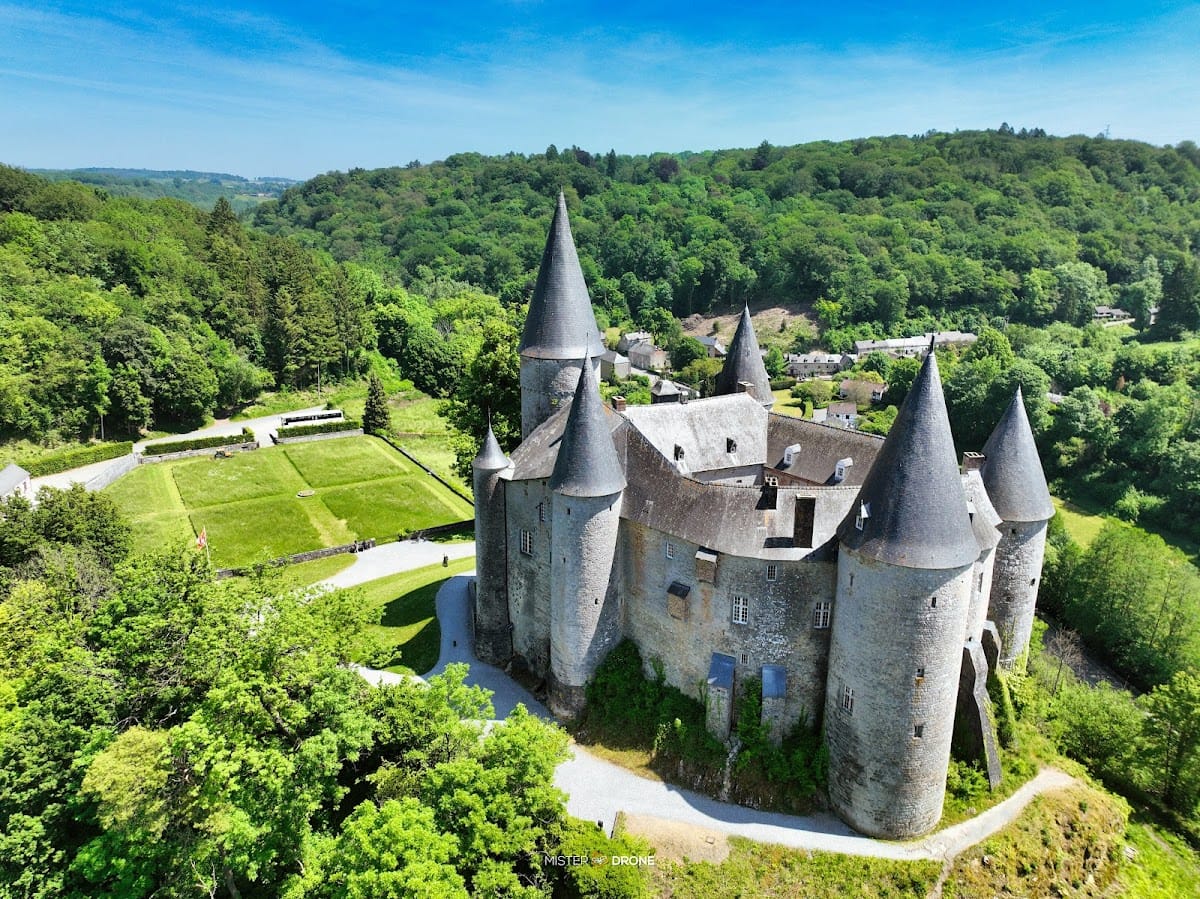
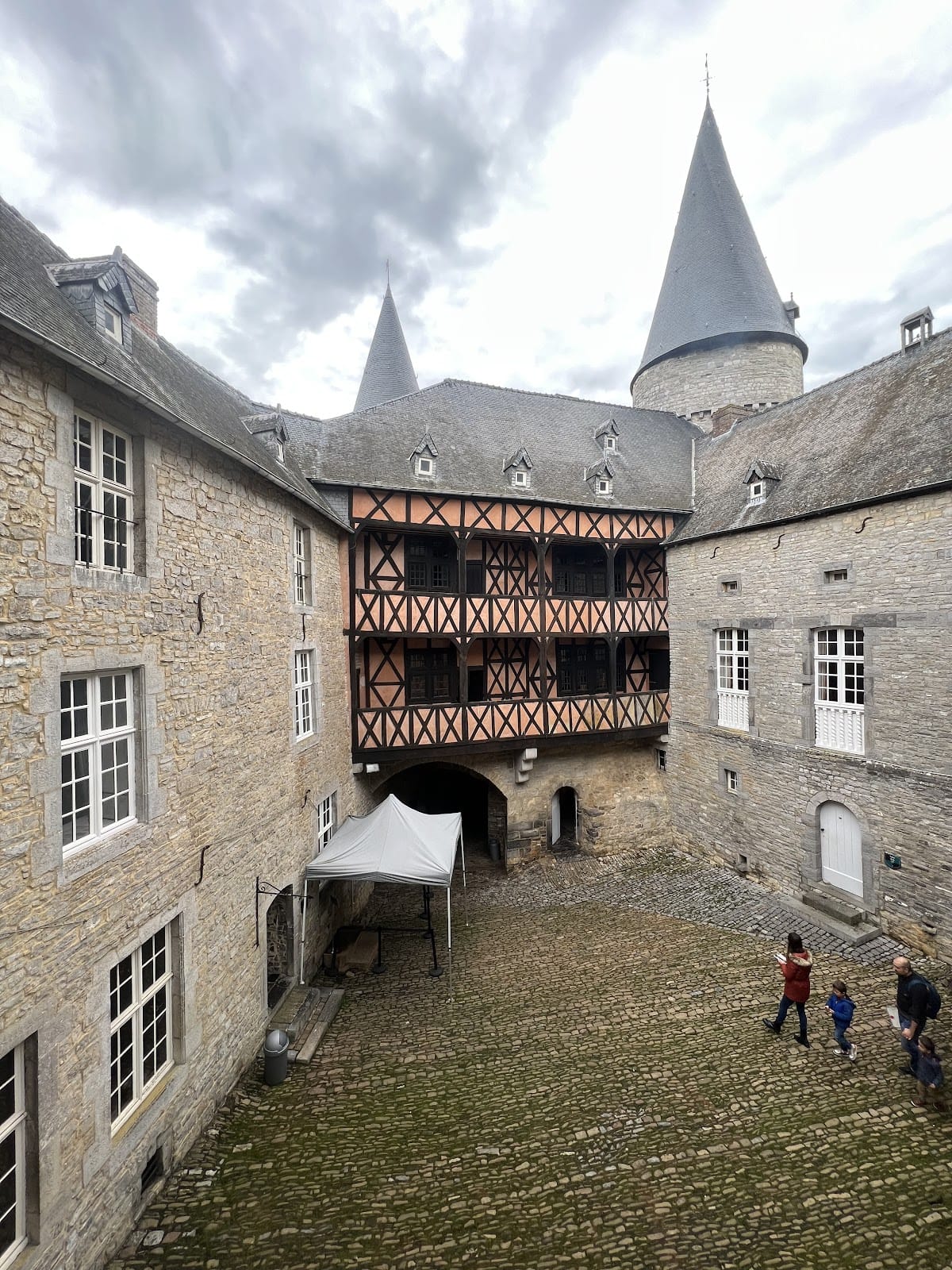
The Castle of Veves is built on a rocky outcrop with an irregular triangular shape shaped by the natural rock beneath. The layout includes four large towers and two smaller ones, enclosing a fully enclosed courtyard. The main tower, one of the oldest parts, stands about 36 meters tall and 8 meters wide.
The castle’s walls are thick and sturdy, originally featuring battlements and arrow slits for defense. These battlements were removed during later renovations and replaced with pointed roofs. The arrow slits were enlarged into windows, reflecting the shift from military to residential use.
A half-timbered gallery dating from the 16th century connects the medieval residential section to a wing built in the same century. Opposite this is a wing with a red brick façade designed in the Louis XV style, showing the castle’s architectural evolution over time.
Inside, the castle contains large medieval kitchens alongside more refined living quarters furnished with 18th-century furniture, paintings, and porcelain from Countess Athénaïs de Mortemart’s collection. The armory has been restored and retains original features such as a fireplace, ceiling, and a sandstone floor mosaic decorated with coats of arms.
Thanks to continuous maintenance and restoration, many original medieval elements remain visible alongside later modifications. The castle’s adaptation to the natural topography and its combination of medieval and later architectural styles illustrate its long history and changing functions.
Nearby sites