Castle of Zafra: A Medieval Fortress in Spain

Site at a Glance
- Rating
- 4.6
- Popularity
- Medium
- Country
- Spain
- Primary era
- Medieval
- External website
- Open
- Eras represented
- Classical, Medieval
- Civilizations
- Taifa of Toledo, Visigothic
- Site type
- Military
- Remains
- Castle
On this page11 sections
History
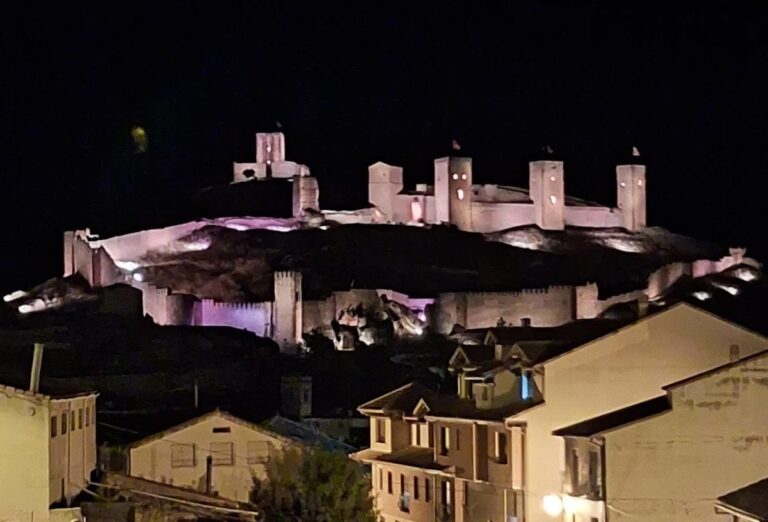
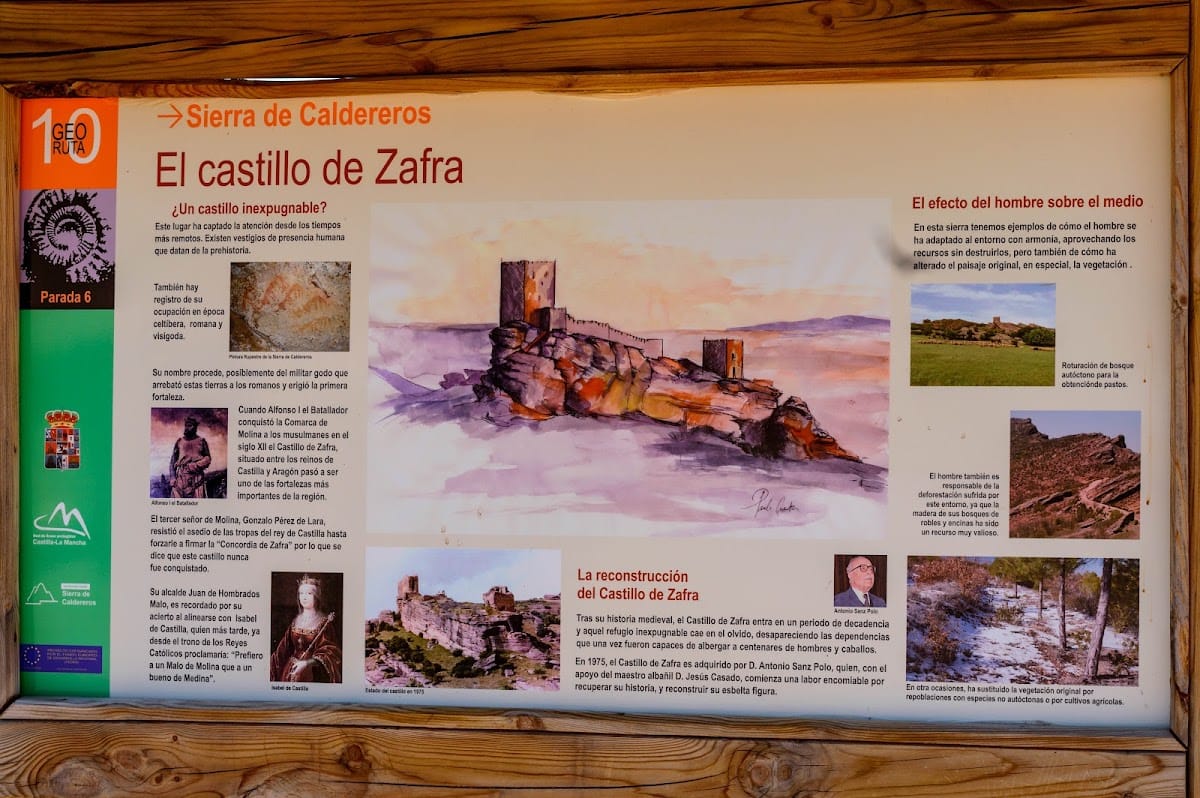
Castle of Zafra is a medieval fortress in Spain, built by the de Lara family between the second half of the twelfth century and the beginning of the thirteenth century. It stands on a sandstone outcrop in the Sierra de Caldereros, where the stronghold helped the lords of Lara consolidate control of the Señorío de Molina.
Early Occupation and Christian Conquest
The area around the castle was inhabited from antiquity. Pottery from the Bronze and Iron Ages has been found nearby, while ancient masonry and remains of classical-era structures suggest that the rock may also have been occupied during the Roman period. The earliest fortress is traditionally placed before about AD 720, during the Visigothic Kingdom, a Germanic-ruled kingdom that governed much of the Iberian Peninsula before the Muslim conquest.
A Muslim fortification later occupied the site under the Taifa of Toledo. A taifa was an independent or semi-independent Muslim state that emerged after the fragmentation of the Caliphate of Córdoba. Christian forces took the fortress in 1129 during the Reconquista, the centuries-long expansion of Christian kingdoms into Muslim-ruled Iberia.
The Kingdom of Aragon used Zafra as an important defensive position in the southern part of its territory, including in the protection of the newly established community of Daroca. In 1154, Manrique Pérez de Lara named Zafra among the most important dominions under his authority in the Charter of Molina de Aragón. The de Lara family subsequently constructed the present castle as part of its effort to secure the Señorío de Molina.
The Siege of 1222
The fortress faced its most notable medieval crisis in 1222. Gonzalo Pérez de Lara, the third ruler of Molina, had provoked the hostility of Fernando III of Castile through attacks and other abuses in neighboring territories. When Fernando’s army advanced on Molina, Gonzalo withdrew to Zafra with his family, court, servants, and supporters.
The royal forces were unable to take the castle by assault. After several weeks of siege, the two sides reached the Agreement of Zafra. It provided that Molina would pass after Gonzalo’s death to his daughter, Mafalda González de Lara, who would marry Fernando’s son, Prince Alfonso. Through this arrangement, the lordship was to come under the control of the Crown.
Castilian Rule and Loss of Military Importance
During the fourteenth-century Castilian Civil War, Henry II of Castile granted the castle and the lordship of Molina to Bertrand du Guesclin, a prominent French commander and mercenary who supported him. The people of Molina rebelled and invited Peter IV of Aragon to rule them. After the castle was captured, Peter granted it to his vassal Ximeno Pérez de Vera.
The castle later returned to Castilian control through marriage. In the fifteenth century, Henry IV of Castile granted the castle and town to his favorite, Beltrán de la Cueva, causing another rebellion. Juan de Hombrados Malo, the castellan, defended the fortress and kept it under royal control until the political union of Castile and Aragon under Isabella and Ferdinand, commonly known as the Catholic Monarchs. He was then granted hereditary custody of the castle, which his family retained for many years.
The completion of the Reconquista and the union of the two principal Christian crowns of Iberia ended the castle’s former strategic importance. From the sixteenth century, it gradually fell into ruin and shifted from a military stronghold to a residential property.
Private Ownership and Reconstruction
Castle of Zafra remained state property until 1971, when it was sold at auction for 30,000 Spanish pesetas to Antonio Sanz Polo (1913–2008). Sanz Polo was a distinguished educator and a descendant of Juan de Hombrados Malo. The castle was completely ruined at the time of the sale, and he devoted the next thirty years to its reconstruction with the assistance of architects and historians.
Sanz Polo received the Medal of Merit from the National Association of Friends of Castles for this work. The property remains privately owned, and the Sanz Polo family has continued its restoration. The castle is now partly restored, while other portions remain in ruins.
Remains
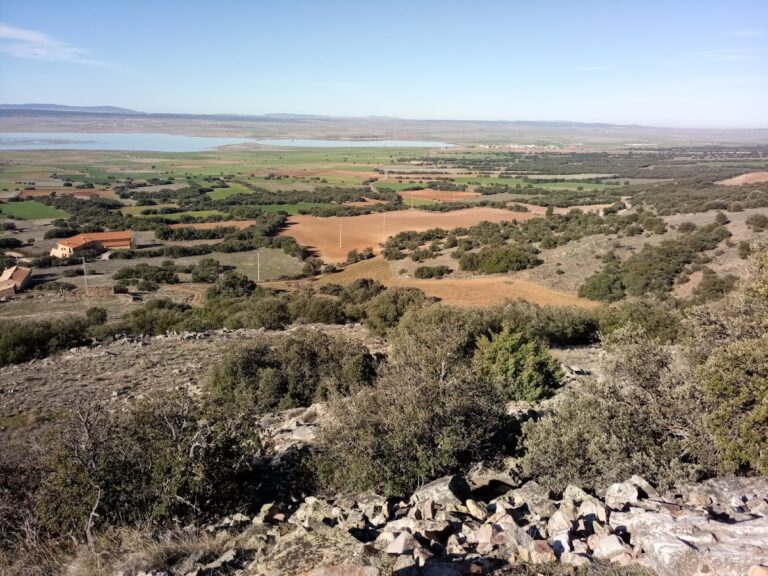
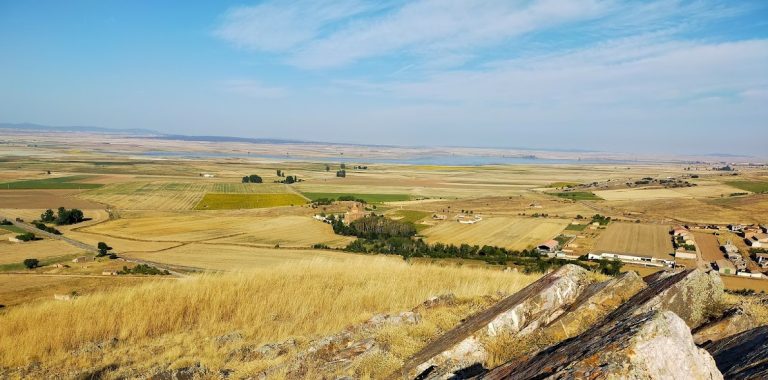
Castle of Zafra occupies the summit of a sandstone outcrop in the Vega de Zafra, within the Sierra de Caldereros between Hombrados and Campillo de Dueñas. The rock stands at about 1,400 metres above sea level and extends from northeast to southwest. Steep, heavily eroded sandstone surfaces provide the natural defensive foundation, while sloping upland meadows surround the formation.
Defensive Layout
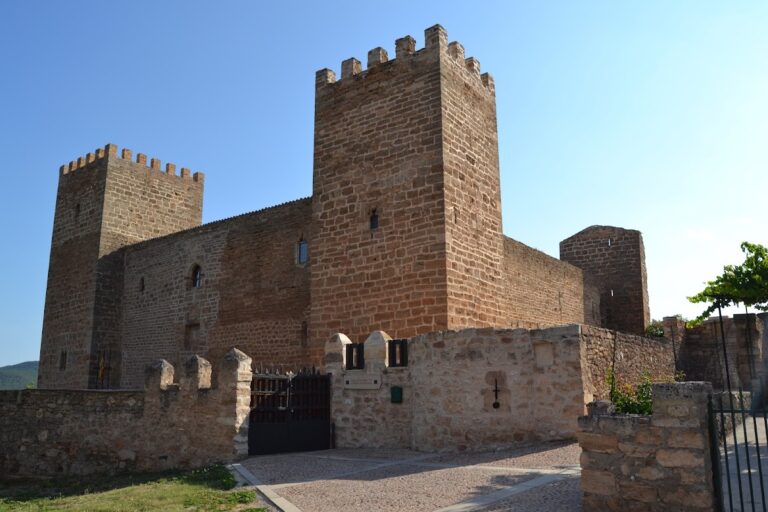
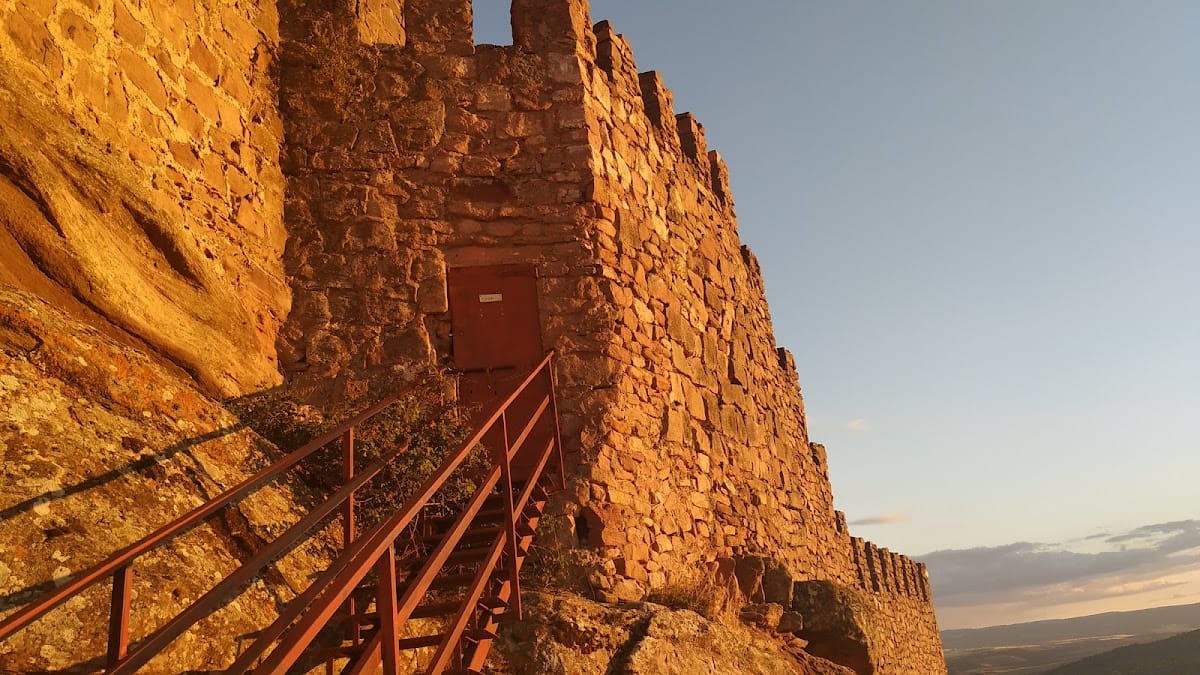
A defensive wall follows all sides of the rock, linking the entrance tower at the southwestern end with the principal buildings at the northeastern end. The castle is organized into four main areas: the entrance tower, an open courtyard, the Place of Arms, and the Tower of Homage. The main building material is sandstone, and the two principal towers have undergone substantial restoration even though the complex as a whole remains only partly restored.
Entrance Tower
The entrance tower forms the southwestern access point within the enclosing defenses. An earlier route to the entrance, described for its ingenuity and appearance, has disappeared. A ladder installed by the owner now provides access to the entrance.
Place of Arms
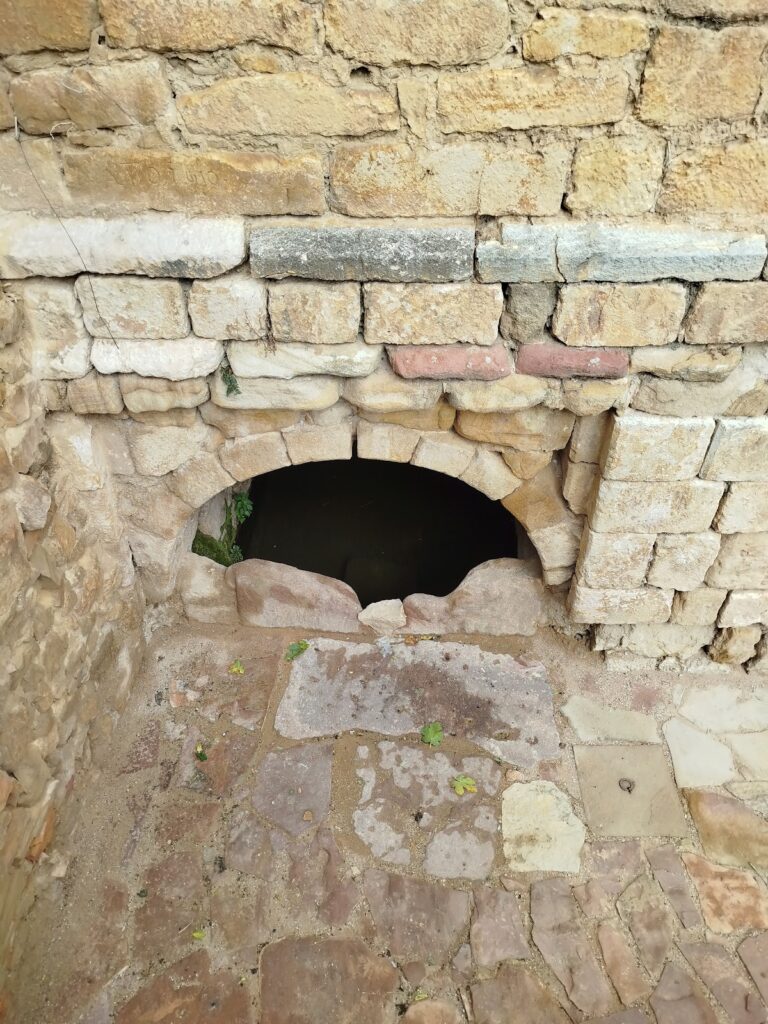
The Place of Arms served as the area where troops assembled. It also contained the castle’s cisterns, tanks used to collect and store water, making it an important functional space within the defensive layout.
Tower of Homage
The Tower of Homage is the castle’s keep, the principal fortified tower and residential center of the stronghold. It occupies the highest point of the outcrop and contained the lords’ chambers and kitchens. The tower has two floors and is linked by a spiral staircase to an upper terrace. The castle was thought capable of accommodating as many as 500 people.
Surrounding Archaeological Remains
Ancient masonry and possible classical-era structural remains occur in the rock and surrounding grounds. Visible remains in the nearby meadow may represent an outer enclosure containing buildings such as stables and supply stores. These structures are thought to have been destroyed during the Reconquista, leaving their traces outside the main castle enclosure.