Castle of Varese Ligure: A Medieval Fortress and Administrative Center in Italy

Visitor Information
Google Rating: 4.6
Popularity: Low
Google Maps: View on Google Maps
Country: Italy
Civilization: Medieval European
Remains: Military

History
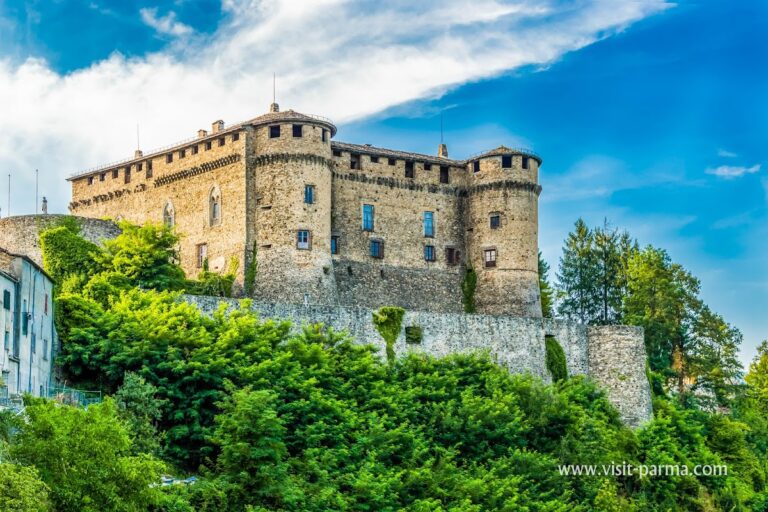
The Castle of Varese Ligure, located in the municipality of Varese Ligure in Italy, was built by the noble Counts Fieschi during the medieval period. The castle formed a central part of their efforts to establish control over an important route linking the Ligurian coast with the Apennines.
Originally, the castle stood within a newly planned fortified settlement known as the “Borgo Rotondo.” This settlement was designed in an elliptical shape, with defensive walls that enclosed stone houses arranged around the perimeter, providing protection and serving both military and commercial functions. The borgo’s strategic position addressed ongoing conflicts in the surrounding upper Vara valley, serving as a military stronghold and a center for local administration.
In the early 15th century, the castle faced military pressure during regional power struggles. After resisting two sieges, the borgo was conquered in 1435 by Niccolò Piccinino, a mercenary commander (condottiero) acting under the command of Duke Filippo Maria Visconti of Milan. Following the conquest, Piccinino ordered the construction of a tall defensive structure, now known as the “Piccinino Tower.” This tower was notable for its height and included a drawbridge and advanced weapons for that period.
Between 1472 and 1479, the Landi family—who had become the local overlords by then—added a second, cylindrical tower with a broad, sloping base (known as a battered base). This tower was lower than the Piccinino Tower and reflected evolving defensive architecture of the late medieval period.
The Fieschi family’s control ended in 1547 following the unsuccessful conspiracy led by Gianluigi Fieschi against the powerful admiral Andrea Doria. Afterward, the Republic of Genoa took possession of Varese Ligure. Under Genoese rule, the castle’s function shifted from a military fortress to an administrative center. It became the seat of the local podestà, a magistrate responsible for governance, and also served as a prison. During this time, modifications were made to the structure, including enlarging windows in the Landi Tower and possibly reducing the height of the main Piccinino Tower to suit its new administrative and custodial roles.
In the 20th century, the castle underwent restoration work in the 1960s led by the Ligurian Superintendent of Monuments. Today, it remains the property of the local municipality.
Remains
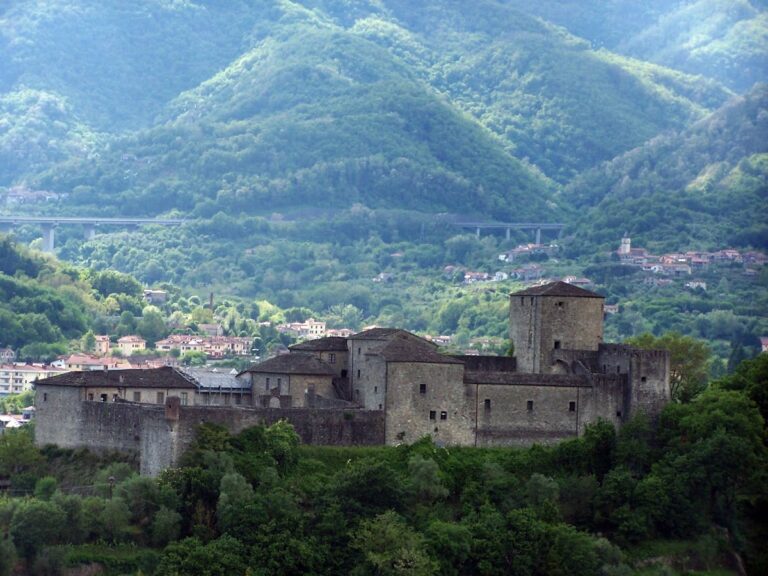
The Castle of Varese Ligure lies at the heart of the fortified elliptical settlement called the Borgo Rotondo, which is enclosed by defensive stone walls forming a protective curtain. Along the perimeter inside the walls, stone houses are closely set, featuring porticoes beneath them that historically supported commercial activities. Narrow alleys connect these buildings to a central street running through the borgo, which formed the community’s main thoroughfare and contributed to its defense.
On the northern side of the borgo stands the first palace, once the residence of the Counts Fieschi. This building marked the administrative and noble center within the fortified village.
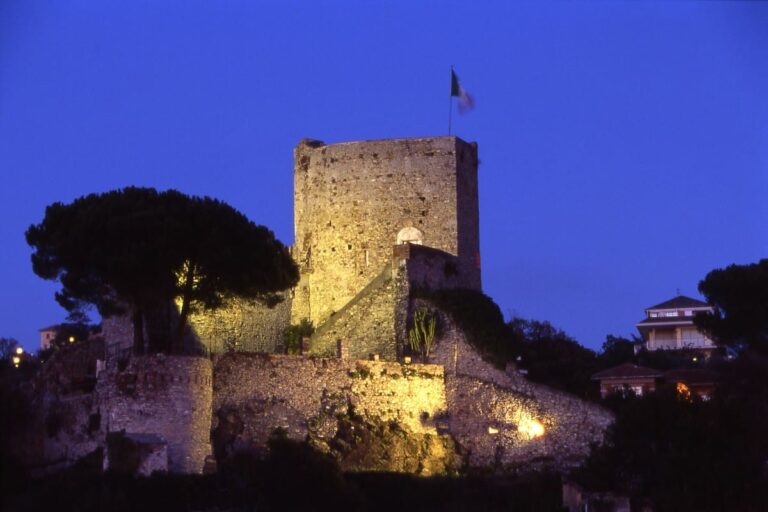
The most prominent feature of the castle complex is the Piccinino Tower, erected in 1435 under Niccolò Piccinino’s orders. This tall defensive tower originally included a drawbridge mechanism, offering enhanced security at its entrance. Skilled builders from Lunigiana, known for their expertise in defensive structures, constructed it using local stone. These workers had experience with similar fortifications, notably the tower at Piagnaro Castle in Pontremoli, linking the construction styles across the region.
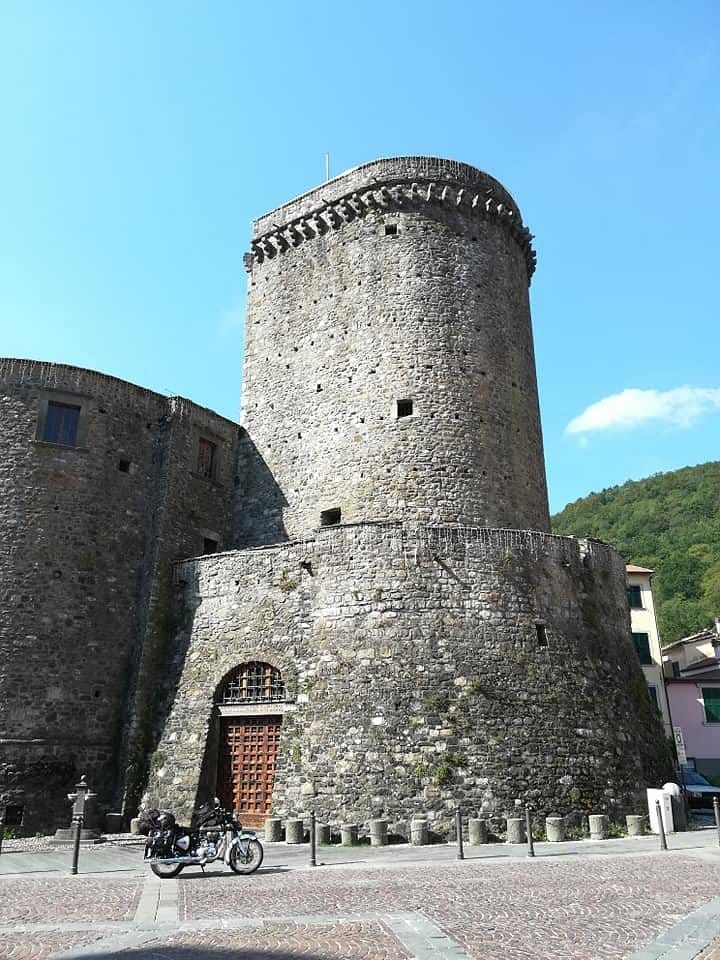
The second significant tower was constructed during the Landi family’s dominion between 1472 and 1479. It differs in form, being cylindrical with a battered base—a sloped foundation designed to better resist attacks and prevent undermining. This tower is shorter than the Piccinino Tower yet contributes to the castle’s layered defense.
When the castle became the seat of the podestà under Genoese control, alterations adapted the defensive buildings for civil administration and incarceration. Windows in the Landi Tower were enlarged to allow more light and ventilation, and the main tower may have been lowered, reducing its military posture. These changes reflect the castle’s evolving role away from pure defense.
Today, the castle’s stone construction—including walls, towers, and residential buildings—remains well preserved. Restoration efforts have maintained the integrity of the site, allowing its historical structures to stand largely intact. This preservation enables the castle to serve as a cultural venue while honoring its complex heritage rooted in medieval military, noble, and administrative uses.
Nearby sites