Castle of Valongo: A Historic Fortress in Évora, Portugal



Visitor Information
Google Rating: 4.2
Popularity: Low
Google Maps: View on Google Maps
Country: Portugal
Civilization: Unclassified
Remains: Military

History
The Castle of Valongo is situated in the municipality of Évora, Portugal. The earliest evidence of human activity at this location dates back to the Roman era, indicating its long-standing significance in the region. Following the Roman period, the site saw occupation by the Visigoths, and later by Muslim forces who undertook substantial fortification work here, as shown by inscriptions in the Arabic script found within the castle.
During the late 14th or early 15th century, amidst the Christian Reconquest of the Iberian Peninsula, the castle was reconstructed to serve as a defensive stronghold for the resurgent Portuguese Christian kingdoms. This rebuilding reflected the changing political and military landscape of the time. Earlier written records link the castle to a property transaction in 1283, involving Infanta D. Leonor Afonso, daughter of King D. Afonso III, confirming the site’s importance under medieval Portuguese nobility.
From the 15th to the 16th centuries, the castle’s central keep underwent renovations that included the addition of architectural features such as pointed tiled roofs, brick staircases, and bay windows. These upgrades suggest its continued use and adaptation to evolving residential and defensive needs. By the 19th century, ownership passed to the Marquesses of Valada before eventually entering private hands. Although the castle has experienced periods of neglect, efforts to stabilize and preserve the ruins were conducted in 1989 and 2004, including structural repairs and thorough risk assessments.
Remains
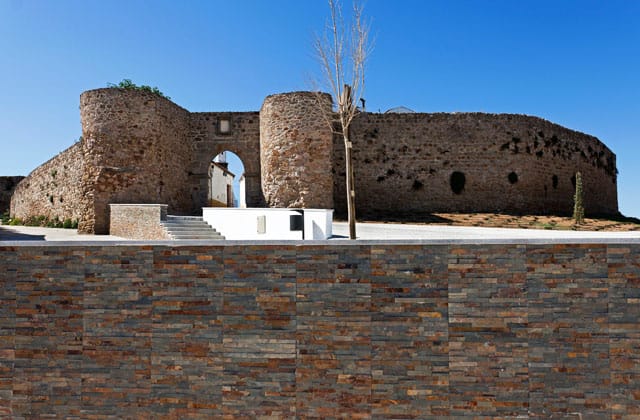
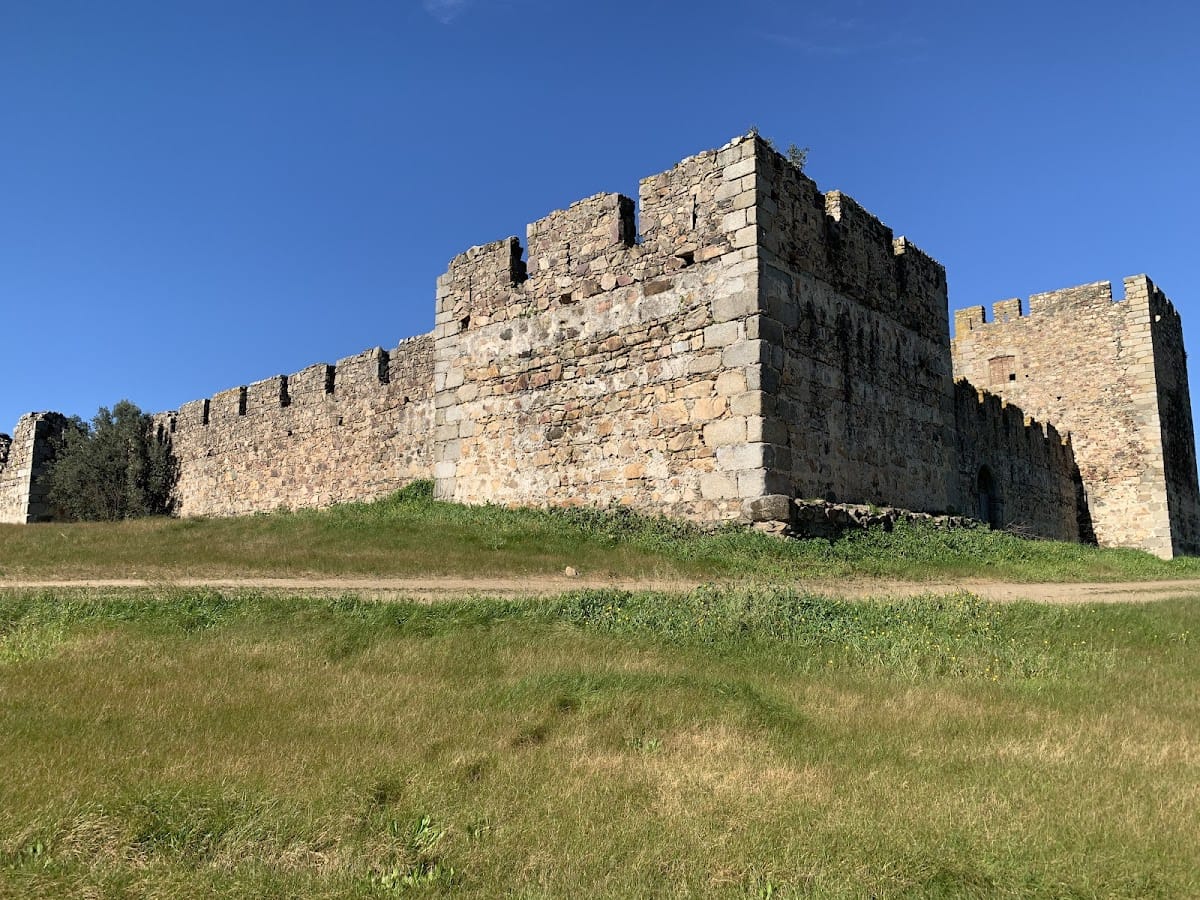
The Castle of Valongo features a rectangular layout reinforced by four square towers positioned at each corner. These towers are linked along the walls by parapets equipped with battlements of a square profile, creating a walkway, or chemin de ronde, used historically for defensive patrols. Situated on a gentle hillside near the Ribeira de Valongo stream, the castle is surrounded by natural cork and holly oak trees, as well as cultivated farmland, which emphasizes its strategic placement overlooking local estates and landmarks.
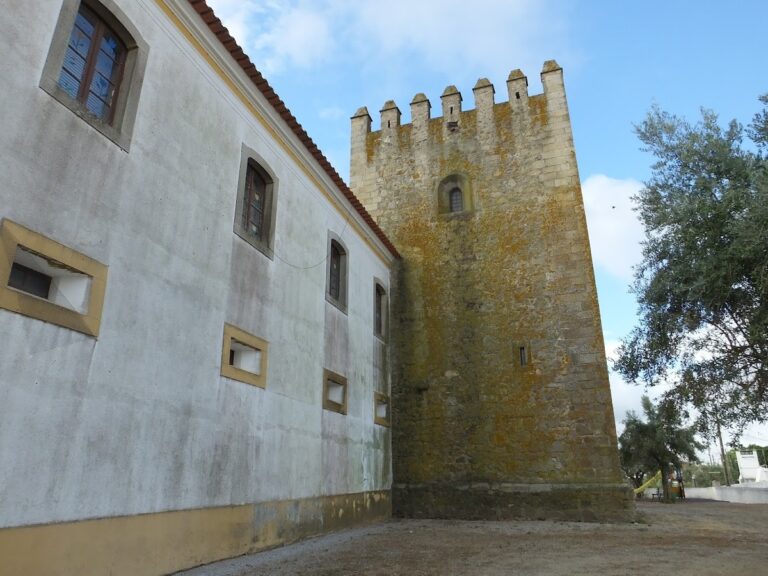
The castle’s main entrance faces east and is distinguished by a large arched gateway that once controlled access to the interior. The most prominent defensive structure is the keep tower, located at the northeast corner and oriented westward. Its entrance is reached by a staircase, underscoring its role as a stronghold within the fortress. Inside, the keep contains three storeys supported by pointed brick vaults, known as ogival rib vaults, which are architectural features characterized by intersecting arches forming a pointed, ribbed ceiling. The top floor is crowned with battlements, providing protection for defenders. Large halls within the keep are illuminated by narrow vertical slits called meurtrières or arrow slits, allowing archers to shoot while remaining protected.
Additional structures include a smaller tower attached to the western wall that features a lateral entrance. Throughout the walls and towers, narrow vertical openings and corbels—the projecting supports beneath the parapets—reflect medieval defensive design. Building materials combine masonry walls with brick vaulting in the keep. Decorative elements such as pointed tiled roofs and bay windows date to the 15th and 16th centuries and highlight later modifications. Inside the castle, Islamic inscriptions provide tangible evidence of its fortification during Muslim occupancy, linking the architecture to the cultural influences that shaped its history. Today, the castle stands in ruins, with conservation interventions having addressed cracks and structural weaknesses to preserve what remains.
Nearby sites