Castle of Saint Mary, Tirano: A Historic Fortress in Northern Italy

Visitor Information
Google Rating: 4.1
Popularity: Very Low
Country: Italy
Civilization: Unclassified
Site type: Military
Remains: Castle

History
The Castle of Saint Mary stands in the municipality of Tirano, Italy, and was established by the Duchy of Milan. This fortress emerged in a period of intense regional competition among European powers over control of strategic transit routes in northern Italy.
Construction of the castle began in the late 15th century, around 1492-1493, under the direction of Duke Ludovico Maria Sforza, known as il Moro, who governed Milan intermittently between 1494 and 1500. The work drew upon designs by Giovanni Antonio Amadeo, an architect and engineer of Italian-Swiss origin active from the late 1480s. The castle formed an integral part of the town’s defensive walls, devised to secure a critical junction that connected the Rhine Valley, South Tyrol, the Po Plain, and the Lake Como region. These crossroads were heavily contested by entities including the Habsburgs, Spain, France, Venice, and the Vatican.
Earlier defenses in the vicinity, such as the nearby castle of Dosso, were destroyed during the incursions by the Graubündner in 1487. This destruction prompted the Duchy of Milan to invest in more robust fortifications, leading to the creation of Castello Santa Maria and expanded town walls. The castle’s name derives from a chapel dedicated to Mary that once stood close by, although this religious structure no longer exists.
In the early 16th century, the castle and the city walls experienced damage during the Graubündner occupation in 1512. Repairs were swiftly carried out during a turbulent period marked by violent conflict known as the Valtellina Massacre. Later, in the aftermath of a battle in 1620 when Swiss troops seized the city, Spanish forces used the castle to defend their hold on Tirano. Shortly after, starting in 1627, a strategic decision was made to dismantle the existing fortifications, which led to much of the castle falling into ruin. Partial restoration of the castle occurred centuries later, with notable works undertaken in the years just before World War II and again at the turn of the 21st century, efforts that continue today to conserve this historical site.
Remains
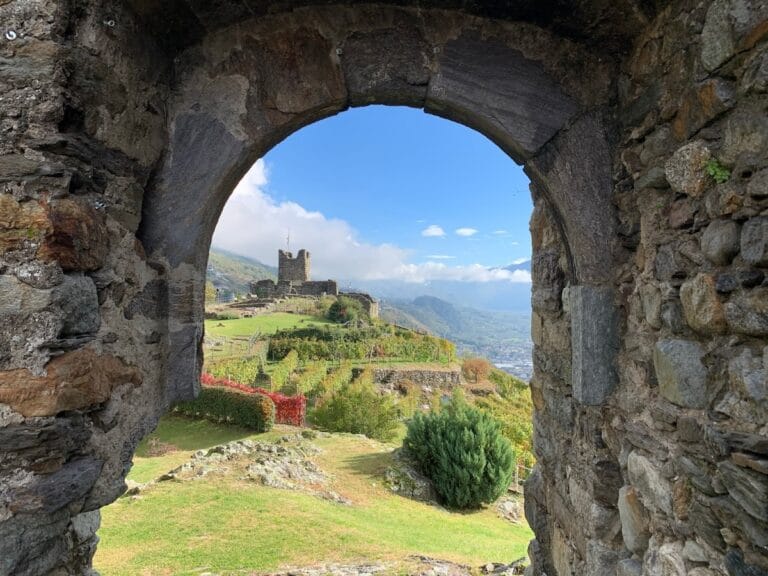
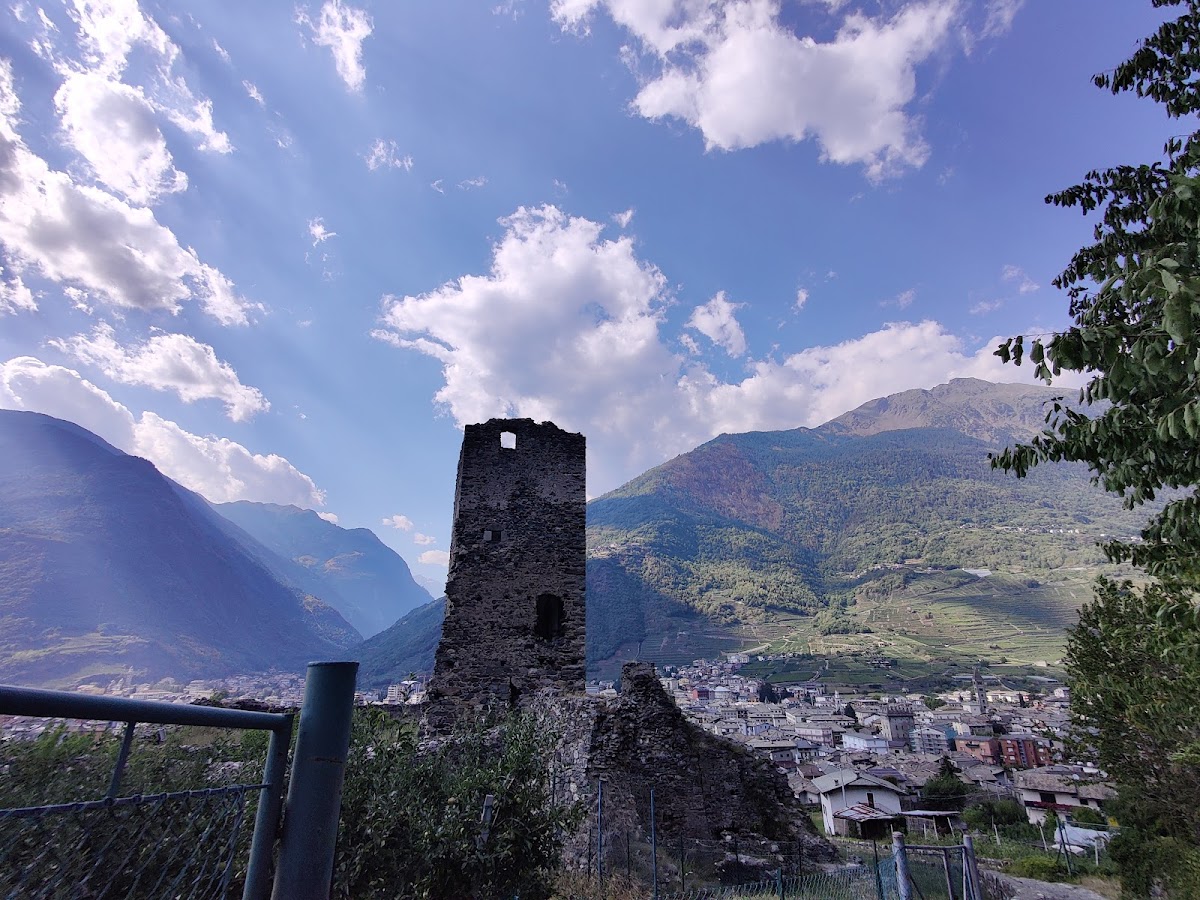
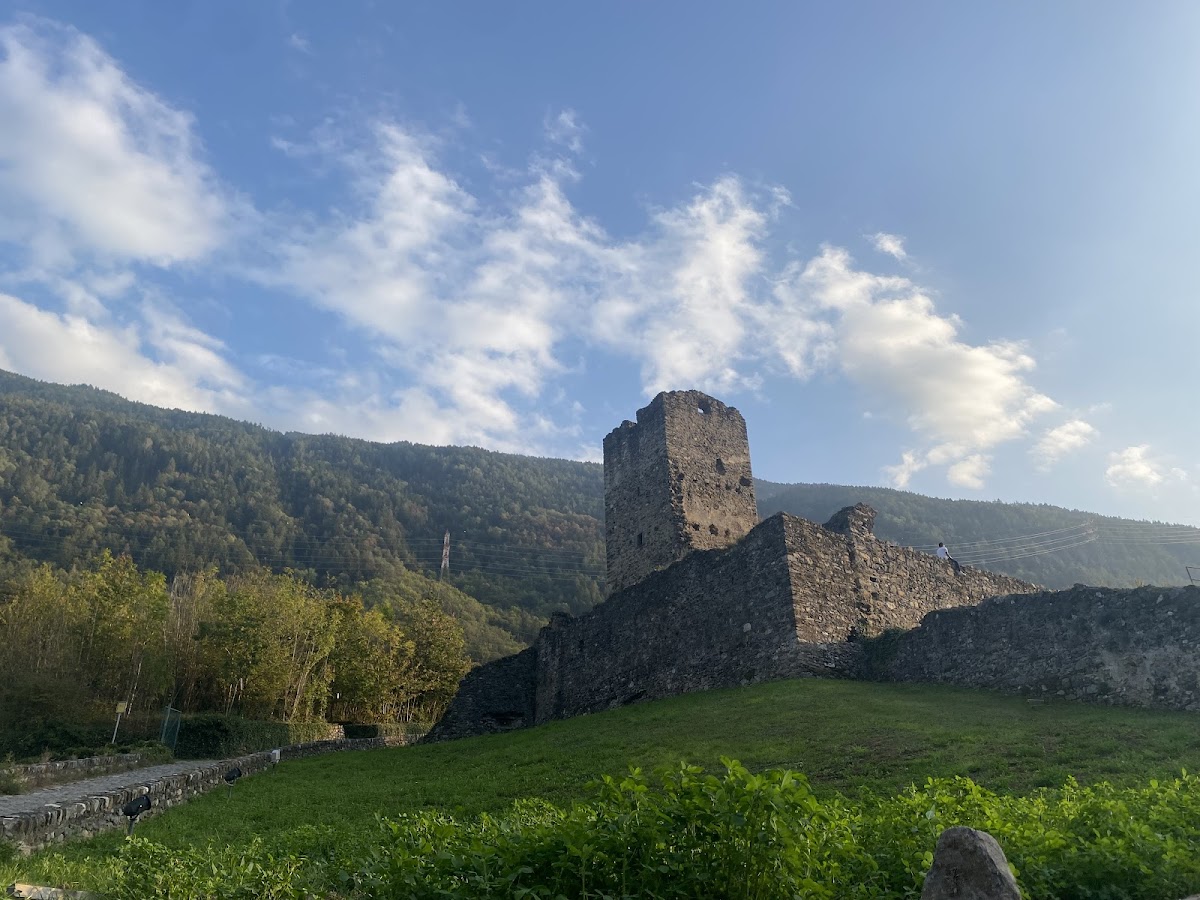
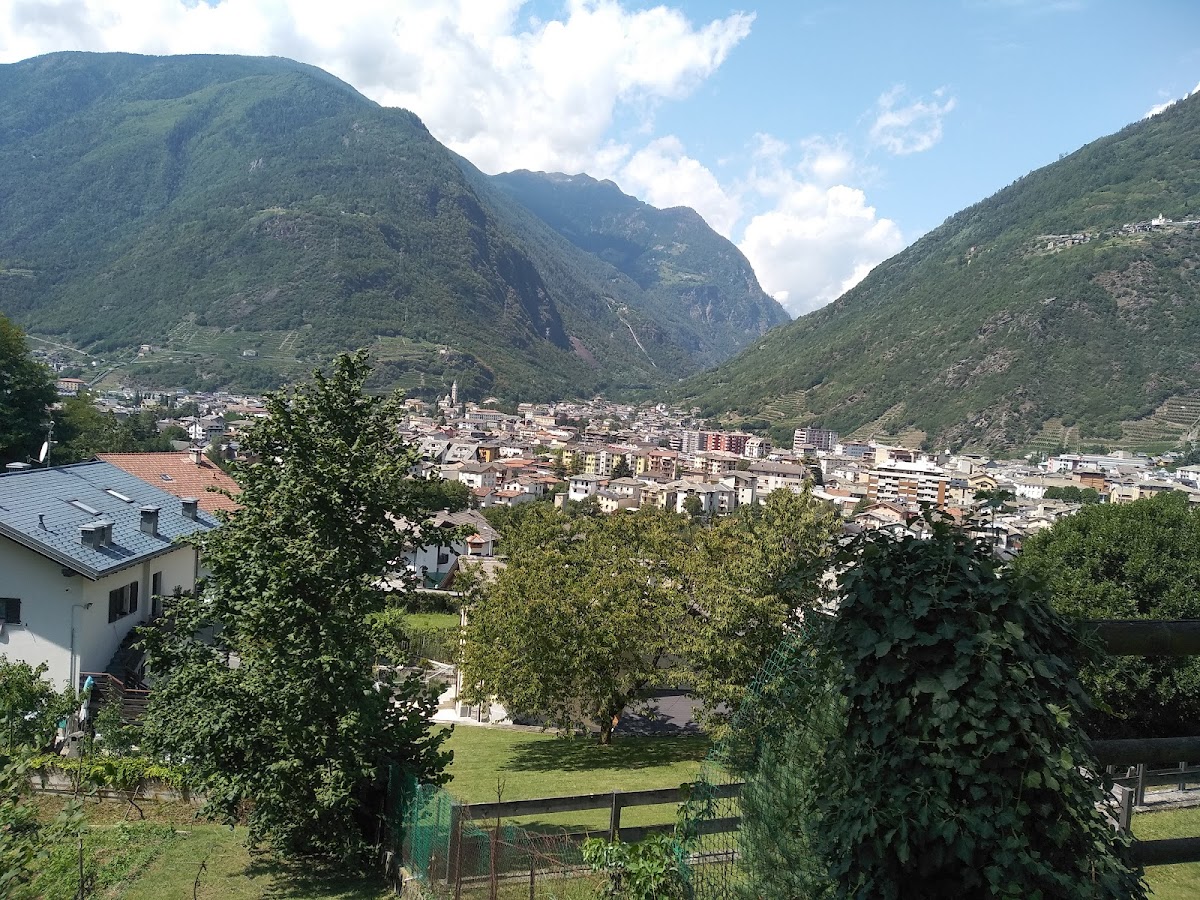
The remains of the Castle of Saint Mary reveal the layout of a hilltop fortress built primarily in stone, consistent with military architecture of the late 1400s. Positioned about 480 meters above sea level, the castle occupies a site accessible within minutes from key points in Tirano, reflecting its role in overseeing the town and its approaches.
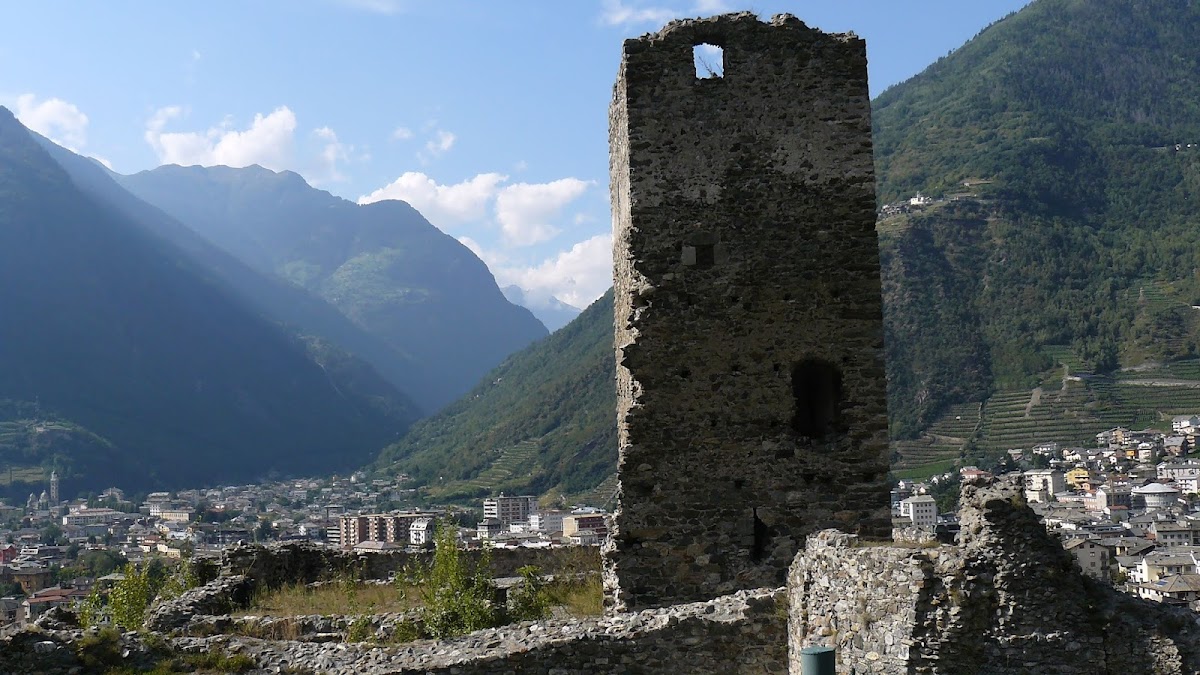
At the core lies a four-story rectangular tower capped with a gabled roof, which formed the inner stronghold. This tower was enclosed by an inner ring wall, traces of which still survive, defining what was known as the “inner castle.” Surrounding this, an outer ring wall featured a semicircular bastion facing the mountain. This bastion includes firing chambers equipped with narrow openings, or gun slits, designed for artillery defense. Such gun ports signify the adaptation of the fortress to evolving military technologies.
Two connecting walls once linked the castle directly to the town’s defenses, creating a narrow defensive courtyard known as a zwinger (or ricetto in Italian). This added layer of defense contributed to the town’s comprehensive fortification system. The town walls themselves extended from the fortress along a slope toward Porta Bormina in the east, then followed a route north to the Adda River, continued west along the riverbank, and ascended back southward to the castle’s elevation.
Surrounding these fortifications were at least ten square defensive towers, of which three remain visible today. These structures formed strongpoints along the walls and helped secure Tirano’s vital position. Though the castle survives only partially restored and in a state of ruin, ongoing renovation efforts aim to preserve its architectural legacy.
No inscriptions or decorative elements have been documented on the site, and the surviving features consist largely of stone walls, towers, and the remains of defensive structures adapted to the use of firearms. Together, these ruins reflect the castle’s original function as a commanding military installation controlling one of the region’s most important routes for trade and warfare during a turbulent period in European history.
Nearby sites