Castel Masegra: A Medieval Castle in Sondrio, Italy
Site at a Glance
- Rating
- 4.2
- Popularity
- Low
- Country
- Italy
- Primary era
- Medieval
- External website
- Open
- Eras represented
- Medieval, Early Modern
- Civilizations
- Duchy of Milan, Holy Roman Empire
- Site type
- Military
- Remains
- Castle
On this page10 sections
History
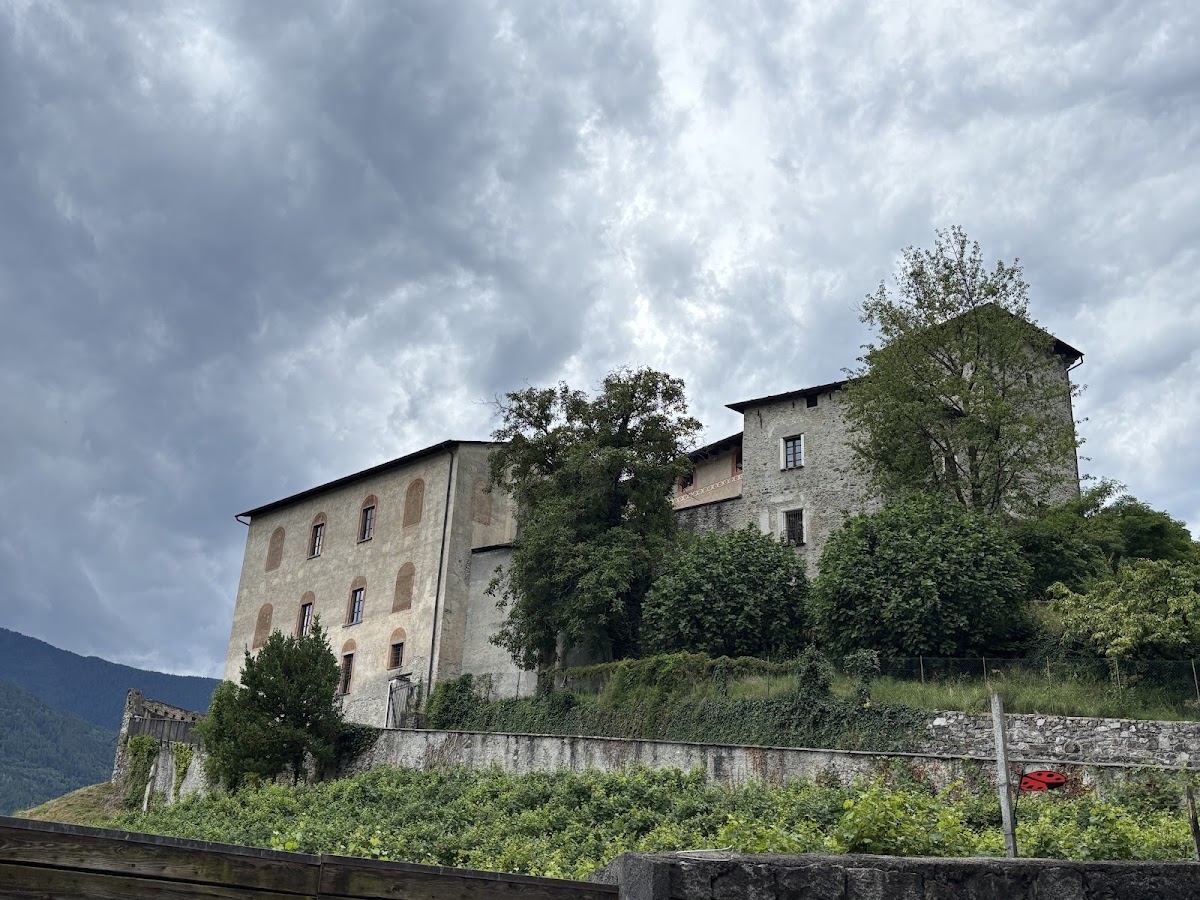
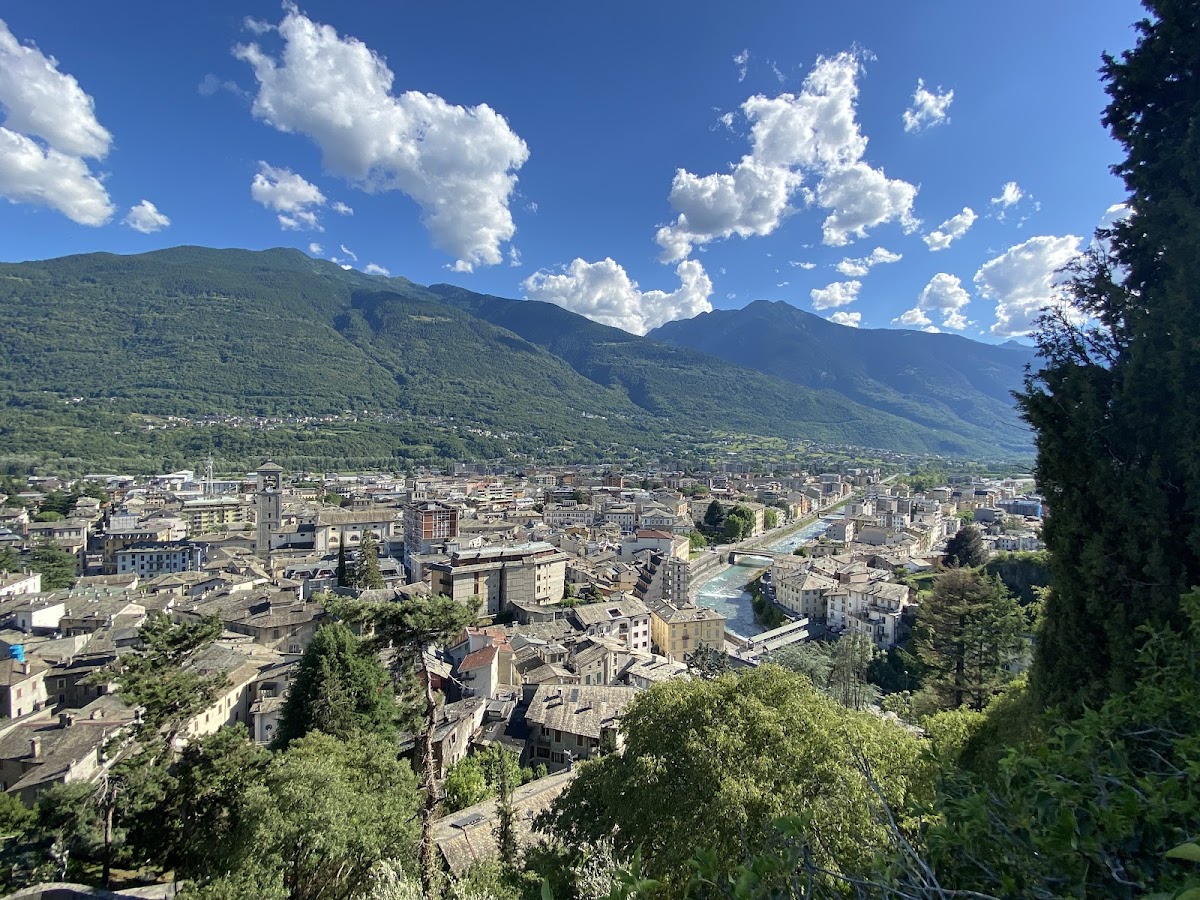
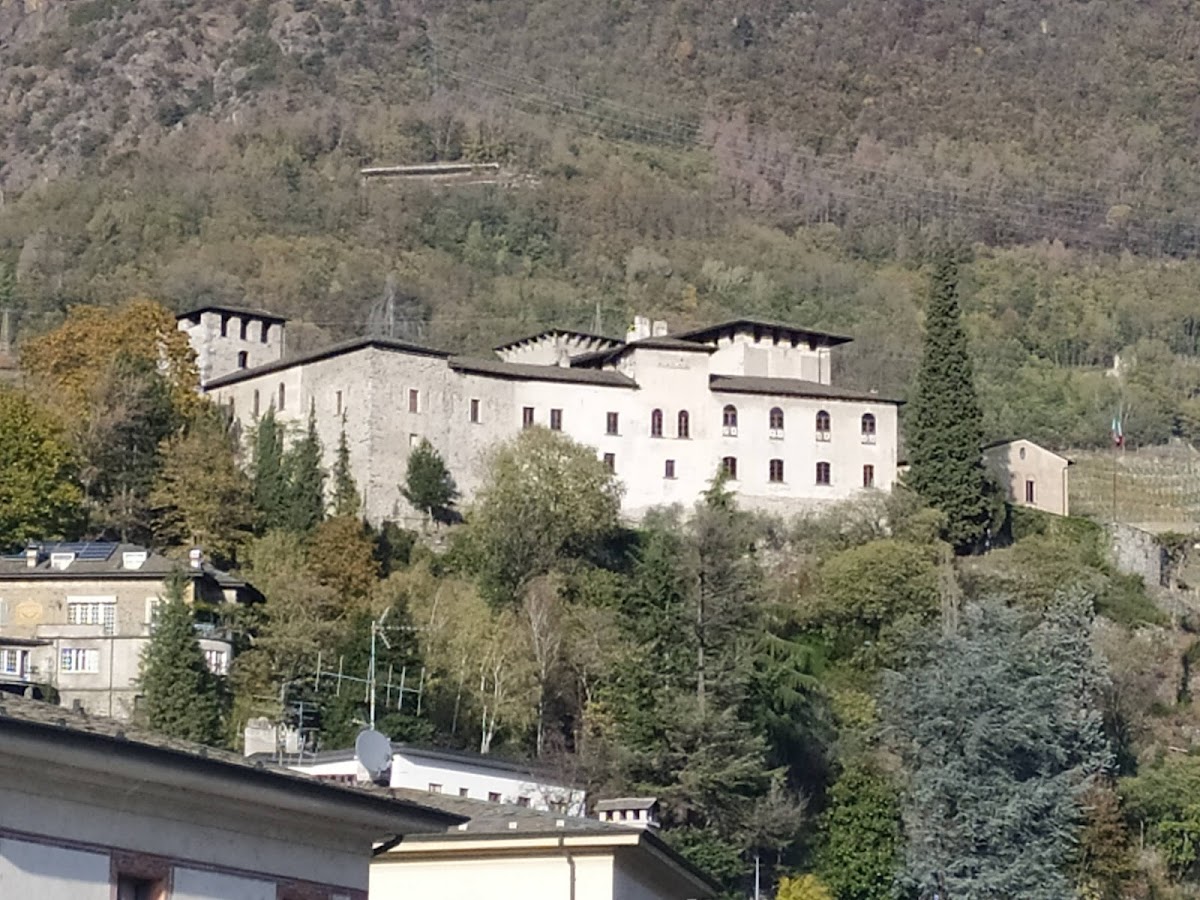
Castel Masegra is a medieval castle in Sondrio, Italy, positioned at the entrance to Valmalenco. Founded for military purposes in 1041 or after 1048, it is attributed to the Ticinese de’ Capitani, or Capitanei, one of the principal feudal families of medieval Valtellina. Its commanding position made it part of the defensive history of the city.
Medieval foundation and feudal ownership
The castle changed hands in the fifteenth century, passing to the Beccaria family of Tresivio in 1436, or possibly in 1433. During the Renaissance, its function became chiefly residential, reflecting a broader transformation from a primarily military stronghold into a residence.
Grisons and Milanese rule
The Grisons, the Swiss ruling power that controlled Valtellina from 1512 to 1797, made Castel Masegra the residence of the powerful Salis family. The castle was also used especially as a wine storehouse. In 1639, the Grisons ordered the dismantling of Valtellina’s fortifications, but Castel Masegra survived because it served as the Salis residence. It is the only one of Sondrio’s three castles to remain.
After Valtellina returned to the Duchy of Milan, the state centered on Milan, the castle passed to the Guicciardi family, who donated it to the state. It was later used as a barracks and then as the seat of the Military District, a military administrative institution, until the 1980s. A historical museum was subsequently established in the former stables, presenting the three centuries of Grisons rule in Valtellina, while the castle also houses a digital museum devoted to Sondrio’s history. Castel Masegra is recognized as Italian national heritage and is undergoing restoration.
Remains
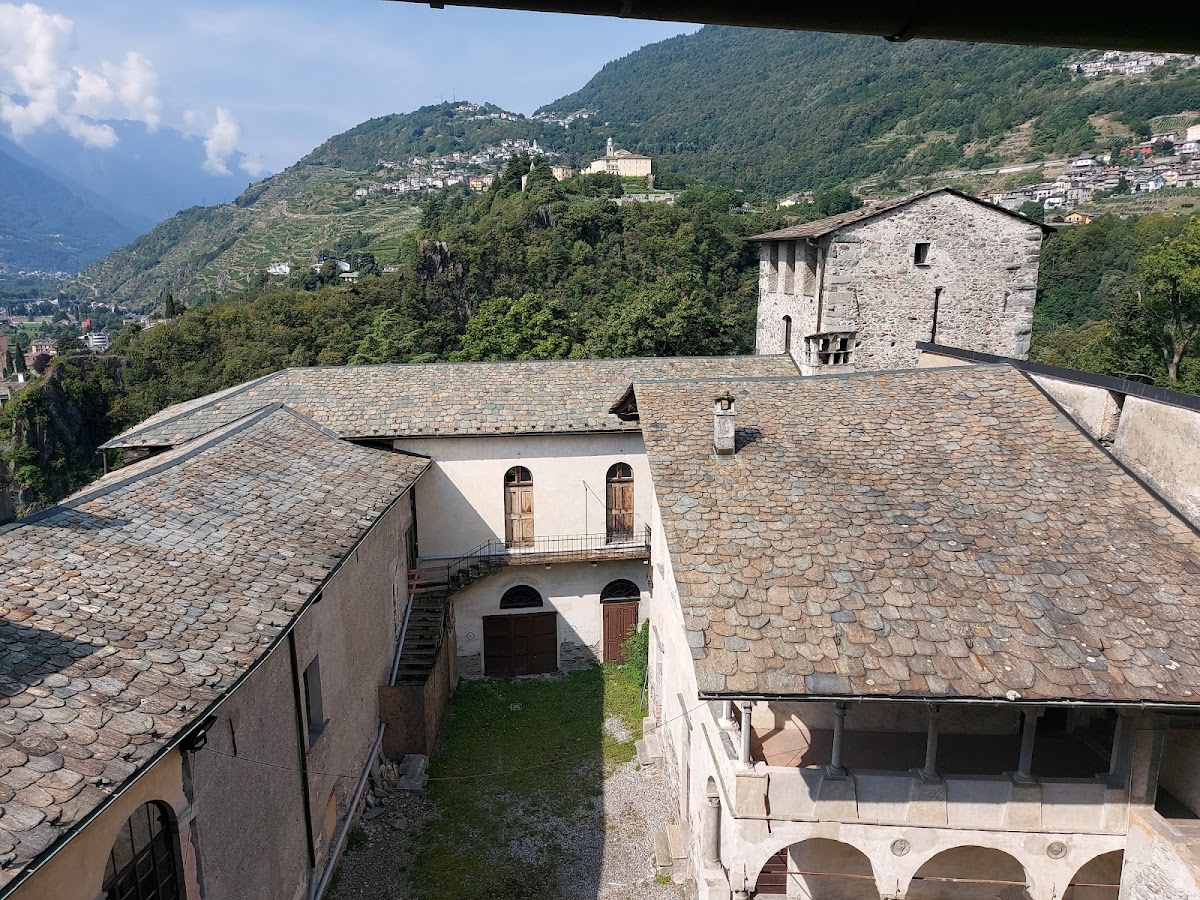
Castel Masegra retains a medieval defensive core together with Renaissance residential alterations and later institutional spaces. The surviving structures occupy the castle’s elevated position above the Mallero, with the medieval towers defining its northeastern and northwestern sides. Access originally came from the west along a narrow rising path, while the present eastern entrance reflects the later needs of the Salis residence and permitted carts to enter.
Medieval defenses and entrances
Surviving towers
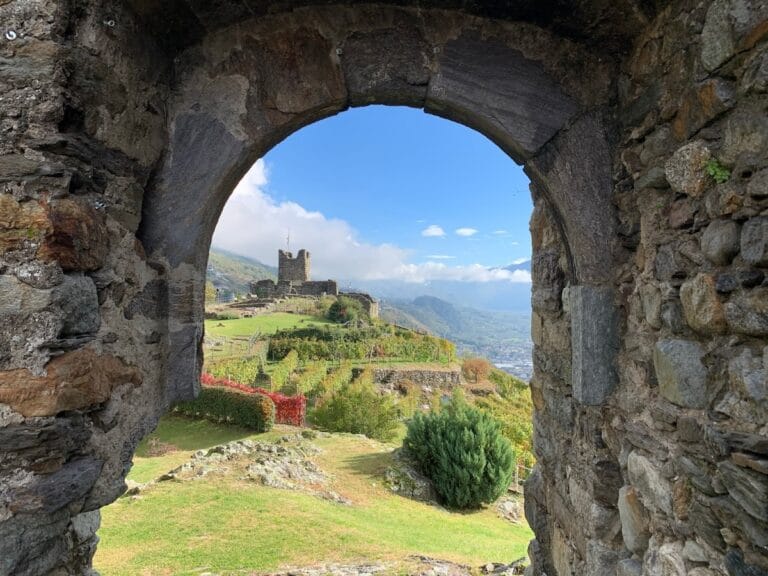
Two towers, on the northeastern and northwestern sides, provide evidence of the castle’s medieval date. They remain the principal surviving elements of its original military character and help define the defensive arrangement of the site.
Castle entrances
The original approach from the west climbed from the Mallero by a narrow path. An entrance portal was built in 1491. The eastern entrance belongs to the period of the Salis family and was adapted for carts, showing how access changed as the castle’s use became more residential.
Renaissance residence and later spaces
Residential alterations
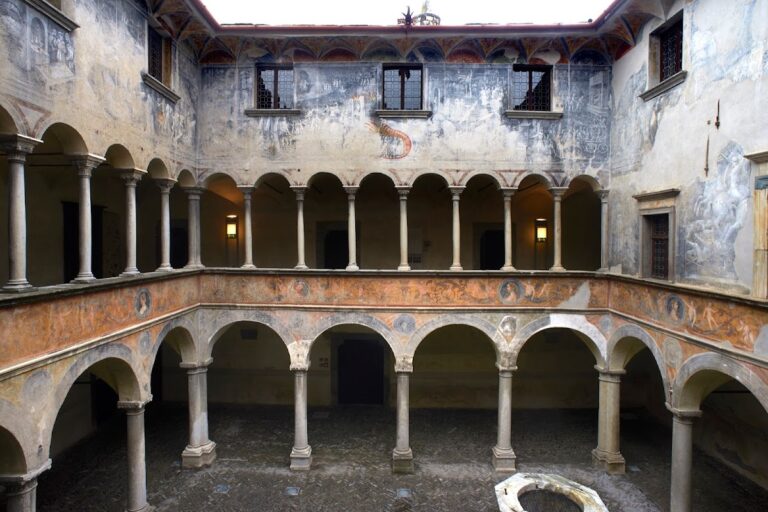
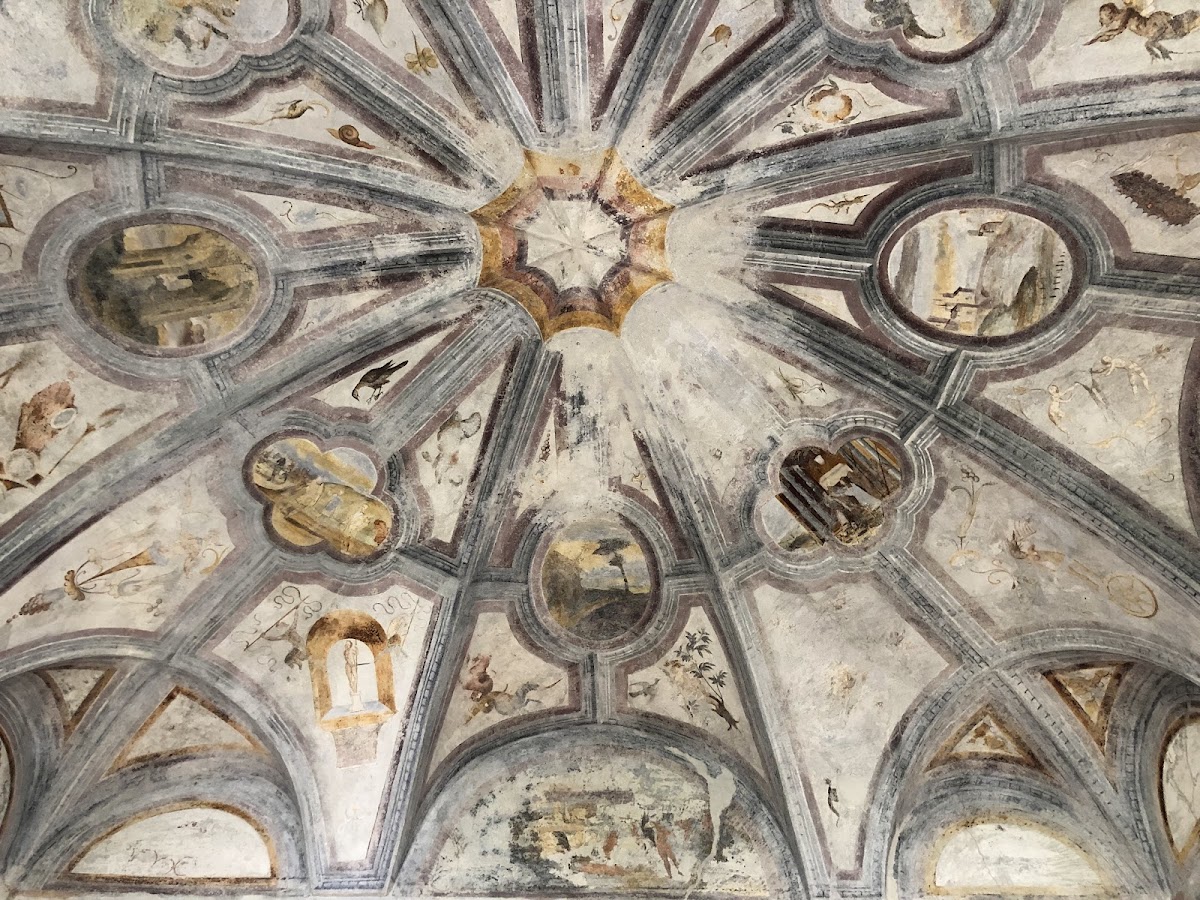
Renaissance changes include a small loggia, an open-sided gallery, and the conversion of the southern tower into a dovecote, a room or structure for keeping pigeons. A finely decorated room contains frescoes and an umbrella vault, whose curved surfaces radiate from a central point in a segmented form.
Former stables
The former stables now contain the premises of the historical museum. This surviving part of the complex connects the castle’s later working spaces with its present interpretation of Valtellina’s political history.
Nearby sites