Castle of Moeche: A Medieval Fortress in Spain


Visitor Information
Google Rating: 4.6
Popularity: Low
Google Maps: View on Google Maps
Official Website: moeche.gal
Country: Spain
Civilization: Unclassified
Remains: Military

History
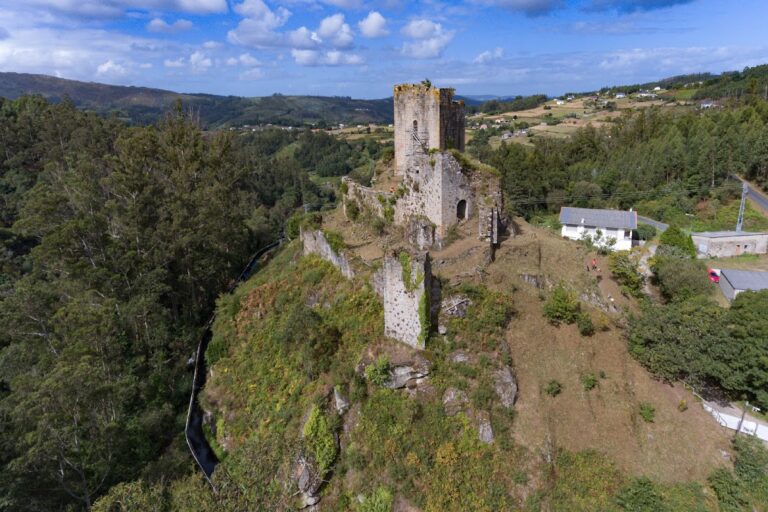
The Castle of Moeche is a medieval fortress situated in the municipality of San Xurxo de Moeche in present-day Spain. It originated in the 14th century, constructed during a period when noble families, including the Valcárcel and Andrade, held significant dominion over the region. Through marriage alliances, ownership later passed to the Osorio family, prominent local aristocrats.
The site on which the castle stands reveals an even longer history of fortification, with archaeological evidence indicating several building phases predating the current structure. Before the late 15th century, an earlier defensive building occupied the location, part of which was destroyed in 1467 during the Second Irmandiña Revolt. This mid-15th century uprising involved local commoners, known as irmandiños, who rebelled against the abuses of nobles like Pedro Álvarez Osorio. During this revolt, the castle was stormed and demolished by the rebels as a symbol of noble oppression.
Following the defeat of the irmandiños, Pedro Álvarez Osorio undertook reconstruction and expansion of the fortress in the late 15th century. Notably, prisoners captured from the rebellion were employed as laborers in rebuilding what developed into the current castle. This reconstruction reinforced the castle’s role as both a stronghold and noble residence.
Even before the 15th century conflicts, the location had seen military action tied to wider Castilian civil strife. After the Battle of Montiel in 1369, figures such as Henrique II of Castile, the French commander Bertrand du Guesclin, Fernán Pérez de Andrade, and King Pedro I “El Cruel” were involved in engagements connected to the castle’s vicinity. The eventual death of Pedro I at the site is a historically significant event associated with the fortress.
Since 1980, the castle grounds have hosted the Festival Irmandiño, an annual event commemorating the 15th-century revolt. The festivities include reenactments and traditional music, reflecting the castle’s enduring place in local cultural memory.
Remains
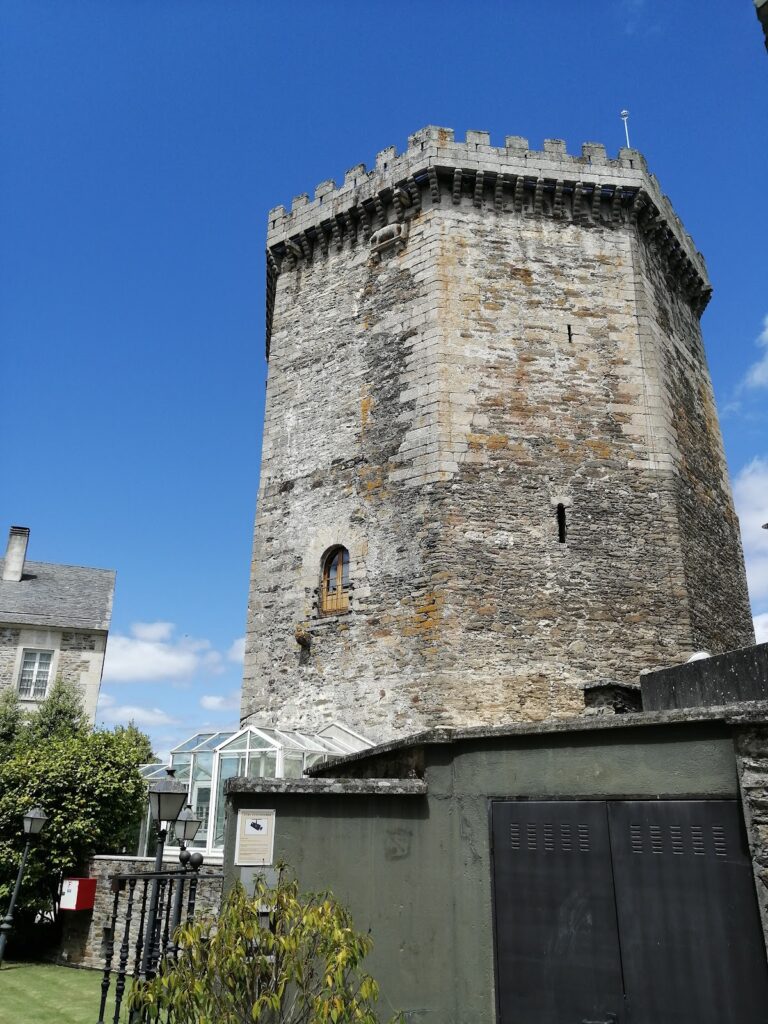
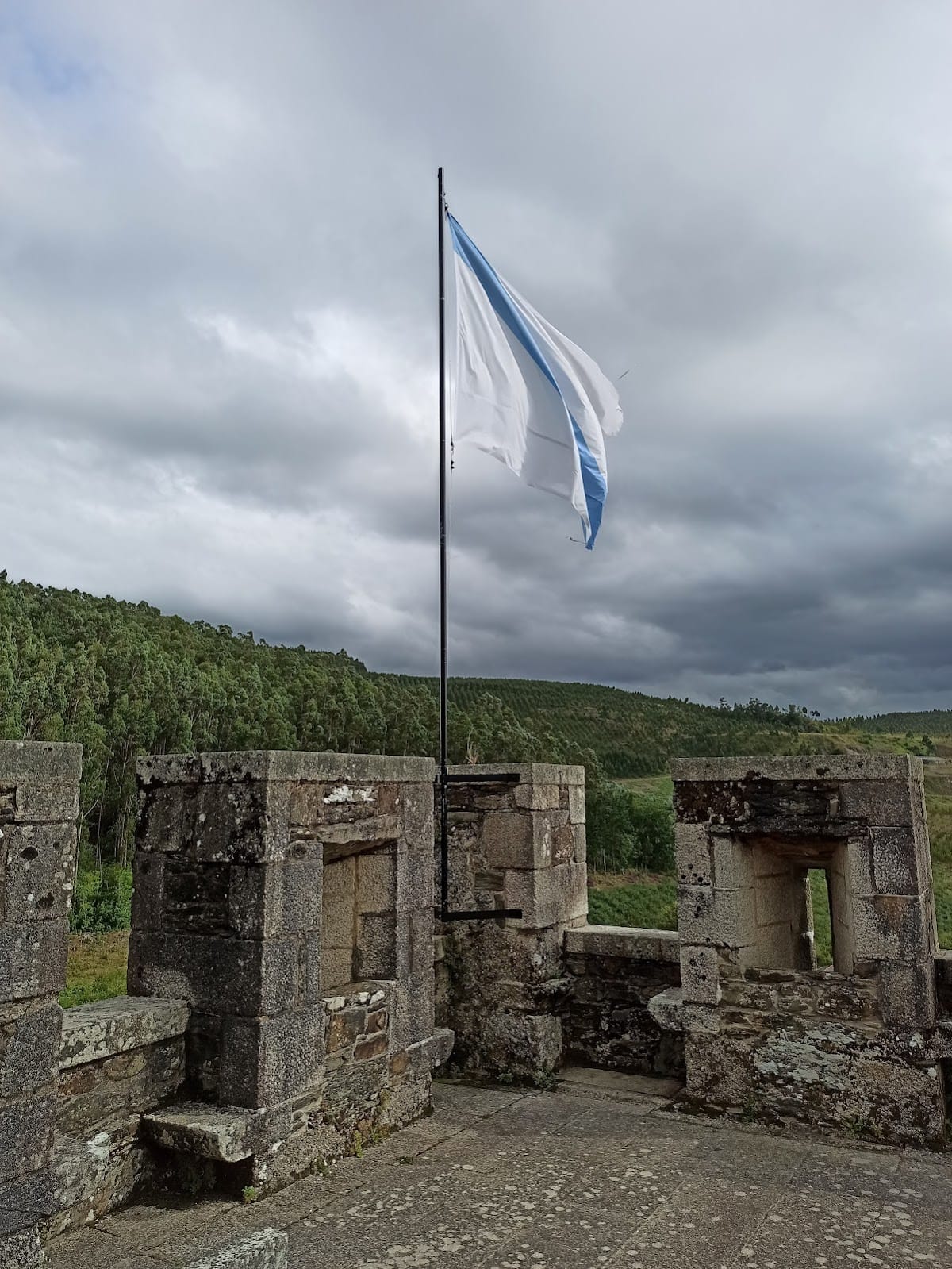
The Castle of Moeche occupies an irregular octagonal layout, surrounded by a shallow moat that marks its perimeter. This design combines elements intended for defense with residential spaces befitting a noble household. The primary construction material consists of schist rubble masonry, with finely cut stone blocks, known as ashlar, forming the corners, arches, and battlements, creating a sturdy and visually defined structure.
At the heart of the complex stands a prominent square keep, also called the tower of homage, reaching approximately 18 meters in height. The keep’s walls are about four meters thick and pierced with narrow arrow slits on the outside, allowing defenders to shoot while minimizing exposure. Internally, wider openings face the courtyard. The tower is divided into three levels with wooden floors: the ground floor probably served as a storage space, the second level functioned as a prison, and the top floor provided a refuge for the lords, with direct access onto the central courtyard.
A circular turret is positioned at the northern corner of the keep, housing a spiral staircase which provides access from the courtyard to the defensive walkway or battlements, locally called the adarve. This arrangement facilitated movement and defense during potential attacks.
The keep connects to the outer walls that enclose the courtyard, containing various rooms dedicated to the castle’s daily operations. These include spaces once used as servants’ quarters, an armory, dining hall, and stables. The stables building now serves as the Castle of Moeche Interpretation Center, offering insights into the site’s history.
The main façade of the keep is decorated with three heraldic shields carved in stone. One bears the coat of arms of the Duke of Arjona, while the others display the crests of Pedro Álvarez Osorio and his wife Beatriz de Castro, signifying their ownership and influence during the castle’s late 15th-century reconstruction.
Today, the castle is fully restored, preserving these architectural features that reflect its complex history from medieval noble residence to fortress and symbol of regional conflict.
Nearby sites