Castillo de Santa Cruz: A Coastal Fortress in Spain

Site at a Glance
- Rating
- 4.6
- Popularity
- Medium
- Country
- Spain
- Primary era
- Early Modern
- Eras represented
- Early Modern
- Civilizations
- Spanish
- Site type
- Military
- Remains
- Castle
On this page10 sections
History
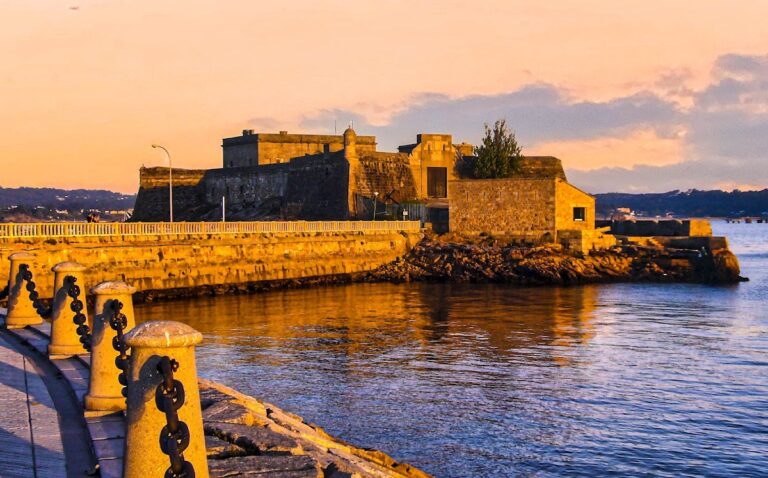
Castillo de Santa Cruz is a coastal fortress on Santa Cruz Island at Porto de Santa Cruz in Oleiros, Spain. Construction began in 1594 or 1595 to defend the inlet of La Coruña, after the English commander Francis Drake approached the island on 4 May 1594 and landed at Oza Beach while planning an attack on the city.
Foundation and early artillery
Diego das Mariñas, Captain General of Galicia, ordered the work after Drake had sailed close to Santa Cruz Island to avoid La Coruña’s artillery. The plans were prepared by the military engineer Pedro Rodríguez Muñiz. The fortress formed part of a wider coastal defense system intended to control access to the inlet.
In 1607, the castle possessed four artillery pieces: a bronze three-quarter culverin, two bronze sakers, and a cast-iron gun. A culverin was a long early modern cannon, while a saker was a lighter type of gun. The claimed range of nearly two leagues for the culverin was regarded as exaggerated. The defenses were completed and armed with artillery in 1640. One cannon known as “O Barraco” was reportedly able to fire about 10 kilometers.
Seventeenth-century defenses
During the seventeenth century, the fortress’s defenses consisted of several batteries distributed around the position rather than a single concentrated artillery platform. This arrangement helped protect the approach to La Coruña.
In 1639, a Franco-Dutch fleet attacked La Coruña under Henri d’Escoubleau de Sourdis, the archbishop and admiral of Bordeaux. The coastal batteries associated with Santa Cruz played an important part in repelling the attack and prevented the fleet from advancing into the inlet.
Reform and expansion
By the middle of the eighteenth century, the fortress had fallen into an advanced state of neglect. During Maximiliano de la Croix’s governorship of Galicia, Antonio de Gaver was commissioned to prepare plans for its reform. Proposals made between 1752 and 1758 included separate batteries for three and four guns.
From 1784, the works were enlarged during Martín Cermeño’s tenure as Captain General of Galicia. New bastions, pavilions, and parapets were added. A bastion is a projecting fortified platform designed to support fire along walls or across neighboring defensive positions. Fernando de Gaver’s plans portrayed the fortress in 1792, and Miguel de Hermosilla proposed further improvements in 1799.
By 1799, the lower battery held four guns. In the upper part of the fortress, an earlier three-gun battery had been replaced by a bastion arranged for six guns in two groups of three. The defenses were intended to hinder vessels entering the port and to force ships that wished to bombard La Coruña to neutralize both Castillo de Santa Cruz and the Mera battery first.
Abandonment and changing uses
A description from 1847 characterized the fortress as an eight-gun battery protected by a simple and insecure parapet, with a weak rear wall enclosing the gorge, or back of the fortification. The position stood on unstable slate-and-earth ground that the sea could undermine, and high tide completely isolated the island. By then, the castle had lost much of its strategic value.
After the military abandoned it, José Quiroga Pérez de Deza acquired the property and converted it into a summer residence. He was the husband of the writer Emilia Pardo Bazán. In 1939, their daughter Blanca Quiroga donated the castle to the army for use by the Colegio de Huérfanos de Caballería as a summer colony for war orphans. This function continued until 1978, after which the property again stood unoccupied.
Protection and conservation
The Municipality of Oleiros acquired the castle in 1989 for environmental-education purposes. In 2001, the Center for University Extension and Environmental Dissemination of Galicia, known as CEIDA, was established there through an agreement involving the Galician environmental authority, the University of La Coruña, and the municipality. CEIDA is devoted to university extension and environmental education.
Several associations called on the Ministry of Defence in 1982 to recognize the castle as a Historic-Artistic Monument and restore it. The castle has been protected as a Spanish Site of Cultural Interest in the monument category since 17 October 1994. Between 2009 and 2011, conservation work consolidated the walls and repaired damage caused by rainwater.
Remains
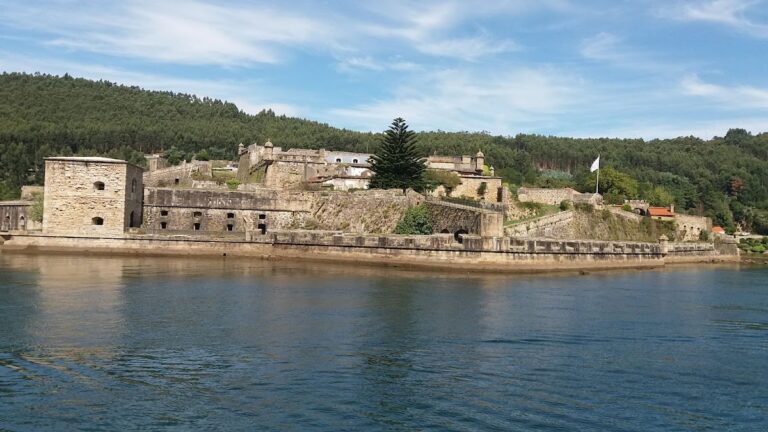
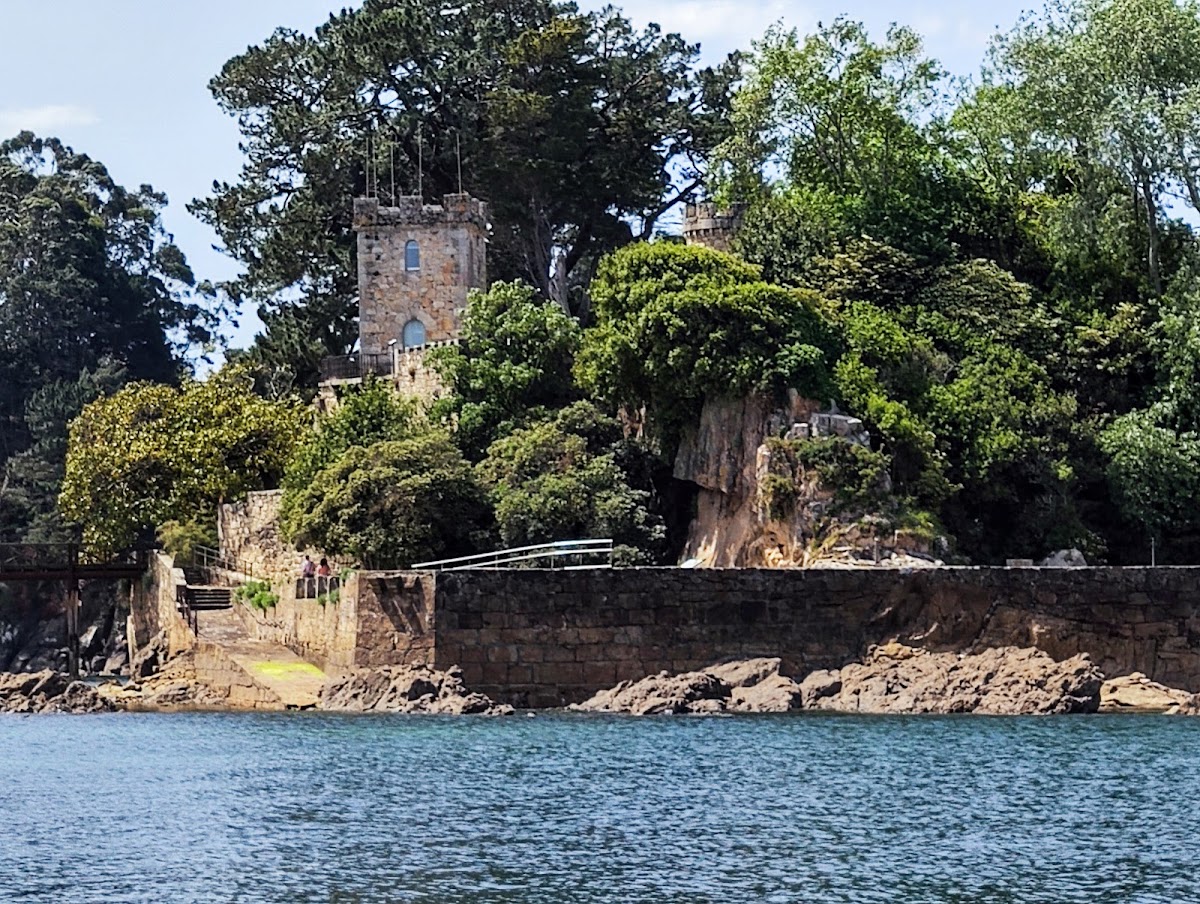
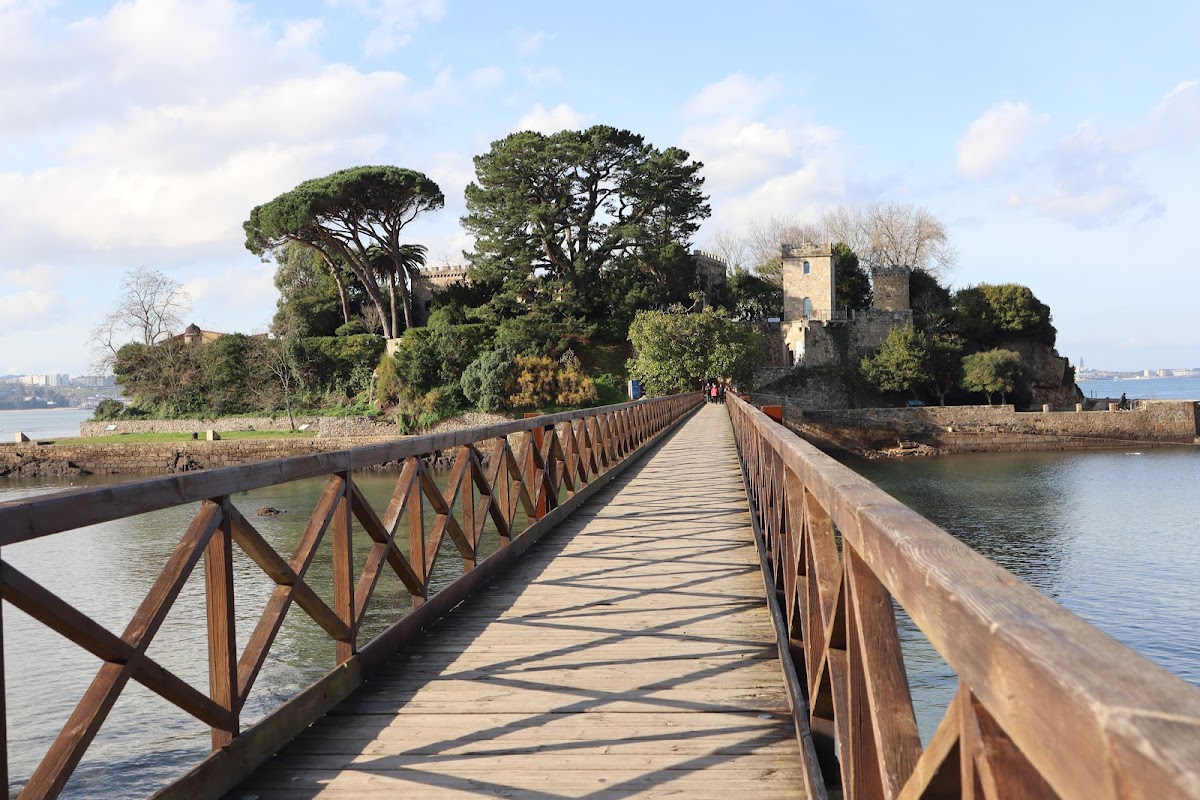
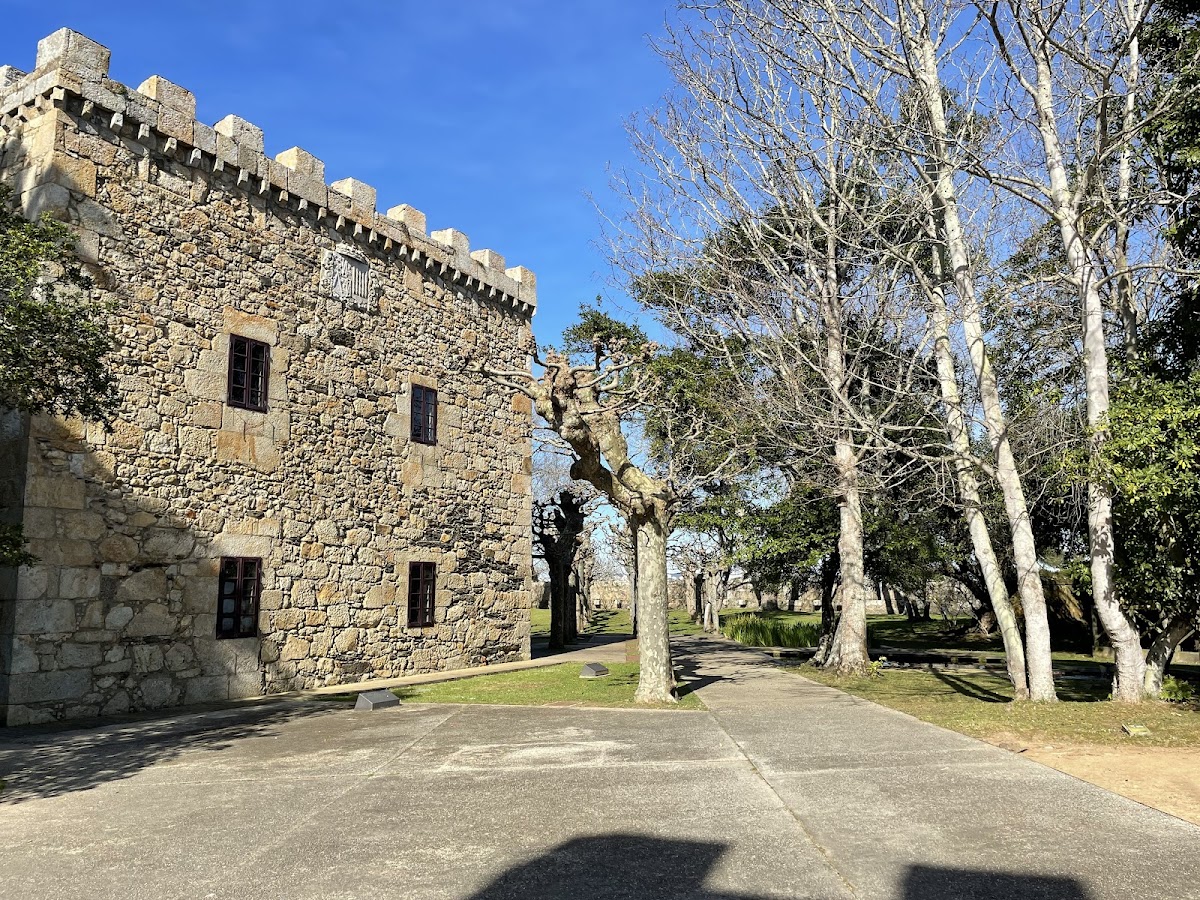
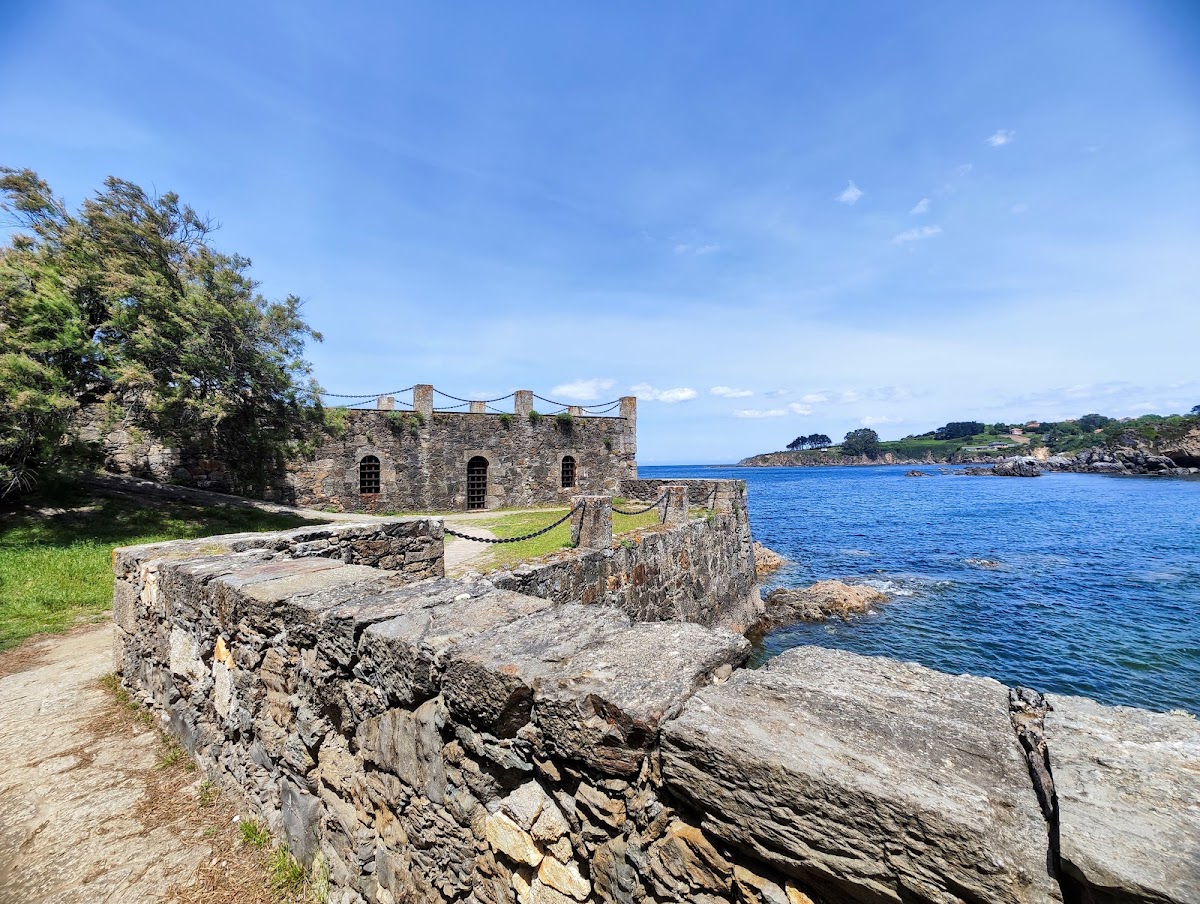
Castillo de Santa Cruz occupies Santa Cruz Island in the Porto de Santa Cruz area of Oleiros. The surviving complex is a coastal fortification shaped by its defensive role and by the exposed island setting. Its architectural elements include square and round towers, a principal building, the rear facade, and associated constructions. The fortress is shown in relation to the surrounding coastal cliffs and Portocovo beach, as well as in its isolated position at high tide.
Artillery defenses
The physical arrangement reflects successive changes in artillery practice. The seventeenth-century defenses were dispersed among several batteries. Eighteenth-century reform proposals introduced batteries for three and four guns, while later construction added bastions, pavilions, and parapets. The 1799 layout placed a four-gun battery in the lower section and a six-gun bastion above it, replacing an earlier three-gun position.
The 1847 defensive arrangement was designed to protect vessels entering the port as they maneuvered into position. Its low protective walls and rear gorge closure formed a relatively simple enclosure around the battery. The surrounding slate-and-earth terrain was unstable and vulnerable to erosion by the sea, a condition that affected the fortress’s physical security.
Buildings and surviving accommodation
The fortress formerly included accommodation for its governor, three or four officers, and approximately 150 to 200 men, together with a small powder magazine. By 1847, only the governor’s residence and a small guardhouse remained usable. These surviving buildings formed part of the later transformation from military installation to private residence and institutional property.
Walls and restoration
The walls and associated structures preserve evidence of the fortress’s successive alterations. Restoration between 2009 and 2011 consolidated the masonry and addressed deterioration caused by rainwater, helping retain the visible form of the coastal complex.