Castle of Los Fayos: A Historic Cave Fortress in Aragón, Spain


Visitor Information
Google Rating: 4.4
Popularity: Very Low
Google Maps: View on Google Maps
Country: Spain
Civilization: Unclassified
Remains: Military

History
The Castle of Los Fayos stands in the municipality of Los Fayos, Spain, and was constructed during the 12th century by Christian forces under the Kingdom of Aragón. Its foundations rest on a site long occupied by human settlements, starting from prehistoric times, including the Late Bronze Age and Iron Age.
Before the castle’s medieval construction, the hill where it sits had strategic significance. Ancient fortifications existed there from the pre-Roman period, guarding a crucial passage connecting the central Meseta plateau with the fertile Ebro Valley. Notably, local populations utilized an advanced water supply system linked to the nearby Turiasu settlement, which was functional until roughly the 2nd century. These earlier communities established the area’s role as a natural stronghold and a link in the regional communication and trade networks.
The castle itself first appears in historical documents dating to 1128, shortly after King Alfonso I of Aragón reclaimed this territory in 1119 during Christian reconquest campaigns. Early records mention a tenente, or military governor, named Sequin, who held the castle until 1131. Throughout the 12th and 13th centuries, the fortress was positioned on a contested frontier between the neighboring kingdoms of Aragón, Navarra, and Castilla. Its control passed frequently due to ongoing political and military conflicts.
During the 13th and 14th centuries, the Castle of Los Fayos continued to serve as both a military bastion and an economic checkpoint, as it dominated toll collection along the route toward Castilla. The castle was actively involved in the War of the Two Peters (1356–1366), a conflict between Aragón and Castilla. It endured sieges and changed possession multiple times during this period. In response to military threats, royal authorities allocated funds for its upkeep, including orders in 1361 to reinforce the main tower against siege engines, though archaeological findings indicate these reinforcements were not fully realized.
By the late 14th century, the castle’s role shifted as it was sold to noble families and incorporated into regional baronies. The dynastic union of Aragón and Castilla in the 15th century reduced the fortress’s strategic importance as a border defense site. As a consequence, the castle was gradually abandoned, especially given its challenging conditions within the cave complex that limited comfortable habitation.
Interest in the site resumed centuries later through archaeological investigations. Starting in the late 20th century and continuing into the 21st, excavations uncovered artifacts spanning from the prehistoric periods to medieval times. Ceramic fragments dating back to the Late Bronze Age and Iron Age confirmed the site’s deep historical roots. In 2017, a nearby Iron Age settlement roughly 2,600 years old was discovered, further illuminating the area’s long-standing human presence. Recognizing its cultural and historical value, the Castle of Los Fayos was declared a protected archaeological site under regional heritage law in 2006.
Remains
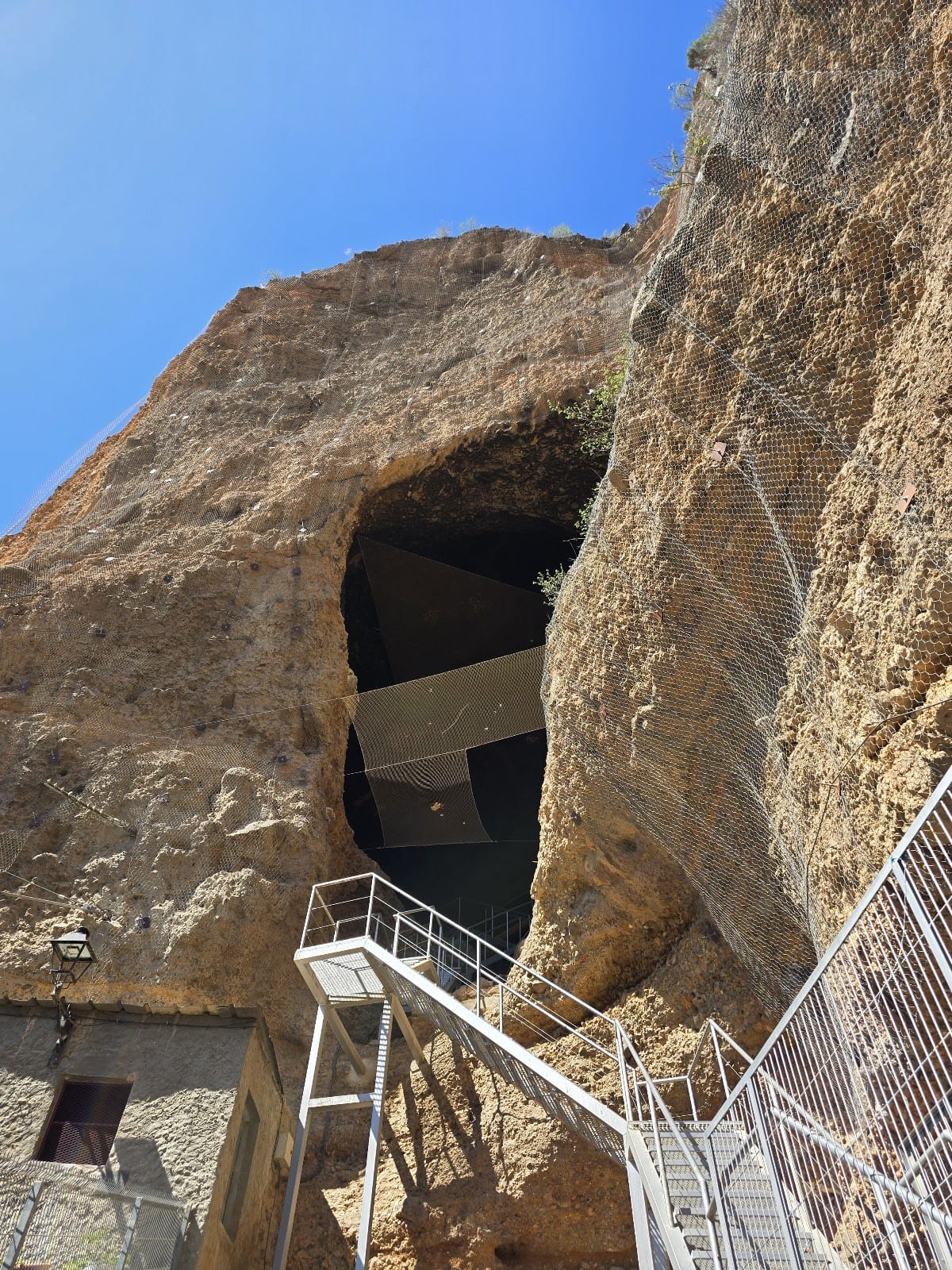
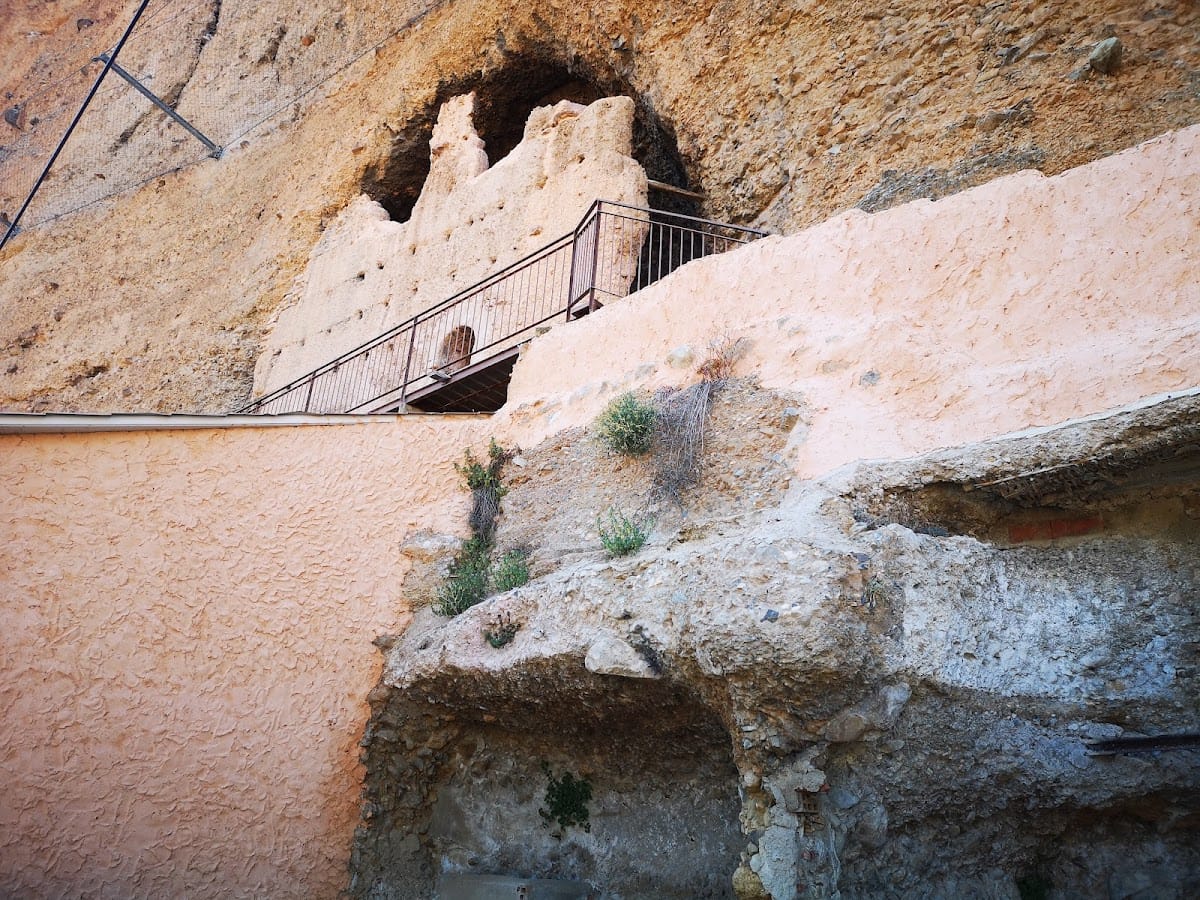
The Castle of Los Fayos is a distinctive example of a cave castle, or Höhlenburg, a rare type of fortification in the Iberian Peninsula that integrates natural and built elements. The main defensive section is positioned inside a naturally occurring cave complex, which was enclosed and secured by a wall made of rammed earth, a technique known locally as tapial. This wall included narrow vertical openings called arrow slits, allowing defenders to shoot projectiles while remaining protected.
Within the cave enclosure, an underground cistern carved into the rock ensured a water supply for the castle’s occupants during sieges. Wooden structures were constructed inside the cave to provide shelter and functional space for defenders. These internal additions highlight the castle’s adaptation to the unusual topography and emphasize its role in sustained defense.
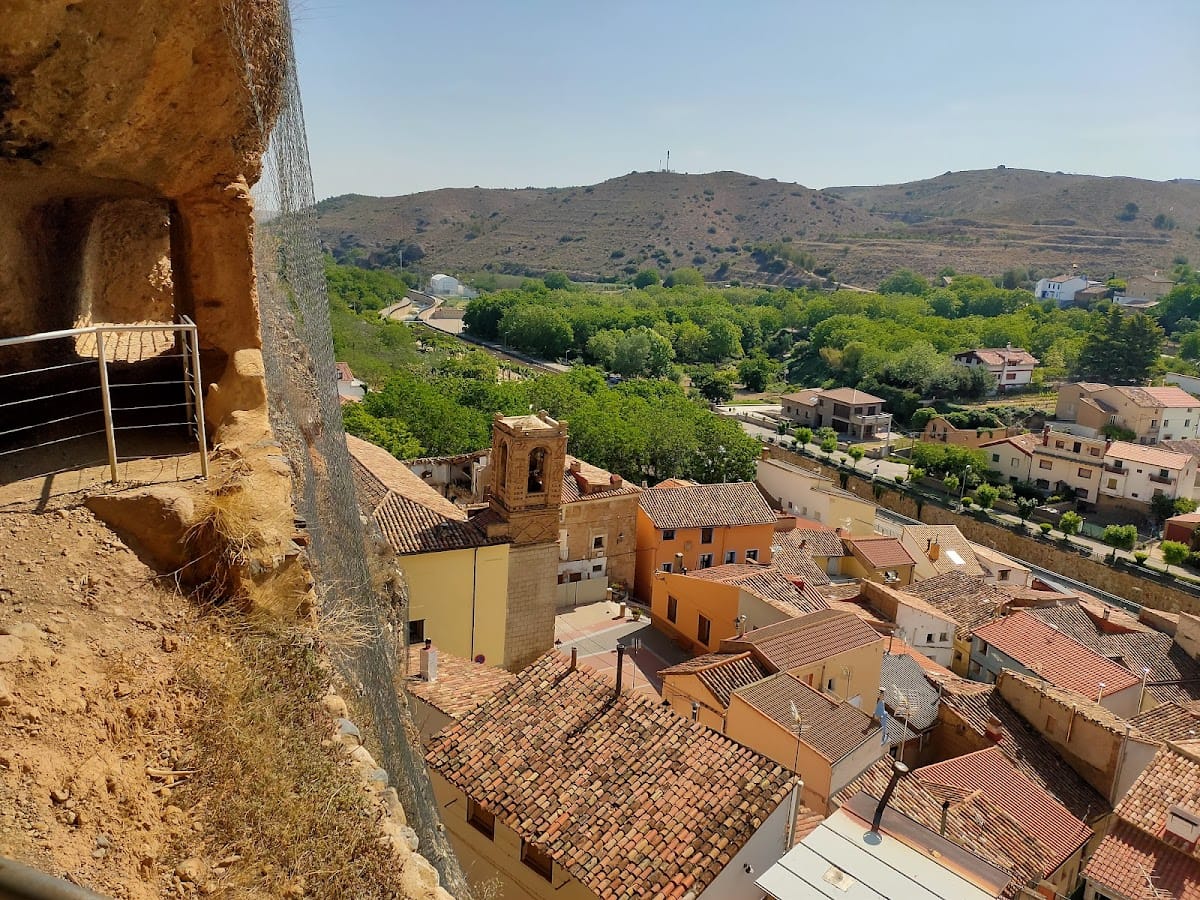
Dominating the site is a large circular tower, or torreón, rising approximately 17 meters above the rocky outcrop on which it stands. This tower functioned as the castle’s main keep and observation point, offering extensive views over the surrounding valley and enabling communication with other defensive positions through visual signals. The tower’s foundations follow a circular plan; access was deliberately limited to a retractable ladder reaching the first floor, preventing easy approach at ground level.
Surrounding the tower were two moats cut directly into the rock, serving as formidable obstacles to attackers. Additional watchtowers complemented the defensive system, positioned to monitor the valley and safeguard the route the castle controlled. One such outpost, known as the torre parda, was demolished amid military actions during the War of the Two Peters.
Archaeological investigations have uncovered medieval remains within the tower dating to the castle’s period of active use, although these are scarce. Outside and around the cave, a variety of ceramic fragments from prehistoric times have been found, confirming prolonged human activity in the vicinity. Today, the castle exists in a ruined state, with only the tower’s remains visible above ground. Restoration efforts carried out in 2009 aimed to consolidate and stabilize the structure, preserving it as an important piece of the area’s historical landscape.
Nearby sites