Castle of Trasmoz: A Medieval Frontier Fortress in Spain



Site at a Glance
- Rating
- 4.1
- Popularity
- Low
- Country
- Spain
- Primary era
- Medieval
- External website
- Open
- Eras represented
- Medieval
- Civilizations
- Crown of Aragon, Kingdom of Navarre
- Site type
- Military
- Remains
- Castle
On this page7 sections
History
Castle of Trasmoz is a medieval fortress in Spain, standing on a frontier contested by the kingdoms of Aragon and Navarre. It is traditionally dated to 1185, when the surrounding territory belonged to Navarre and was being disputed by Aragon.
From contested stronghold to abandonment
The castle later entered the Crown of Aragon, a medieval composite monarchy centred on territories ruled by the Aragonese dynasty, through the mediation of Alfonso II, a king of Aragon. The Crown subsequently granted it to Sancho Pérez de Monteagudo. For generations, the fortress remained one of the most disputed strongholds in the region.
After the dynastic union of the Crowns of Castile and Aragon, Ferdinand II of Aragon conquered Navarre. With the end of the noble disputes that had shaped the castle’s earlier history, the fortress was abandoned. It was no longer occupied by the sixteenth century, and a fire in 1530 caused the keep, the principal fortified tower, to collapse.
Legends and modern preservation
Castle of Trasmoz has long been linked with stories of witchcraft, necromancy, the traditional practice of attempting to communicate with the dead or use supernatural powers, and witches’ sabbaths. Gustavo Adolfo Bécquer recorded one legend in which a necromancer built the castle in a single night with help from beings of the subterranean world.
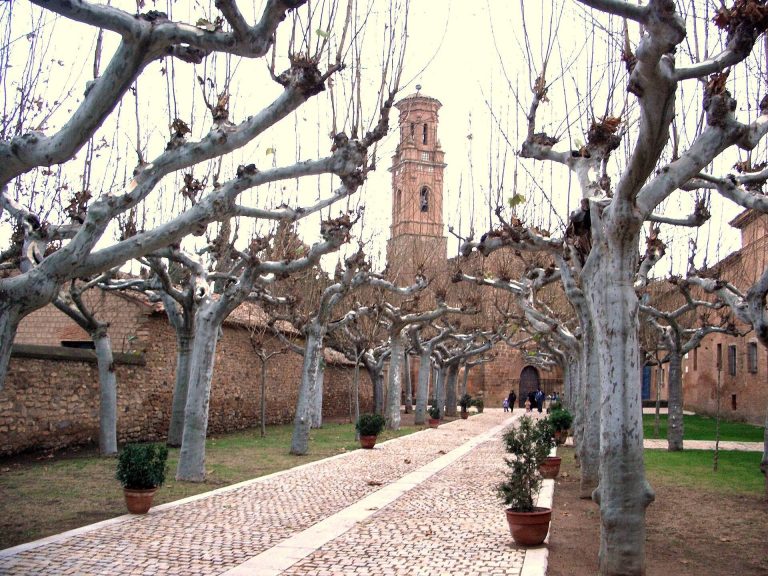
Bécquer collected the legends of Trasmoz in Cartas desde mi celda after living with Casta Esteban, their children, and his brother Valeriano Domínguez Bécquer at the restored guesthouse of the Monastery of Veruela, a medieval Cistercian monastery in Aragon.
Manuel Jalón Corominas acquired the castle and founded the Castillo de Trasmoz Foundation in 1988. The foundation initiated archaeological excavations and restoration work, and the ruins were partially restored in 2002. The castle was listed as a historical monument and designated an Asset of Cultural Interest, a Spanish protected status for places recognized for historical, artistic, or cultural value, in 2006.
Remains
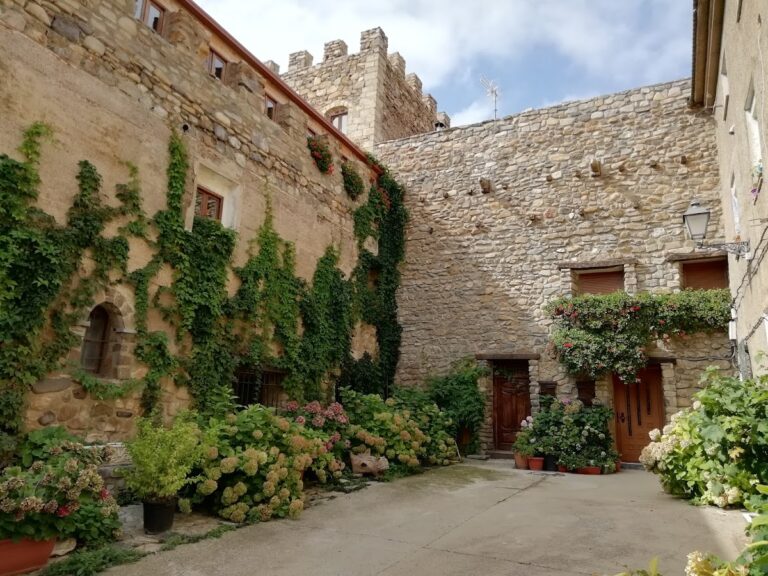
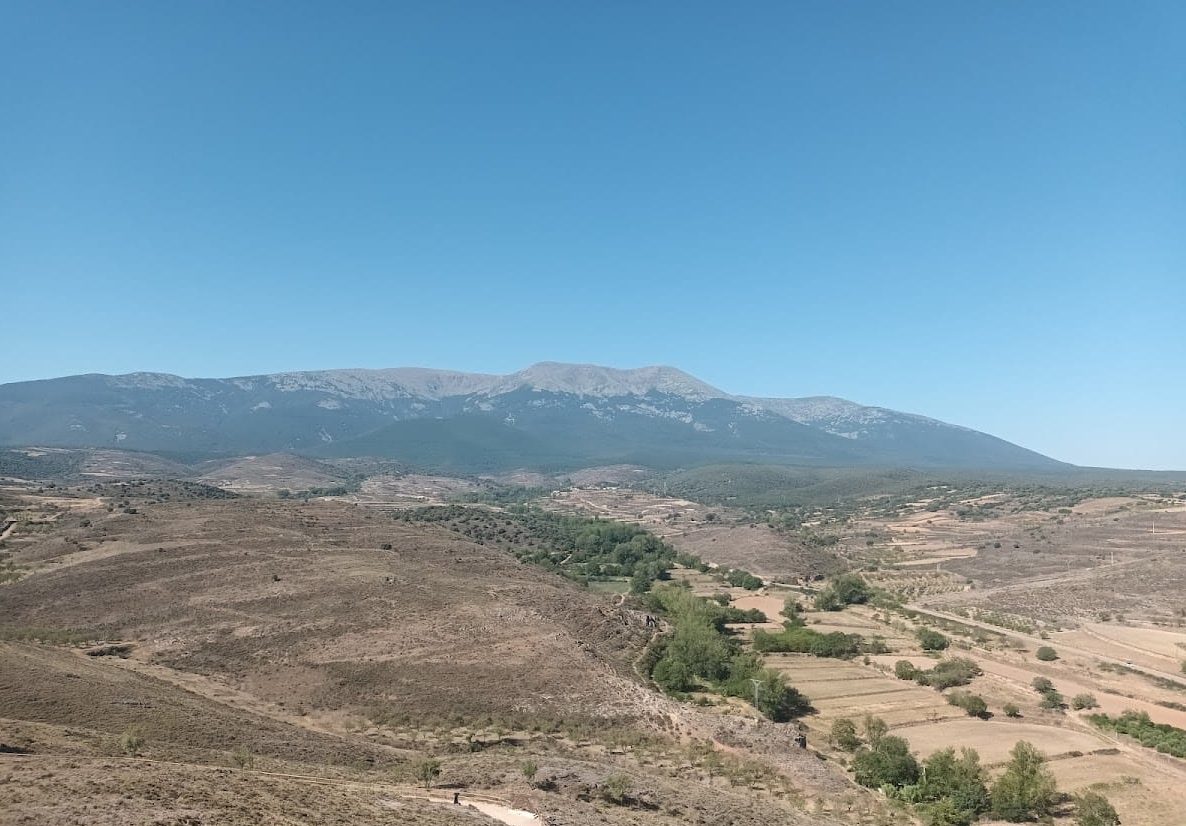
The ruins occupy the summit of a hill in the village of Trasmoz, near the Sierra del Moncayo mountain range in northeastern Spain. The fortress has a hexagonal plan, with towers positioned at its extremities. These towers date from the thirteenth, fourteenth, and fifteenth centuries, reflecting successive phases in the castle’s medieval development.
Fortress structures
Hexagonal enclosure
The surviving fortress is organized around a six-sided enclosure. Towers at the extremities define its perimeter and belong to different medieval periods, from the thirteenth through the fifteenth century. The castle’s position on the hilltop forms part of its defensive setting.
Central keep
A square keep stands at the centre of the castle and is its oldest surviving element. The tower was formerly crowned with battlements. The fire of 1530 caused its collapse, leaving the central structure among the principal remains of the ruined fortress.