Castle of Talamantes: A Medieval Rock Fortress in Spain


Site at a Glance
- Rating
- 4.2
- Popularity
- Very Low
- Country
- Spain
- Primary era
- Medieval
- Eras represented
- Medieval
- Civilizations
- Crown of Aragon
- Site type
- Military
- Remains
- Castle
On this page7 sections
History
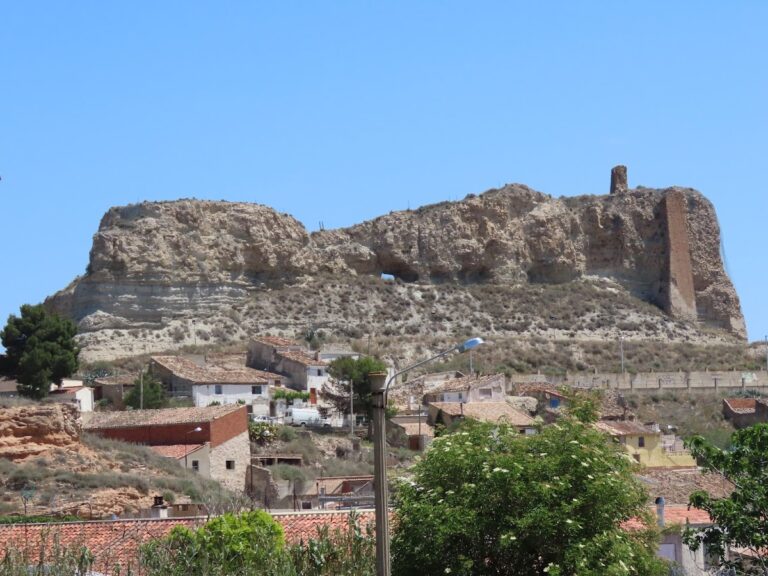
The Castle of Talamantes is a medieval fortress in Spain, above the town of Talamantes. Built in 1175 on a route between the Kingdoms of Castile and Aragon, it formed part of a defensive system with the castles of Ferrera and Ferrellón, controlling passage where the Valdeherrera and Valdetreviño ravines meet.
Templar and Hospitaller Control
In 1210, the castle was transferred to the Order of the Temple, a medieval religious-military order that administered fortified properties and commanderies, or administrative and economic districts governed by a commander. The Templars held Talamantes as a commandery until their suppression. It then passed to the Order of St John of the Hospital, another religious-military order that inherited many Templar properties and later became associated with the Knights of Malta. The Hospitallers retained the castle until 1780, as they also did at the nearby Castle of Añón.
Heritage Protection
The Castle of Talamantes is included in Aragón’s register of Assets of Cultural Interest under the second additional provision of the 1999 Law on Aragón’s Cultural Heritage. The designation was formally resolved on 17 April 2006 and published on 22 May 2006.
Remains
Fortress Layout
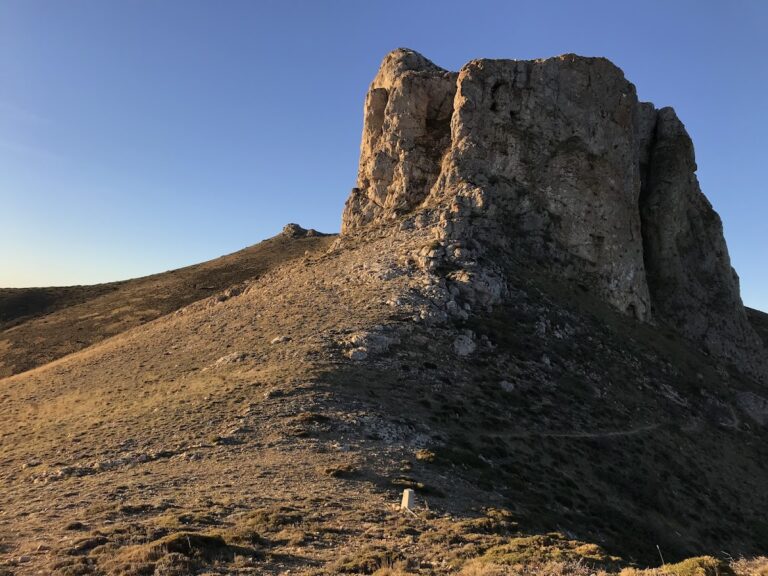
The castle is a small rock fortress built in masonry on the crest of a rocky height on Mount Silla above Talamantes. Its elevated position made access difficult. The elongated defensive plan follows the rocky summit, while the collapse of the ground caused the complete loss of the south wall and deformed the courtyard.
Northern Defenses
The north wall survives in relatively good condition. It retains a projecting tower, a wall-walk, which is a passage along the top of a defensive wall, and battlements, the raised notched parapets used for protection. Arrow slits remain in the wall as well.
Central and Western Towers
A large tower remains visible near the center of the castle. Its interior is no longer enclosed, and its upper termination has been lost. In the western part of the fortress, the keep is a square tower measuring approximately six metres on each side. Its height has been reduced, the structure is ruinous, and its doorway has disappeared.