Castle of Les Torrocelles: A Historic Fortification in Lucena del Cid, Spain


Visitor Information
Google Rating: 4.5
Popularity: Low
Google Maps: View on Google Maps
Country: Spain
Civilization: Unclassified
Remains: Military

History
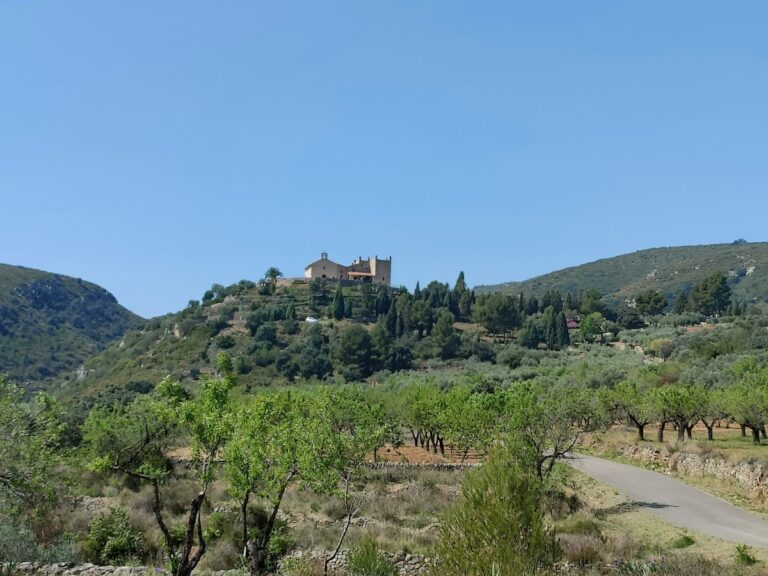
The Castle of Les Torrocelles is situated in the municipality of Lucena del Cid, Spain. Its origins date back to the period of Muslim rule on the Iberian Peninsula, indicating it was initially constructed by Islamic inhabitants as a fortified outpost.
During the Muslim era, Les Torrocelles, alongside the nearby castle of Atzeneta, formed an advanced defense system within their districts. These castles acted as frontier outposts, protecting the territories associated with the larger fortresses of Alcalatén and Culla. Their positioning at the end of a narrow valley that connects Lucena and Atzeneta highlights their strategic military importance in controlling movements through this corridor.
Following the Christian Reconquista, the castle underwent significant changes, reflecting its role in the shifting political landscape. Its current form corresponds closely to early medieval designs, likely developed during the initial phase of Christian efforts to reclaim territory. Over time, multiple expansions and remodeling efforts altered the site, contributing to its varied architectural appearance found today.
In addition to its military function, the site also included a religious structure, a chapel or hermitage, which underlines the intertwined nature of military and spiritual roles in medieval complexes. This chapel continues to hold relevance in the present day, serving as a station for the Pilgrims of Les Useres, maintaining its spiritual significance well beyond the medieval period.
Remains
The Castle of Les Torrocelles occupies roughly 500 square meters at a single-level mountain fortress set on an irregular trapezoidal plan. Its layout reflects defensive priorities with four surrounding curtain walls made of simple limestone, constructed using local, unworked stone arranged in a herringbone pattern bonded with mortar. This modest construction method points to practical building techniques adapted to local resources and the site’s military function.
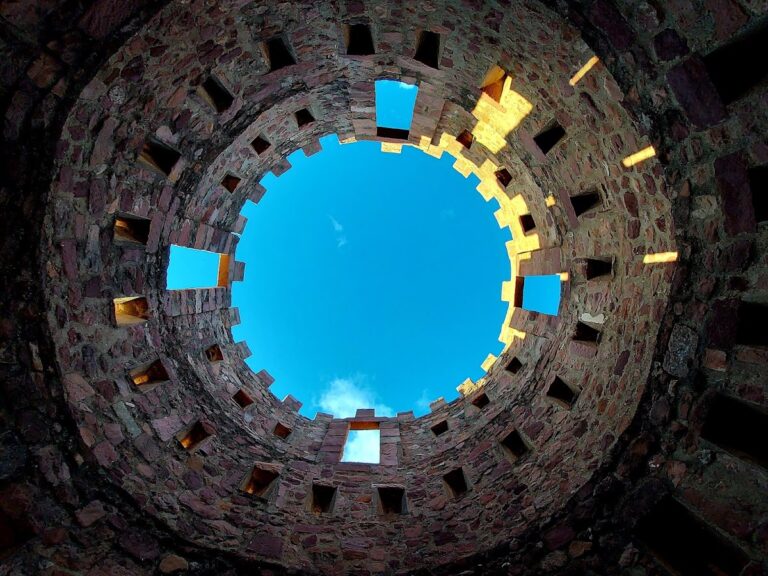
The most architecturally notable element is the southern wall, which is the longest side of the trapezoid and houses a central tower built from finely cut ashlar stone. This robust tower features a nearly square footprint and rises in two stacked levels. It served as the castle’s principal entrance, passing through two distinctive archways: an outer arched portal made of semicircular voussoirs (wedge-shaped stones forming the arch) of moderate size, and a larger Gothic-style arch with a split keystone that opens into the interior courtyard. These elements emphasize the gate’s defensive and ceremonial function.
At the tower’s upper level, arrow slits face both outward and inward toward the courtyard, indicating the defenders could protect both approaches and internal spaces. The tower is covered by a traditional double-pitched roof adorned with Moorish-style tiles, a detail that blends cultural influences. Originally, battlements likely crowned the tower, providing additional defensive capacity.
Access to the tower’s higher floor is through a basic staircase attached to the inner face of the wall, constructed for functionality rather than decoration. Together, these features paint a picture of a compact but well-fortified fortification developed to meet the military demands of the early medieval period and adapted through subsequent use.
Today, the site remains registered as a Valencian heritage landmark with a status identifying it as significant at the local level, helping preserve both the castle and its adjacent chapel which continues to serve a religious purpose.
Nearby sites