Castle of Villahermosa del Río: A Medieval Fortress in Spain


Site at a Glance
- Rating
- 4.6
- Popularity
- Very Low
- Country
- Spain
- Primary era
- Medieval
- Eras represented
- Medieval
- Civilizations
- Almohad
- Site type
- Military
- Remains
- Castle
On this page8 sections
History
The Castle of Villahermosa del Río is a thirteenth-century fortress in Spain, built in the Mudéjar tradition on the upper mountain above Villahermosa del Río. Its position overlooking the river landscape made it an important stronghold after the Christian conquest of the region. Although its first written mention dates from the eighteenth century, its construction is generally attributed to the thirteenth century and was apparently undertaken on the initiative of Zayd Abu Zayd, a Muslim ruler associated with the government of Valencia before and during the Christian conquest.
Origins and medieval importance
Villahermosa del Río began as an Arab settlement. After the forces of James I of Aragon conquered the area, the town was repopulated by inhabitants from the nearby Castle of Villamalefa. The fortress then passed into royal possession, and during the reign of James II of Aragon, who ruled from 1291 to 1327, it became the center of the Duchy of Villahermosa, a noble territorial title and jurisdiction within the Crown of Aragon.
The castle was involved in the thirteenth-century struggles of the Arenos lineage. It also played a part in the fifteenth-century conflict between James of Aragon and the Crown, reflecting the continuing political and military value of its strategic position.
War, restoration, and decline
During the War of the Spanish Succession, the early-eighteenth-century conflict over the Spanish monarchy, a major fire left the castle almost entirely ruined. The destruction was recorded in writing and marked a decisive change in the condition of the fortress.
Restoration work was carried out during the nineteenth-century Carlist Wars, civil conflicts fought over competing claims to the Spanish succession and the political order. These works were intended to make the castle usable during the First Carlist War. Its deterioration continued afterward, although it served as the headquarters of the Central Carlist Deputation, a Carlist administrative and political body, during the Second Carlist War from 1873 to 1875.
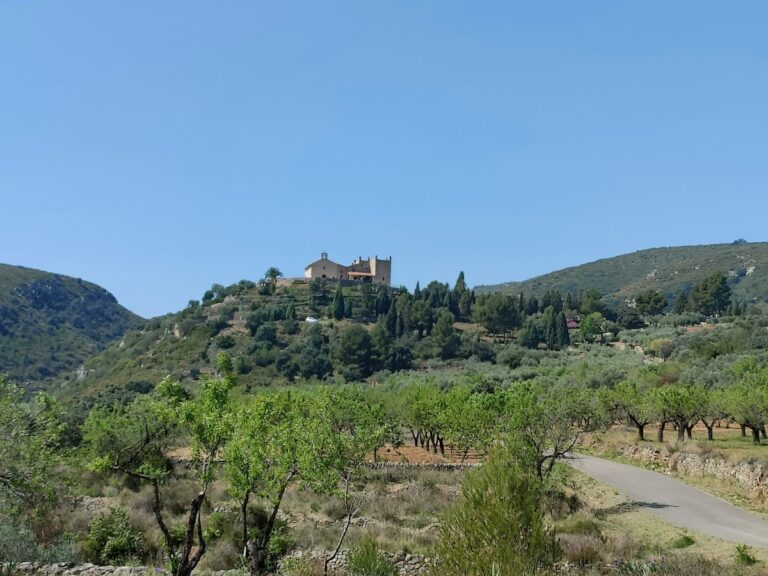
The castle is now in ruins, partly because its building materials were reused in private houses. Some structures incorporated into private properties have been restored by their owners and adapted as residences. The monument is designated in Spain as a Property of Cultural Interest through a generic declaration in the category of Monument, and is registered under Valencian heritage code 12.08.130-004.
Remains
Mountain setting and enclosures
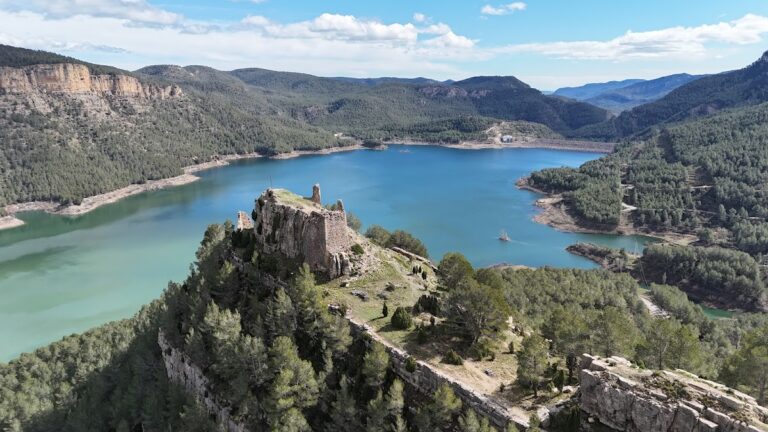
The fortress stands at about 731 metres above sea level on La Muela, the upper part of the mountain dominating Villahermosa del Río. It overlooks a meander of the river associated with the town and occupies a strategic position at the confluence of the Mayor and Carbo rivers. Cliffs naturally protected the site on most sides, while the northern side provided the principal vulnerable approach.
The castle had a rectangular plan divided into two large enclosures, where the population was housed. Each enclosure was protected by walls and albarrana towers, projecting or detached defensive towers linked to a fortification by a wall or bridge. The surviving fabric is fragmentary, with ruined wall sections and tower remains distributed partly through the town’s streets and private properties.
Entrance defenses
El Tamborete and the Tower of Homage
Two twin towers, El Tamborete and the Tower of Homage, defended the entrance area. A drawbridge was associated with the passage between them and provided access to the fortified zone.
Gate tower
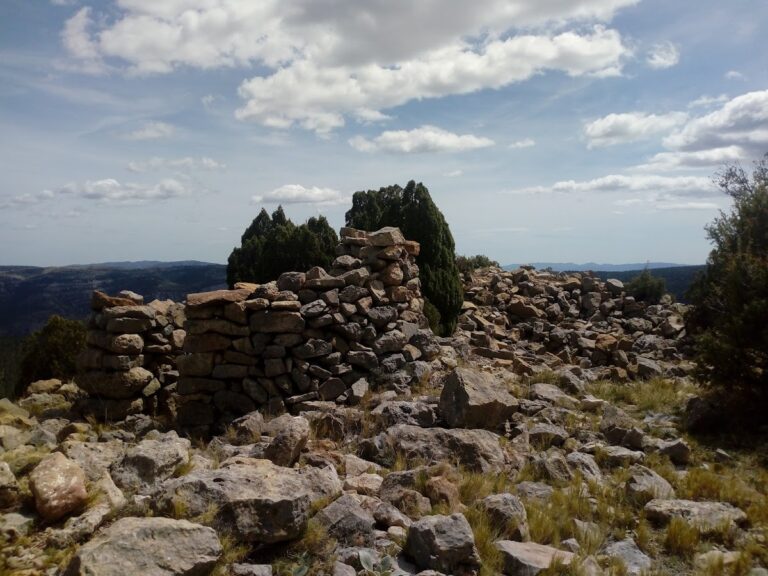
A surviving tower also served as a gate or portico for entry to the settlement. Together with the wall sections, tower fragments, and defensive remains, it preserves part of the arrangement of a fortress whose present form is shaped by fire, later deterioration, and the incorporation of its materials and structures into the town.